Hawaii is an adventurer’s dream. Stretching 1500 miles in Pacific, the Hawaiian Islands are an archipelago of 8 major islands, several atolls and numerous isles. Replete with sun, sugary beaches, lush green mountains, vivid colorful corals and ferocious volcanoes, this place is the poster child for all tourism brochures. Learn to surf, snorkel in cobalt blue water, trek on volcanic mountains or just lay back on golden-sand beaches. An epitome of multiculturalism, Hawaii embraces everyone with its aloha spirit.
The 8 major islands of State of Hawaii are among the youngest geological formations in earth. They are –
| Island | Nickname |
| Hawai | The Big Island |
| Maui | The Valley Isle |
| Oahu | The Gathering Place |
| Kauai | The Garden Isle |
| Molokai | The Friendly Isle |
| Lanai | The Pineapple Isle |
| Niihau | The Forbidden Isle |
| Kahoolawe | The Target Isle |
My trip to Hawaii was a business trip. I had to meet a customer in Honolulu. So, the island where I took shelter was Oahu island.
Geology of Hawaii
Hawaiian Islands have been formed by a hotspot. This hotspot is similar to the one beneath Iceland (read about my Iceland adventure). Hotspots are underground volcanic regions anomalously hot compared to surrounding mantle. The position of hotpots on the Earth’s surface is fixed; it is independent of tectonic plate boundaries. These hotspots cause a bulge in earth’s crust due to pressure underneath, creating volcanoes. Once the pressure is significantly higher, the magma rushes out of these volcanoes with full spectacle.
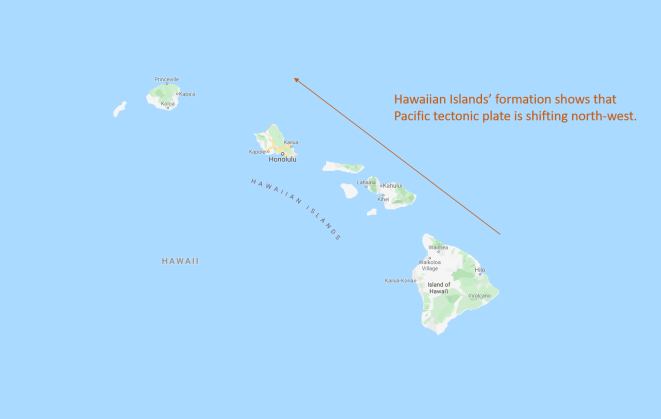
Pacific tectonic plate is gradually shifting northwest at the rate of 3 inches a year. But the Hawaiian hotspot is fixed. So, as the Pacific plate moves slowly over that hotspot, it gradually produces volcanoes. This is how Hawaiian Islands were born. The Big Island sits on top of that hotspot today. But it will change due to tectonic shift. The super active volcanoes of The Big Island will become dormant as they will be cut off from their source (the hotspot). So, eventually after millions of years, all the 8 islands will die and pave way for new islands as lava oozes out of the hotspot. In fact, the wheel has already been set in motion. On the seafloor, 20 miles southeast of The Big Island, is an active volcanic area with periodic eruptions. This area is called Loihi and will be the site of the next Hawaiian Island if geological processes continue as they have for millions of years. But it may be over 10,000 years before Loihi emerge out of ocean.
The tectonic movement of Pacific plate is evident from the shape of Hawaiian Islands. Notice their shape on the map. They are angled such that they are moving north west, the direction of Pacific tectonic plate.
Like other islands, The Big Island also started as a very small volcano. This volcano was Kohala, which grew out of ocean. Over time more volcanos appeared making Big island larger – Hualalai, Mauna Loa, Mauna Kea and obviously Kilauea. Mauna Loa is largest volcano in the world. It rises 13,000 feet above sea level. Kilauea is the most active volcano in the world. It has been erupting continuously since 1983, the latest being 2018. This steady flow of lava has added roughly 500 acres to the island. The Big Island is like an iceberg, with only its tip visible above the sea level. Drain the sea water and it is 4500 feet taller than Mt. Everest. And guess what, it is still growing as the ancient hotspot beneath is still very active.
Why Hawaii is so green?
When I visited Iceland, I noticed one thing. Northern and north-eastern part of Iceland is primarily barren. The scenery is replete with black volcanic mountains, devoid of any vegetation except mosses. The main reason is that enough erosion has not occurred in that part to create soil. And plants and trees need soil to grow their roots. This is different from other parts of Iceland, particularly southern and western part. They have large settlements and are quite green.
I assumed that Hawaii was so green because human settlement would have caused erosion leading to soil formation. And hence greenery. But that’s not what I learnt based on my research.
Hawaii is so green because of Ohia Lehua plant. These plants have evolved themselves such that their roots can run deep into volcanic rocks and suck nutrients and water from underground moisture. Unlike many other plants, they do not need soil to grow. In fact, the decomposition of these trees gradually formed soil on Hawaiian island making it greener the way it is today. Millions of these trees cover Hawaiian Islands today and is found nowhere else in the world. These resilient plants that could thrive without soil became the soil for the next wave of plant species as they decayed and composted. That’s how Hawaiian Islands gradually changed from desolate black to lush green.
Happy Birthday! 7th Dec 2019
You get to visit Hawaii on a business trip on your birthday. Isn’t that an excellent birthday gift? In fact, I joined Microsoft Identity team last year on 10th Dec. So, it was my work anniversary week as well. Things got aligned pretty well! I landed at Honolulu airport at around 2:30 PM and headed to my hotel, Moana Surfrider. The hotel staffs welcomed with a customary Lei, a garland of pink orchids. By the time I freshened up, I was famished. I headed to a restaurant nearby Hula Grill and celebrated my birthday with Mai Tai and crab cakes.
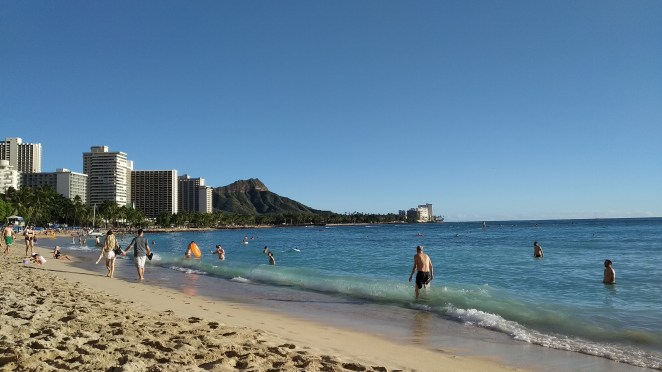
Waikiki beach
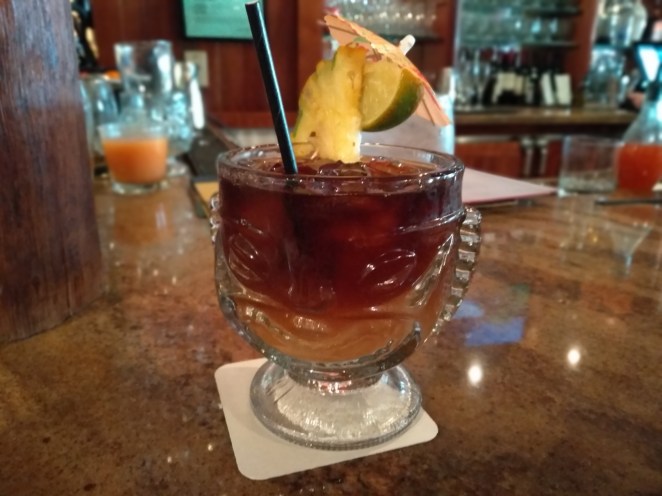
Mai Tai

Crab meat filled samosa
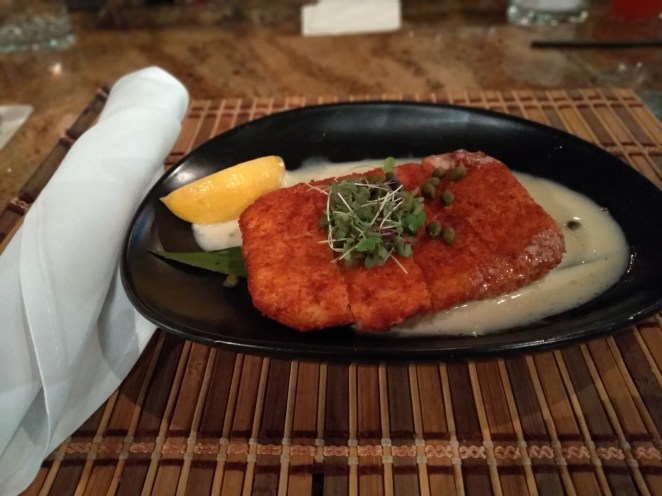
Tuna steak topped with lemon seeds
In the evening there was a road show cum parade that happened in the memory of Pearl Harbor victims. That day was 79th anniversary of Pearl Harbor attack (7th Dec 1941). A number of local army veterans participated in the parade. The most captivating part of this whole parade was to witness America’s love affair with cars. Initially it started with army, air force, navy and marines’ parade and eventually it became an antique car show. Old-timers participated in parade flaunting their classics, some were even custom-made, blowing horn occasionally to attract audience’s attention and making ‘Shaka’ gestures.
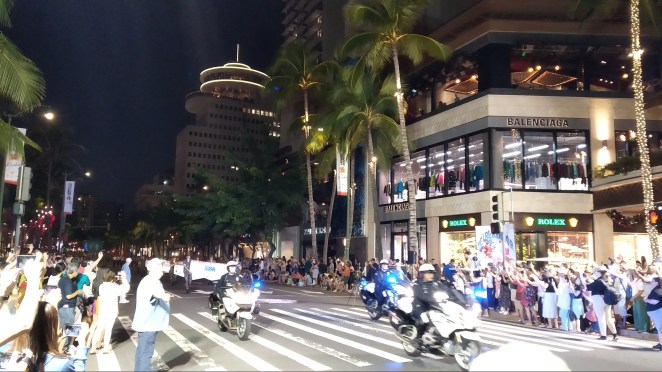
Pearl Harbor parade
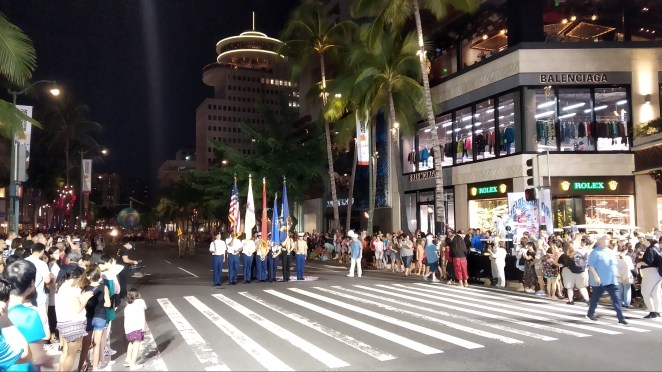
Flagbearers
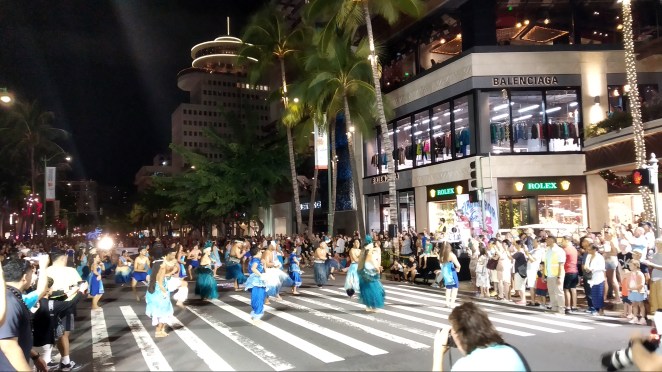
Polynesian pride showcased at parade

An army veteran gracing the parade
Diamond Head trek, 8th Dec 2019
Diamond head is a volcanic crater in Oahu lying south east of Waikiki beach. It is known as Leahi in Hawaiian language. Leahi is derived from lae (brow ridge) plus ahi (tuna). This crater was named Diamond Head in 19th century by British sailors because they mistook calcite crystals as diamonds. Diamond Head is estimated to be about 500,000 to 400,000 years old and was used as a strategic military lookout in early 1900’s.
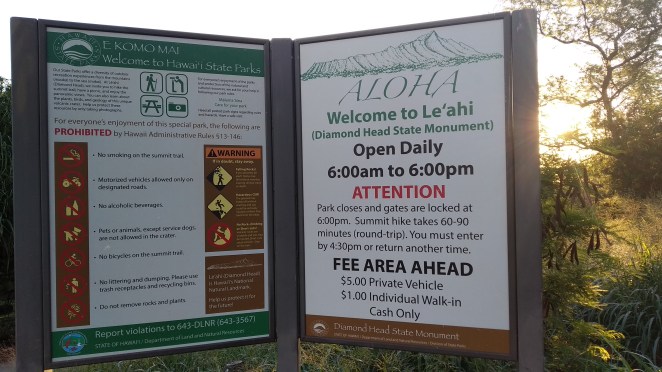
I woke up early morning on Sunday, at around 5AM. Diamond Head crater was about 30 min walk from my hotel. When I came out of the hotel at 6 AM, I saw that a marathon run was going on the road. This inspired me to walk all the way to Diamond Head trailhead instead of taking a cab. I had nothing else to do anyway. I thought it to be a better way to explore Waikiki and nearby areas. So, I walked all the way to the trailhead and then hiked.
The trek to the top was moderate. Although the trek is just 0.8 miles, but the altitude gain is roughly 800 feet with a number of switchbacks. The top of diamond head provided a panoramic view of Waikiki and Oahu’s south shore.
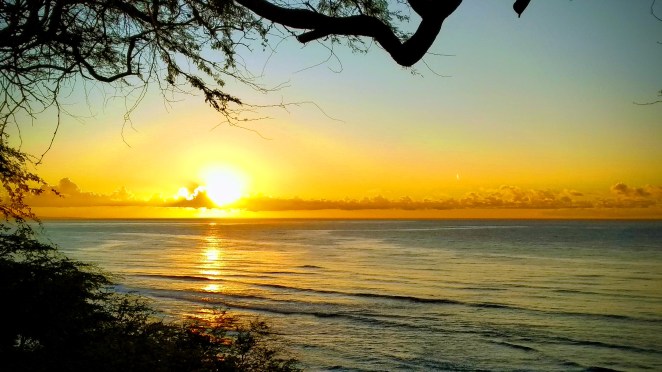
Sun coming above the horizon

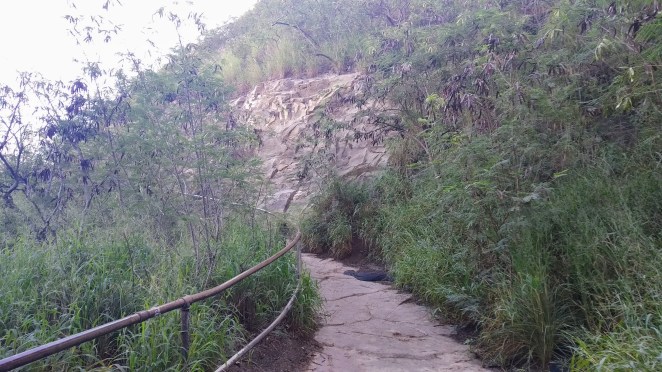
One of many switchbacks on the trail
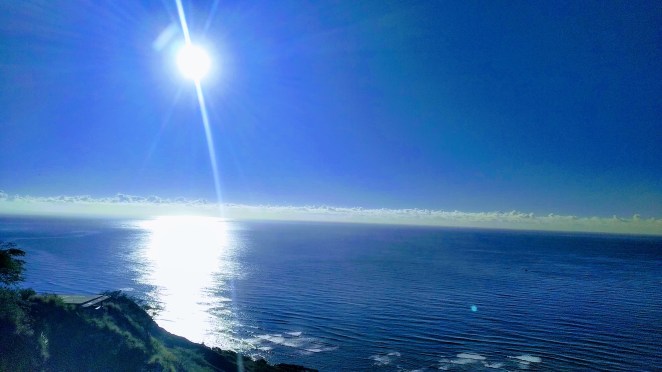
Ocean view from top
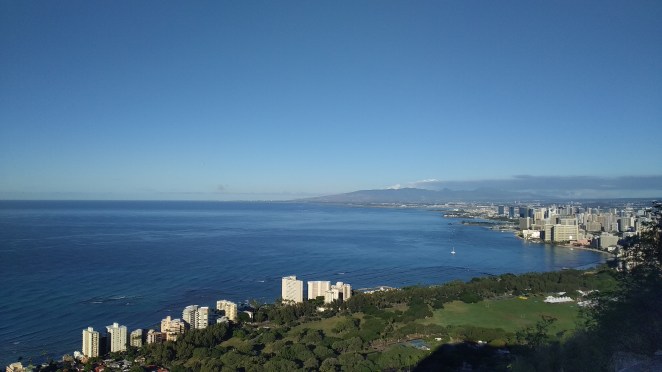

At the viewpoint
Kuliouou trek, 8th Dec 2019
My Microsoft colleague Grace reached Honolulu in the afternoon on 8th Dec. She pinged me that our customer Sal was willing to take us to a hike in the evening. Although I had done Diamond Head in the morning, I agreed. Grace’s sister, Sarah, and her friend, Jenna, had joined her on this trip. Grace, Sarah, Jenna and I carpooled from our hotel and met Sal at the trailhead. We started the hike at roughly 4 PM.
Unlike the Diamond Head, this was a bit strenuous. It’s a 4-mile hike with an altitude gain of roughly 1600 feet. After a steady incline for first couple of miles, we had to put our glutes into overdrive to get to the summit. We were about 10 min away from reaching summit when it started getting dark and we had to descend. Although, I didn’t reach the summit, but it was a time well-spent with all these new people. Far better than sitting in my hotel room and watching Netflix.
After the trek, the group assembled again for having a dinner together at Aloha Steak House where Shawn also joined us.
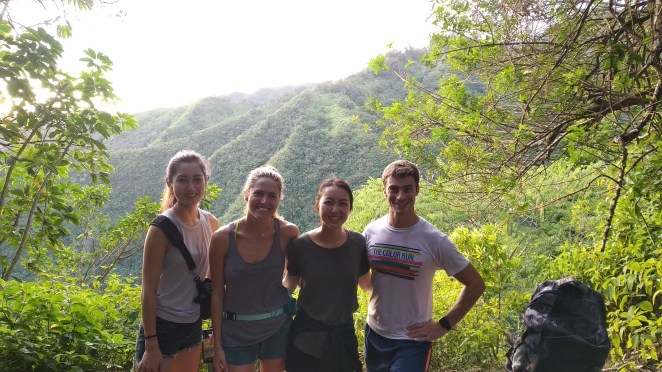
Sarah, Jenna, Grace and Sal (L-R)
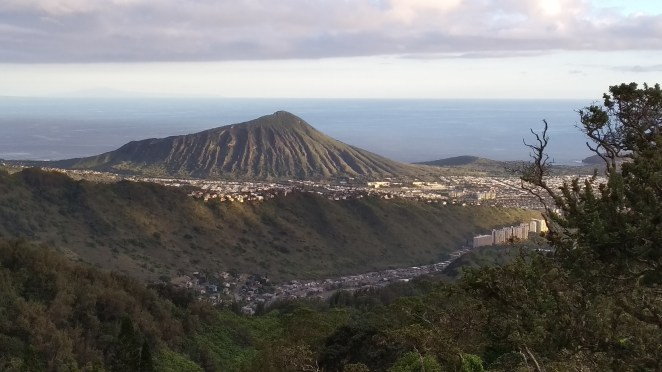

I’m like 104% tired!

Shawn joined us for dinner at Aloha Steak House
Hanauma Bay, 11th Dec 2019
Hanauma Bay is a nature preserve dedicated to safeguard the fragile marine ecosystem in the bay. It is one of the most popular tourist destinations on Oahu island. Its pristine cobalt blue water is home to corals and rich marine life.
I always wondered what corals and coral reefs are. Surprisingly, I never cared to find the details regarding them. Finally, I researched and have a rudimentary understanding now. Corals are marine invertebrates that are made of coral polyps, a distant cousin of jellyfish. Thousands of polyps make up a coral. Each polyp takes in dissolved minerals from water and mixes it with protein. As a result, it forms calcium carbonate which it releases beneath itself. Thus, forming its exoskeleton, aka reefs. It is these tiny polyps that build such giant impressive reefs, millimeter by millimeter. But what gives the energy to polyps to build reefs? It lives in a symbiotic relationship with an alga called Zooxanthellae. These algae use the carbon dioxide released by polyps and sunlight to perform photosynthesis. This process releases oxygen which in return is consumed by the polyps.
Hawaiian waters are not rich in nutrients. But it is this lack of nutrients which fosters the marine diaspora there. If Hawaiian waters were rich in nutrients, algae would breed on surface water clouding the water and starving the corals of sunlight. These corals and reefs that they create provide food and shelter to many fishes and underwater creatures.
One thing to keep in mind is that it is a nature preserve. Government is trying to preserve the marine life here in most natural way. That’s why there is no water sport allowed at Hanauma Bay except snorkeling. Tourists can rent snorkel masks and fins from a rental shop. However, they do not provide life jackets. I don’t know how to swim. So, initially I was a bit scared to go in water without life jacket. But since the water is quite shallow near the shore, so I went in and snorkeled.
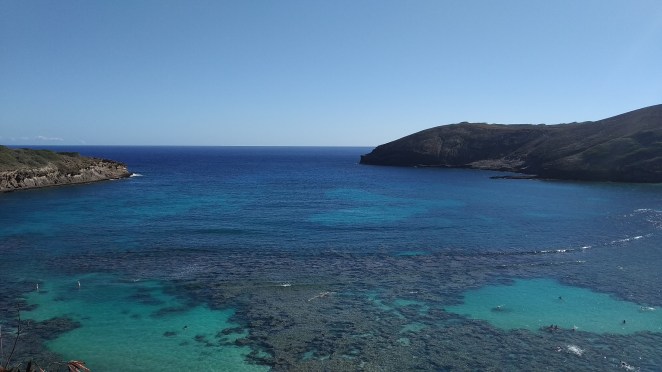
Hanauma Bay

Bay is a water body surrounded by land on three sides and connected to ocean on the fourth
The moment I put my head inside water, a new world emerged. A world full of blue. The fishes I saw varied from bright yellow to purple to black with red accents. Unsure of whether I was a friend or foe, they would sometime hide behind a reef and sometime swim past frivolously besides me. I had seen colorful fishes and corals in TV and aquariums, but nothing beats saying ‘hi’ to them in their natural habitat. There are some things that can’t describe in words. You just feel that beauty amidst the deep blue silence. Surreal and mesmerizing.
After an amazing snorkeling experience at Hanauma Bay, we went on a short 2 hours cruise at Waikiki beach to see sunset. At $35 per person with unlimited beer and awesome sunset view in the middle of the ocean, it was not a bad deal after all.
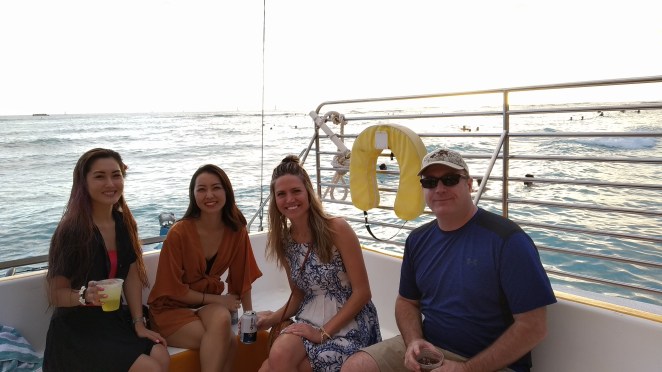
On cruise. Sarah, Grace, Jenna and Shawn (L-R)

Chasing sunset since 1990

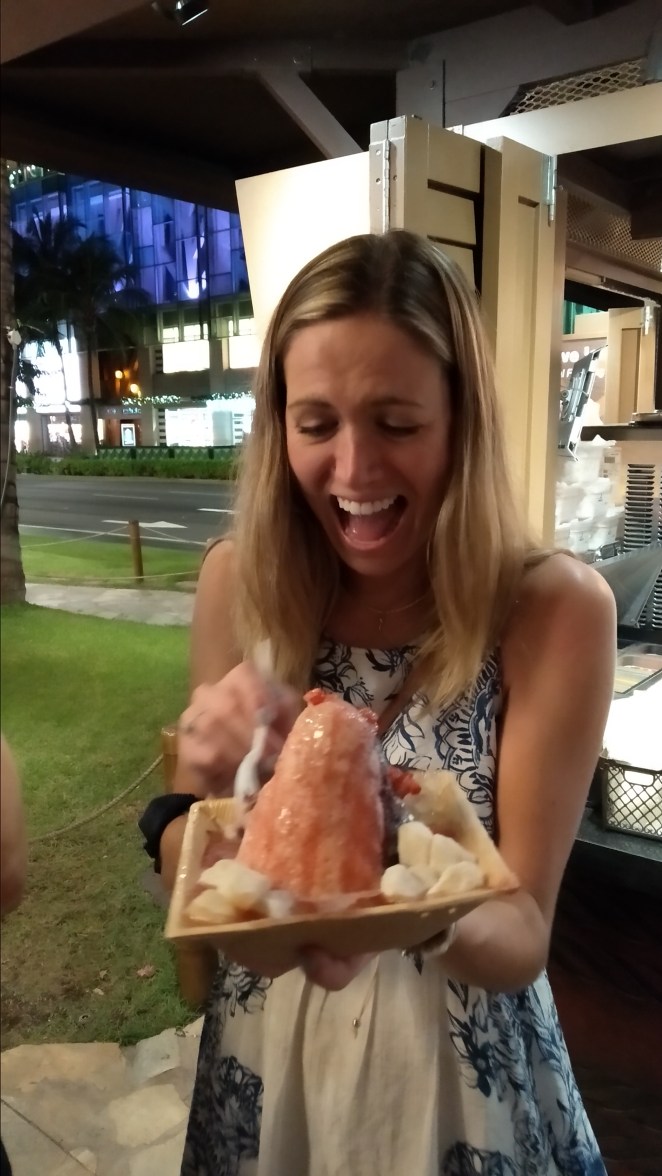
Shave ice !!!
Submarine scootering, 12th Dec 2019
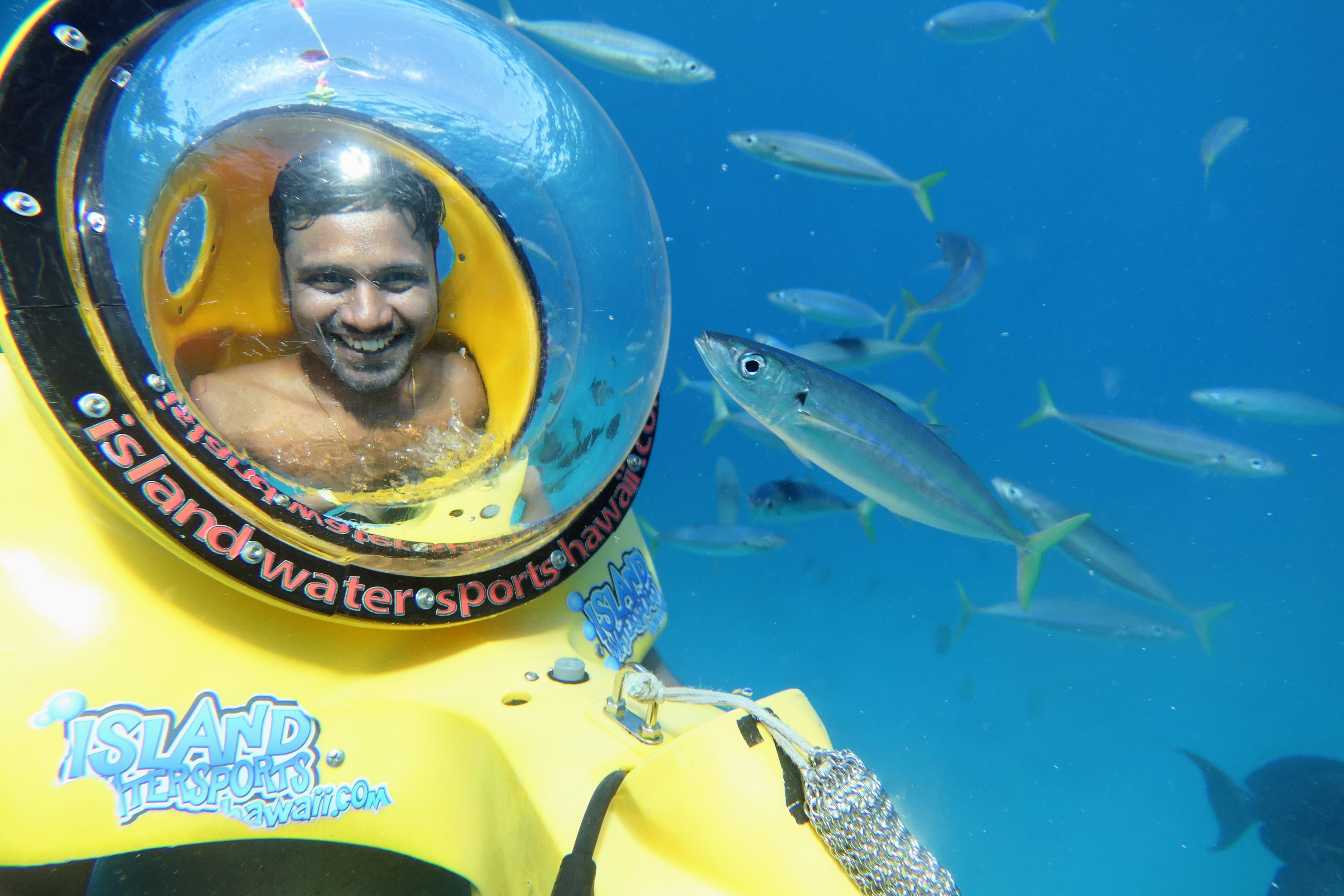
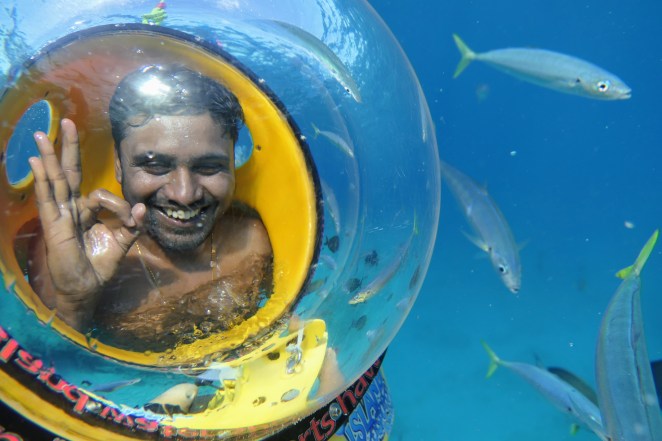
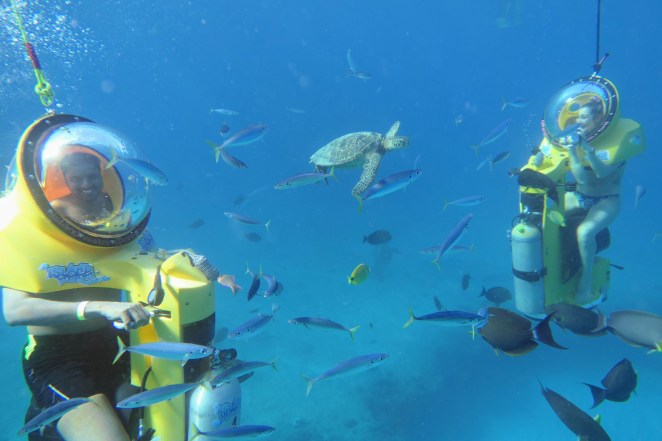
This was, hands down, the highlight of this trip. Submarine scootering is not scuba diving. It is as if you are riding a scooter/bicycle inside ocean. You can breathe normally inside ocean and get to witness the marvels of sea without any uncomfortable constraints of diving equipments.
How does submarine scooter work?
It’s based on basic science. When you push an inverted mug into a bucket of water, then water does not go inside mug. This is because air pressure pushes the water and does not let in come in. As the inverted mug is pushed down, the water pressure increases (remember, P=hdg). If somehow, air pressure inside the mug is also increased to counter the increasing water pressure, then that air pocket inside the mug can be maintained. Submarine scooter works on the same principle. The person’s face is put inside that air pocket so that he can breathe normally.
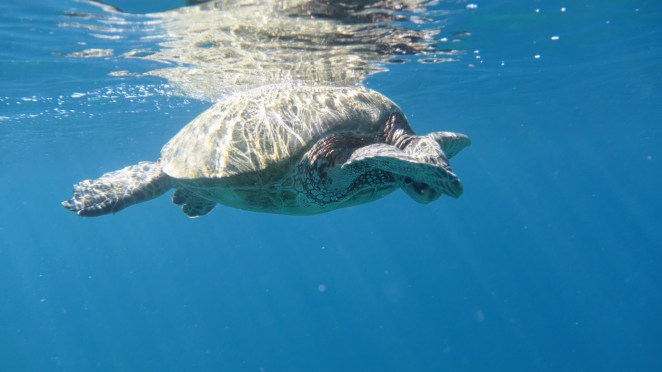
Those 20 minutes inside ocean were amazing. There were bread sticks hanging in front of the scooter, so fishes were rushing towards it. It was one-of-a- kind-experience to feed fishes with your own hands. I held the bread sticks in my hands and invited the fishes to nibble. The sensation was a bit eerie initially, but then I started enjoying it.
There were limited number of scooters, so we went in batches. But its not that after we were done, we just sat idle. The boat had snorkeling masks, fins AND life jackets. I grabbed all three and did snorkeling here as well. This time it was in the middle of the ocean, but with life jacket I was confident.
The activity was $99 per head and then three of us paid combined $80 for photos and videos. The experience was totally worth the money.

Picture perfect!


North shore, 12th Dec 2019
After submarine scootering, we drove off to North Shore to watch Pipeline Masters contest. North Shore witnesses waves as high as 30 feet and is a paradise of surfers. The North Shore is considered to be the surfing mecca of the world. That’s why Pipeline Masters contest is held there every year where surfers from all across the world participate to claim the coveted title. Unfortunately, on that day waves were too high and were very dangerous. So, the competition was put on standby. However, its not that we returned disappointed. There were surfers practicing on that day as well, and it was a treat to see how they scored sea waves. People are just crazy!
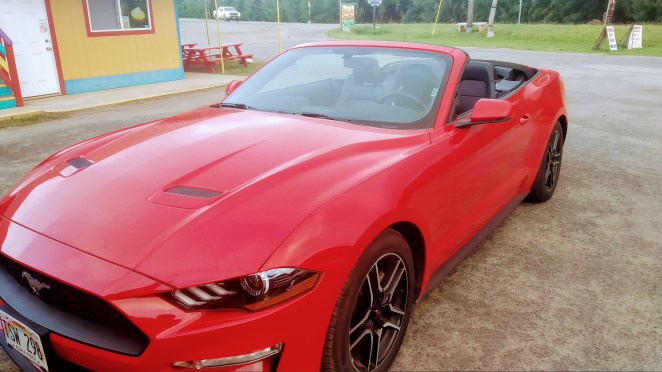
And we had convertible for the ride…
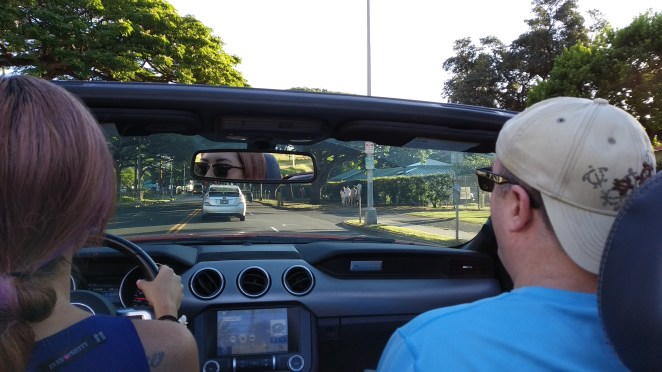
Shawn in his hip mode
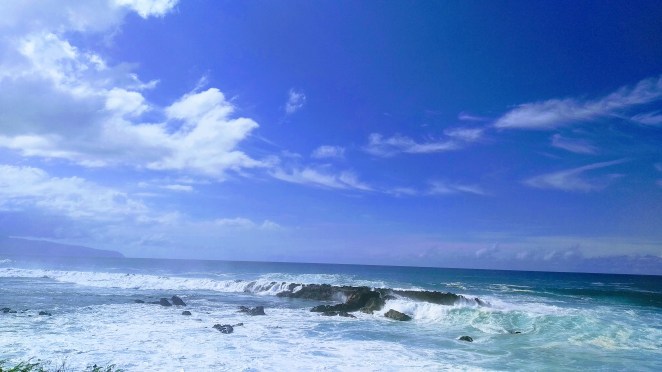
Boisterous surfs of north shore
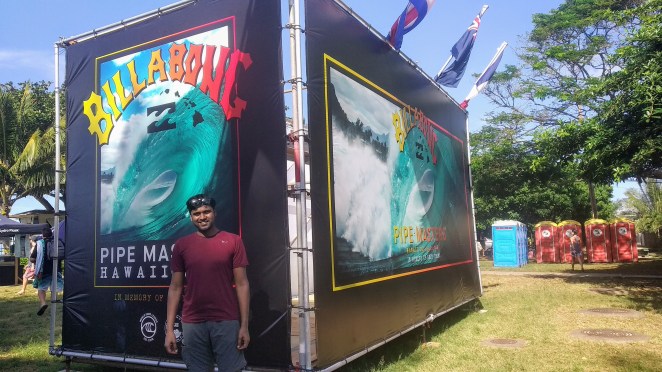
Pipeline Masters
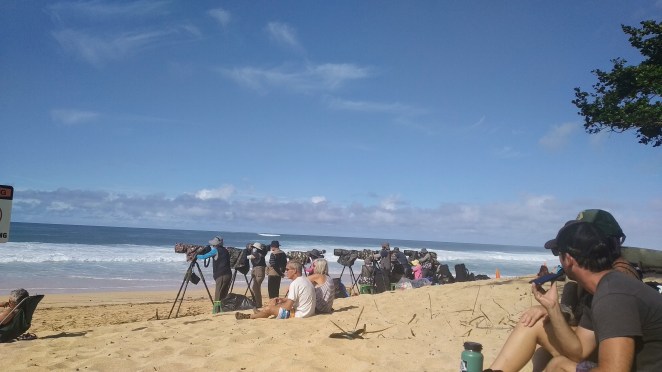
Cameramen lined up to capture surfers scoring the waves
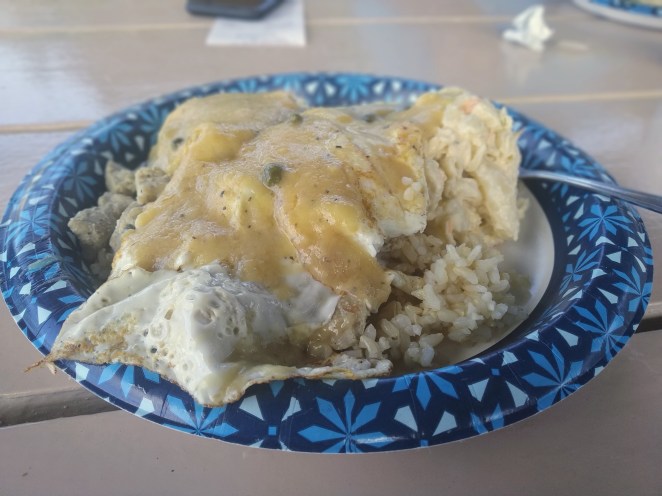
Ahi loco moco
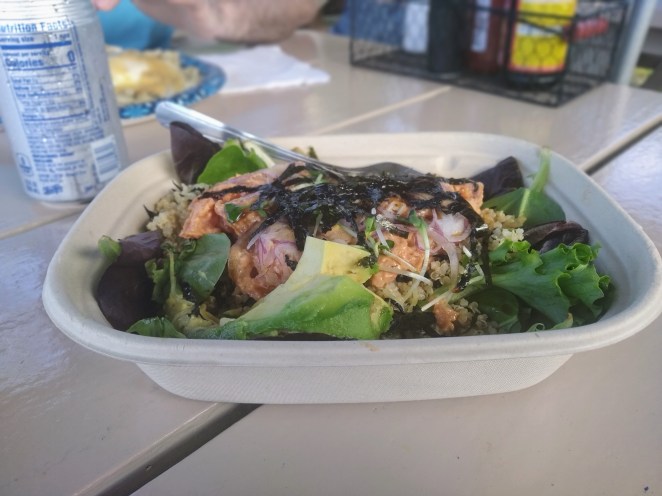
Quinoa salad
 Abhijeet Kumar Sinha
One thought on “Travel Diary #16: Oahu, Hawaii”