
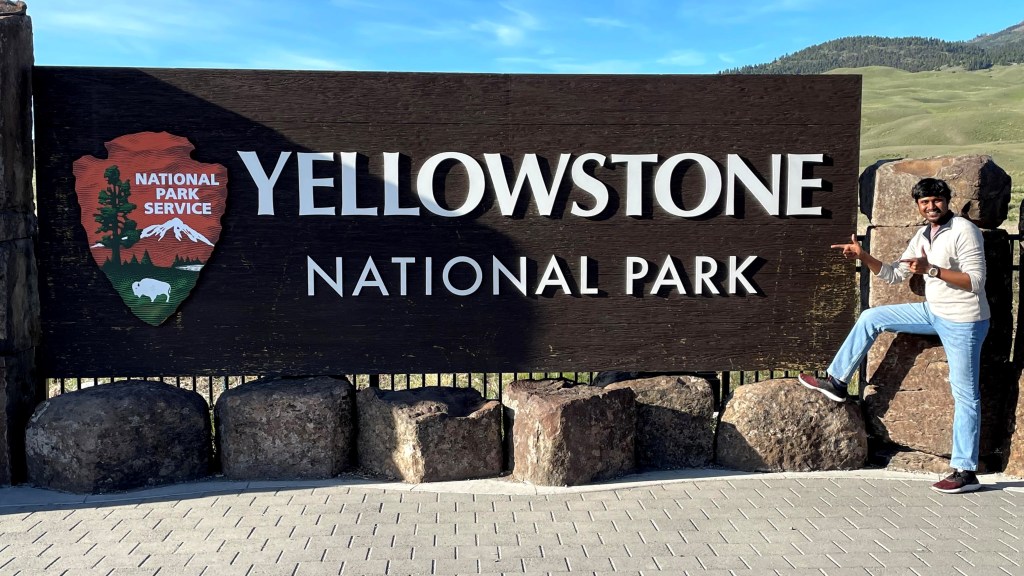
This Memorial Day wasn’t red, white or blue for me. It was painted all yellow 😉. Yes, I went to Yellowstone National Park this weekend. There was a surprise change of plan. We had planned for Idaho but at the last minute we got an Airbnb option available in Pray, Montana. This pushed us to switch the plan to Yellowstone. And what a good time we had!
Yellowstone sits on the top of a super volcano which erupted multiple times, the latest about 630,000 years ago. The center of what is now the park collapsed, forming a 30- by 45-mile caldera. The magma plumes powering those eruptions still fuel thousands of geysers, hot springs, fumaroles and mudpots.
Yellowstone National Park was the first national park in the US having been granted this status on 1st March 1872. The trans-continental railroad had just been completed by that time in United States, but the rail network was not as vast and extensive in the west as compared to east. So, railroads companies lobbied the government to designate this vast expanse of natural wonder as a tourist spot. This was a rare example where commercialization and public interest of government worked hand-in-hand.
But why Yellowstone is called as such?
It is named after the Yellowstone River, the major river running through it. The native Indians called this place Yellow Rock River, most likely due to the yellowish formations of the Grand Canyon of the Yellowstone.
Day 0: Reached Yellowstone, 28th May 2021
We started from Redmond on Thursday night, the 27th. It was a long drive where Naveen, Rajendra and I took turns. I started from Redmond and drove till late at night, then Rajendra took over and drove till early morning and then Naveen took us all the way to the destination. Initially, I was reluctant to drive at night but in hindsight, I can say that it saves a lot of time. We reached Montana by about 11 AM. Since the check-in time at our Airbnb was 4 PM, we had some time to explore a couple of places in Yellowstone. So, we headed to Mammoth hot springs which is near the north entrance of the park, not very far from our stay in Pray.
Mammoth hot springs
Mammoth hot springs features ever-changing travertine terraces. Travertine is a terrestrial sedimentary rock, formed by the precipitation of carbonate (CO3) minerals from solution in ground and surface waters, or geothermally heated hot springs. An underground network of fractures forms a plumbing system that enables hot water to come up to the surface. Limestone (CaCO3) deposited underneath provides the much necessary ingredient for these travertine terraces. Hot water combined with carbon dioxide forms a weak solution of carbonic acid, H2O + CO2 –> H2CO3. This solution, as it rises up the surface, reacts with limestone and dissolves calcium carbonate (which is the prime component of limestone). This calcium carbonate precipitates on the surface forming the terraces of Mammoth Hot Springs. As minerals deposit, the underground channels change, thus changing the course of water. That’s why the pic that you take today may become obsolete in a few years, and you may find a completely new view here.


The white terraces are carpeted with pale yellow or brownish patchworks. These are not just random mud and dirt; it is a thriving ecosystem of billions of micro-organisms living and prospering amid the heat and gases of this region. These are called thermophiles. Different species of thermophiles flourish at this place based on difference in temperature, water current and gaseous environment. These multiple species of thermophiles create a shimmering palette of color which is unique and unbeknownst to most of the world.
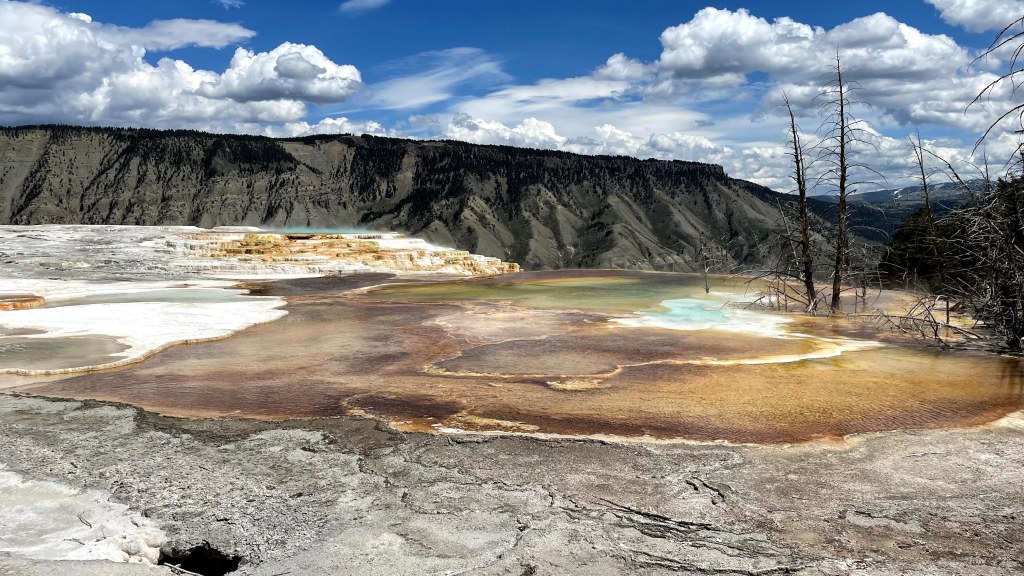

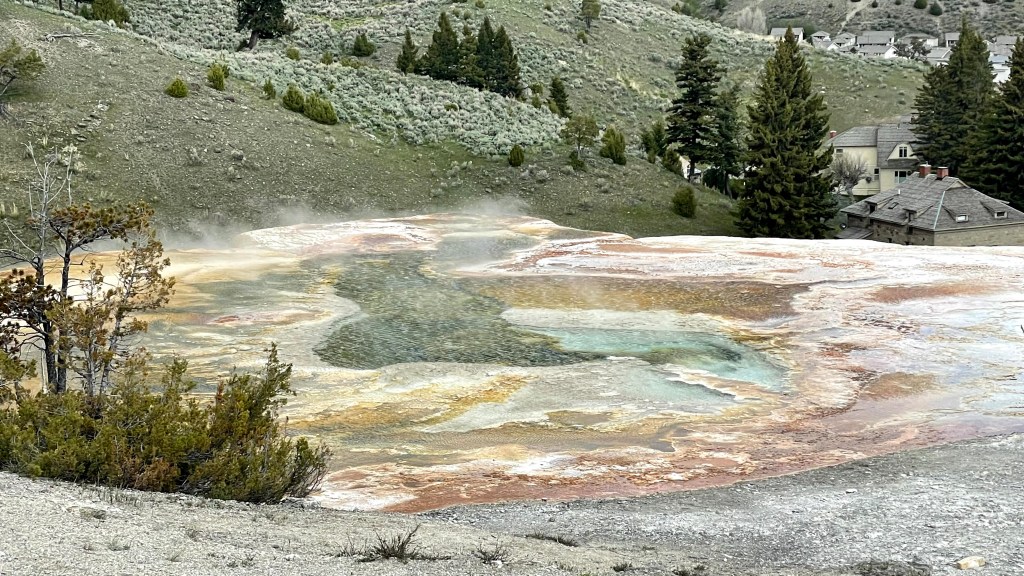
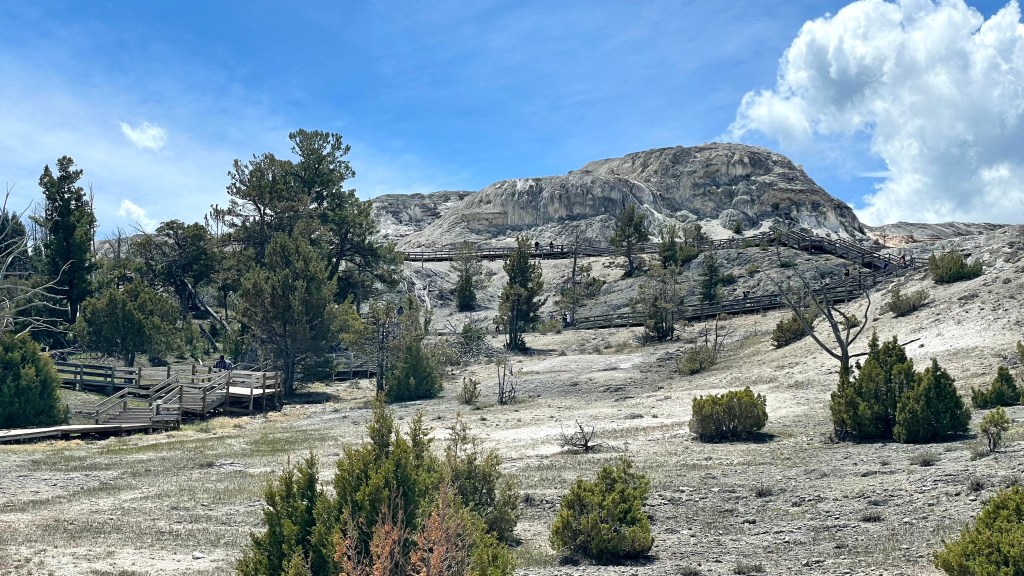
Mammoth hot springs is not just a single spot. It is a large area with numerous such terraces which can be explored by a network of boardwalks. We took about 2 hours to explore this entire area and that too when we had to rush towards the end as it started drizzling. Around 3 PM, we headed to our Airbnb.
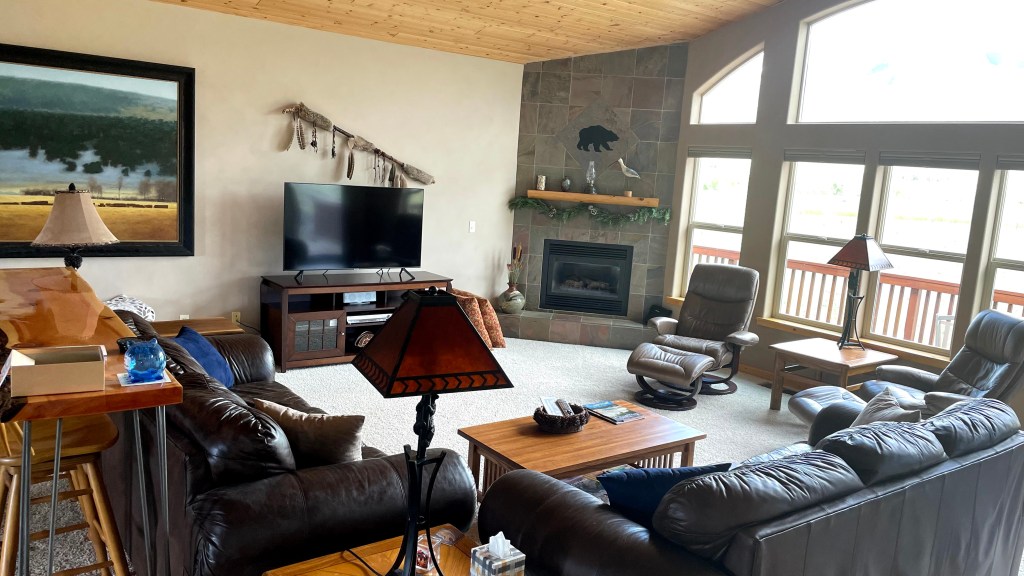
We stayed at Paradise Vista in Pray, Montana. Located at a very secluded place, the house had a huge open area all around with a view of snow-capped mountains from the living room. This cabin was beautiful and cozy with all the amenities you expect at your home.



Day 1: Geysers, fumaroles, mudpots, 29th May 2021
Old Faithful was a 2-hour drive from our Airbnb, so we started early at 6.45 AM that day in order to avoid the rush. Old Faithful is an extremely popular destination thronged by tourists and it may get difficult to find parking there after 10 AM, especially on a long weekend.
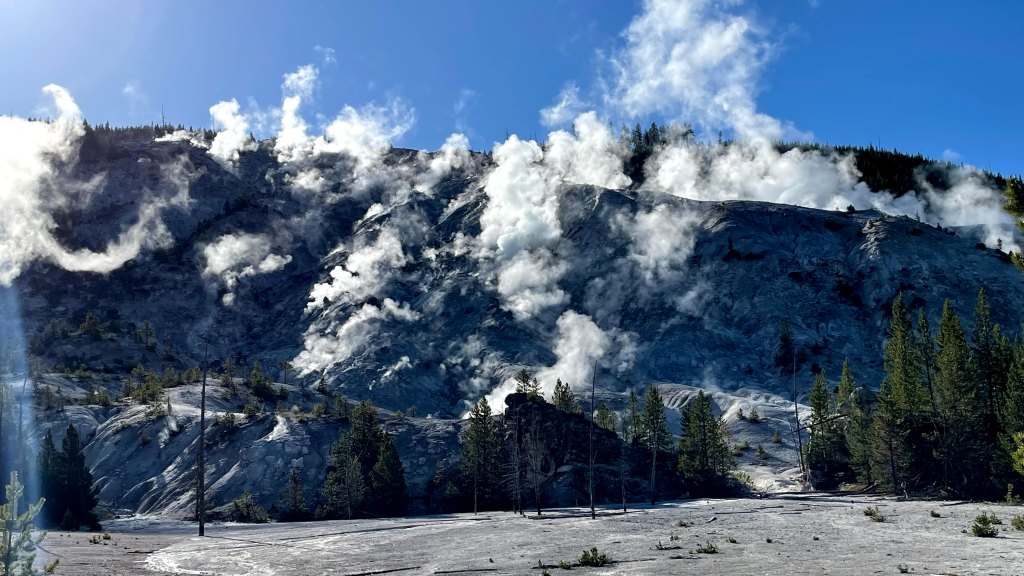
Roaring Mountain
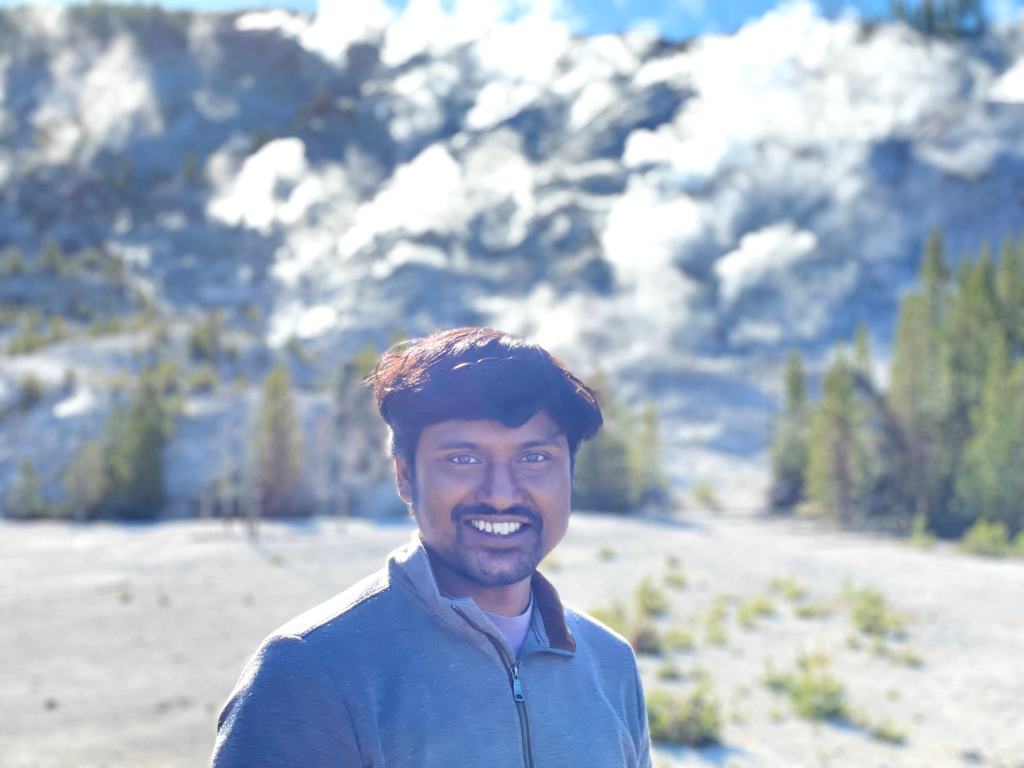
As we were on our way towards the Old Faithful, we were stumped by a view to our left. There was a small hill with hundreds and thousands of vents hissing and letting off steam along with a stench of hydrogen sulfide. No wonder why it is named as such – Roaring Mountain. A fumarole is an opening in a planet’s crust which emits steam and gases such as carbon dioxide, sulfur dioxide, hydrogen chloride, and hydrogen sulfide. The steam forms when superheated water boils as its pressure drops when it emerges from the ground.

Upper geyser basin and Old Faithful
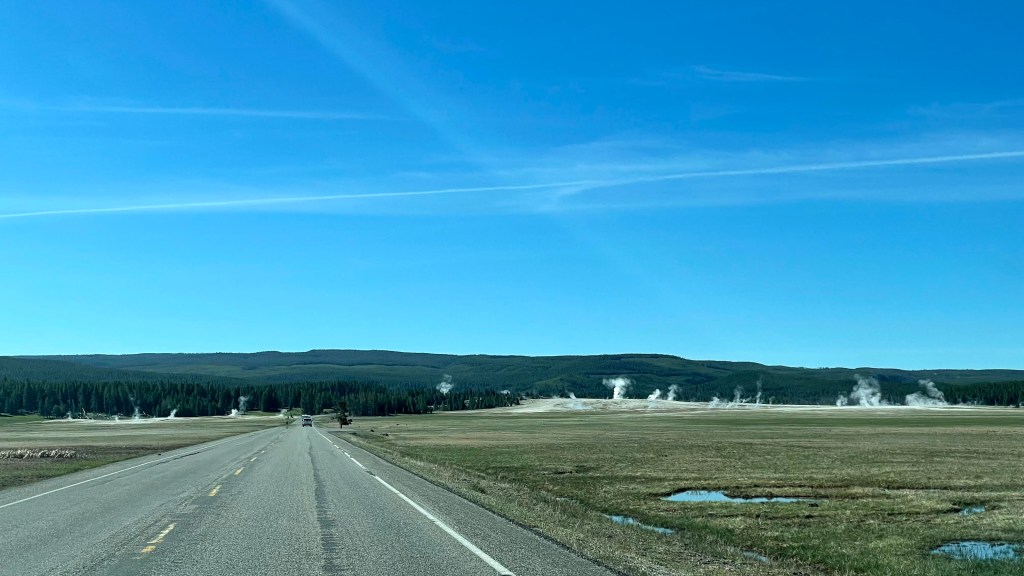
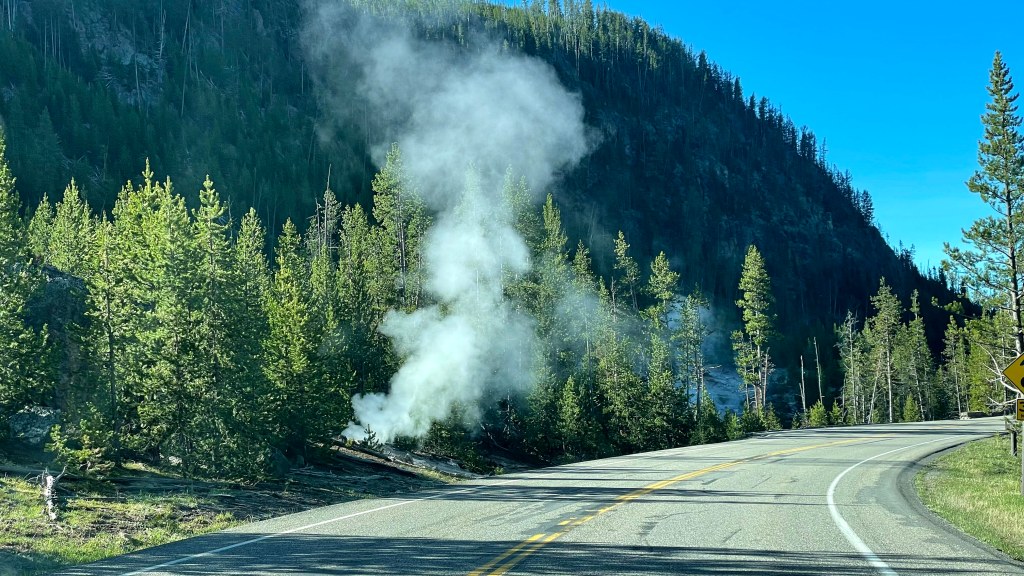
After a nice photo session there, we headed further south, towards the Old Faithful. Yellowstone has more than 10 thousand geo-thermal spots. And it is quite evident when you drive through the park. At every nook and cranny, you can see a vent in the ground wafting off steam, a pond of gurgling water and a stench of hydrogen sulfide.
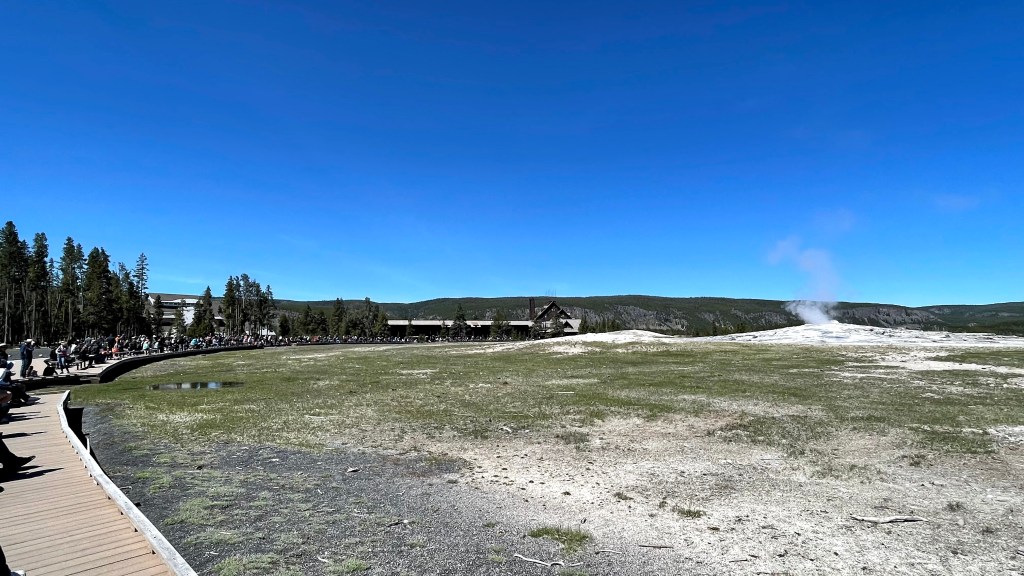
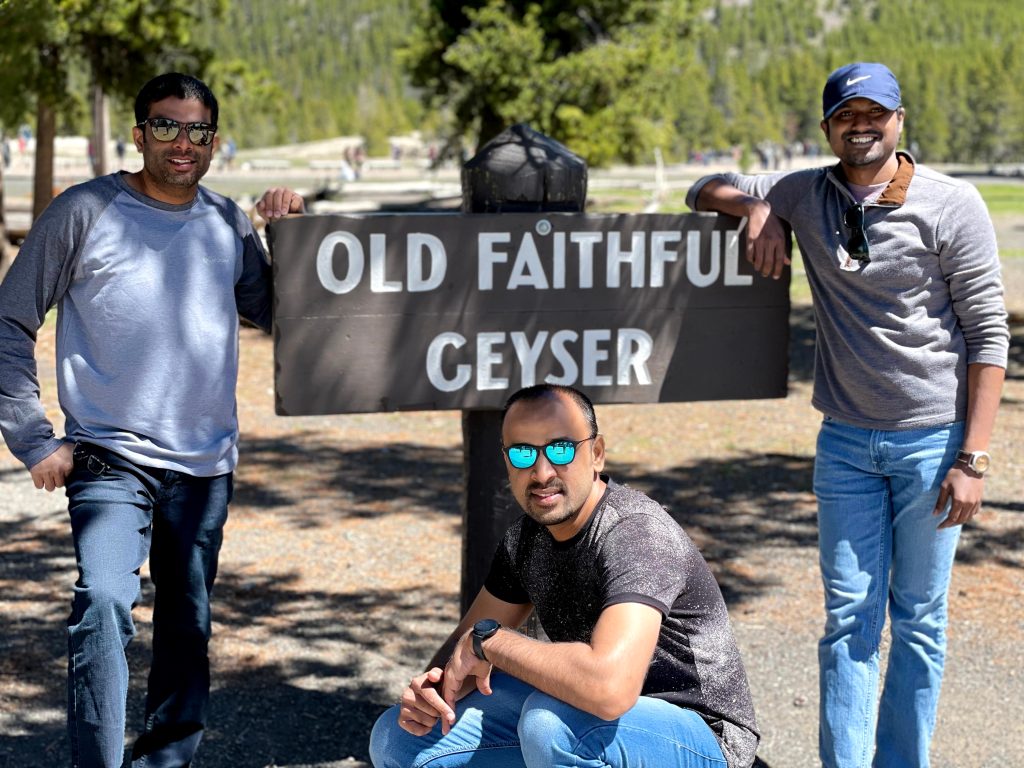
We reached the Old Faithful geyser site at around 10.30 AM but it had just erupted. We didn’t manage to get a good view of it. So, we chose to explore the upper geyser basin and return to this spot in about an hour. Upper geyser basin is the busiest part of the park as it is home to the Old Faithful geyser. Old Faithful was discovered in 1872 and is named as such because of its long history of predictable eruptions every 60-90 minutes.
There is a nice seating arrangement in front of Old Faithful for tourist to enjoy the event. We took our seats at around 11.20 AM. It was amazing to see so many people turning up and waiting with their bated breath to witness this unique event.
Old Faithful keeping its promise

How do geysers work?
Geysers are similar to pressure cookers. In pressure cookers, some water heats up to form water vapor. This steam does not get any place to escape so it starts building pressure. As pressure inside the pot increases, the boiling point of water increases. As a result, steam formation stops till the remaining water reaches the boiling point. Since water is a better conductor of heat than air, this water at elevated boiling point cooks the food. When the boiling point of remaining water is reached, steam starts forming again, thus increasing the pressure and elevating the boiling point further. This cycle continues till the optimum pressure of the pressure cooker is reached, for example 15 psi. At this pressure, the whistle of the pressure cooker lifts up emitting some steam, thus reducing the pressure inside the pot. The reduction in pressure decreases the boiling point of the water and steam starts forming again, thus building up the pressure. This lead to yet another whistle and the cycle continues.
Think of geysers as whistles of earth’s pressure cooker. They work in a similar way. A geyser has 3 parts –
- Water
- Plumbing system
- Heat source
The magma beneath the geysers provides the heat source. The shallow ground water seeps through a conduit of holes and channels to the very bottom of the surface. The water gets heated up here and forms steam. As water gets converted into steam, more water fills the channel. This mile’s deep water channel increases the pressure thus raising the boiling point of the water. When optimal pressure is reached (driven by natural surface and environment), the boiling water gurgles out. As the pressure decreases, the boiling point decreases leading to forming of a lot of steam in a very small time. Steam expands almost 1500 times resulting in a huge burst which we see as geyser.
Grand Prismatic Spring
After having a good time at Old Faithful, we headed towards Grand Prismatic Spring. This turquoise hot spring with hues of orange and yellow at its fringes is a sure thing of beauty. Nestled in midway geyser basin of Yellowstone National Park, it is the largest hot spring in United States and third largest in the world. The brilliant blue of the spring is caused by scattering of sunlight by the minerals present in the water. Bright orange color at the circumference of the spring comes from the thermophiles. The micro-organisms have colorful pigments and flourish in heat and sunlight which is in abundance at this place.
There are two ways to enjoy the Grand Prismatic Spring. You can either take a boardwalk loop trail which takes you closer to the spring. But if you want a postcard view of this spring, then take a short (but steep) 1-mile hike from Fairy Falls trailhead. We did the latter.

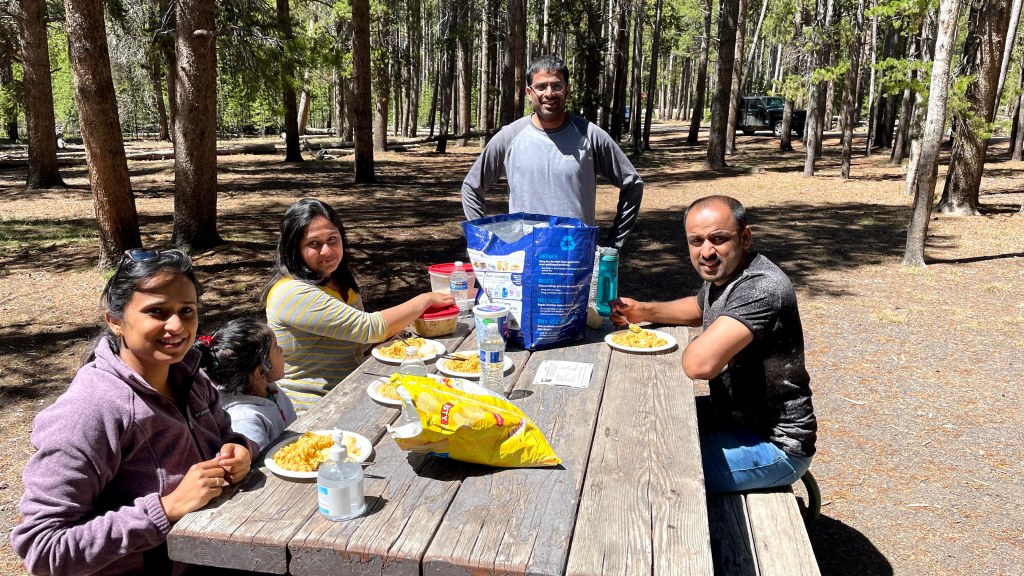
It was 2 PM by the time we were done. We found a nice picnic spot and had our lunch – tomato rice and eggs. Thanks to Mansa and Shruti, we had good home cooked food throughout the trip.
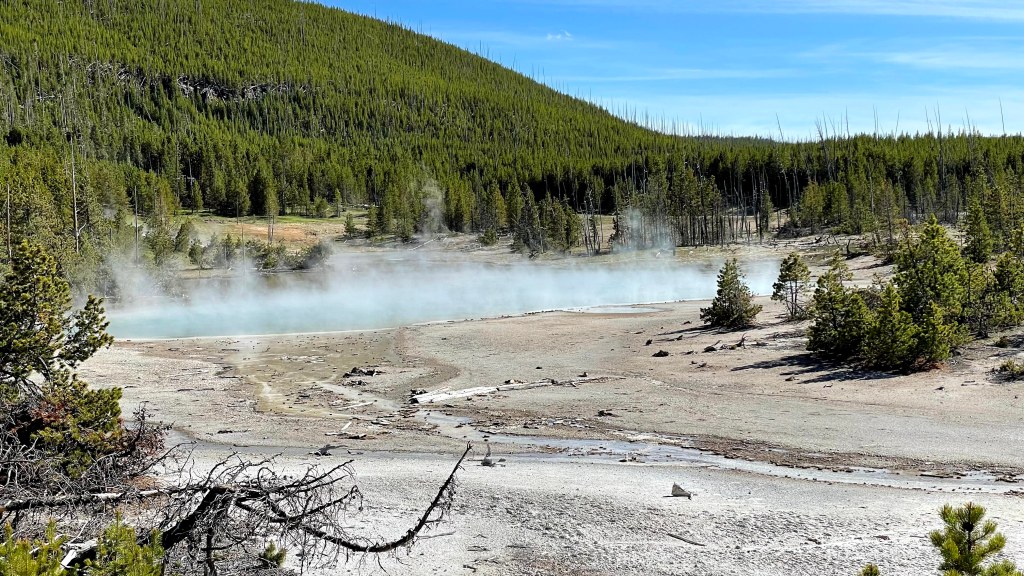
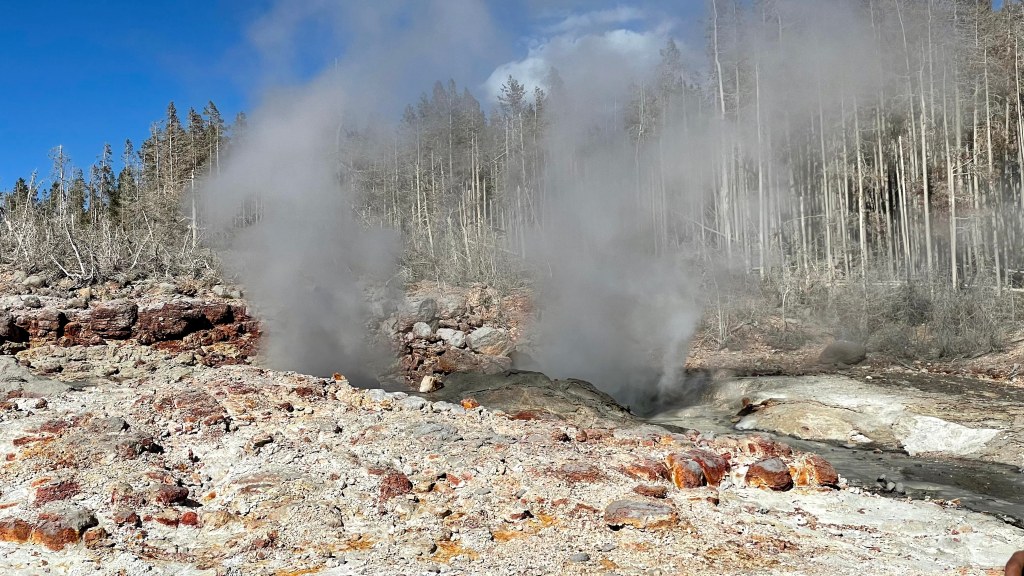
Norris Geysers Basin
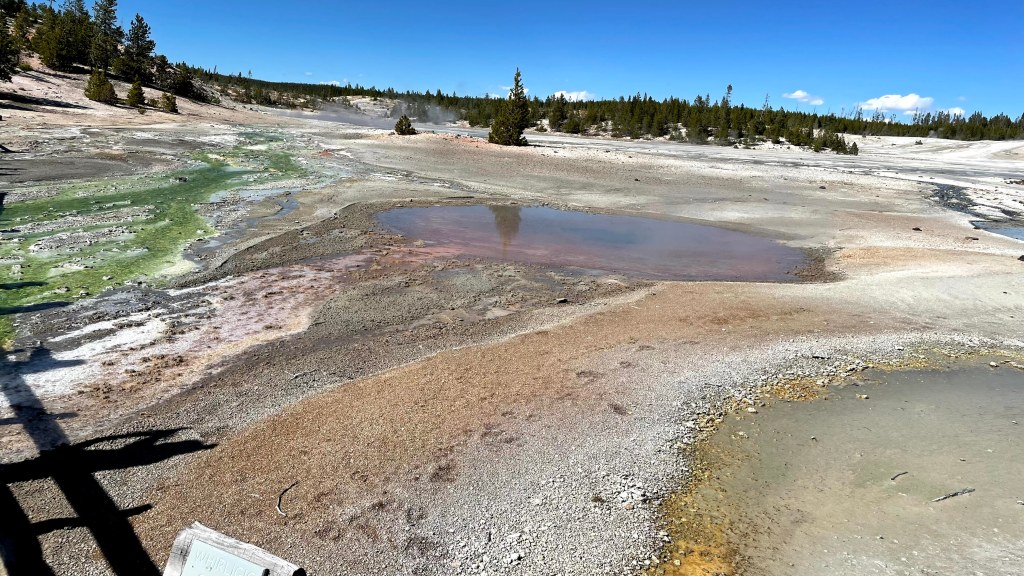
Norris geyser basin is the largest thermal basin in Yellowstone. It further splits into two basins – Porcelain basin and Back basin. Porcelain basin is smaller of the two but more open. It gets its name from the calcified white that lays accumulated due to hundreds of thermal spots on the barren piece of land. Back basin, in contrast, is larger and heavily wooded. It houses Steamboat geyser which is the tallest geyser in the world. When it erupts, the steam rises all the way up to 300 feet. But Steamboat is quite shy and erupts infrequently.

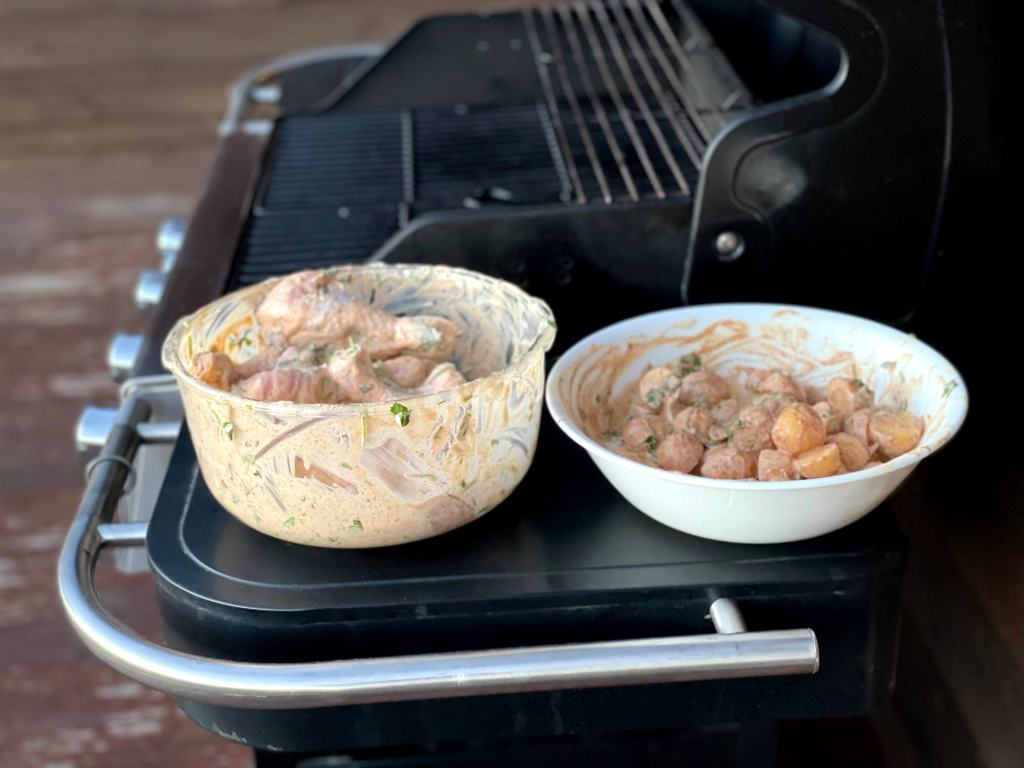
That evening, we decided to have a barbeque at our Airbnb. The grill and propane gas were already provided by the Airbnb owner. We just had to get our chicken, which we did. Grilled chicken and beer – heavenly!

Day 2: Canyon and waterfalls, 30th May 2021
We followed the same schedule as the previous day; woke up early and started at around 7 in the morning to avoid the rush. Today, it was all about canyons and waterfalls.
Grand Canyon of Yellowstone
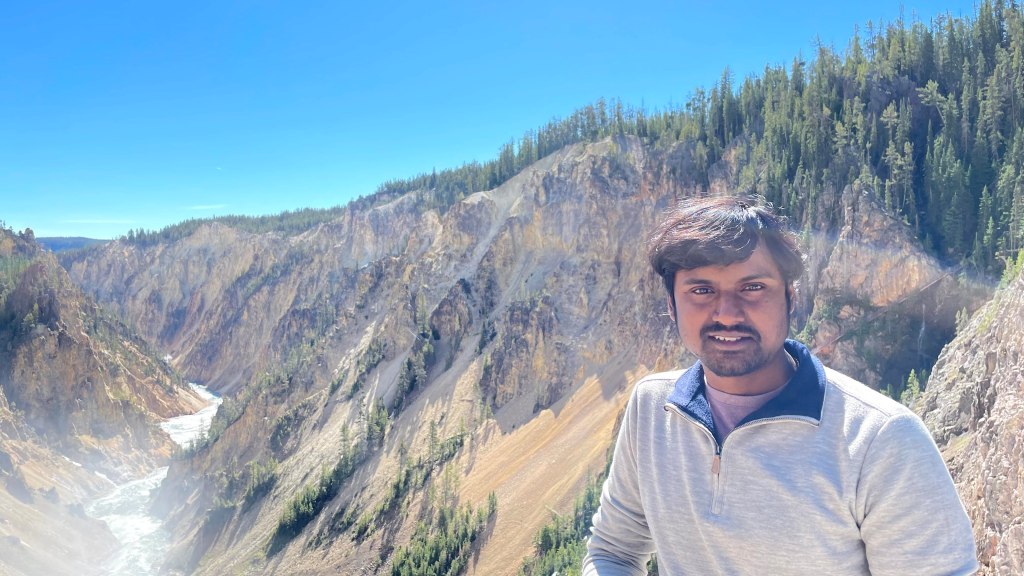
Yellowstone has its own Grand Canyon. Formed by the erosion from Yellowstone River, this canyon is about 1000 feet deep, 1500-400 feet wide and runs about 20 miles long. Past and current hydrothermal activity has altered and weakened the rhyolite rocks, making it easier for Yellowstone River to carve out a canyon. One can see steam wafting out of vents on the sidewalls of the canyon. The canyon starts at Lower Falls where the river plunges about 300 feet and ends at Tower Fall. There is a green streak clearly visible at the location where water starts its plunge. This is nothing special; its the actual color of the water. Due to some protruded rock at that spot, water just falls slowly without forming the white froth. This became much more clear when we went to Brink of Lower Falls viewpoint next. Brink of Lower Falls viewpoint, as the name suggests, takes you right at the brink where Lower Falls starts. The viewpoint is a steep downhill hike (and uphill while coming back) all the way to level at which Yellowstone starts its 300 feet plunge. Rajendra, Shruti and I did the hike while Naveen, Mansa and Chitte stayed back in the car. We took about an hour to do the roundtrip, which, of course, included taking lots of photos.


Artists’ Paintpots
After Grand Canyon, we had small pitstops at Hayden Valley and Sedge Bay of Yellowstone Lake. Hayden Valley was a bummer. It is just a vast expanse of greenfield where hundreds of bisons roam around. Sedge Bay was comparatively better. It had a nice view of snow-capped mountain in the backdrop. We spent about half an hour there testing our stone skipping skills before heading to Artists’ Paintpots. We were famished by the time we reached there. We had our lunch at the parking lot of Artists’ Paintpots before seeing the place.
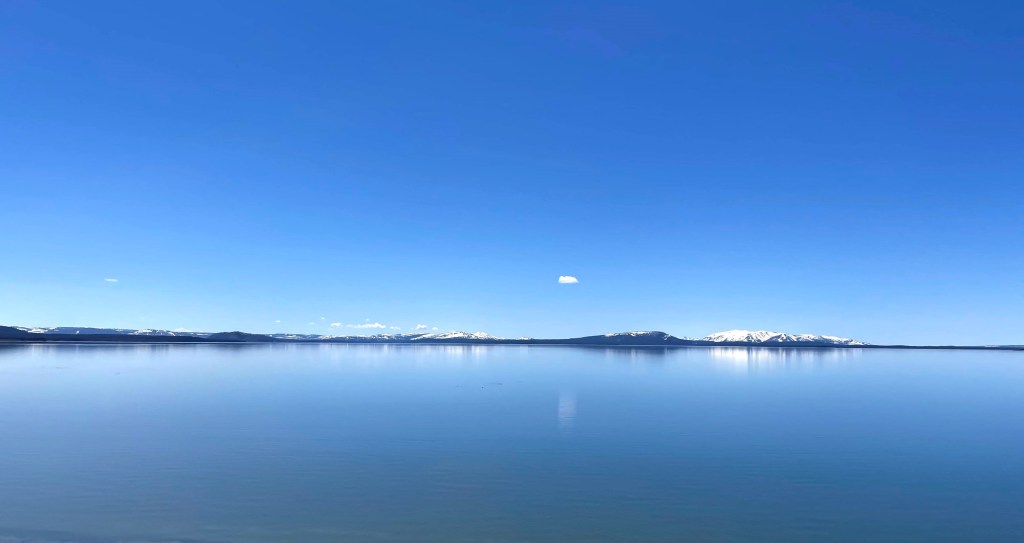
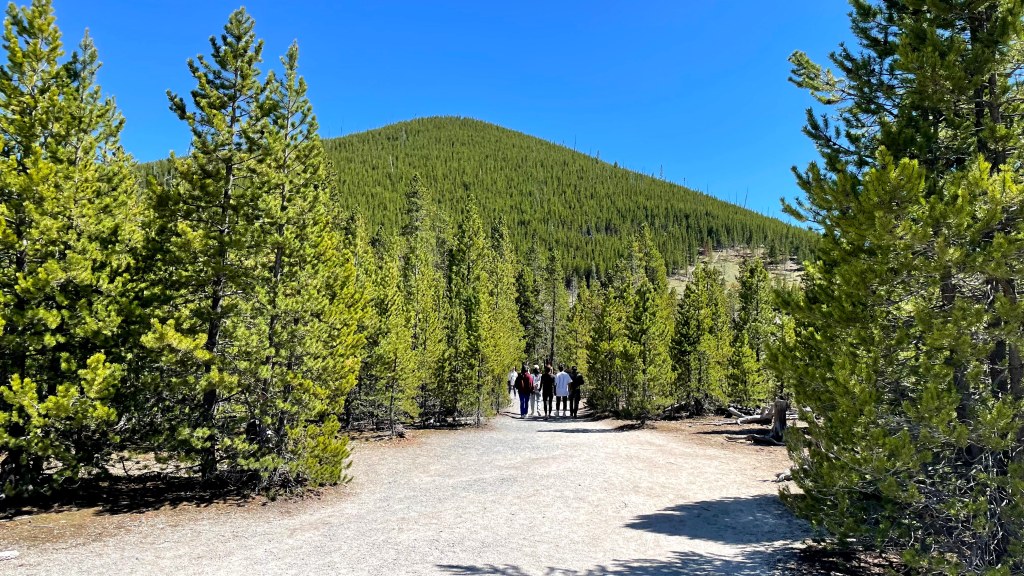
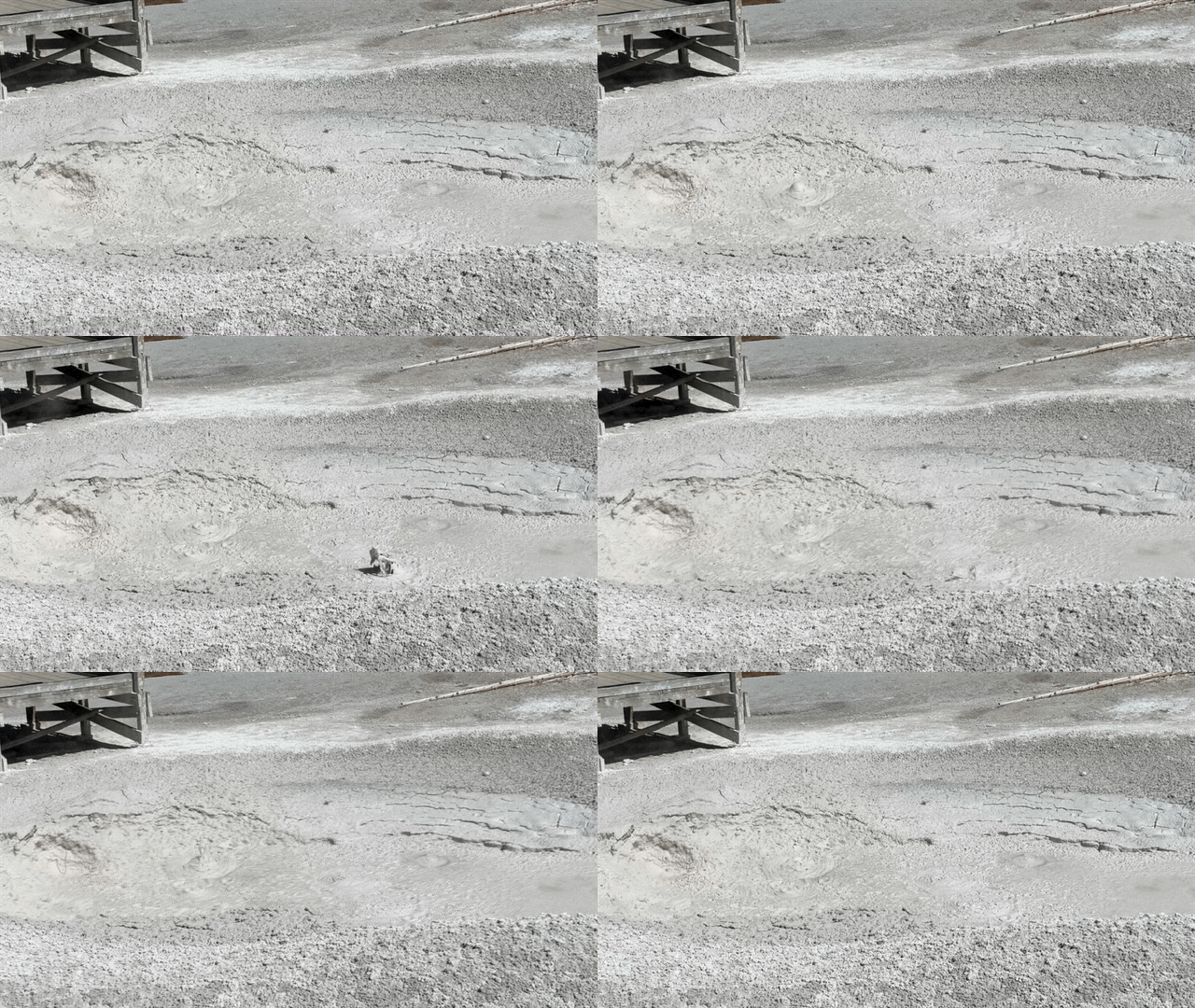
It’s a short 1-mile trail that takes you through different mudpots. Mudpots are formed when hot acidic steam dissolves the rhyolitic rocks into clay. This hot clay receives water from rainwater or snowmelt. That’s why consistency of mudpots vary with season. In spring, when there is plenty of water, mudpots are soupy and splashy. As the summer progresses, they become thicker because water decreases. Artisits’ painpots flaunts its full gamut of earthy colors. While the mud starts out white, iron oxides tint it varying shades of pink, brown, orange, and gray.

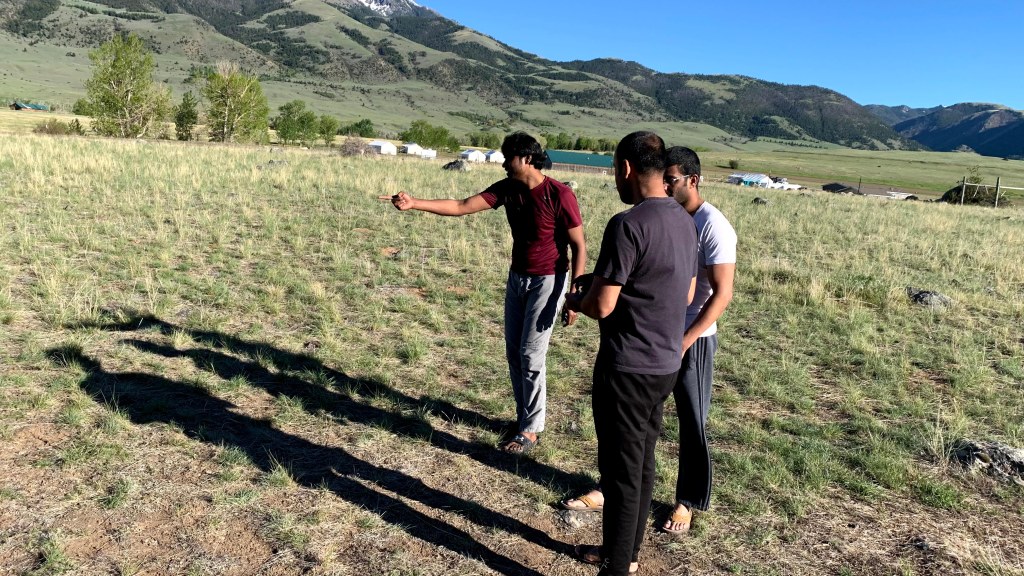
It was a light day itinerary-wise but we were tired as sun was quite strong. We decided to leave early and reached our Airbnb back by 5.30 PM. We had enough time to relax. Rajendra and Naveen came up with the idea of playing marbles (with stones though) in the backyard of the house. By the way, calling it a backyard is an understatement; it was more of an entire ranch. As I was learning the game, the pictures of kids playing it on the streets back in my hometown started flashing in my head. It all started coming back and making sense. What they used to aim at, the measurement with palm, the quibbles, the disagreements – all started making sense. Playing marbles is so much fun.
Random fun while driving
Day 3: Wildlife watching, 31st May 2021
This day was about driving to Lamar valley and doing some wildlife watching. We checked out of the hotel at 10.30 in the morning and headed towards Lamar valley.
Lamar valley
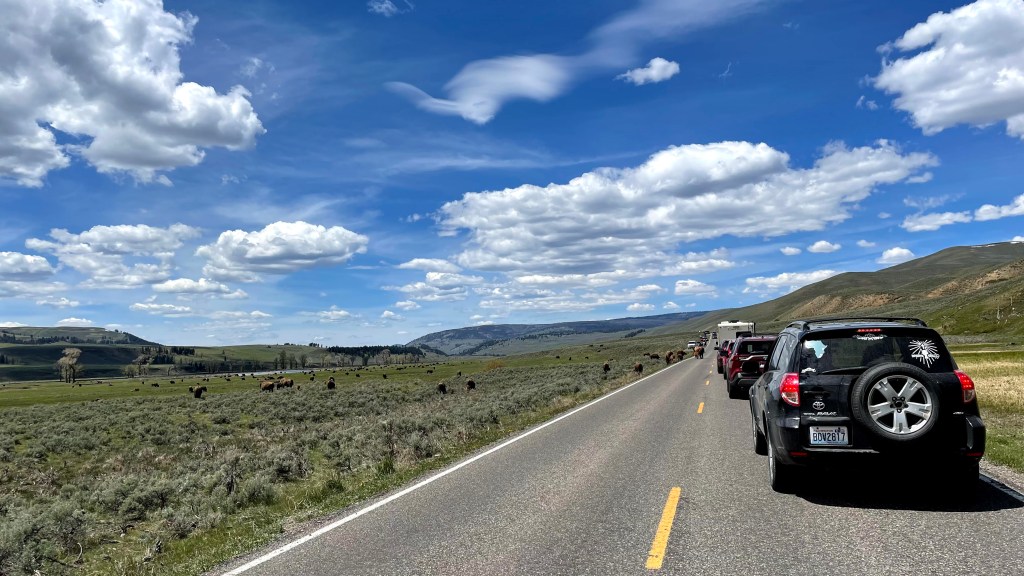
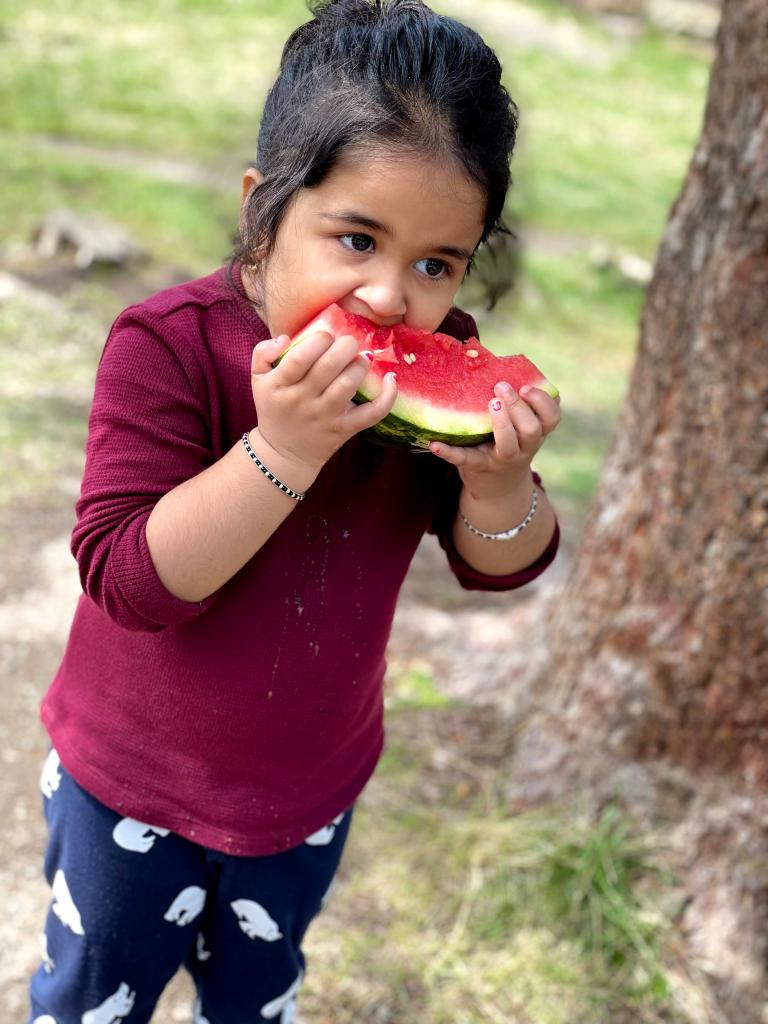
Lamar valley is a vast expanse of forested area situated in north-eastern side of the park. Wildlife enthusiasts come to Lamar valley to see wolf packs and grizzlies in action. We saw a mother grizzly bear along with her cubs through the lens of a professional photographer who had parked on the roadside and was exploring the fauna. But, they were way too far away. It wasn’t possible to see them with naked eyes. Other than that, we mostly saw bisons – lots of them. Once, the entire traffic was blocked because a few bisons to gallivant on the road. Unfortunately, we didn’t see any wolves or bald eagles. My guess is that it was because of our timing. We were there around noon which is not a good time. Wildlife watchers prefer early morning or late evening. We stopped at Lava Creek picnic area to have our lunch – puliogare (tamarind rice) and watermelon. We did a short hike to Undine waterfalls afterwards before starting our return journey back home.

To be honest, there wasn’t much to do that day. Nevertheless, the drive was scenic and beautiful. And since I was the one holding the steering, so couldn’t complain much!
It was good to see life getting back to normal after the raging pandemic. I had a nice family’ish time staying at an awesome Airbnb, seeing new things, learning something more about nature, playing a game I never had played before and lots of driving amidst lovely landscapes.
 Abhijeet Kumar Sinha