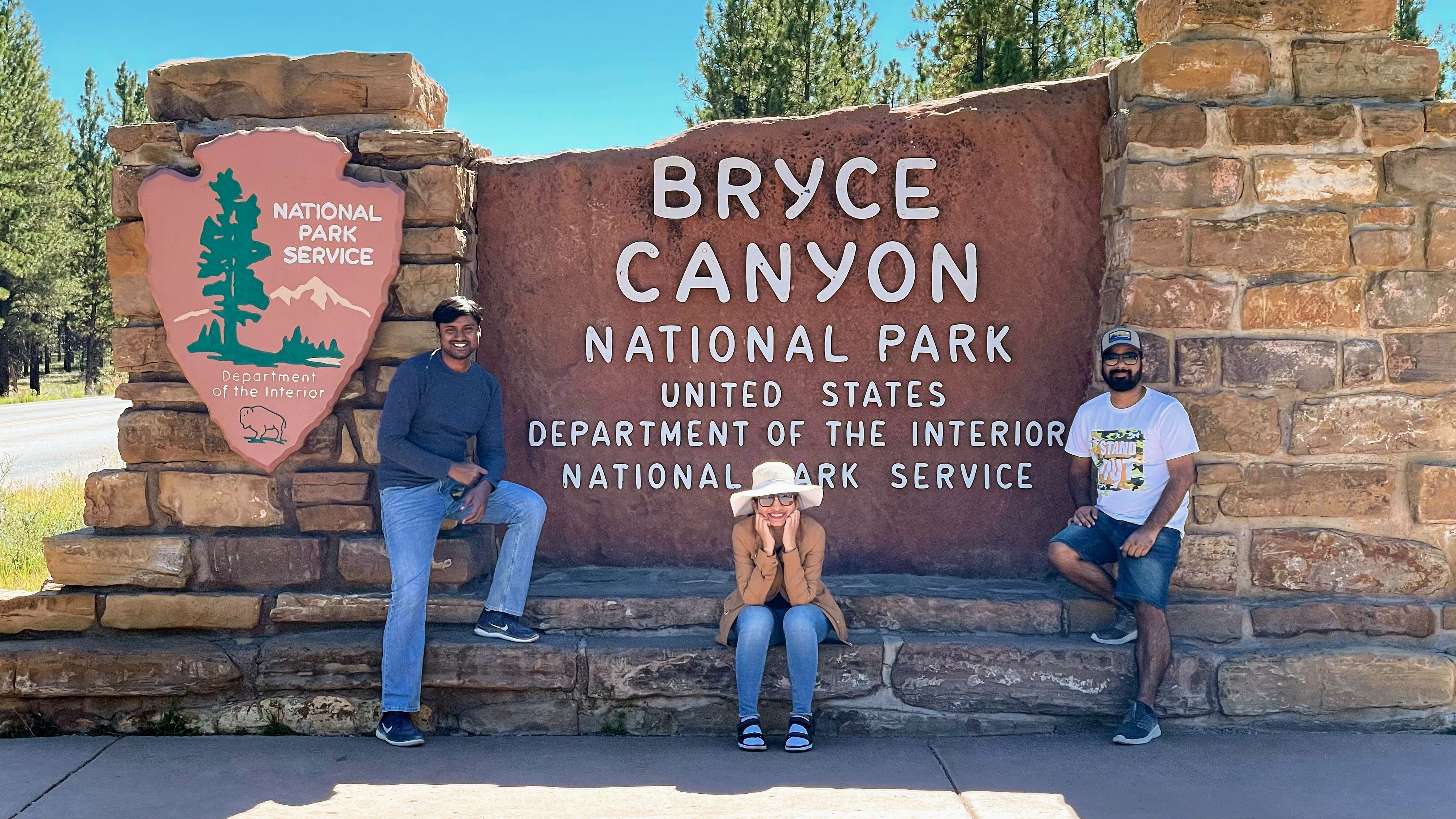
Day 5: Bryce Canyon Nation Park, Sep 22nd 2021
Ok, first thing first, Bryce Canyon is technically not a canyon. It is not carved by a river like others. Instead of that, it is an amphitheater of dramatically eroded vividly colored limestone of pink cliffs. These long, towering vertical spires protruding from the bottom of the earth are called ‘hoodoos’. And guess what, Bryce Canyon National Park has the maximum number of them in the world. But the question is – why? Bryce Canyon is geographically located at 8000 feet above sea level, at a place where for at least 200 days a year temperature goes above and below the freezing point. This has an interesting outcome. Weathering causes fractures within the rocks. The precipitation causes water to seep into these fractures during daytime. During nighttime, this water freezes forming ice that expands. Now, if you remember high school physics, water is the only substance which hardens when its density decreases by expanding. This expansion and hardening of ice over thousands of years creates windows or holes inside the cliff walls. When these windows become so big that it cannot hold the weight of the roof any longer, what is left is a column. Rain further dissolves and sculpts these limestone pillars into bulbous spires called hoodoos. This phenomenon is called frost wedging. Along with physical weathering, chemical weathering also plays a part. Generally, carbon dioxide is present in the atmosphere. This mixes with water coming from the rainfall to form weak carbonic acid (H2CO3). Although it is a weak acid, it is good enough to gradually dissolve away limestone rocks (CaCO3). This process, obviously, is accentuated by global warming that we humans are responsible for. The pink cliffs we see at Bryce are almost 50-60 million years old. However, scientists estimate that the rate of physical and chemical weathering will cause these hoodoos to completely erode away in next 3 million years.
Bryce was no different the day we paid a visit. The temperature at 7 AM in the morning was about 35°F which increased up to 60°F by 10 AM. So, we planned to take it light that day and arrive after 10 AM. Bryce National Park can be easily covered in a day, so we had plenty of time. Bryce Canyon National Park is slightly different from Zion. At Zion, you cannot take your personal vehicle beyond the visitor center unless you are staying at Zion lodge. But at Bryce you can take your personal vehicle to all the sightseeing points. There is a free shuttle system here as well like Zion. Bryce was comparatively less crowded than Zion and it was easy to find parking spots.
We parked our car at the visitor center and walked our way to Sunrise Point. Walking and exploring the place on foot was fun. From Sunrise Point, you get a beautiful top view of Bryce’s amphitheater – a beautiful vast expanse of pink earth from where spires protrude to as much as 200 feet above the ground. At Sunrise Point, you can see a series of cliff walls. These cliff walls are called fins. Frost-wedging in fins lead to formations windows, which erode further to form bulbous columns called hoodoos.

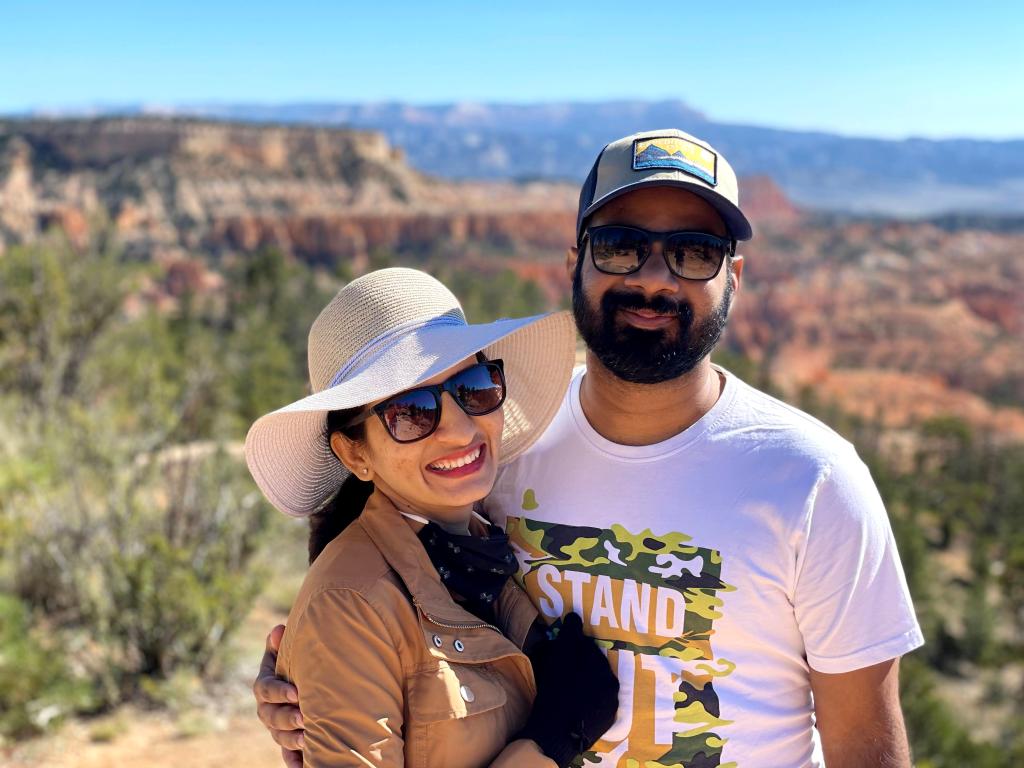
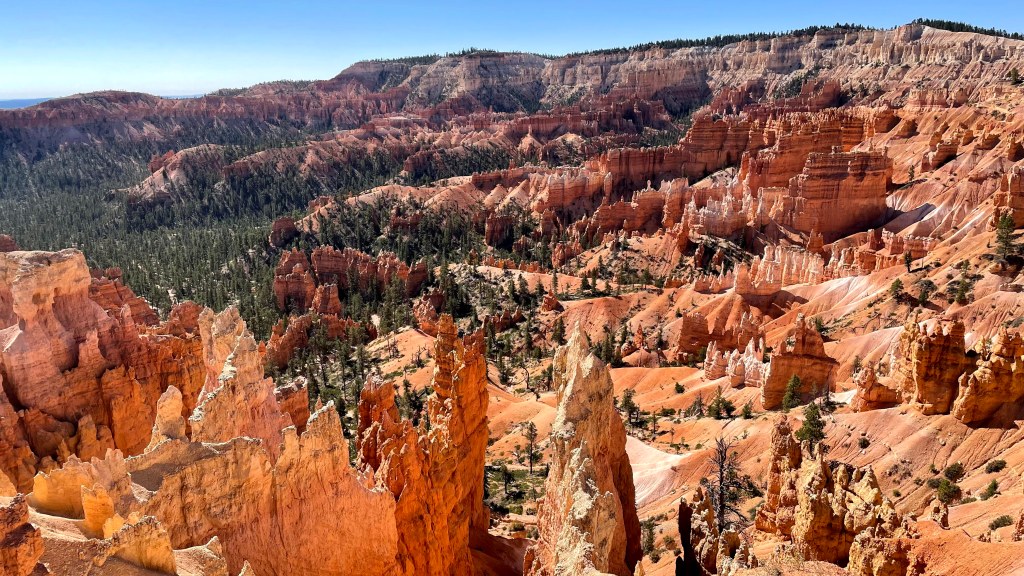
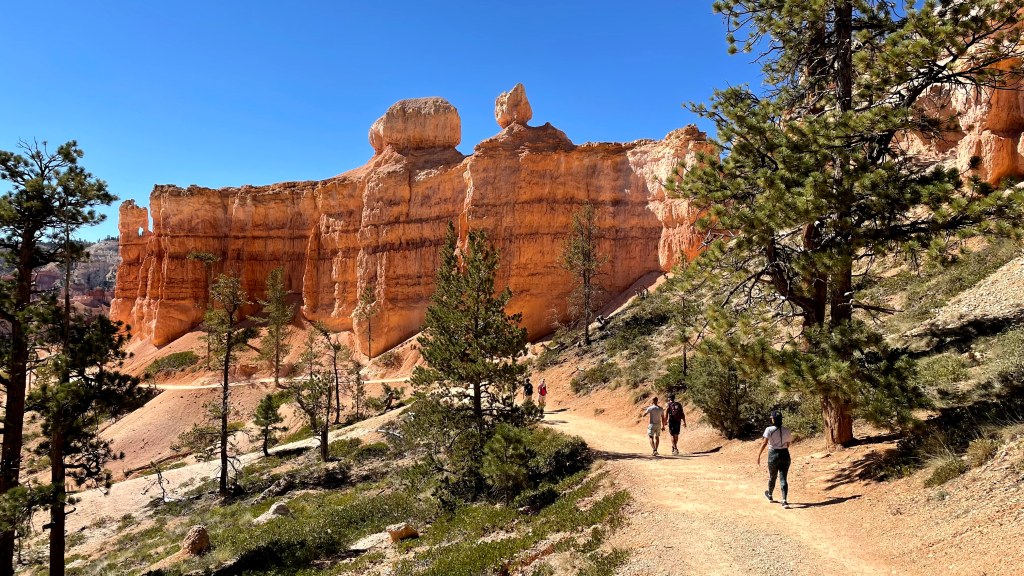
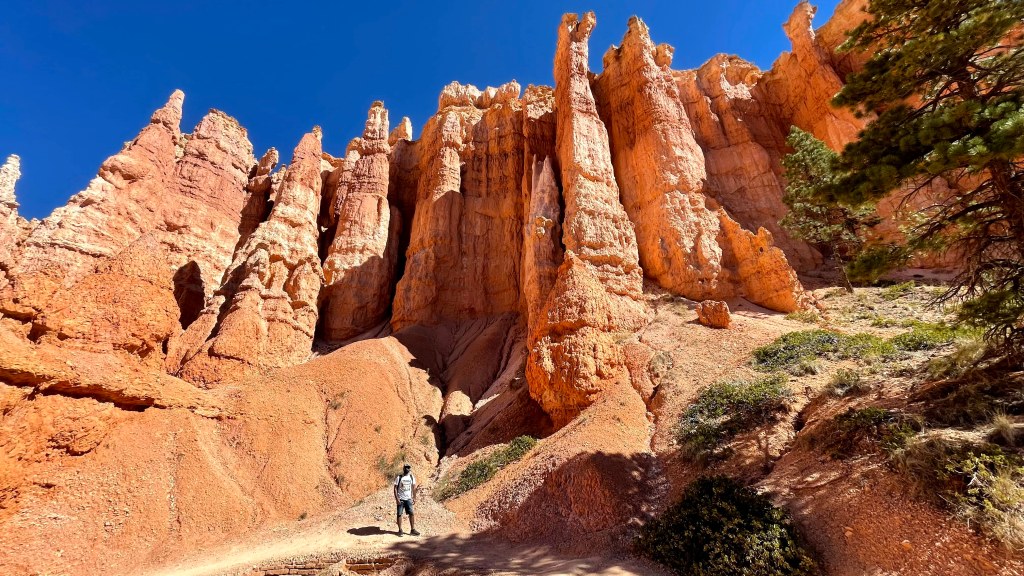
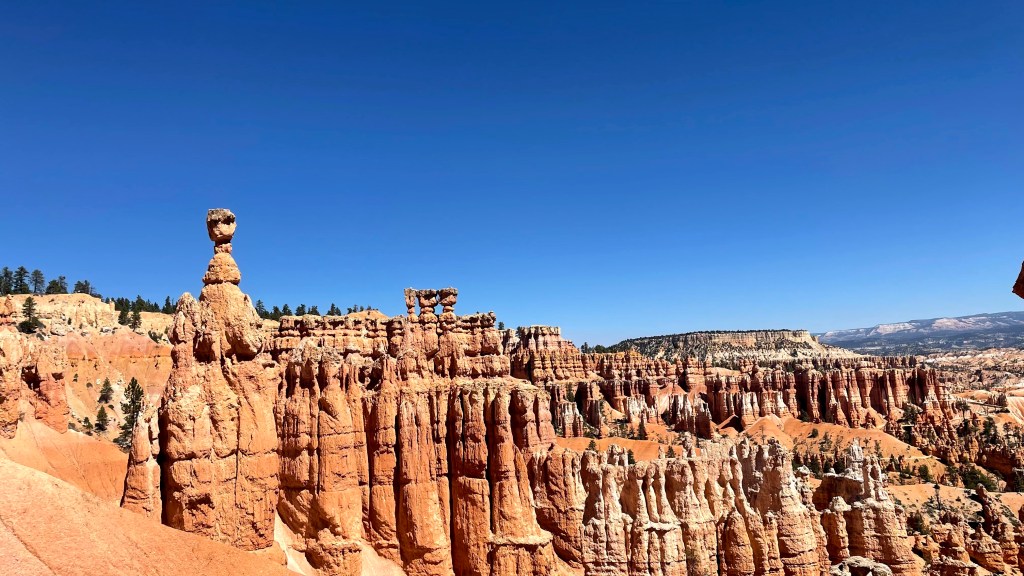
Sunrise Point is also the trailhead of Queen’s Garden trail that takes you to a trip through those majestic naturally sculpted beautiful hoodoos. It’s a short trail that begins with about a 300 feet descent. Using the imagination, one can see Queen Victoria at the end of the trail overseeing her garden of hoodoos. There is a fork just before the end of the trail, one takes you to the end of the Queen’s Garden trail while other to Navajo Loop trail that culminates at Sunset Point. We took the latter. I must say, the last 0.6 miles incline all the way up to the Sunset Point towards the fag end of the Navajo Loop was taxing, particularly because sun was right over our head. But the view, oh my god, was breathtaking. At Sunset Point, we got a much better aerial view of the hoodoos.
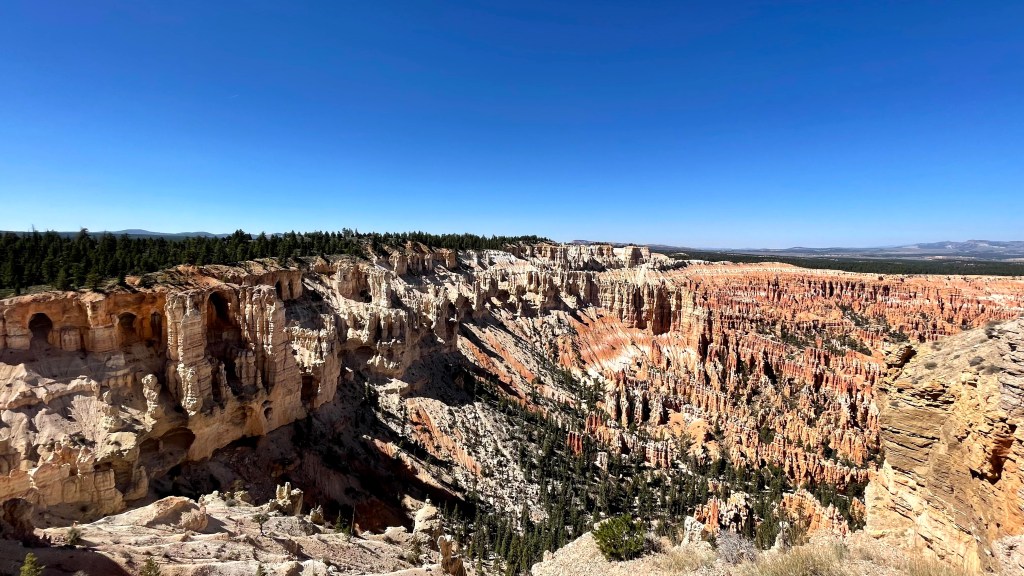
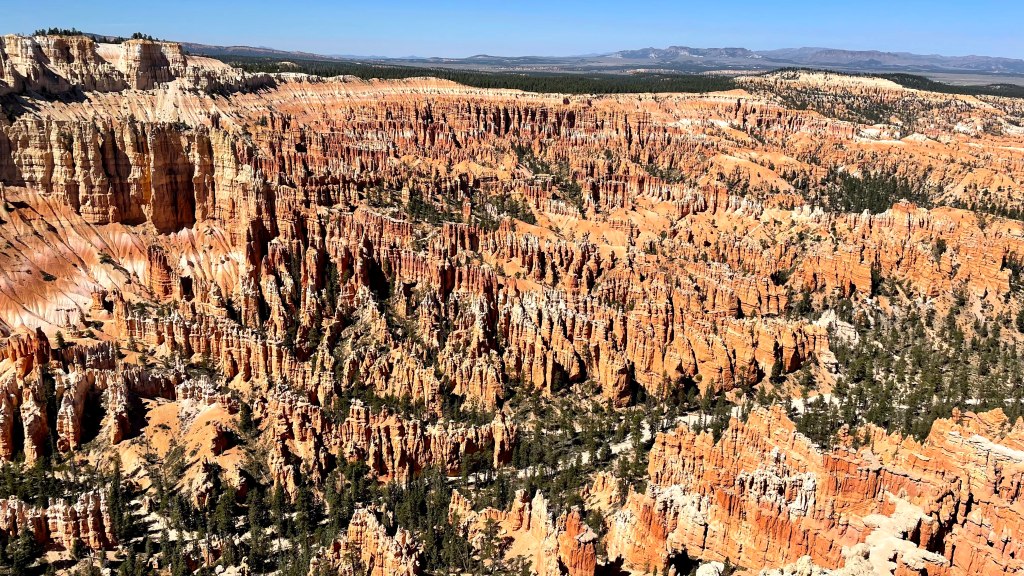
We took the shuttle from Sunset Point back to the visitor center where we finished our packed lunch in the car. After that we drove to Bryce Point. Remember, Bryce National Park allows you to take your personal vehicle to the sightseeing locations, unlike Zion. The vista at Bryce Point is even more expansive. The number of hoodoos visible from here just multiplies. Additionally, a number of windows making way to future hoodoos are also visible at Bryce Point.
The sheer number of spires and pinnacles ay Bryce Canyon dazzles the eyes and numbs the mind. Rocks, here, have not been eroded but rather carved by natural forces. Zion’s formations are huge and solid, but Bryce’s are delicate and fragile. No wonder, it is said that Bryce has poetry in stone.


 Abhijeet Kumar Sinha