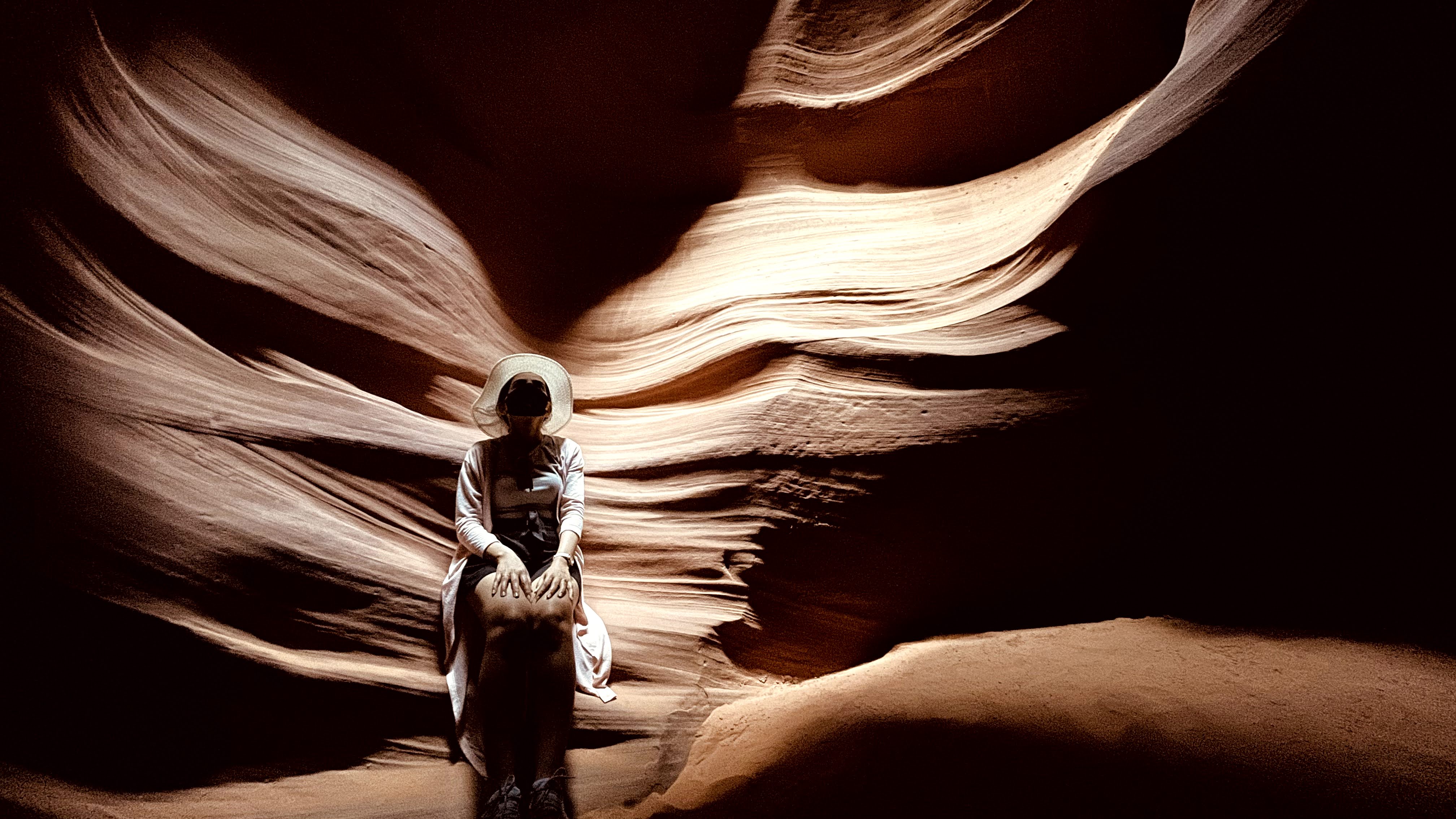
Day 6: Antelope Canyon and Horseshoe Bend, Sep 23rd 2021
There was one thing that we were very good at during this trip – our punctuality. We stuck very well with the timing that was agreed upon among the three of us. This day was no different. We checked out of our Airbnb right on time – 11 AM – and drove towards Page. Today, we were driving from Kanab to Williams via Page.
Just about half an hour into the drive, we hit the border of Utah and Arizona where we stopped here to take a pic at the welcome sign boards of both the states.


Horseshoed Bend
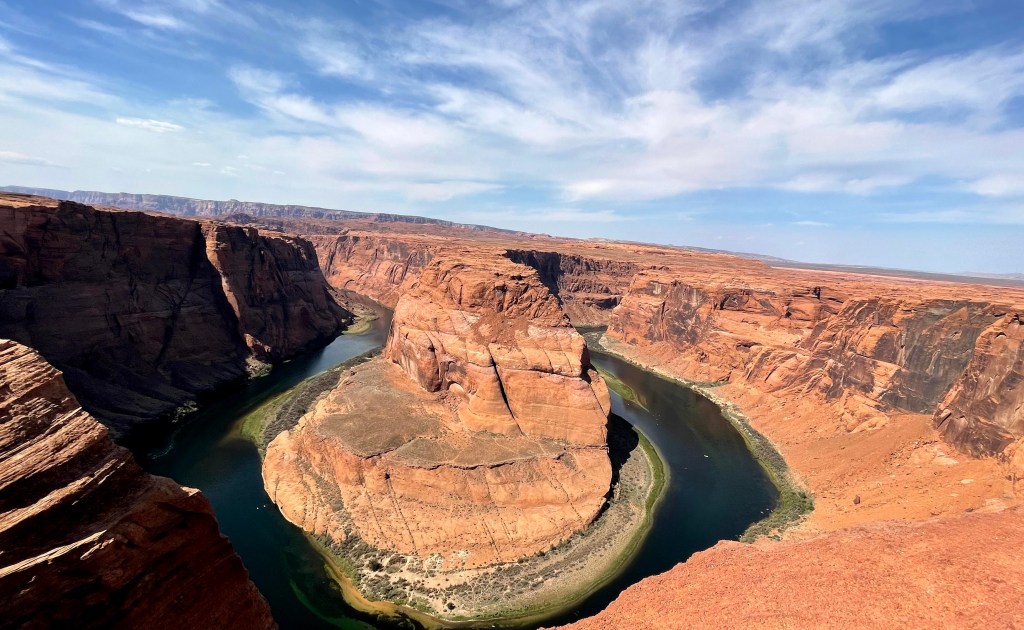
At noon, we reached Horseshoe bend. Horseshoe Bend is a horseshoe-shaped incised meander of the Colorado River located near the town of Page, Arizona. It is also referred to as the ‘east rim of the Grand Canyon’. Colorado river takes a 270° turn as it encounters harder rock formations that were relatively harder to cut. Horseshoe Bend is just a small diversion off US Highway 89. The hike to the overlook is 1.5 miles (2.4 km) round-trip over a hardened path. It was really hot there – blazing sun without an inch of shade. We packed a bag with a water bottle and walked up to the overlook where we were greeted with a view of Colorado river incising into Glen Canyon culminating into a horseshoe shaped formation, called eponymous Horseshoe Bend.
Antelope Canyon
We had our lunch in the car at Horseshoe Bend parking lot and headed towards Antelope Canyon Tours office. Antelope Canyons – lower or upper – can only be visited via guided tour operators. We had our Upper Canyon tour booked between 2 PM and 3:30 PM. We checked in a bit early at around 1:15 PM. But the window was not enough to explore nearby places like Glen Canyon dam and Lake Powell. So, we waited there itself. One thing to note, Page follows UTC-7 time zone all throughout the year. It does not honor daylight saving while Utah does. So, while we were there, Utah was UTC-6 and Arizona was UTC-7. So, when we travelled from Kanab to Page, we gained 1 hour. This is important because it can mess with the bookings of Antelope Canyon tours, particularly when someone is driving from farther away.
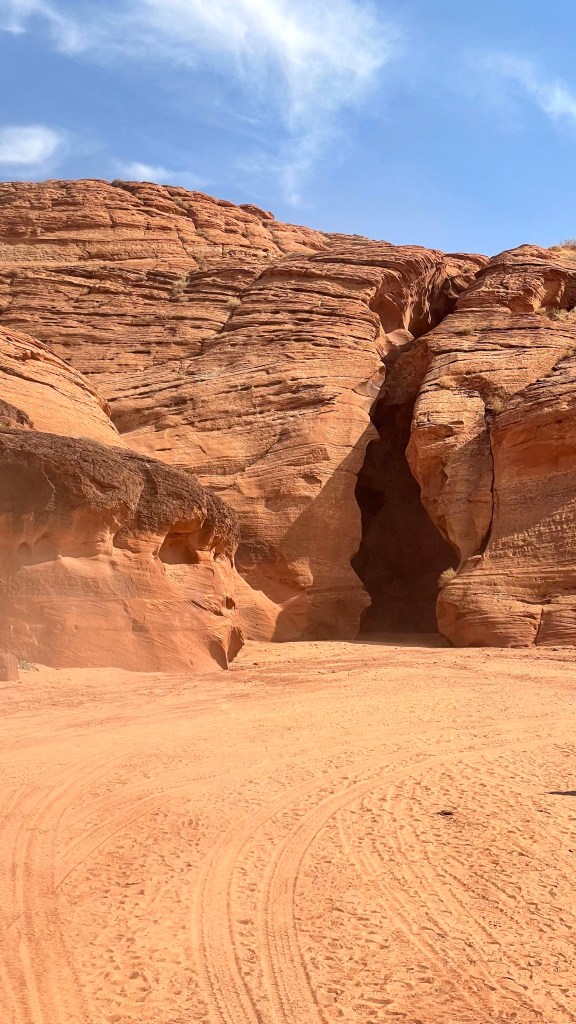
At sharp 1:55 PM, we boarded a shuttle that took us on bumpy and dusty 20-minutes’ ride to the entrance of Upper Antelope Canyon. The initial stretch of the road was well-paved but soon enough we hit the desert. And when you are in a desert, you can be sure of 1 thing – sand and wind. No wonder, the desert embraced us and left its stamp on our body and belongings. After that bumpy, windy, and sandy ride, we saw a swirly crack in a distant cliff. With other shuttles parked there, it was easy to identify that we had reached our destination.
Geology of Antelope Canyon
When the canyon was discovered, herds of pronghorn antelope roamed the area. And henceforth, this place was called Antelope Canyon. This is actually made up of 2 slot canyons – Upper and Lower. The Navajo name for Upper Antelope Canyon is Tsé bighánílíní, which means ‘the place where water runs through rocks’. The name for Lower Antelope Canyon is Hazdistazí which means ‘spiral rock arches’. Upper Antelope Canyon is like an inverted V – narrow at the top and wide at the bottom, while the Lower Antelope Canyon which has shape of a regular V – narrow at the bottom. Upper Antelope Canyon is more popular among tourists and photographers due to the exciting play of lights on orange sandstone walls. More popular means more crowd and expensive tours. We paid $92 per head for our Upper Antelope tour.
Layers and layers of sand accumulated over thousands of years, pressured and baked by sun, formed the landscape here which we know today as Navajo Sandstone rock formation. A series of fast-flowing flash floods over the next thousands of years carved this soft sandstone to give us vertical, winding, narrow passageways of Antelope Canyon. The abrasive sand carried by water and wind acted as a sandpaper and smoothened the walls of the canyon. This video has a very good demonstration of Antelope formation – Antelope Canyon Creation Demonstration – YouTube. Do check it out. When I was reading about Antelope Canyon formation, I was unable to imagine how flash floods can cause water levels to rise so much in this slot canyon. But look at this video on YouTube, it will make you believe in the power of water – Insane Flash Flooding, Antelope Canyon and Page Arizona. August 2nd, 2013 – YouTube.
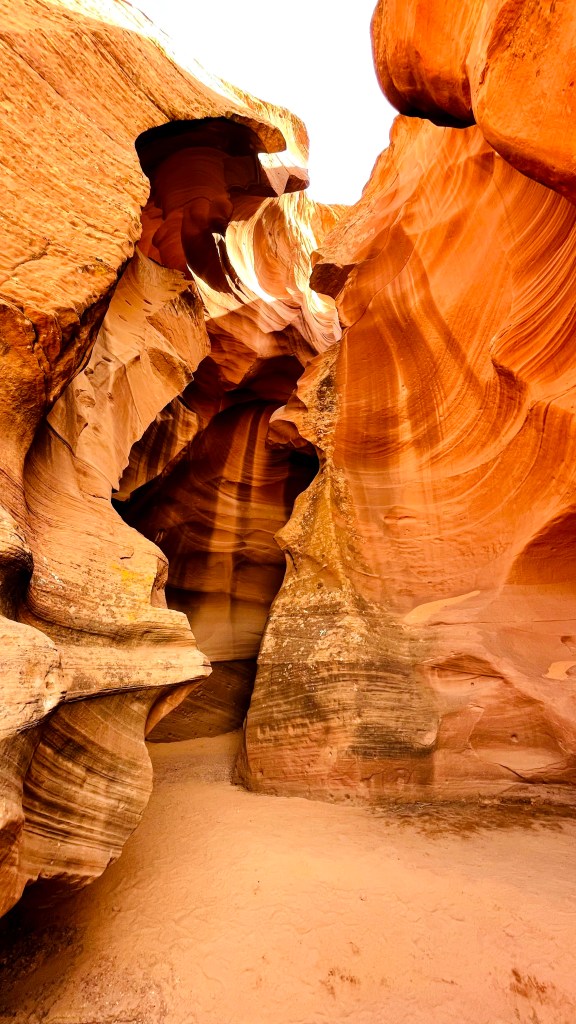

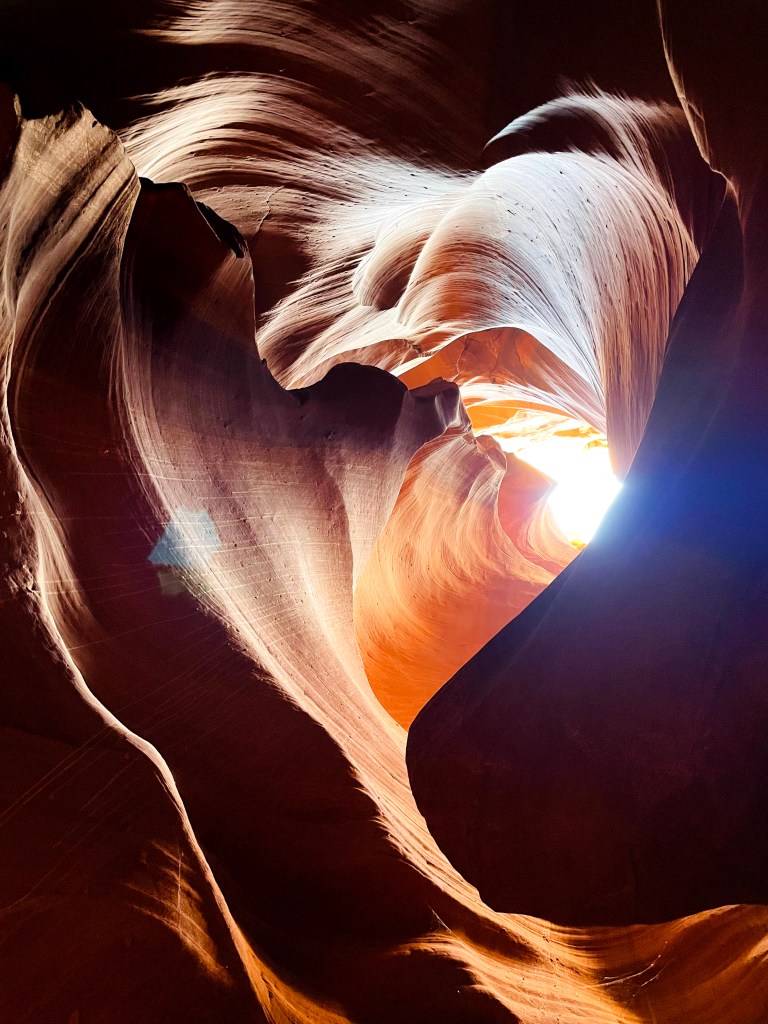

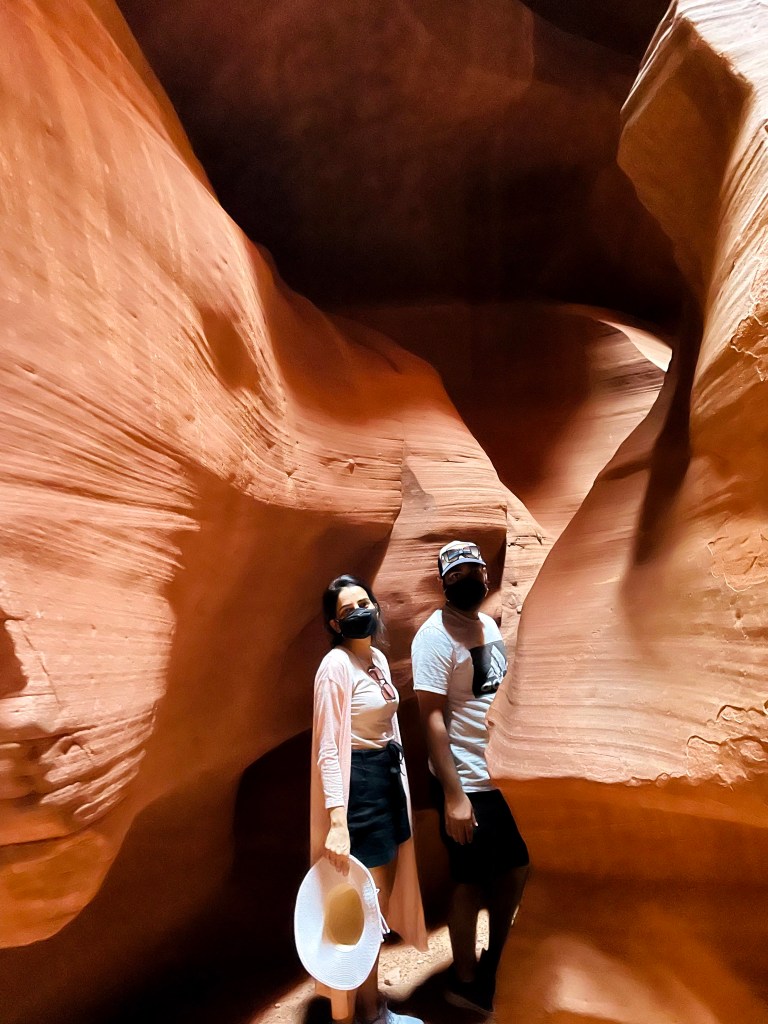
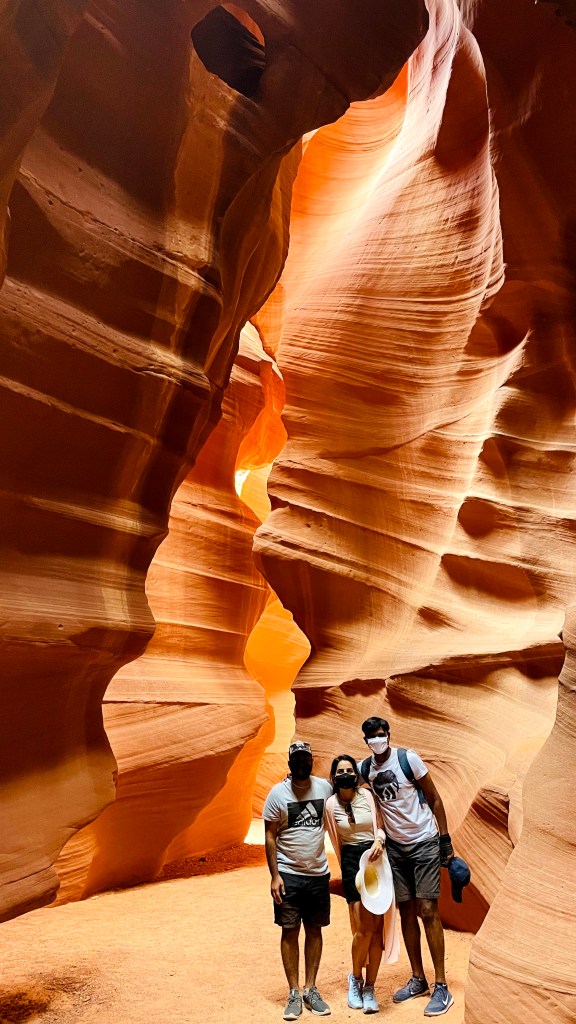

It was about 45 minutes’ walk inside the canyon with our tour guide Sonny stopping at different “rooms” inside the canyon. He educated us about the geology and history of this place and also took some amazing pictures for us. In fact, I feel that taking photos at Antelope is quite easy – just set your filter to ‘vivid’ and start clicking. This place is so different and beautiful that you can’t miss a shot.
Stand in silence for some time and run your fingers through the walls of the canyon, you can feel a marvelous blend of color, shape, texture, and majesty. Antelope Canyon plays host to a unique dance of sunlight and colors – a sight second to none. It is not easy to shrug off the colors of Antelope Canyon, both figuratively as well as literally 😉.
 Abhijeet Kumar Sinha