
Bali should be on everyone’s wish list. Not just because it is incredibly picturesque but also because it is a deeply spiritual place. Numerous temples with richly ornated sculptures at every nook and cranny, early morning scent of incense sticks in offerings made to spirits outside every shop or house, the sound of gamelan reverberating in daily prayers, the rich Hindu tradition – all of these brims you with a divine presence, a sweet feeling within. No wonder this place is called “The island of gods”. And I haven’t even started talking about the fast flowing rivers, deep ravines, lush tropical vegetation, rugged saddles, incredible deep cliffs, gorgeous waterfalls and many more. So read on!
Geology
The island of Bali was formed by tectonic subduction of Indian Ocean plate under Eurasian plate (remember oceanic plates are denser than the lighter continental plate) to the north upon which Bali, Java and Sumatra sit. The southern plate tucking beneath the northern plate (subduction) deeply impacts the interiors of Bali. This subduction has created fissures across the crust of Bali leading to the creation of a string of volcanoes. The east-to-west volcanic chain divide Bali into northern and southern halves.
Culture
There are 17,000 islands in Indonesian archipalego and very few of them non-muslim. Bali is among this minority. Around 95% of Bali’s population is Hindu. They follow a form of Hinduism known as Agama Hindu Dharma. Agama (आगम) literally means tradition or “that which has come down”. This is a unique combination of Hinduism, Buddhism, pagan beliefs, spiritism, and magic. Travelling Indian priests are said to have introduced the people to the sacred literature of Hinduism and Buddhism centuries ago. People here accepted it and blended it with their pre-Hindu mythologies and beliefs. The pantheon of Agama Hindu Dharma consists of three main gods (Trimurti): Brahma the creator, Vishnu the preserver and Mahesh the destroyer. Unlike India, all three are represented as one entity – one God – in Bali. In addition of these three main gods, Balinese also believe in other devatas, ghosts and spirits.
There are more than 20,000 temples (or “pura”) in Bali each with a specific function and rituality for the Balinese calendar year of 250 days. The different types of Balinese temples are arranged according to the physical and spiritual realm of Balinese Hinduism – from “Pura Tirta”, water temples, for cleansing rituals to “Pura Segara”, sea temples, that are located by the ocean to appease the sea Gods and deities. Pura Besakih, the mother of temples, is situated in the heart if Mount Agung which is considered the abode of god. There are generally 3 types of temples in Bali – public temples, village temples and family temples. Public temples are the ones where everyone and anyone can go. Village temples are for a community to congregate, worship and enjoy festivities together. Family temples are built inside the house and are only for family members.
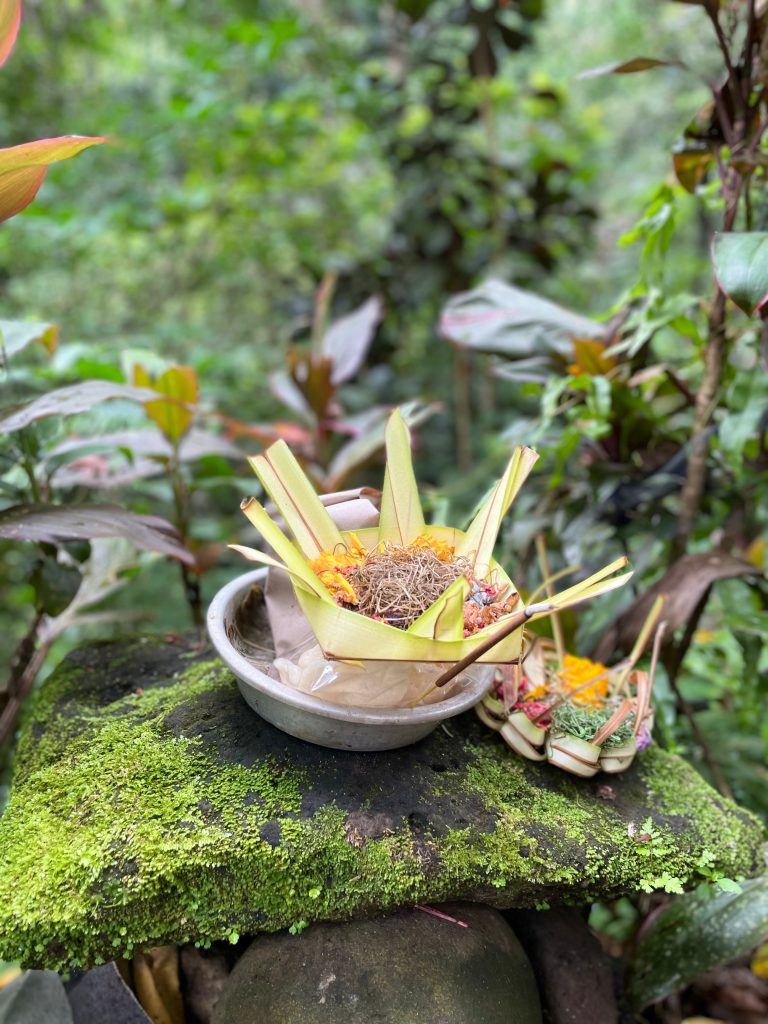
Religion is very important and affects every aspect of life of Balinese people. They make offerings, sesajen, to spirits several times a day. These spirits are believed to maintain peace and balance on earth. The offerings that are often found in front of the house or on the roadside are called “canang sari”. Canang sari has the smallest size among all the offerings. It is made of coconut leaf shaped in form of rectangular container and shaft containing betel nut, areca nut and lime representing Brahma, Vishnu and Mahesh. It also contains sliced sugar cane, bananas and fragrant flowers. Flowers must be fresh and fragrant as a symbol of sincerity and purity.
In the Balinese naming system, a person’s rank of birth is reflected in the name. The eldest is given the name – Wayan, second child is called Made, third Nyoman and the fourth child is called Ketut. For the fifth onwards, the pattern is repeated. That’s why you will find most of the people in Bali with these names. Our Ubud villa’s owner’s name was Ketut, the driver who drove us to Pura Ulun Beratan was Nyoman while the guide we took at Goa Gajah was Made. We didn’t get a chance to meet someone who was Wayan. Balinese people also use the initials of “I” and “Ni” at the beginning of their names. “I” indicates that the person is male, while “Ni” indicates the female. I found this in the name of Grab and Gojek taxi drivers.
Architecture
Balinese people are known for their artistry. Beautifully carved temples with intricately sculpted stone structures and vividly colored compounds stand testament to their masterclass. Balinese see their art as a service to God and not look for any global recognition. And rightly so. Even the regular buildings, houses, offices are so richly carved as if it has been some palace. Most of these buildings have twin dwarpals or guardians which are considered to protect from evil spirits.
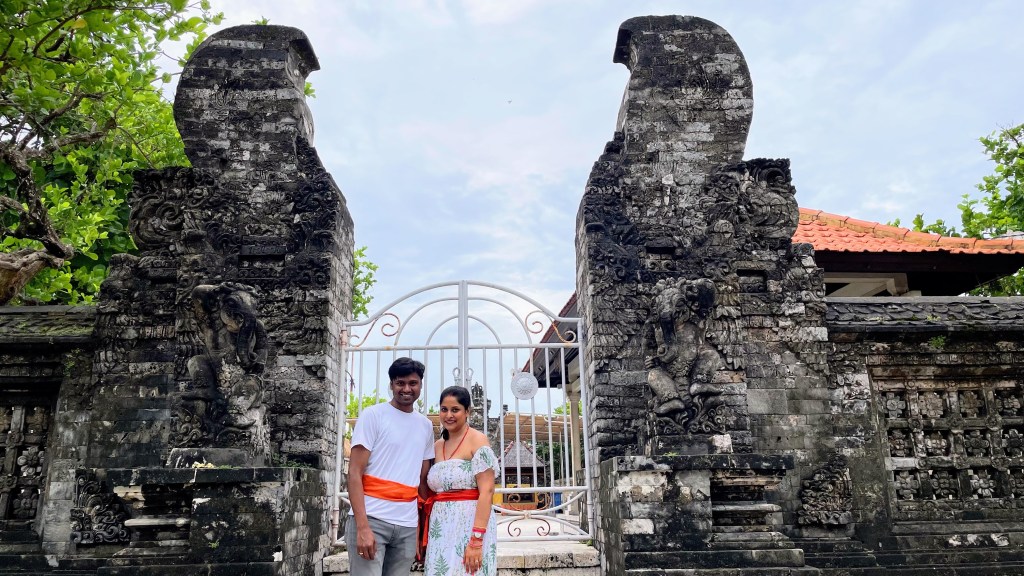
Balinese temple or pura (Sanskrit word for walled city) are designed as an open-air place of worship within enclosed walls, connected with a series of intricately decorated gates between its compounds. Candi bentar, the split gate is considered entrance from the outer realm into the temple. These gates are richly decorated with Kal’s (Hindu God of death or time) head to keep evil spirits at bay. The walled compounds contain several shrines, meru (towers), and bale (pavilions). The structures inside the temple compound have thatched roofs made of ijuk (black sugar palm).
Typically, black volcanic stones are used for temples and statues while lighter stones like limestone are carved for other purposes. Due to Bali’s moist weather conditions, the carvings wear down easily and need to be frequently replaced.
Source – https://en.wikipedia.org/wiki/Balinese_architecture
Day 0 – Dec 15th 2022, Selamat Datang Bali!
We landed at around 12 PM in Bali. The immigration was breeze as we had taken e-visa-on-arrival from Indonesian eVoa – Visa On Arrival Application (imigrasi.go.id). The payment and document upload had already happened. All we had to do was to get in the line in front of the immigration officer and get the entry seal. I had booked cab through Booking.com which was much cheaper for me (~$7) than quoted by any local. I think only Grab or Gojek (Bali’s Uber) would have been slightly cheaper, but it was a good option for someone new to Bali.

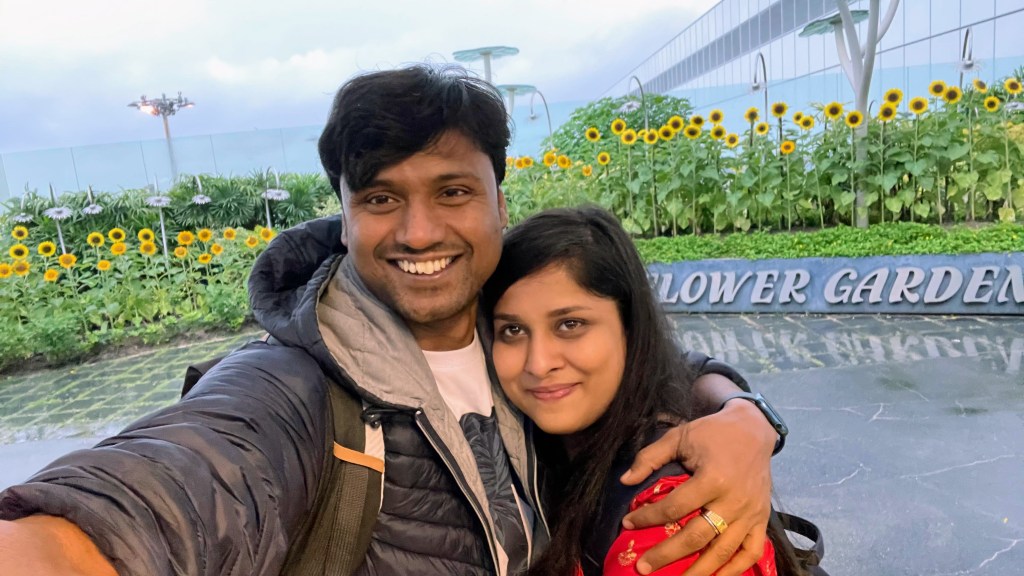
Bali runs on WhatsApp. So, make sure you give your WhatsApp number to anyone in Bali. That is what people will contact you on. I bought a local SIM with internet plan at the airport for 250K IDR. There is no need for a plan with cellular call if you are going for a week or so. At least we didn’t see the need for it. My Booking.com driver, Gustam, contacted me over WhatsApp. I found it a bit weird in the beginning and was skeptical about it, but nothing to worry. As I mentioned, WhatsApp is how everyone communicates in Bali (or Indonesia in general). Gustam took me to my hotel Alamkulkul Boutique Resort. By this time, it was already 2 PM. We freshened up, ate some snacks that we had brought and slept. By the time we woke up it was 6 PM. We dressed up and left the hotel to explore some local markets. Kuta beach was just opposite my hotel. So, we saw the setting sun and roamed around the flea market at Kuta market. Most of them were closing as it was 7.15 PM by then.
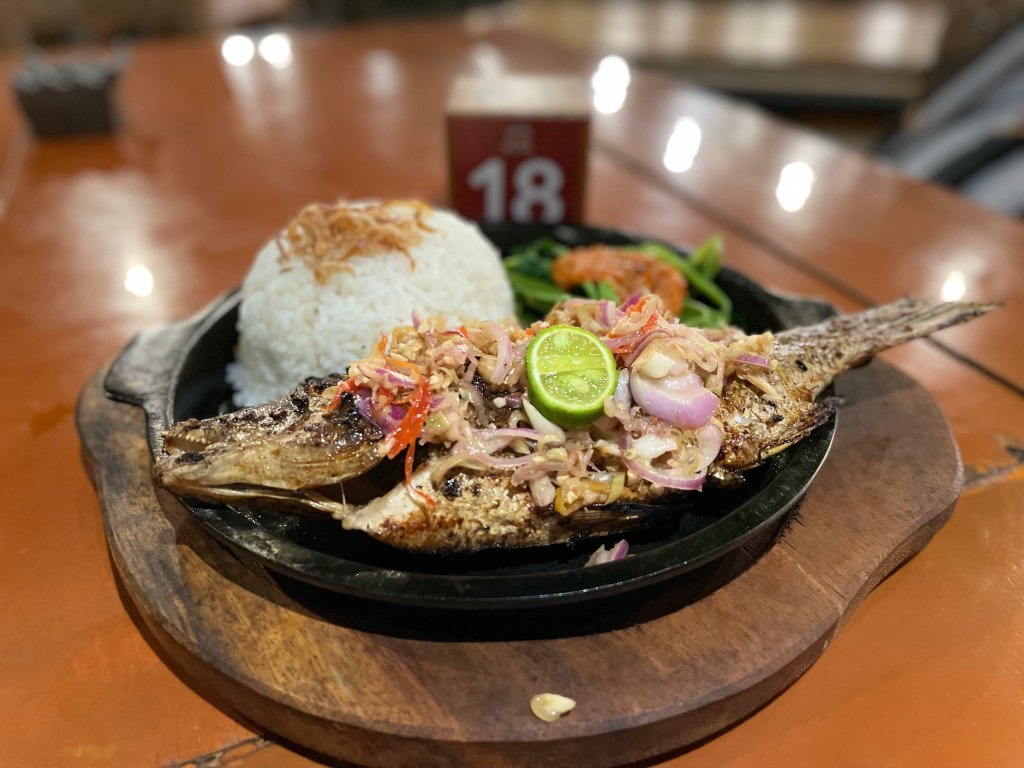
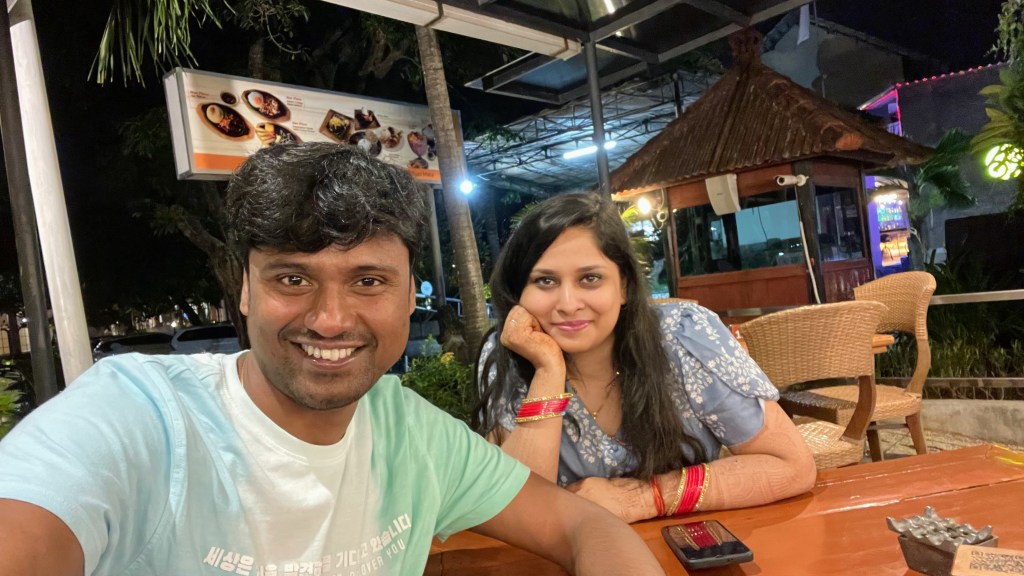
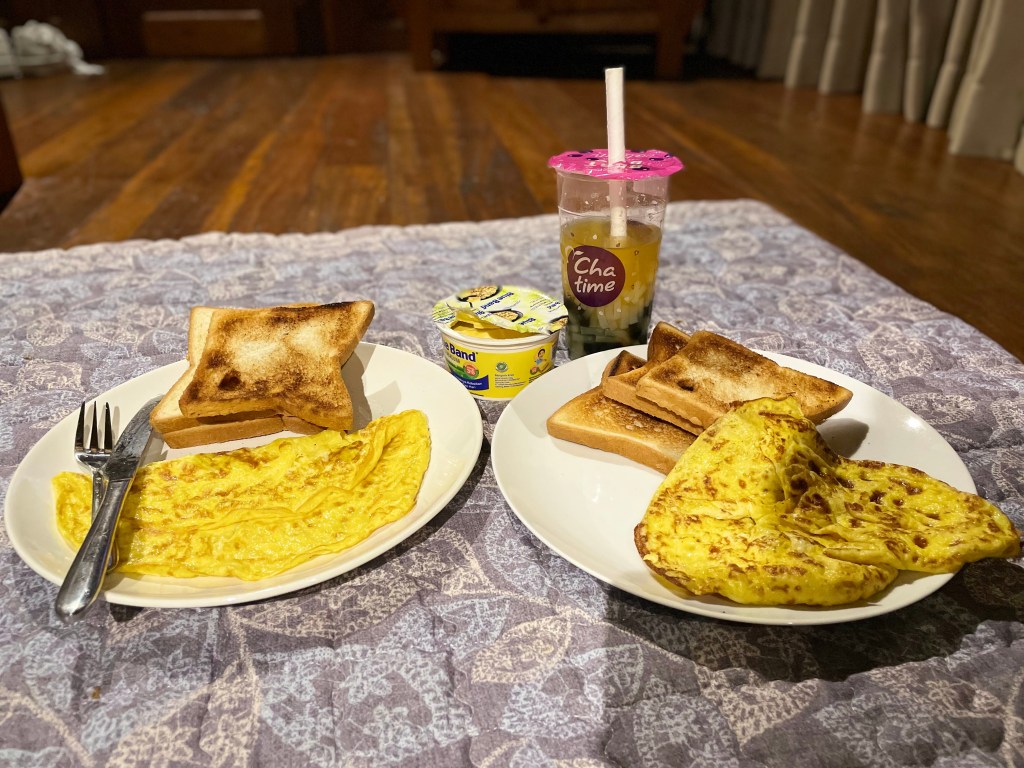
We were famished by now, so we headed to a nearby restaurant, Warung Cuci Mata. We ordered Jimbaran Ikan and Mei Ayam Goreng. Ikan means fish, ayam means chicken and mei means noodles. The restaurant was moderately priced, and the food was decent. We headed to Beachwalk shopping center to pick some fruit for the next day. There we tried Taiwan Mango Juice and avocado jelly at Cha Time and we absolutely loved it. This became our go to drink throughout the trip 😀 .
It started raining cats and dogs on our way back to the hotel. Thankfully, we had our raincoats with us, but we still got a bit wet. Quite a prelude to the upcoming day, I must say!
Note: The name of every shop in Bali starts with “Warung”, which roughly translates to shop or café.


Day 1 – Dec 16th 2022
We planned to do Pura Tanah Lot on this day. So, we woke up early in the morning and had our breakfast at the hotel. We booked a cab via Grab and headed to the temple around 9 AM. We got stuck in traffic and it took up 2 hours to reach there. It started raining heavily when we reached. I struck a conversation with our driver Agung and he agreed to drive us around for the rest of the day for 500K IDR. My earlier plan was to go to Vihara Dharma Giri but it was a bit off track and quite far away. So, my discussion with Agung led me to agree on going to Uluwatu Temple instead. As I was discussing all this, rain slowed a bit and two of us got out of our car and headed to the temple.
Pura Tanah Lot
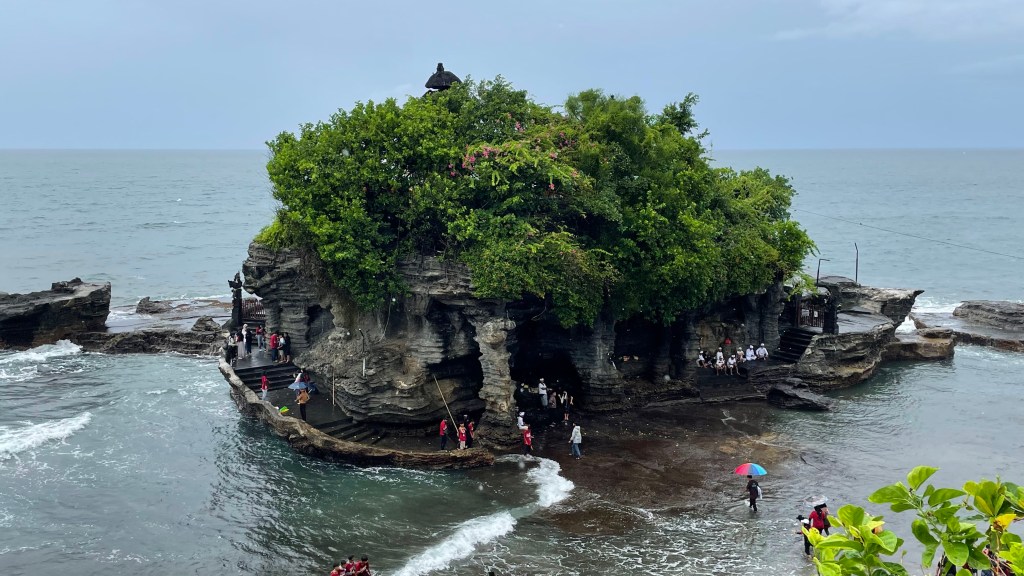
Tanah Lot Temple stands for earth (Tanah) and sea (Lot), quite appropriate considering its spectacular setting on top of an impressive rock overlooking the sea. Literally translating to “a temple which is land in the sea”, it perfectly describes the formation. Pura Tanah Lot is one of the seven temples on the coast of Bali that, according to Balinese people, create a spiritual bulwark against the evil vibes of ocean currents.
There was an entrance fee of 60K IDR per person. Visitors can access the island during low tide but entry within the temple is restricted only to Balinese people. This is true for all temples in Bali; tourists aren’t allowed to enter the temple shrine. As it was low tide when we were there, Shalini and I crossed the shallow water and reached the tiny island on top of which the temple is built. There isn’t much to do on the island though as you aren’t allowed to enter the temple shrine. After clicking a few photos we came back. There is a Tanah Lot Art Market located at the exit of the temple. It leads to a serpentine incline where many cafes and restaurants are located. These cafes provide beautiful top-view of Tanah Lot and some nice picture clicking moments.
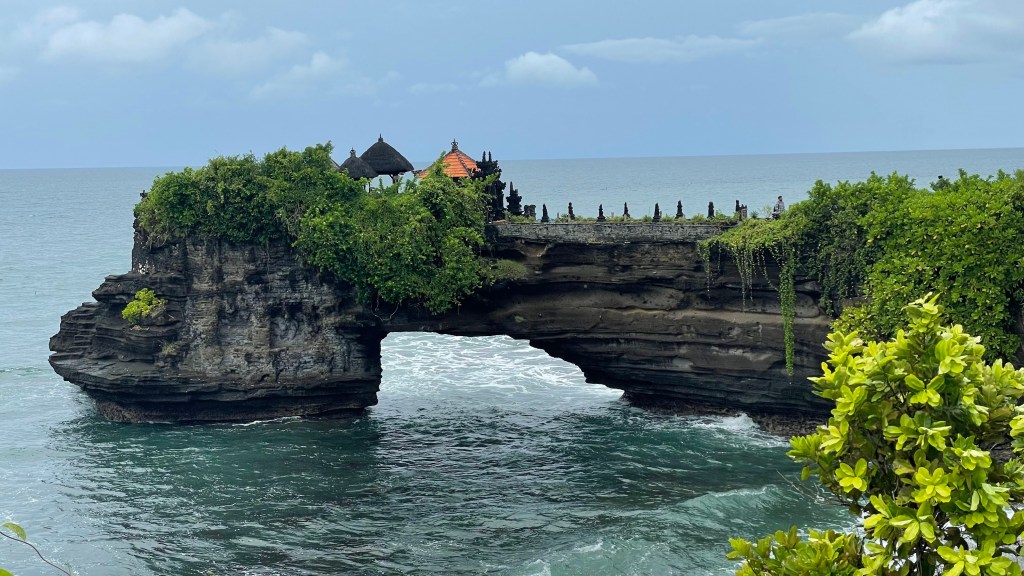
North of Tanah Lot is Batu Bolong, built similarly on a rock formation with a hollow overpass linking to the mainland. Batu or watu means rock and bolong means perforated. There is a pathway from Tanah Lot to Batu Bolong lined with well-kept gardens.

Padang Padang beach
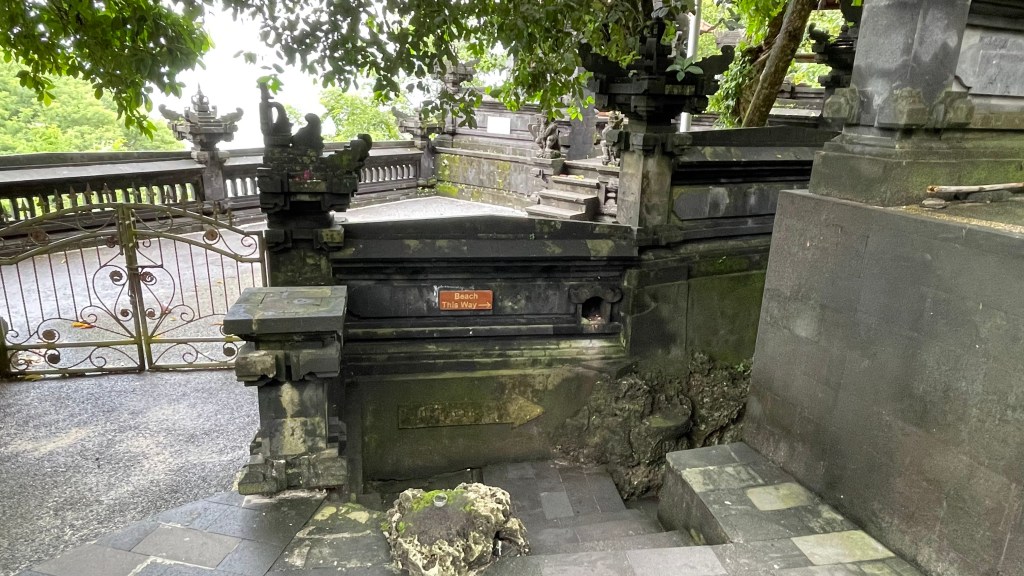
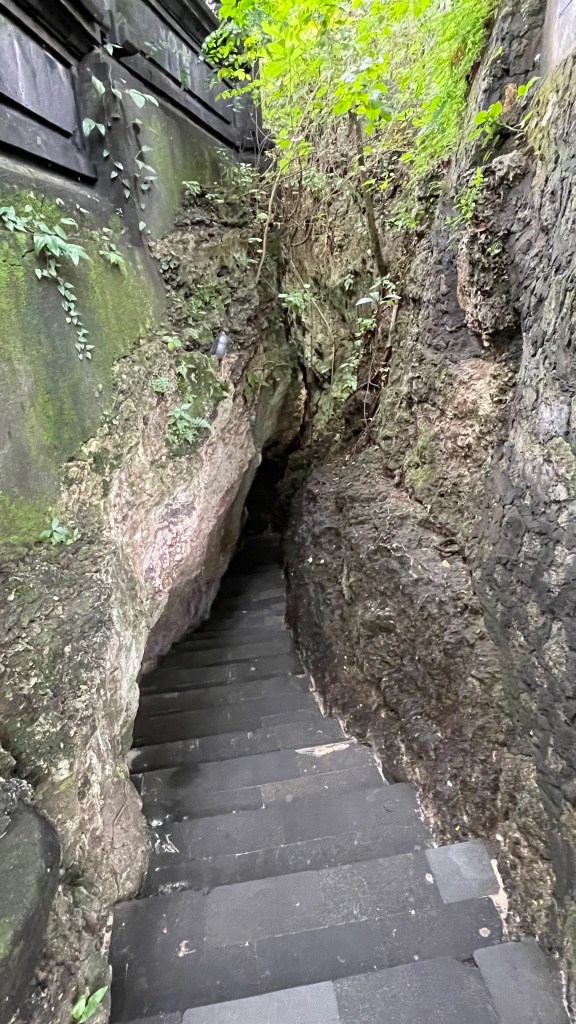
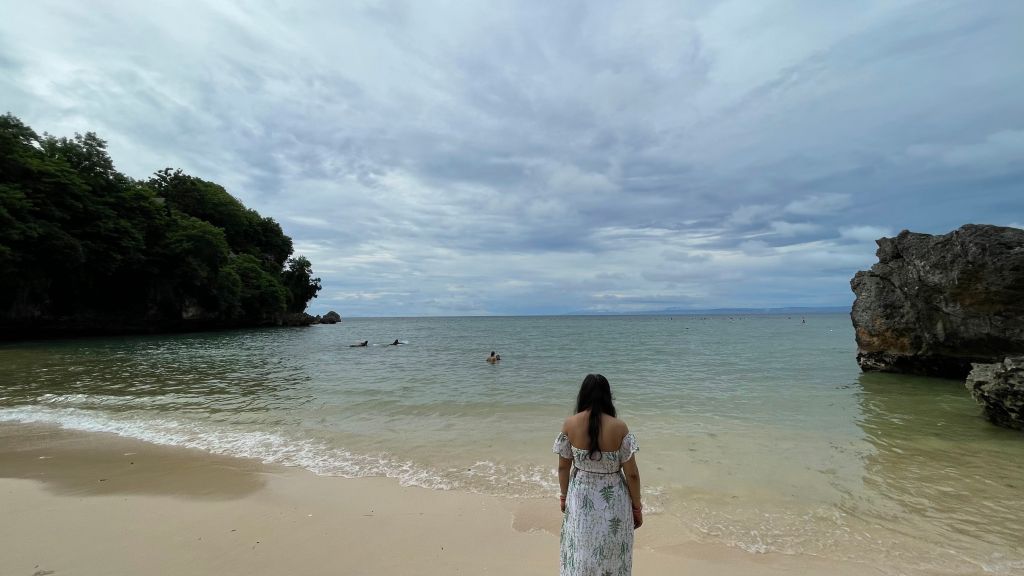
After Tanah Lot, we headed to Padang Padang beach. It was a long 2.5 hours’ drive from there. In between we wanted to go to GWK cultural park but we didn’t want to pay a hefty 150K per person ticket price just for an hour as we had planned Uluwatu Temple as well. So, we gave it a miss and headed to Padang Padang beach. The beach entrance is quite amusing. You have to go down a narrow stairway in between overarching rocks to access the beach. The shoreline of the beach is quite small but the view was quite nice. Morning rain was a distant dream; the sun was glowing in its full glory now. Many tourists were surfing and sunbathing here. We spent about an hour on the beach and headed to Uluwatu Temple.
Pura Uluwatu
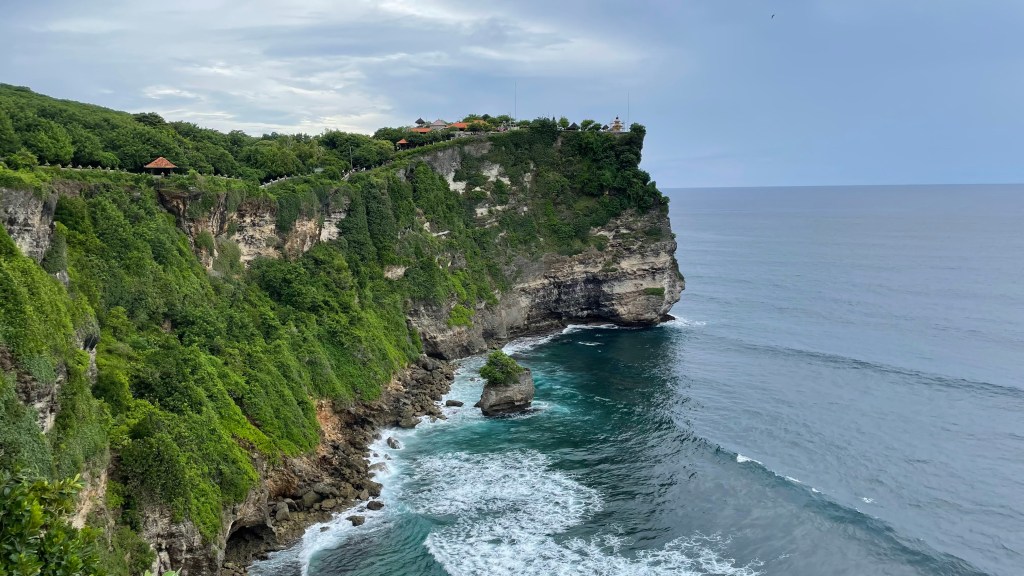
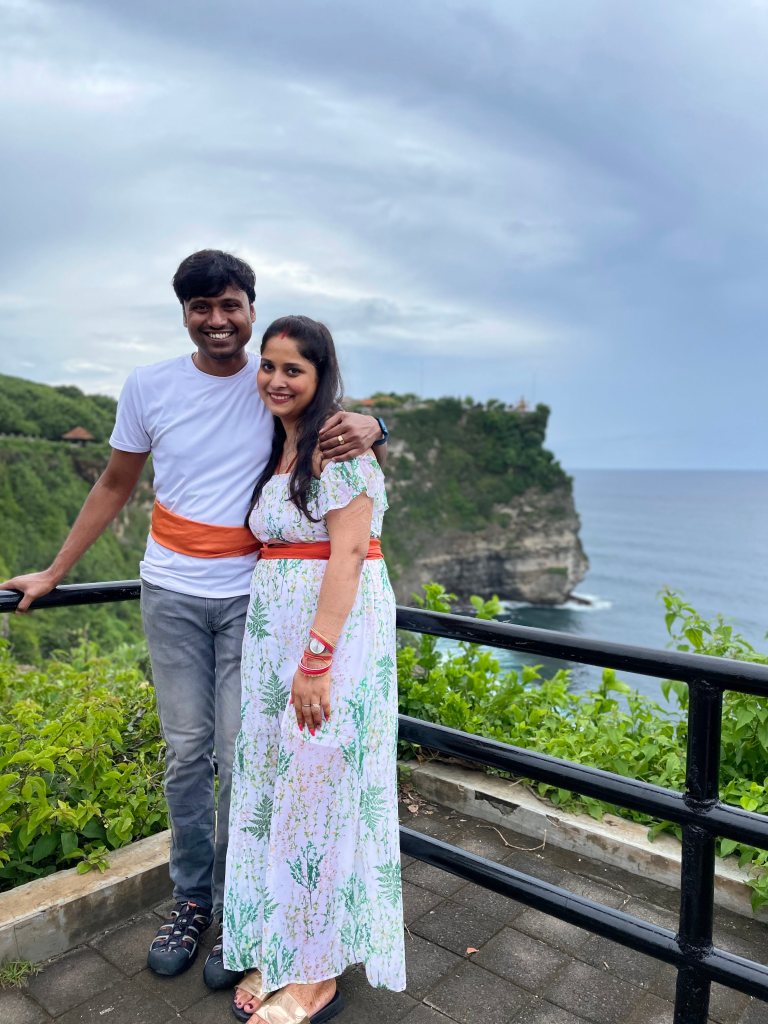
Pura Uluwatu a temple is nestled in a sylvan surrounding on a 70-meter-high cliff jutting out into the Indian ocean. Ulu means edge, while watu means cliff or rock, hence the name. Locally known as Pura Luhur Uluwatu where luhur means “something of divine origin”. This place draws its importance from the fact that a holy priest Danghyang Nirartha chose Uluwatu to be his spiritual journey’s final worship place. Devotees believe that he reached the highest spiritual point of oneness with deities by a strike of lightning and then completely disappeared.
The temple is not very big but the vista it provides is amazing – lush green vegetation all around, infinite expanse of blue water, white foamy hitting the rocky shoreline and a black volcanic mountain standing tall in tha backdrop.
We took a leisurely stroll alongside the cliff on a paved pathway. There were a lot of monkeys there, a lot. They were pretty bold and didn’t hesitate from snatching shiny materials from the tourists. Shalini removed her earrings and necklace to avoid any such incident. Besides that, the walk was quite relaxing.
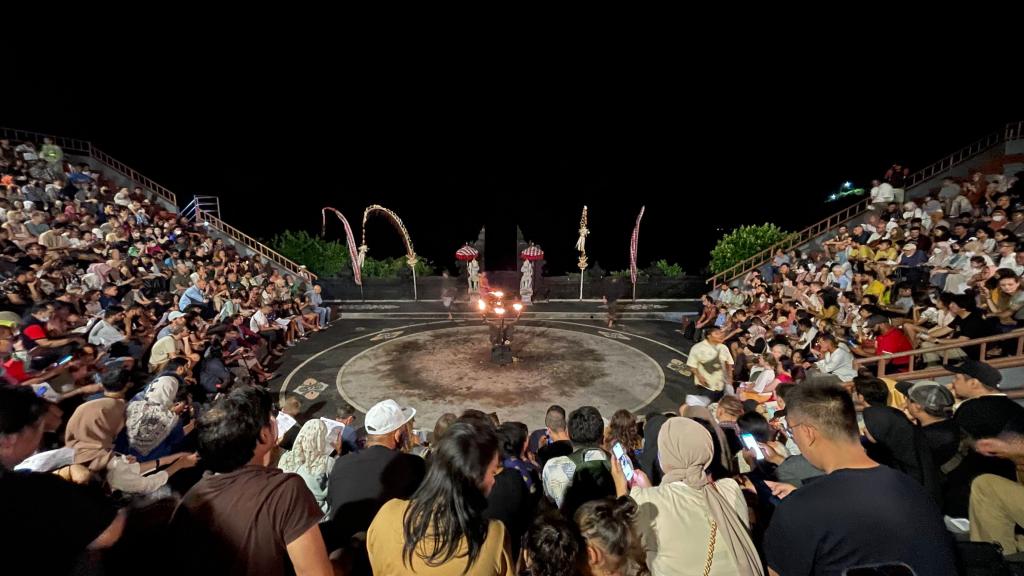
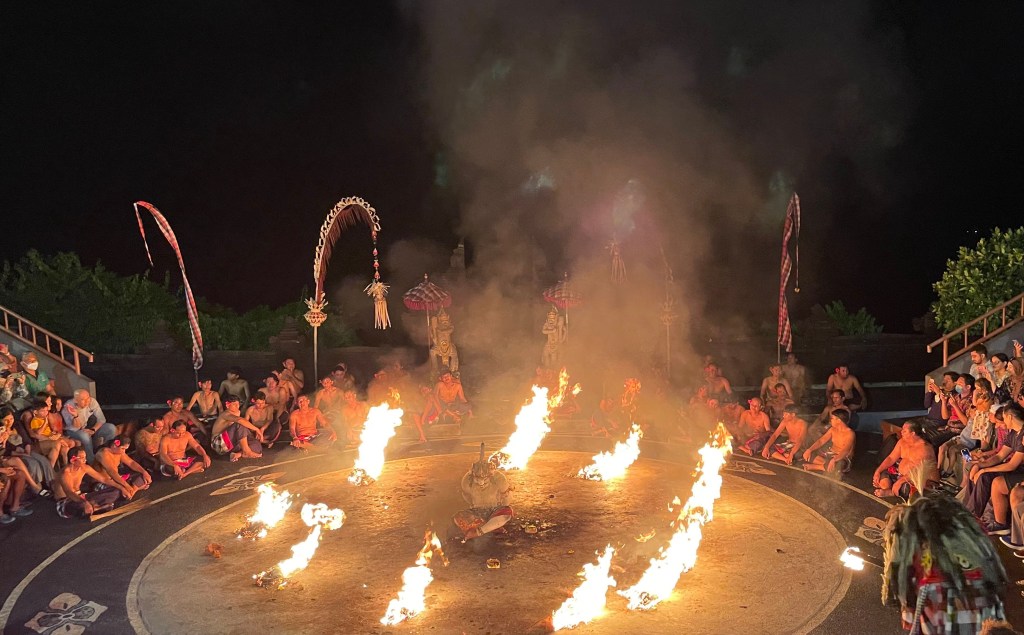
Uluwatu Temple hosts one of the best Kecak dance shows in Bali. Kecak dance is a Balinese Hindu dance performed by about 150 performers wearing checked cloths around their waist and chanting “chak chak” while moving their hands and arms. Usually, scenes from Ramayana are depicted in this dance and are performed in temples and villages all across Bali. The song Devaralan Aattam of the movie Ponniyin Selvan 1 has drawn its inspiration from Kecak dance. The Kecak dance show at Uluwatu was supposed to start at 6 PM and ticket sale at 5 PM. So, we arrived at the temple at around 4.30 PM. Each tickets costs 150K IDR. To our surprise, there was a long queue for the show. Our driver Agung got in the queue to purchase the tickets on our behalf while we explored the temple. This was such a nice gesture on his behalf otherwise we would have wasted a lot of time. Eventually we got the tickets for the second show at 7 PM, not the 6 PM show.
Our Kecak dance performance had 5 acts – (1) sita & golden deer, (2) sita haran, (3) hanuman in ashok vatika, (4) lanka dahan, and (5) ravan vadh. Art intertwined with divinity was on full display there. I was amazed at the dexterity of the moves and expressions of the artists that they were able to explain a complex story without uttering a word. The Kecak dance was certainly an unforgettable, a once-in-a-lifetime experience.


Day 2 – Dec 17th , 2022
Nusa Penida
Nusa Penida (Nusa means island) is a small island south-east of Bali. Nestled in the waters between Bali and Lombok, this small island is known for its beautiful beaches, rugged coastline and relatively relaxed way of life. I had booked a tour to Nusa Penida with GetYourGuide for which I paid $156 (including tax) for two people. I was satisfied with the service overall, but I feel it was a bit expensive. If you can manage to arrange such a tour with a local tour operator and bargain a bit, it will go much lighter on your pocket. In general, I felt that local drivers or tour operators in Bali are very professional, and you wouldn’t have any problem.
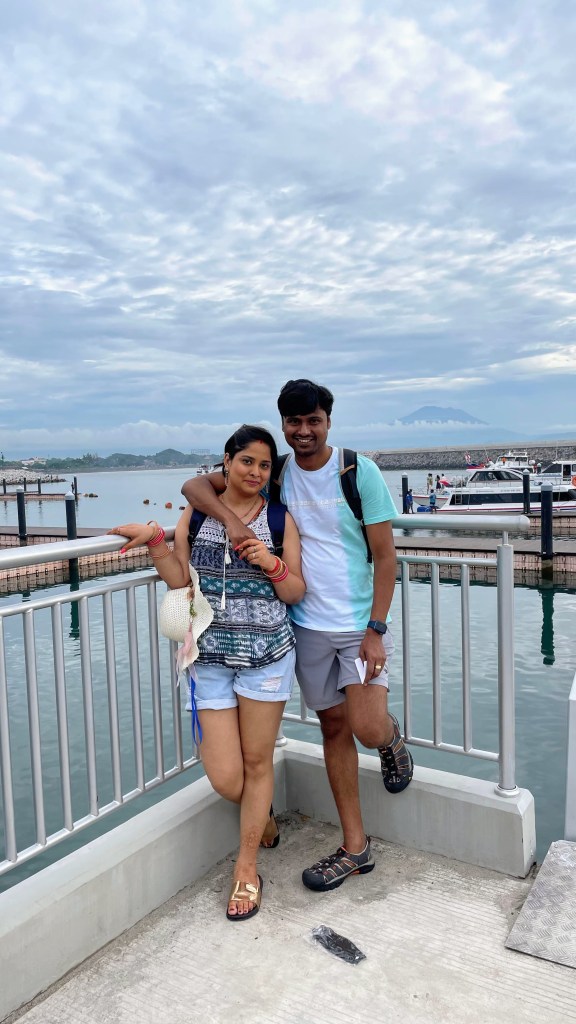
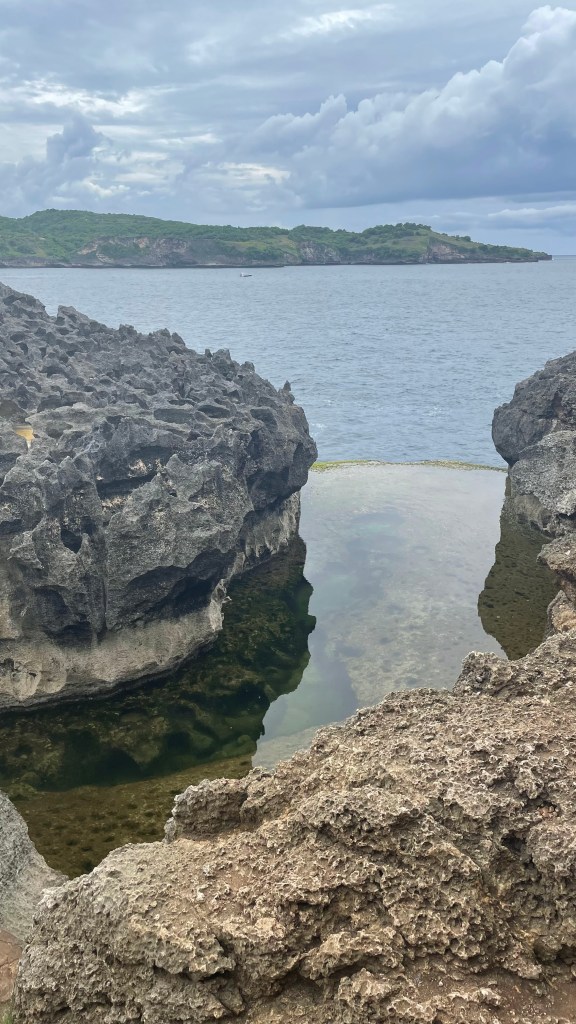
Our driver was right on time at 6 AM in the morning. OK, 1 thing to note – please request your hotel to arrange for a packed breakfast if you are leaving this early in the morning. This way you won’t lose your complimentary breakfast (in case you have paid for it). I didn’t know this. I asked at the last minute in the morning. Thankfully, Alamkulkul staff were generous enough to pack some bread, butter and croissants at such short notice. We headed east to Sanur from where we took a speed boat to Nusa Penida. Our tour included Klengking beach, broken beach, Angel’s Billabong and Crystal Bay. I was expecting a few more people on our tour, but to our surprise it was just 2 of us. So, it turned out to be a fully private tour for us. We took 8 AM boat from Sanur and reached Nusa Penida by 9 AM. Another car was arranged for us at the island to drive us around. It was another 1-hour drive to our 1st stop – Klengking beach. We drove past thick banana plantation and multiple coconut groves which gave south Goa vibe. Klengking beach is also called T-rex bay because the 150-meter-high cliff at the beach looks like the backbone of a dinosaur that would drink in the sea. After Klengking beach, we headed to Angel’s Billabong. It is a natural infinity pool that reveals itself during low tide and goes beneath the sea at high tide. The rocks around Angel’s Billabong are spiky due to erosion caused by constant splashing of sea water over thousands of years. There have been many accidents at Angels’ billabong so local people have created a small temple there to bless the local community as well as the tourists. Along the lines of all temples of Bali, outsiders are not allowed to enter that sanctum sanctorum. We drove further from Angel’s Billabong to Broken beach now. The highlight of this place is a horseshoe shaped cove formation in the midst of stunning blue and green waters. We took a small hike around the archway to immerse in the beauty of this place. It is not possible to go down the beach, just admire the amazing view from above.


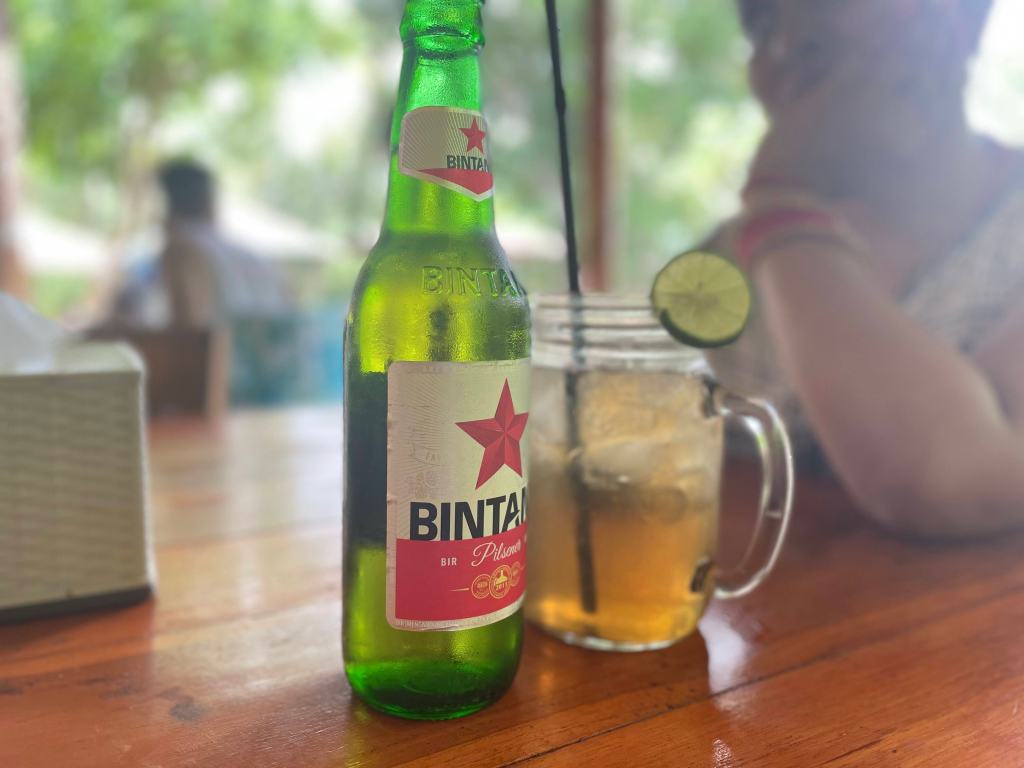
It was 1 PM by now and we were famished. Our driver stopped at a small restaurant where we had Mei Goreng and Bintang beer.
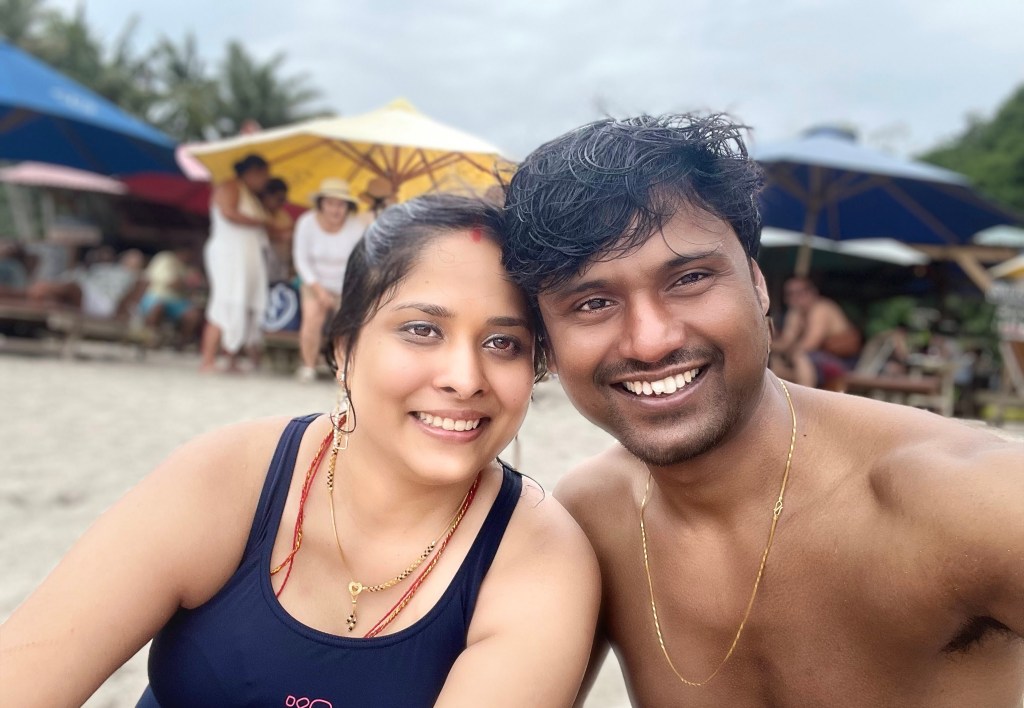
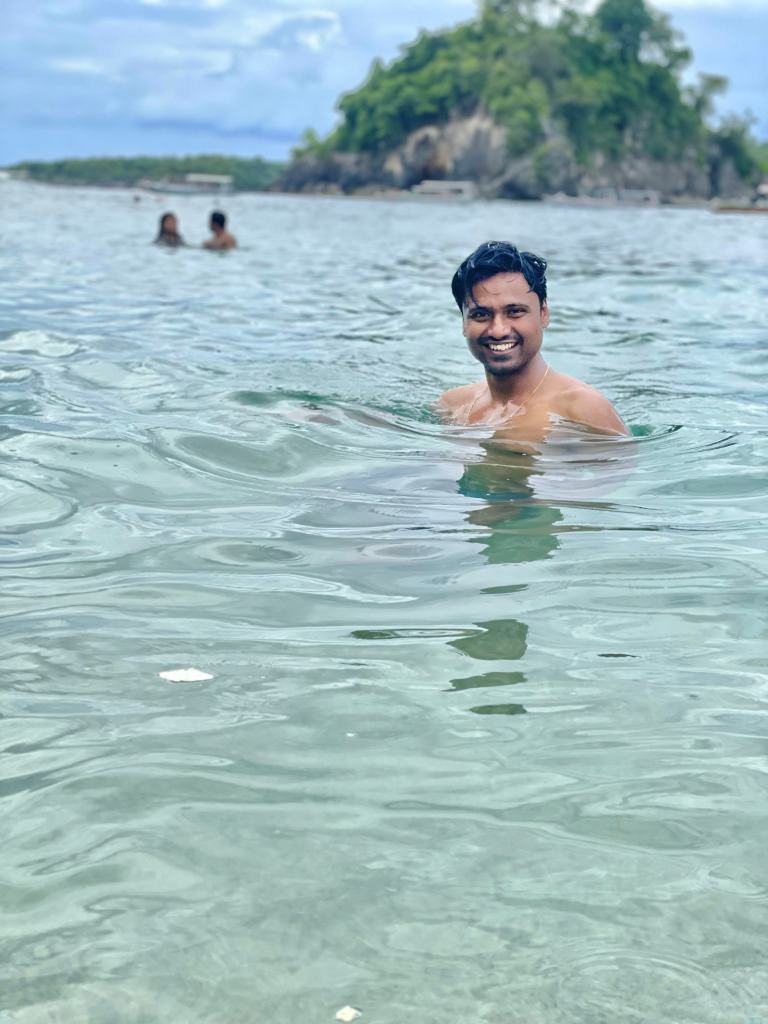
After a much needed and delicious lunch we headed towards Crystal beach. There are beach chairs for rent but we gave it a pass. We had our towels which we spread and sat on the white sand. I feel this was much better way to enjoy the beach. We spent a quality time here soaking in sun and sea. I went for a nice swim while Shalini played with the tides.
We started our return journey back to the harbor at around 3.30 PM and took 4 PM boat. On our return journey, we sat on the upper deck from where we enjoyed the cool breeze and stunning view of the ocean. This was the first time Shalini had come so deep in the ocean and hopped from one island to another on a boat. I was glad to see her childish enthusiasm and infectious smile throughout the ride.
I noticed an interesting thing. A lot of people in Bali smoked cigarettes. While waiting for my speed boat at Sanur, I was observing local tour operators who were also waiting with their guests. Every single one was smoking. My own driver was a chain smoker. He must have finished 2 packs of cigarettes on that day. This made me check the smoking rate across the world, and no wonder Indonesia is 13th country from the top in the list. 38% Indonesians smoke, with male smoking rate as high as 71% ☹. Source- Smoking Rates by Country 2023 (worldpopulationreview.com).

Day 3, Dec 18th 2022
Drive to Ubud
This was the day we checked out from our resort in Kuta. We had a sumptuous breakfast and left for Ubud around 11 AM. For the transport we booked the car through Grab. On our way to Ubud I negotiated with the driver to take me to Monkey Forest as well for an additional 80K IDR. I felt this was the most convenient thing to do in Bali – find a driver through Grab and negotiate with him to take you around for a fixed price. Hopping from one tourist site to another through Grab can be expensive.
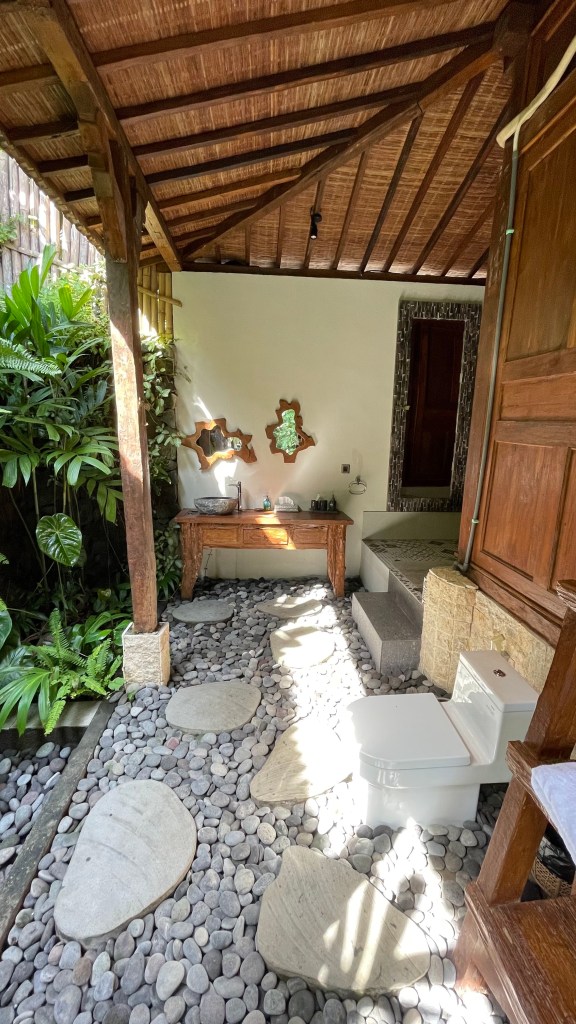
We had booked a private villa for next 4 days in Ubud – Andara Ubud Villa. And oh my god, what a good decision it was. The villa was simply amazing. It was a rustic wooden cabin with a private infinity pool, open-air bathtub and a cozy patio overlooking thick plantation.
Our cab driver who drove us to Ubud waited for us while we completed the check-in formalities and headed to nearby Monkey Forest with him.
Monkey Forest
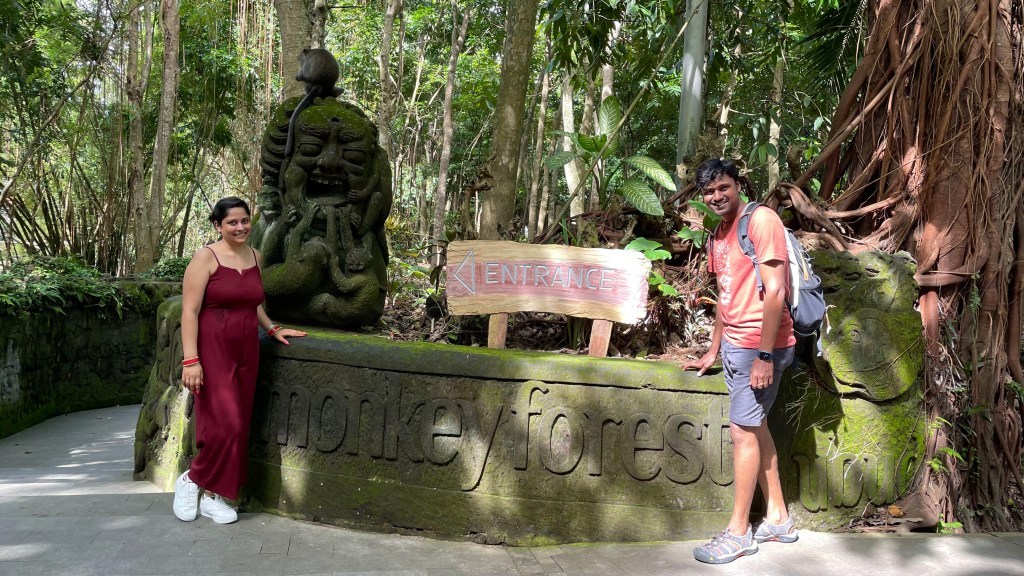
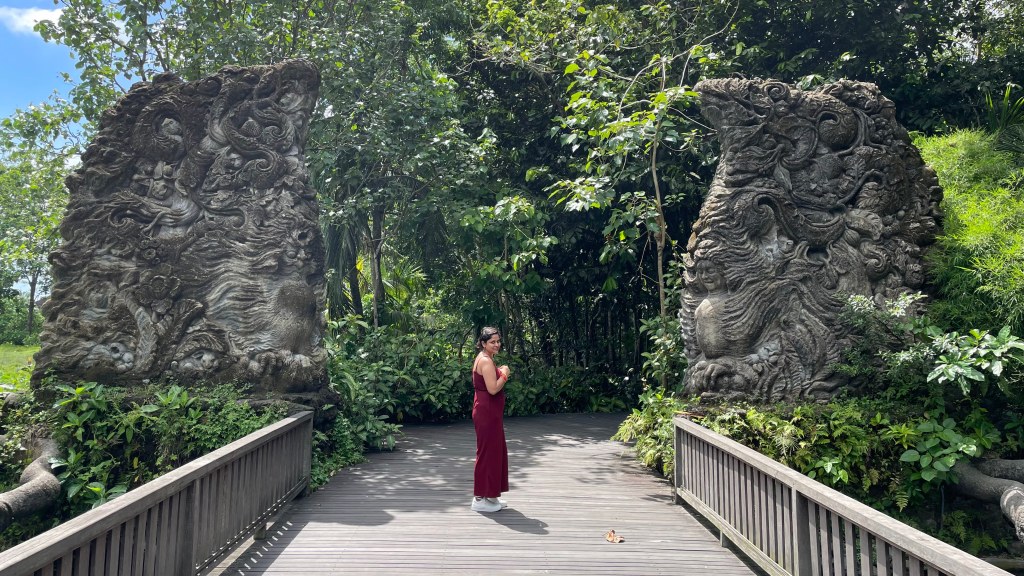
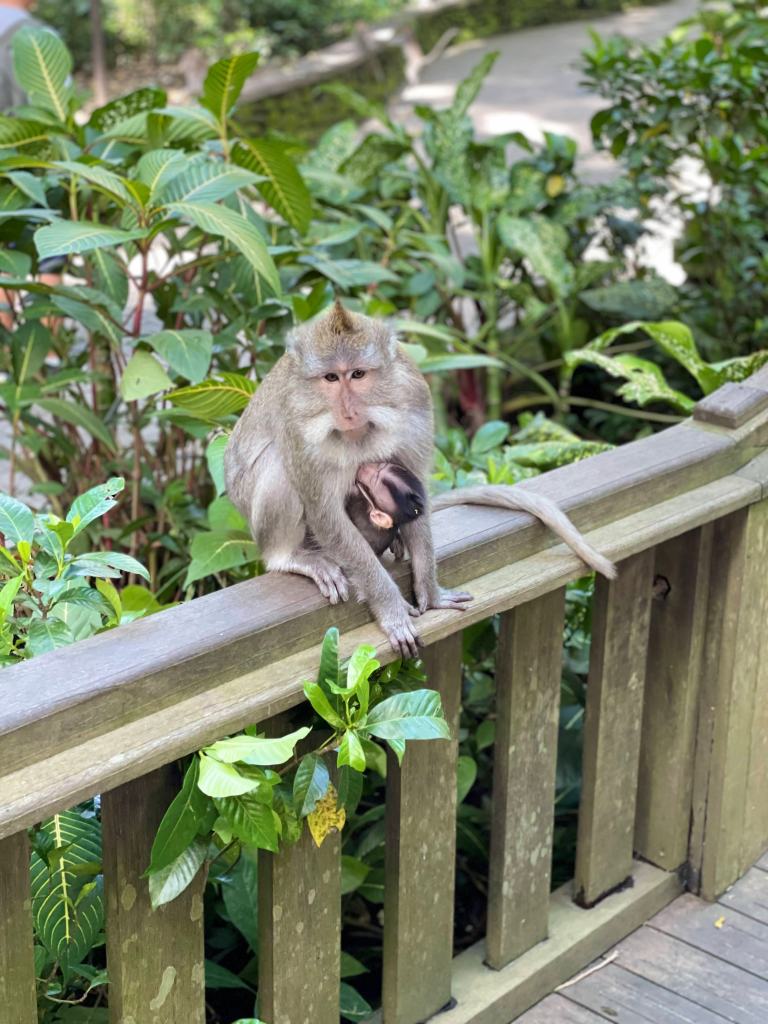
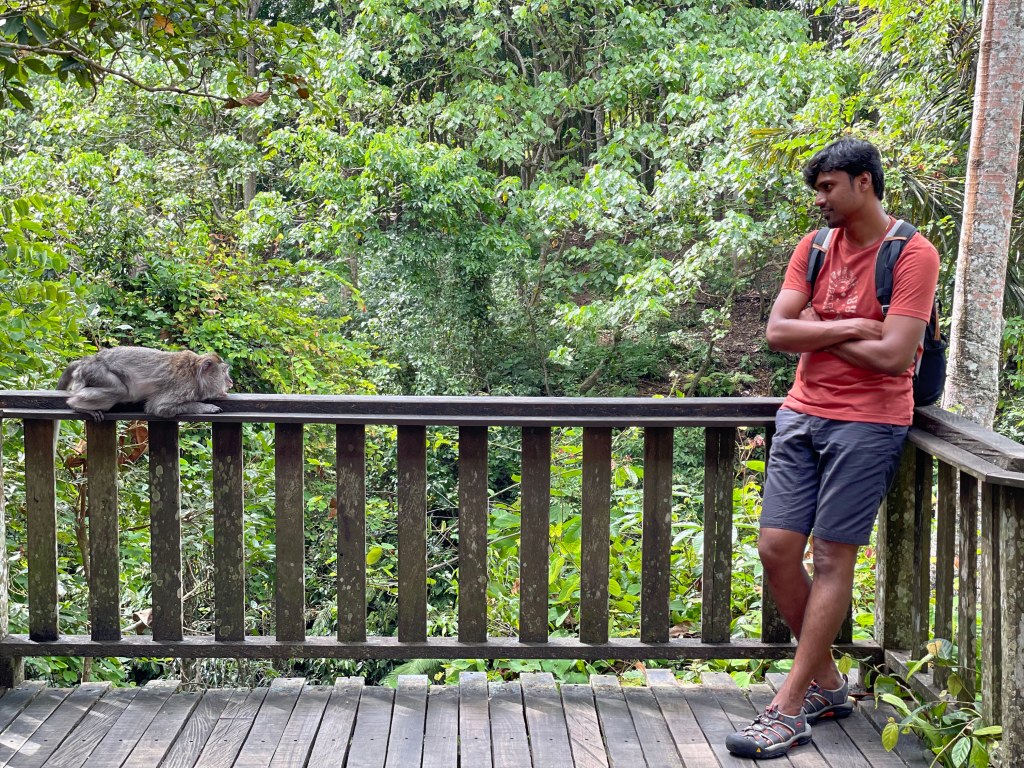
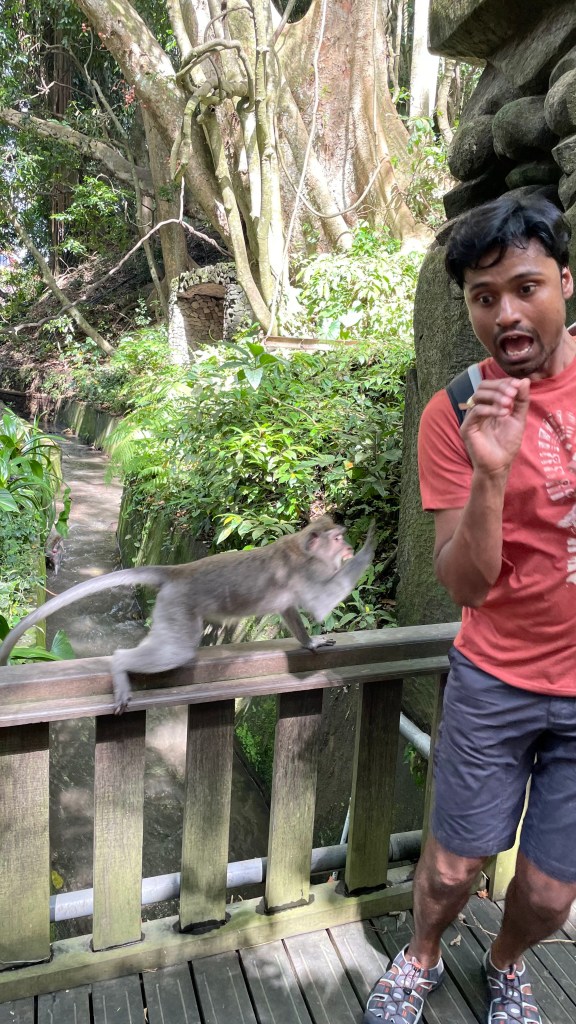
Monkey forest is a big tourist attraction in Ubud. This 12.5-hectare forest is a sanctuary to almost 1000 monkeys, particularly long-tailed macaque. It also has 3 temples – Pura Dalem or temple to worship Lord Brahma, Holy water temple to worship Goddess Ganga and Cremation temple to worship Lord Shiva.
Monkeys roam freely here. You can also pay 50K IDR to feed the monkeys. Although the conserved forest is very large, tourists can roam around in limited areas. We were done in about 1.5 hours. We wanted to go to Goa Gajah as well, but there was a long queue at its entrance, so we took a U-turn and headed back to our villa. We, ultimately, went to Goa Gajah on Day 6th.




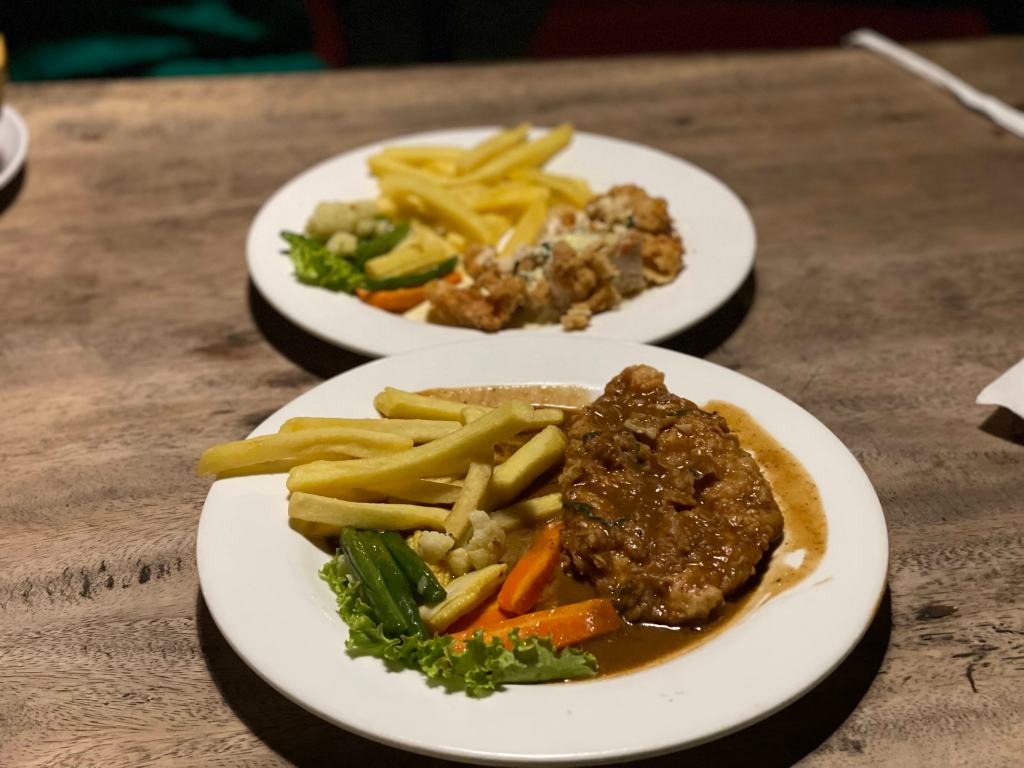
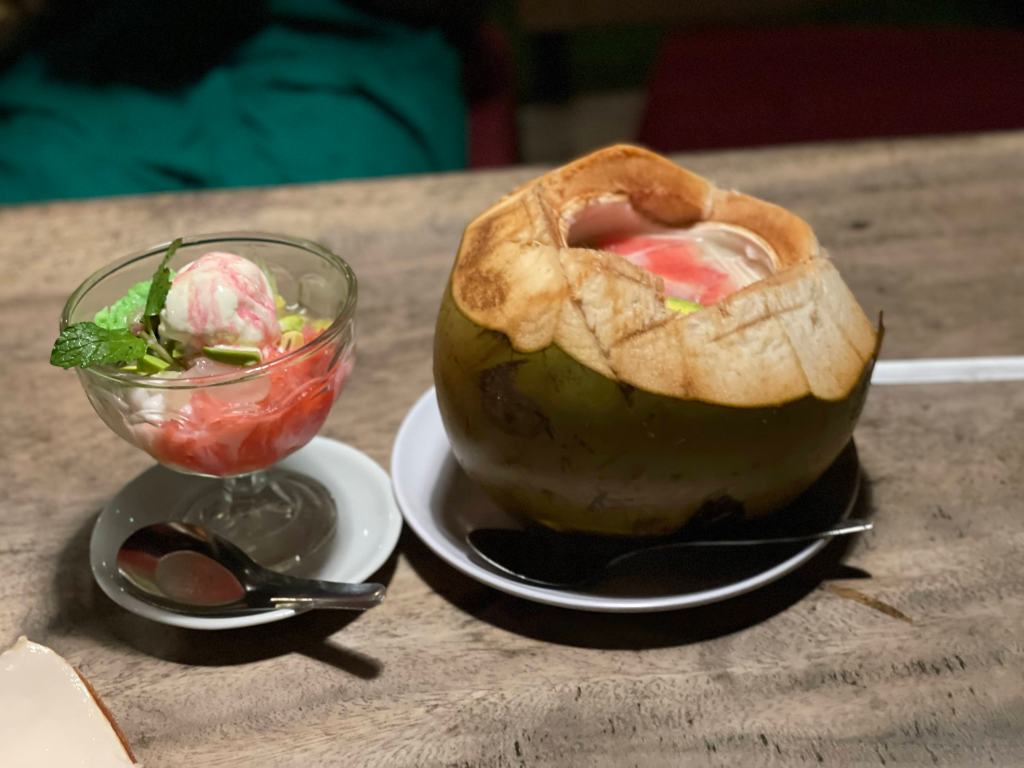
In the evening we went to Warung Mina Ubud for dinner. The thing I remember about the restaurant was that it had very good smoothies and very annoying cats 😀 . We had a kulfi-faulda kind of thing and a coconut water drink filled with lots of ice cream, fruits and jellies. After that we roamed around the local market of Ubud looking for souvenirs and nice spa places. We didn’t buy anything today, just looked at different stuffs and familiarized ourselves with the prices.
Day 4, Dec 19th 2022
Our villa owner’s name was Ketut. He introduced us to a friend of his, Nyoman who was a tour driver. We negotiated with him to take us for a tour on 19th for 600K IDR. This was the standard price for a full day tour in Bali so we were OK with it. Additionally, the driver was a friend of our villa owner, so it was more reliable.
Pura Ulun Danu Beratan
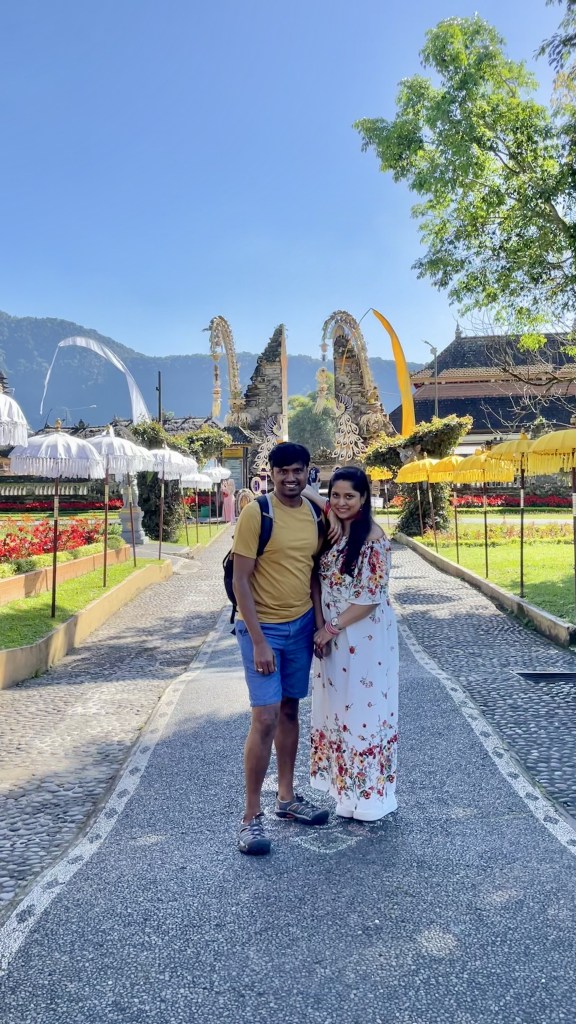
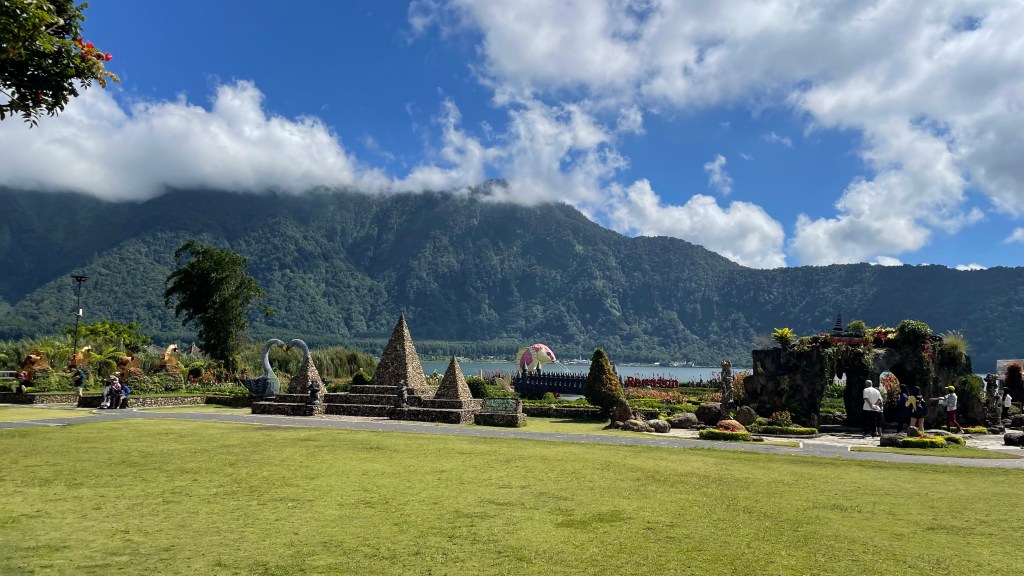
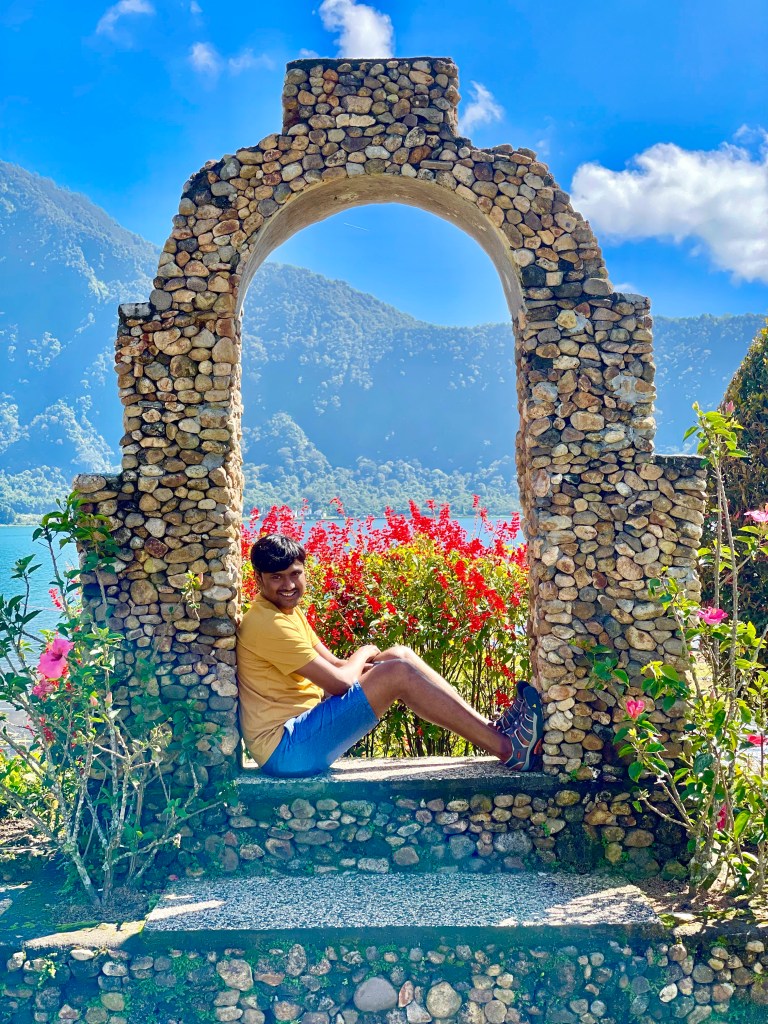
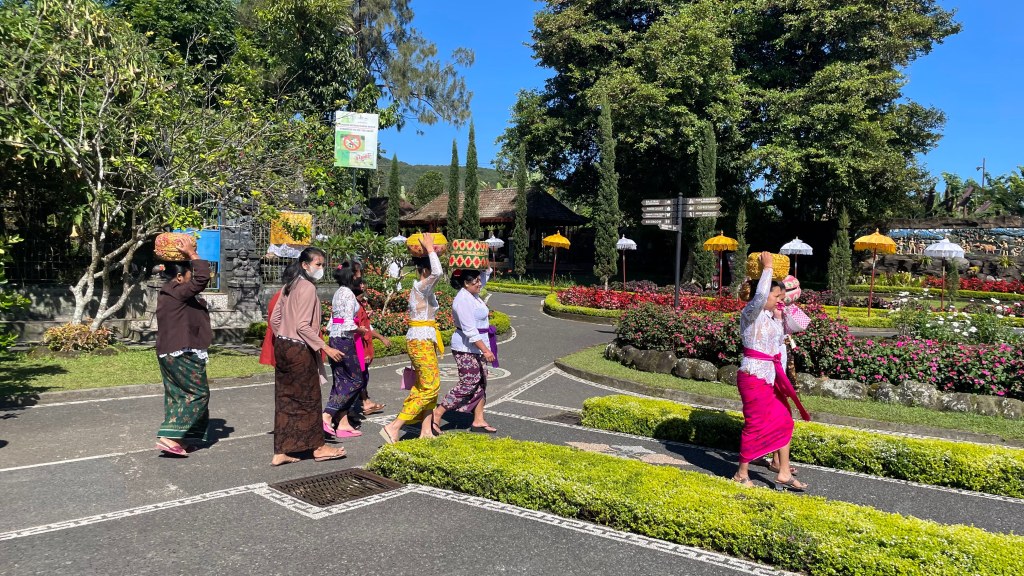
The first click stop of the day was Pura Ulun Danu Beratan or Floating Temple. Literally, it means “the source temple of Lake Beratan”. Built in 1663, the temple is among the most picturesque and photographed temples in Bali. Set in the highlands of the mountainous Bedugul region in Bali, this temple combines the beauty of rolling hills with scenic seaside. Ulun Danu is located inside the caldera of now extinct volcano Gunung Catur and lies on the western bank of lake Beratan which is the main source of irrigation in Bali and considered very sacred by Balinese people. There are 3 main temples within the complex – 11-tiered shrine dedicated Vishnu, 7-tiered shrine dedicated to Brahma and 3-tiered shrine dedicated to Shiva. This temple is used for offerings and ceremonies dedicated to Goddess Danu (lake). In fact, the day we visited there was some sort of ceremony going on at the temple.
Note that Ulun Danu Beratan Temple, mostly called as a Ulun Danu Temple should not to be confused with Ulun Danu Batur Temple, which is on the rim of the caldera at Batur Lake.


Handara Gate
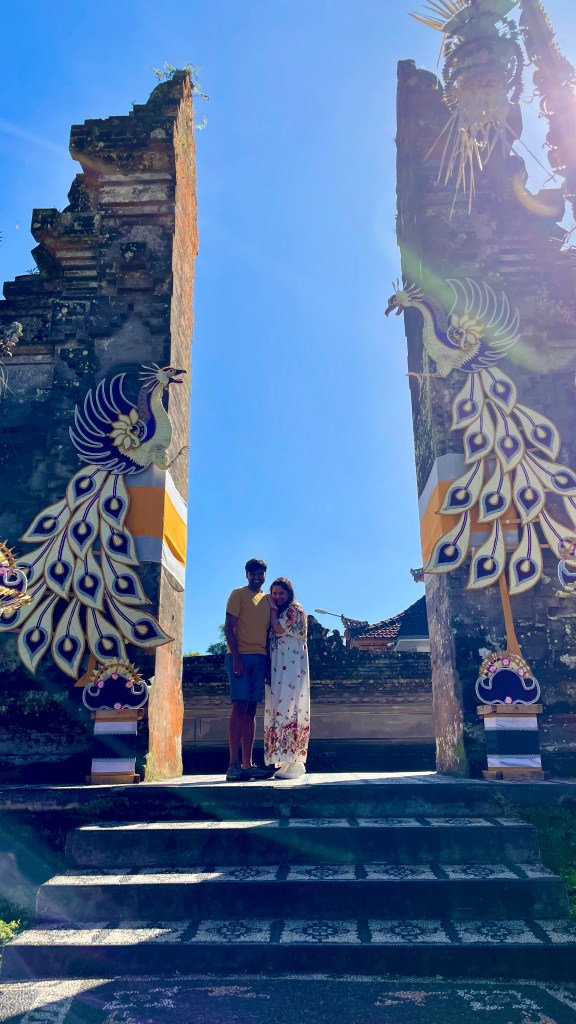
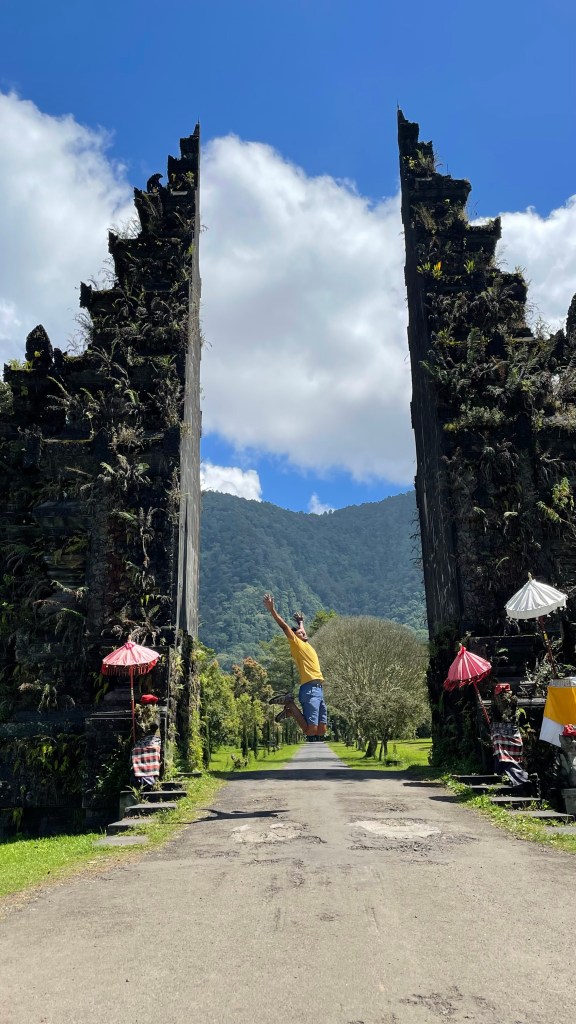
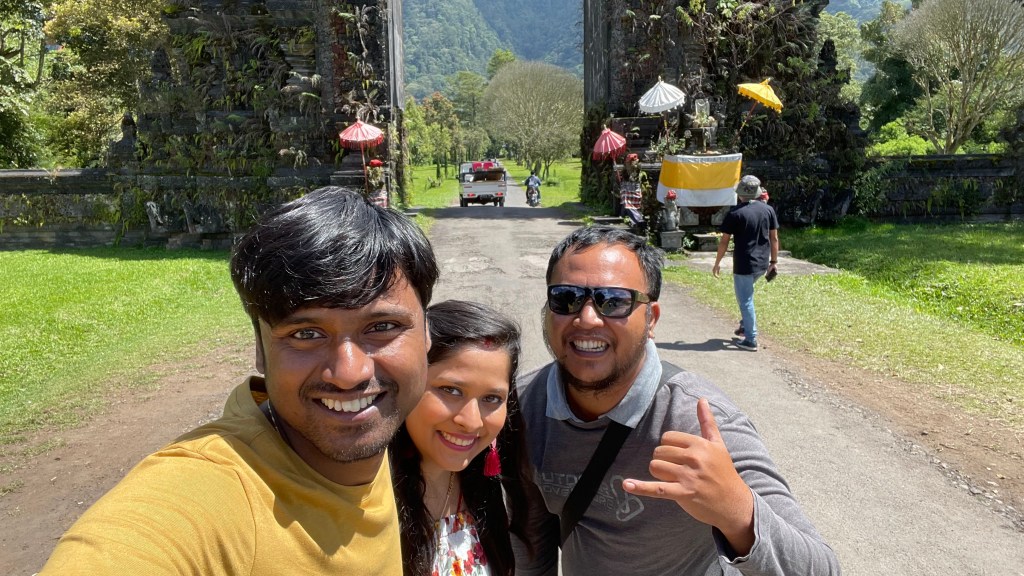
Next, we went to Handara gate which is nothing but a grand entrance to a golf resort. This gate is the traditional split gate found in Bali all across but it is massive and set amidst the lush green vegetation. There was 30K IDR per person ticket to just enter and click photos near the gate. But since it was paid, there wasn’t much crowd. Thanks to Nyoman, we took many pics and videos here.
Banyumala waterfall
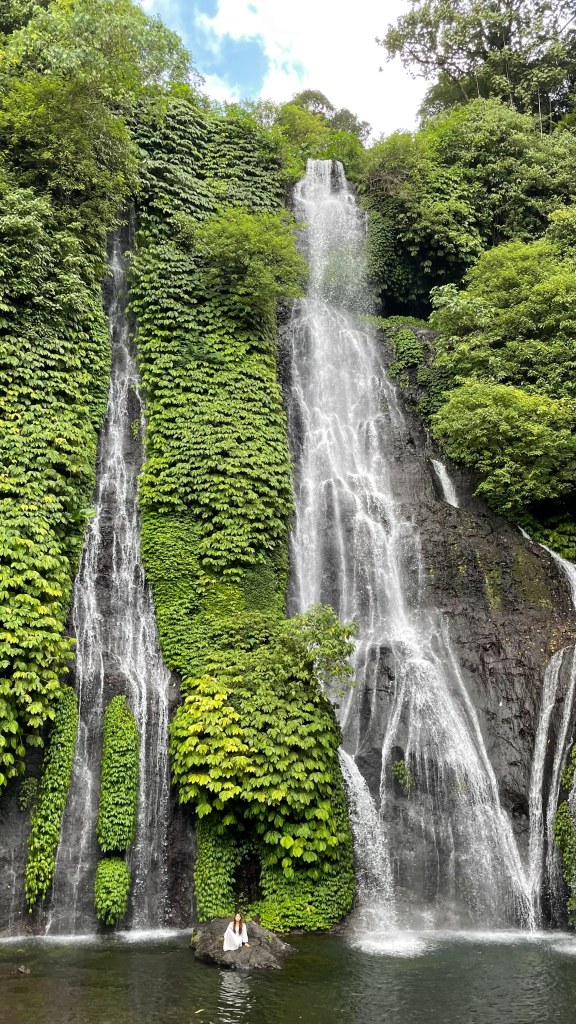
Then we headed further northwest to Banyumala waterfall. The fork off the road towards Banyumala Waterfall is very narrow and can be easily missed. So, pay attention. There was a good 30-minutes downhill hike to reach the waterfall. The waterfall was OK, but it was the hike that spruced me up, as always. I removed my sandals and soaked my feet in the cold water for some time. The return hike up the incline was a bit difficult but I was glad that Shalini was able to make it. She was slow, but steady.


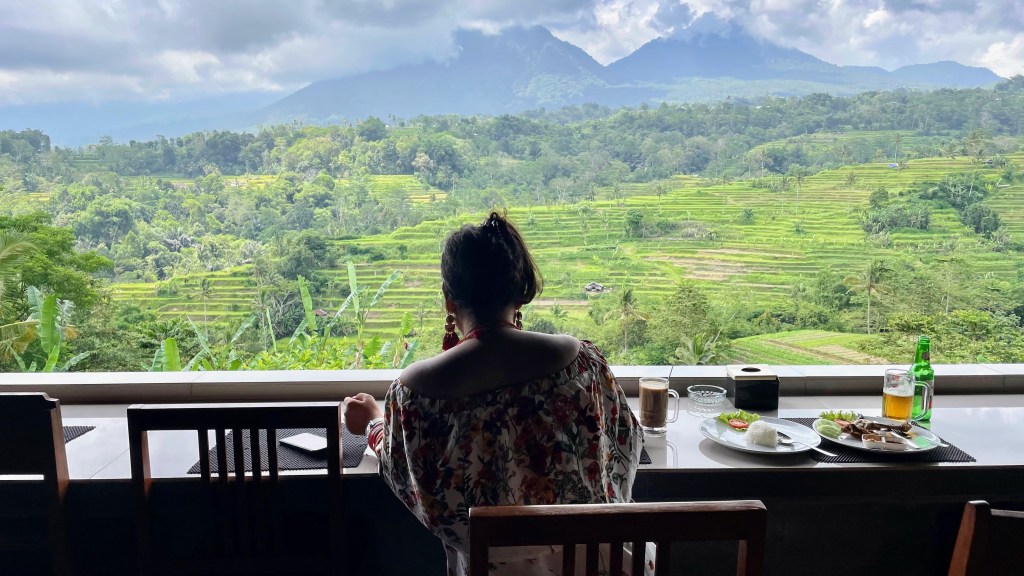
After the hike we were hungry, of course. So, we thought of having lunch at a restaurant with a view. Nyoman took us to Uma Luang Sari restaurant. The restaurant had rice terrace view which you can enjoy while eating. But the food was horrible. That was the worst food I had in Bali during the trip. Moreover, they do not accept credit card. I was surprised as the restaurant was quite big so I pushed back. Then they asked me to take cash from my driver and pay them, which was a bit weird.
Jatilwuh rice terrace
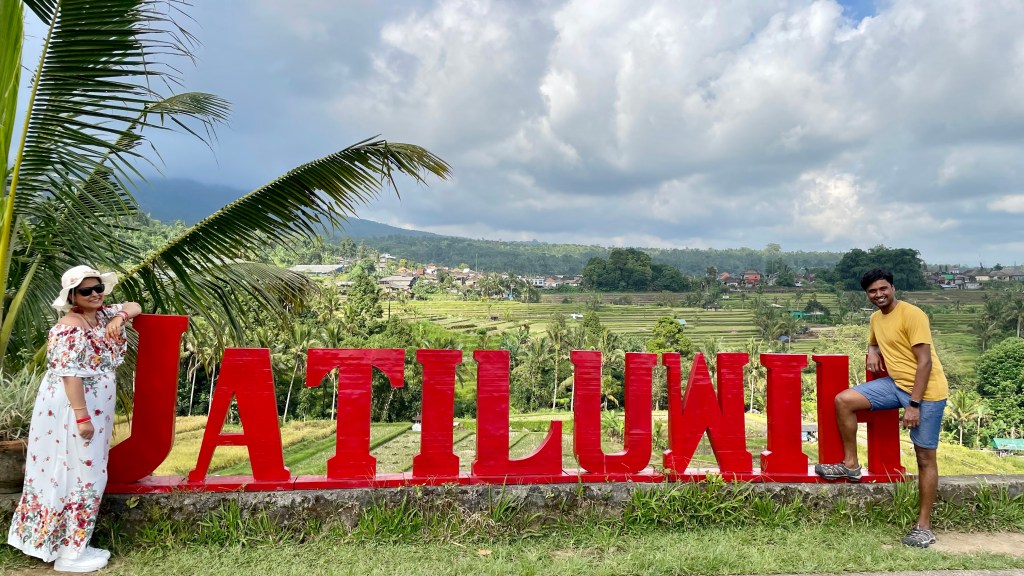
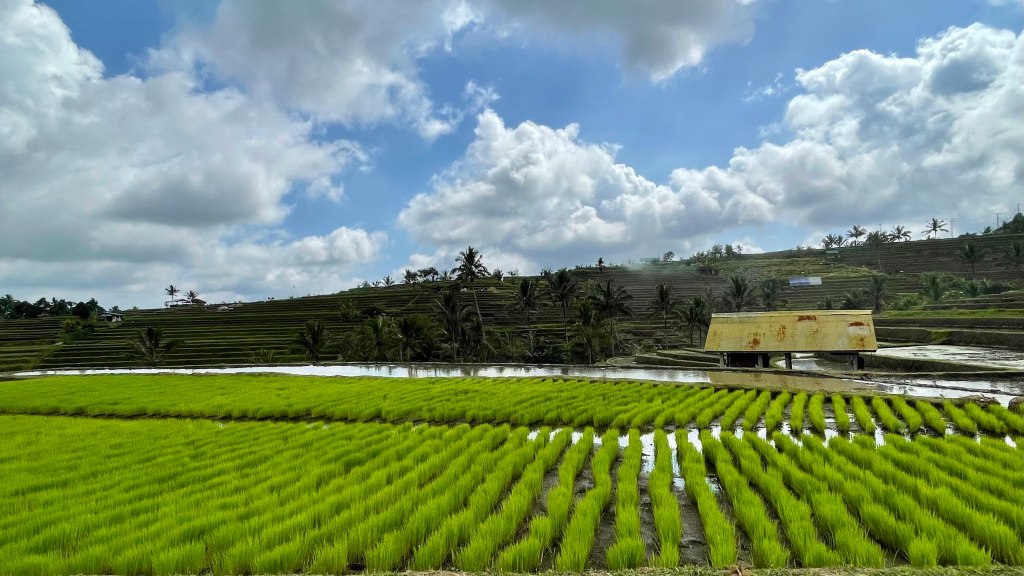
Anyway, after a not-so-good lunch, we headed towards Jatilwuh rice terraces. A UNESCO recognized world heritage, Jatilwuh rice terraces are spread over 600 hectares and are the largest rice fields in Bali. Jatilwuh offers a grand view of contoured rice terraces irrigated using an impressive water system developed by Balinese people. Please note that there is a 40K IDR entry fee per person here as well. But the view you get is really nice. As there is a very efficient irrigation system in Bali, they have 3 seasons of rice in a year. A local person showed me 3 different varieties of rice – white, red and black. As we strolled around, we came across busy farmers – some were harvesting, some were cutting stubbles, others were busy making some local artifacts from farm by products.
It was around 4 PM by now. We had plans to go to Taman Ayun Temple as well after this, but we were tired. We asked Nyoman to take us back. On our way back he took us to Luwak Coffee shop where we learnt about how this coffee is made. Luwak coffee is made from undigested defecated coffee cherries by Asian palm civet or luwak. It is one of the most expensive coffees in the world. It is said to have a unique taste because of 2 processes – selection and digestion. Civets choose to eat only certain coffee cherries and they go through some unique chemical mechanism as they pass through the animal’s digestive tract before being defecated. Although we didn’t purchase this coffee, but it was a good learning.
We bought some bread and eggs from the market on our way back and had our dinner at the villa itself.

Day 5, Dec 20th 2022
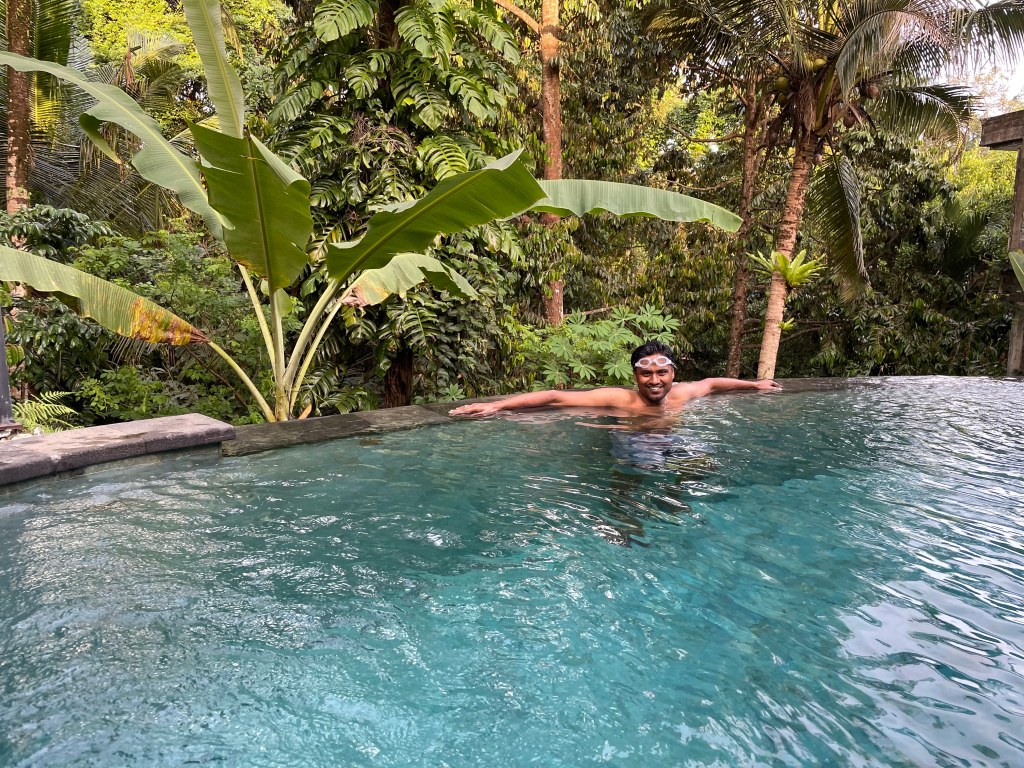
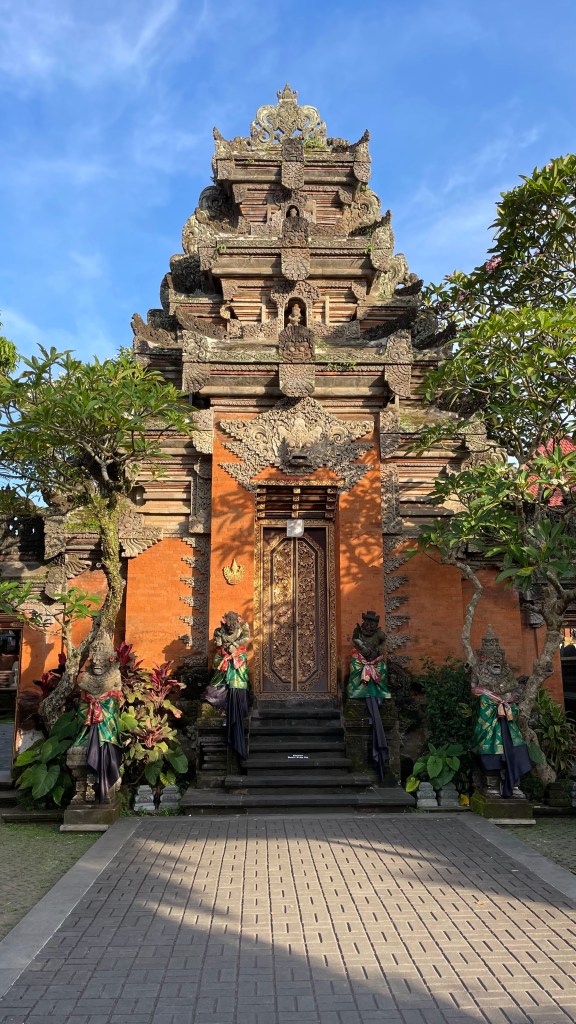
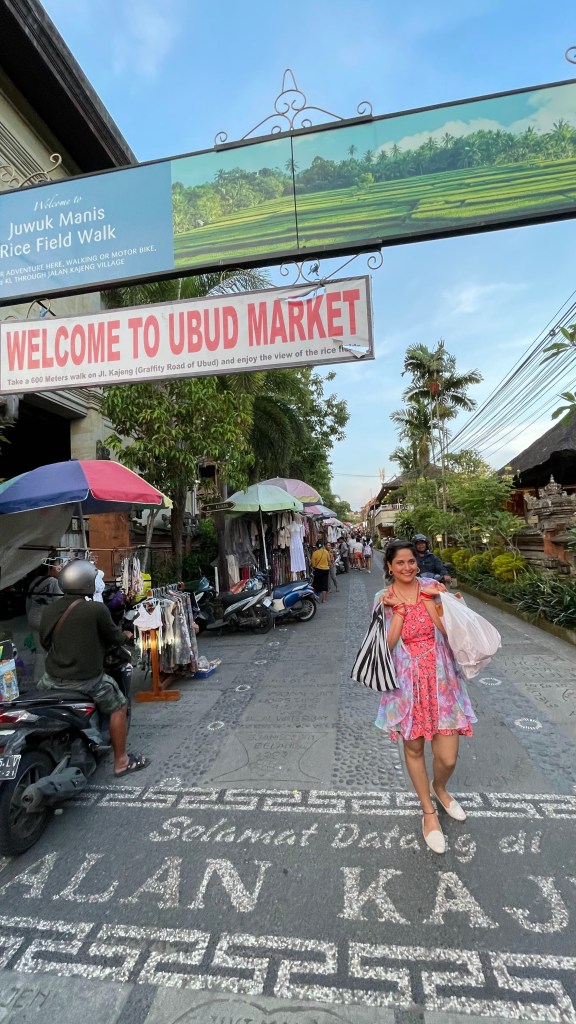
We had plans to do the sunrise trek to Mt. Batur this day, but we dropped it. We had 2 days left and we wanted to just relax, and not do anything. So, on this day we enjoyed swimming in our private pool, cooked together and ate good food. In the evening, we went to Ubud Palace which was just a walking distance from our villa. Don’t expect something as grand as Buckingham Palace here. It is a small palace that can be easily covered in 15-20 minutes. However, the art and carvings are amazing. Bali’s dance performance (including Kecak dance) happens every day there in the evening. The tickets were worth 100K IDR (cheaper than Uluwatu temple). Post that we did some souvenir shopping at the local Ubud market and enjoyed the traditional Balinese spa afterwards.
One thing I noticed was that shops within Ubud Market offered the same souvenirs at relatively cheaper prices than the roadside ones outside it. Those roadside shops located before Ubud Market take advantage of their location and jack up the prices. So, if you have time and energy, go to the Ubud Market. And of course, don’t forget to bargain. I would say, be quite ruthless with bargaining. I think the general rule of thumb I figured out was that whatever the shopkeepers say, start with at least 1/3rd of that amount.
Day 6, Dec 21st 2022
Goa Gajah temple
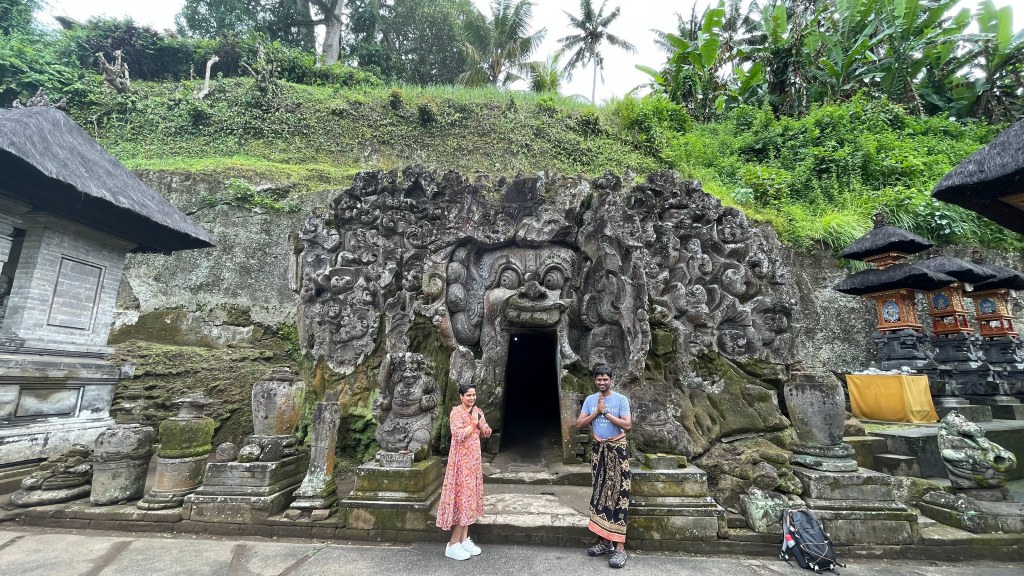
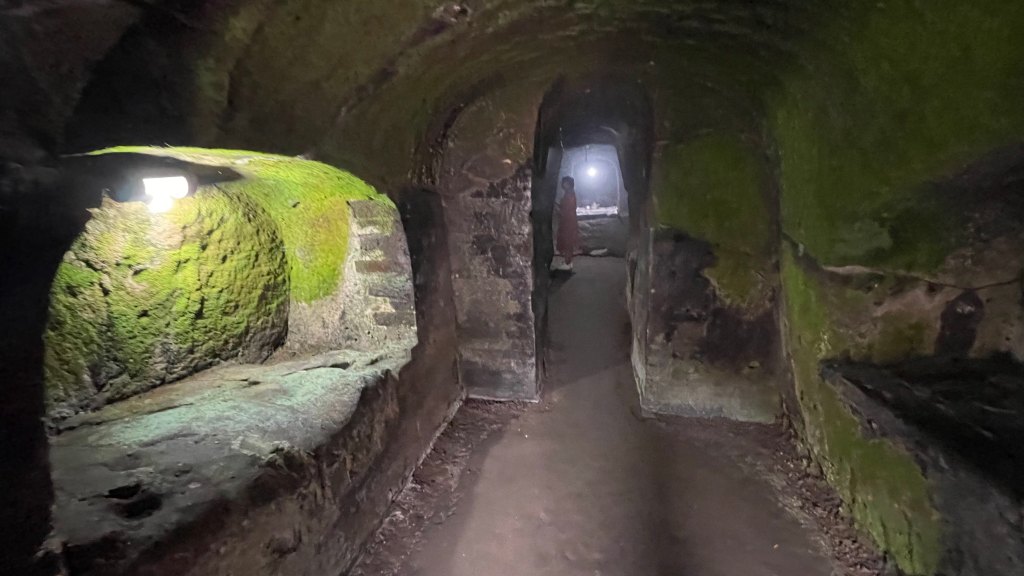
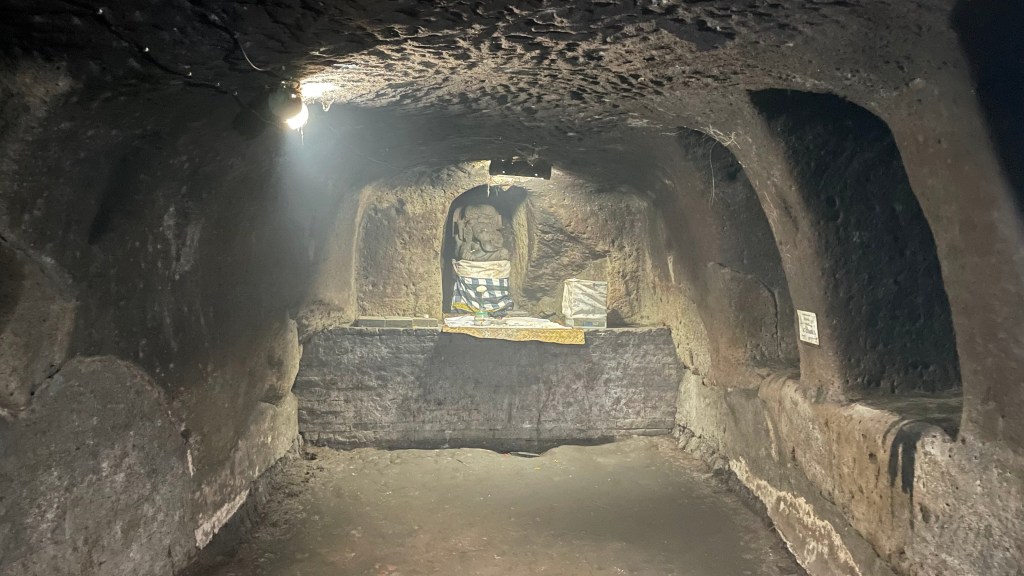
Goa Gajah literally means elephant caves. The temple requires everyone to cover their legs as a respect to the deity. Since I was donning a pair of shorts, I was offered a sarong which I gladly wore. I took a guide here who educated us about the history and significance of the temple. Built in the 11th century, this temple was dedicated to Lord Ganesha. An earthquake in 1917 buried this temple which was excavated by a Dutch archaeologist in 1923. As you enter the temple, the first thing that you see is a rectangular pool filled with water flowing out of stone structures. Balinese consider this water holy and frequently take bath in it. So, we also sprinkled some of this water on our head as a mark of respect before continuing our tour. The cave has two menacing heads carved in stone guarding its entrance. Popular belief is that it wards off the evil spirits. There are stone dugouts within the cave suggesting that it was used as a hermitage or sanctuary for spiritual meditation. The larger dugout was for the teacher while the smaller ones were for the students. There is a Ganesha statue within the cave. Additionally, there are three lingams depicting the 3 gods – Brahma, Vishnu and Mahesh. Although accredit a sacred Hindu site, many relics and close proximity to Buddhist temple suggest that this place also held great significance to early Buddhists.
The renovation effort after excavation is quite visible at Goa Gajah. For example, candi betar or the split gate have been built as part of renovation. The original temple was built of sandstone which erodes easily over a period of time; however, the renovations have been done with much stronger black stone. It is said that the excavations happened till 1950s but were stopped thereafter. There may still be many things buried underneath the massive boulders lying around or thick forest surrounding this place. But who knows!



Day 7, Dec 22nd 2022
The trip ended today. We checked out and left for Ngurah Rai International Airport. It was 2 hours’ drive so called our cab early in the morning the headed for the airport. We had a very relaxing stay at Ubud, all thanks to the awesome villa we stayed at. I would highly recommend anyone going to Bali to give this place a shot.
Bali has a mysterious charm to it. You go back home thinking how the Balinese artists who do such delicate carvings on the temple gate also build menacing faces on the very top of it. Isn’t that paradoxical? But that’s Bali for you. It attracts you with its natural beauty, mesmerizes you with its alluring artwork and then stuns you with its deep spirituality.



 Abhijeet Kumar Sinha
Hi Abhijeet, Wonderful trip to Bali and your description of all the places is excellent. Pictures are beautiful. Thankyou for this wonderful post. Leela
LikeLike