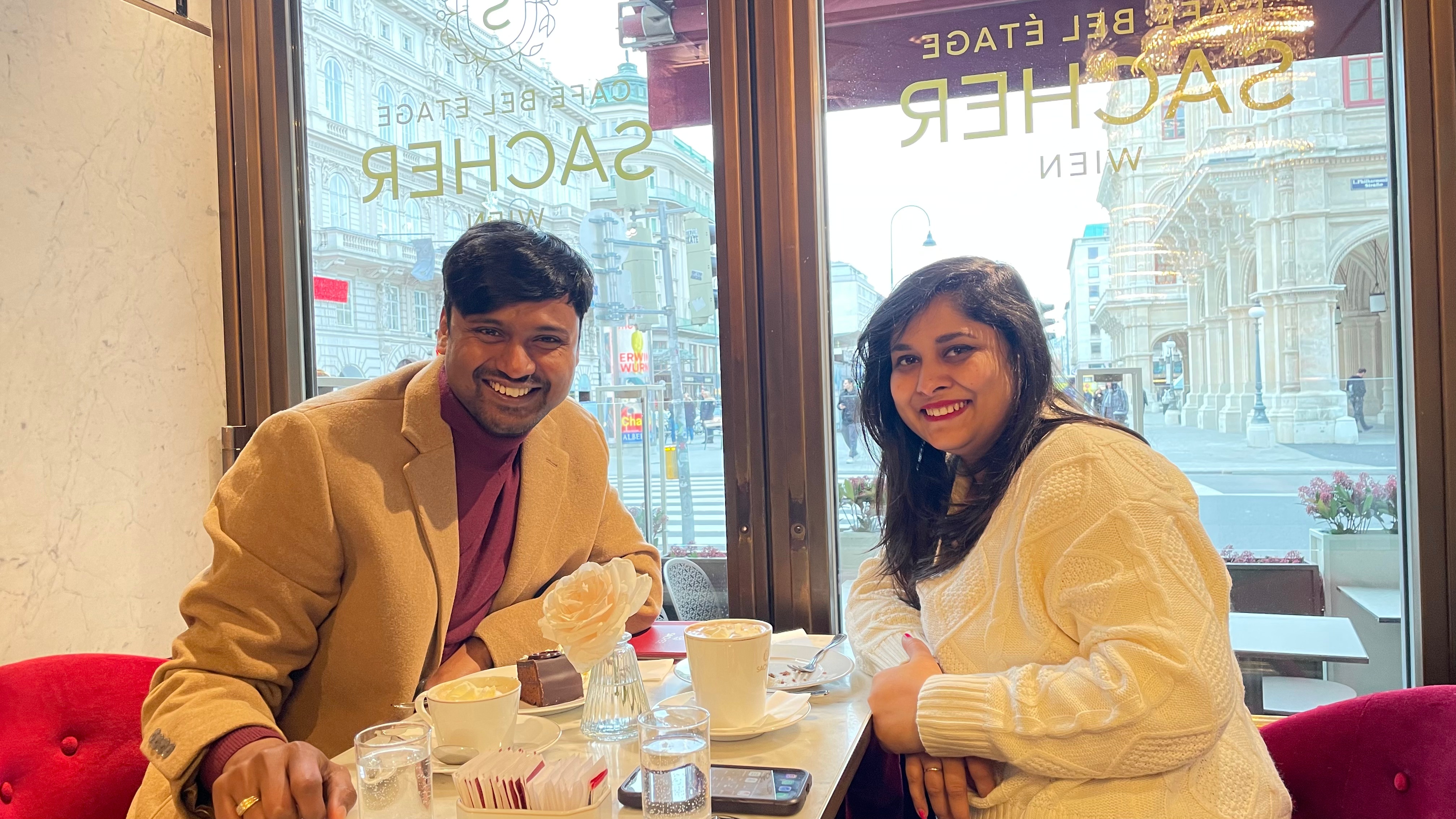
Nestled on the banks of the Danube River, Vienna is a delightful mix of history, culture and modernity which blend seamlessly to offer an experience which is second to none. Vienna – a city that started as just a puny roman military camp, grew in its stature so big that its sitting monarchs became a dominant family in Holy Roman empire from the mid-15th century until its dissolution in 1806. As you walk the historic streets that echo the footsteps of Mozart, Beethoven and Freud, the baroque streetscapes and imperial palaces glide you to a bygone era of unparalleled opulence. Vienna thrives on its rich musical tradition and above all some of the best coffeehouses where you can savor a slice of Sachertorte and satiate your epicurean pleasures. It’s a city that truly has it all…
History of Vienna
History of Vienna and Habsburg go hand-in-hand. Habsburgs have ruled Austria and nearby regions for more than 600 years with Vienna being the imperial seat. This dynasty has left indelible marks in shaping what this city is today.
Habsburgs’ journey started not in Vienna but in a small hamlet of Switzerland, called Habsburg where Radbot built a castle in 1020s. This castle lied enroute of a very popular trade route which made Habsburgs very rich. In 1273, Rudolf II became King of Romans. He defeated Ottokar II of Bohemia in 1276 which brought Habsburgs to Vienna and thus started their rule over Austria which lasted till 1918.
Austrian empire declined for a few centuries till Albert II became holy roman emperor. He was followed by his nephew Frederick III as the holy roman emperor in 1452. Frederick was defeated by King of Hungary Matthias Cornivus in 1485 and Habsburg family moved to Linz from Vienna. To regain power, Frederick married his son Maxmilian I to duchess of Burgundy (Belgium). He gradually built his stronghold and created it into the Kingdom of Netherlands. He took Austria back from Hungary. Maxmilian married his sons and daughters to powerful noble families of Europe. There is a famous saying attributed to him, “let others wage wars, Habsburgs marry”. He married his son Philip to daughter of King of Spain, Joana. As a result, Habsburgs ruled Spain for quite a while. He also developed familial relationships with Hungary to establish cordial relations with his southern neighbors. Philip’s son and Maxmilian’s grandson, Charles V became Holy Roman Emperor in 1519. Charles V inherited kingdom of Austria from his grandfather, kingdom of Netherlands from his father, kingdom of Spain and Sicily from his mother Joana. During his time, Christopher Columbus discovered America, so he even inherited that and other Spanish colonial possessions. No wonder, he was called “heir to the world”.
The next major Habsburg monarch was Maria Theresa who ruled between 1740 and 1780. Her father Charles VI didn’t have a male child, so she was a candidate for being Holy Roman Emperor. But many kings disagreed to bow to a woman, so her husband Francis was made Holy Roman Emperor, but she was the de facto ruler. She consolidated her empire with great political astuteness. Being a pious catholic, she despised Jews and Protestants. She had ordered Jews to be ghettoed in the region of Bohemia. However, his son and her successor Joseph II was complete opposite. He passed Edict of Tolerance of 1782 removing those restrictions and granting Jews the religious freedom. He was a big patron of musical geniuses Mozart and Beethoven who were his contemporaries. The last major emperor of Habsburg dynasty was Franz Joseph I who ruled from 1848 all the way till 1916. His wife Empress Elisabeth of Austria, affectionately known as Sisi, is a cult figure across Austria renowned for her nonchalant attitude towards rigid protocols of Habsburg court. He found these formalities stifling and preferred a more independent lifestyle. Franz Joseph was succeeded by Charles for a couple of years which ended in loss of World War I and the monarchy in Austria.
Austo-Hungarian empire
It was a multi-national constitutional monarchy set up in 1867 by Franz Joseph I. There were revolutions in Hungary around 1850 to get more political freedom, but it was suppressed. However, things changed when Austria lost the war with Prussia in 1866. After that defeat, German states looked at Prussia for leadership. This was a big morale blow for Austrian leadership. Tensions with Hungary was still brewing. So, a middle ground was reached which proposed continuance of monarchy in Hungary but provide more political freedom to Hungarians. This was good for Hungary as well. If Hungary obtained full freedom from Austrian empire, it would be an independent state surrounded by very powerful states like Russian empire and could have ended up becoming a puppet state. So, they shook hands with Austrian monarchy and continued in the empire while obtaining more freedom and prestige. This led to the creation of new Austro-Hungarian empire in 1867 with Franz Joseph I its first ruler. Each state had its own parliament and prime minister. Internal affairs were handled by parliament, but emperor handled military and foreign affairs. Emperor had veto power to any legislation. Austria and Hungary are equals; Austria was no longer an overlord of Hungary.
Till World War 1, Austro-Hungarian empire acted as a good buffer zone for western powers like England and France from the great Russian empire. But after Russian revolution during World War 1, they didn’t have that threat from Russia. They no longer needed this strong empire. So, the victorious countries chose to break apart this empire after the war and created many independent countries including Austria, Hungary and Czechoslovakia.
Public transportation in Vienna
No surprises here. The best way to roam around Vienna is using its public transport. We purchased Vienna City Card for 7 days from WienMobil app. It provided unlimited access to its public transportation. Note that Vienna City Card is different from Vienna City Pass. Vienna City Card provides discounts on a bunch of Vienna’s attractions, while Vienna City Card was only for public transportation. I felt Vienna City Pass was a bit expensive for my requirements. It works for those who want to visit a lot of attractions in a short time.
Day 6, Dec 22nd 2024
We took a RegioJet train from Prague to Vienna. Pre-booking your train ticket is highly recommended as purchasing it from the station can be quite expensive. It was a peaceful 4-hour train ride. Shalini mostly slept while I read and planned our upcoming days in Vienna. We reached our destination around 1.30PM. We took a Uber to our Airbnb as I was unsure how the public transport would work. But in hindsight I feel I could have saved my Uber money. I purchased 7-day Vienna City Card later that day anyway. Trust Google Maps and back yourself up 😊.
It was a lazy day. We didn’t do anything, just rested.
Day 7, Dec 23rd 2024
Café Sacher
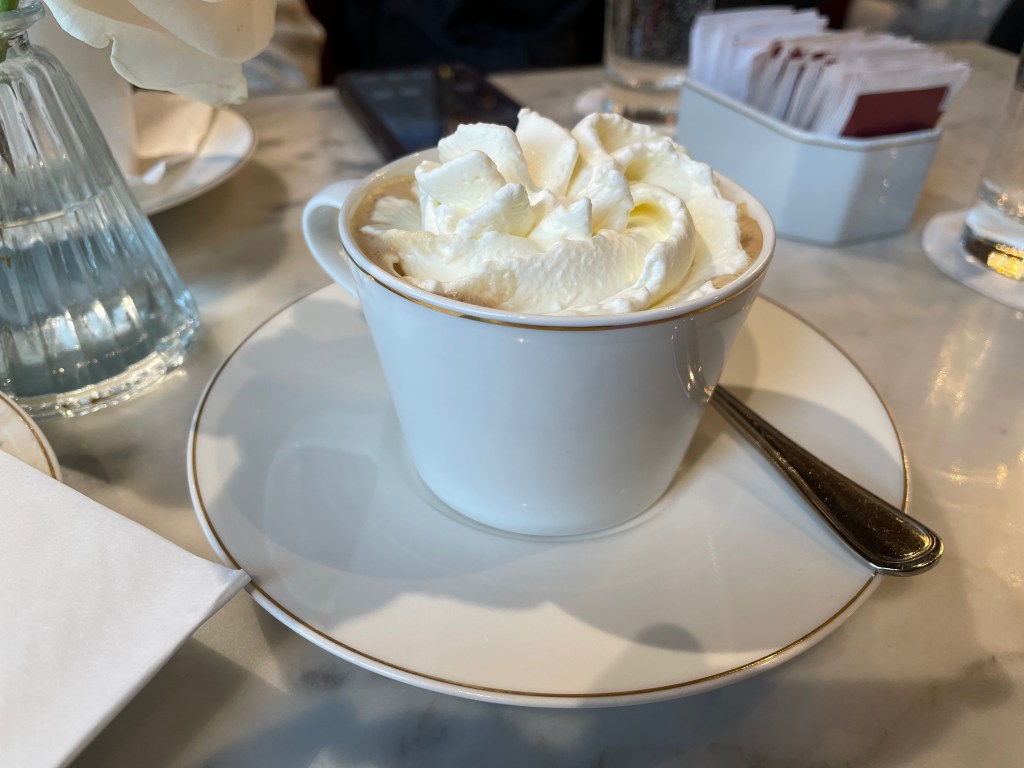
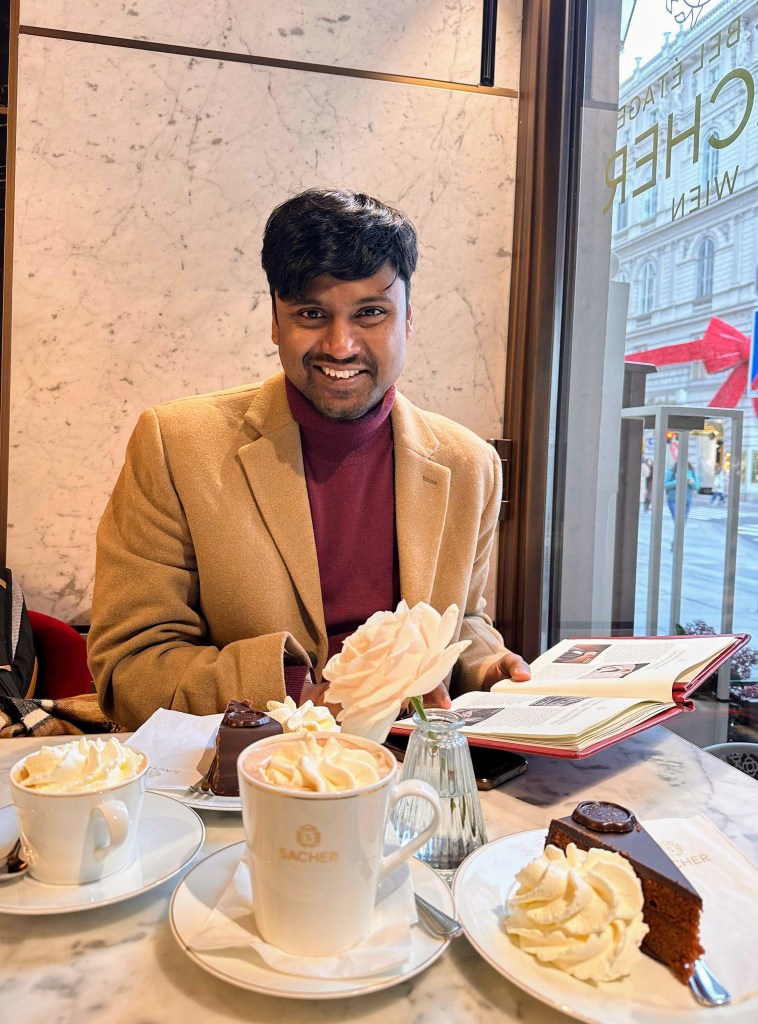
What better way to start your morning than with a coffee and Sachertorte at the legendary Hotel Sacher? Hotel Sacher is a luxury hotel established by Eduard Sacher in 1876. After his death his wife Anna took over its management. Right opposite of Vienna State Opera, Hotel Sacher was the hotspot of Vienna’s glamourous life where aristocrats, politicians and artists met for legendary parties. The hotel runs a café on its ground floor where they serve its most sought-after Sachertorte. Developed originally by Franz Sacher (Eduard’s father) supposedly in 1832, Sachertorte is a chocolate cake with a thin layer of apricot jam in between and dark chocolate icing on the top. It is served with unsweetened whipped cream. This place is so much in demand that we had to stand in queue for half an hour in freezing cold early morning to get a seat. But the experience was worth it.


Free walking tour
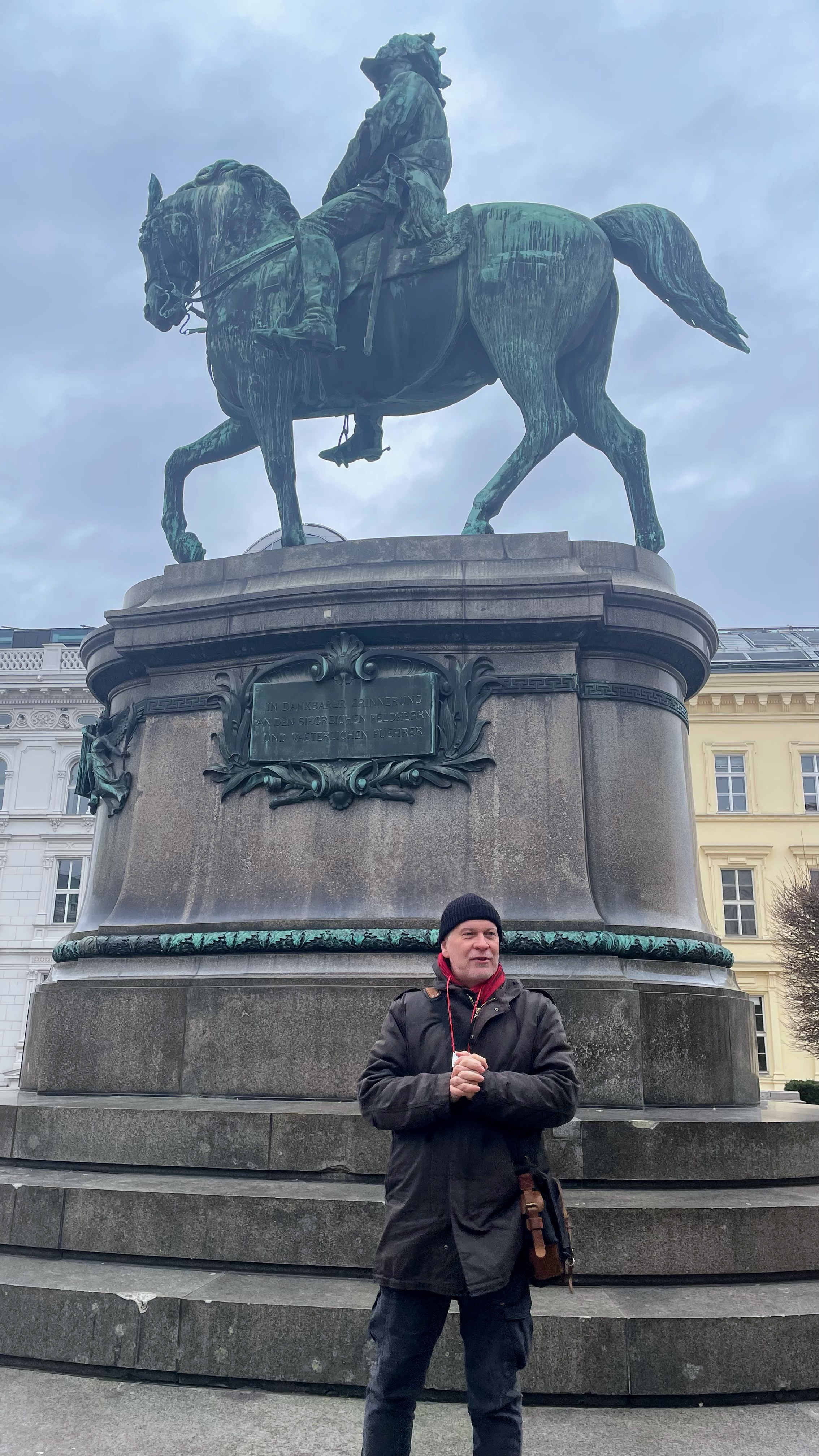
We booked a free walking tour with Good Vienna Tours at 10AM. Vienna is well-known for awesome tour guides and our guide Michael didn’t disappoint. He was very animated, knowledgeable and wisecrack. We started with Albertina Museum and then walked right through Burggarten. Inside Burggarten we stopped at statues of Franz Joseph I and Mozart for small anecdotes from their lives. Walking further we entered Hofburg complex and reached Heldenplatz where we learnt about the two equestrian statues of Prince Charles and Eugene. Michael showed us the balcony from where Hitler gave his speech after occupying Austria during 2nd World War. Walking further, we went to Michaelplatz, Spanish Horse-Riding school and eventually at St Stephen’s Cathedral where our tour ended. I will rate this walking tour among the best I ever had. Michael the storyteller definitely gets the most credit, but I feel the story of Vienna also packs a punch.


Rathaus – Vienna’s city hall
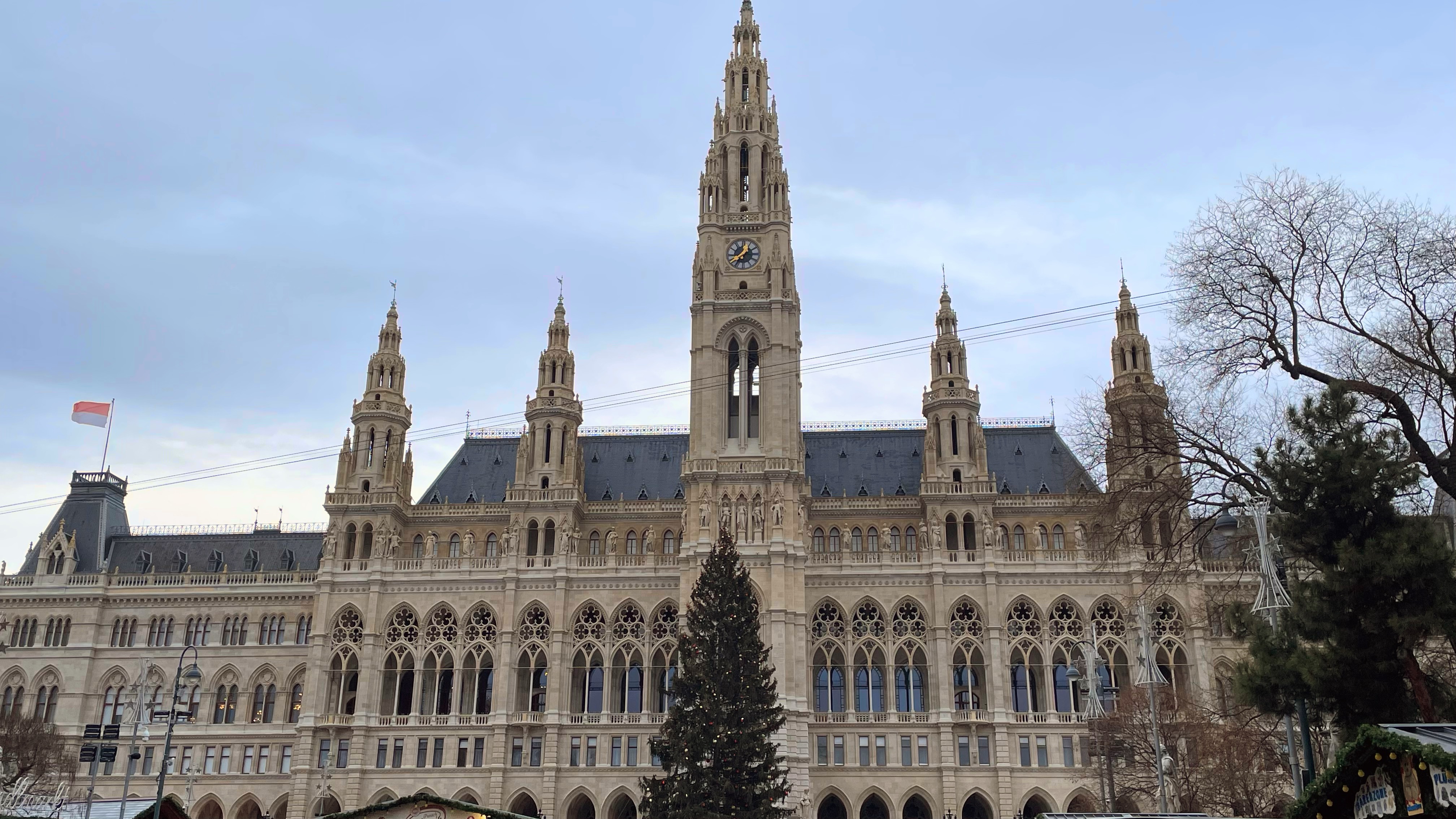
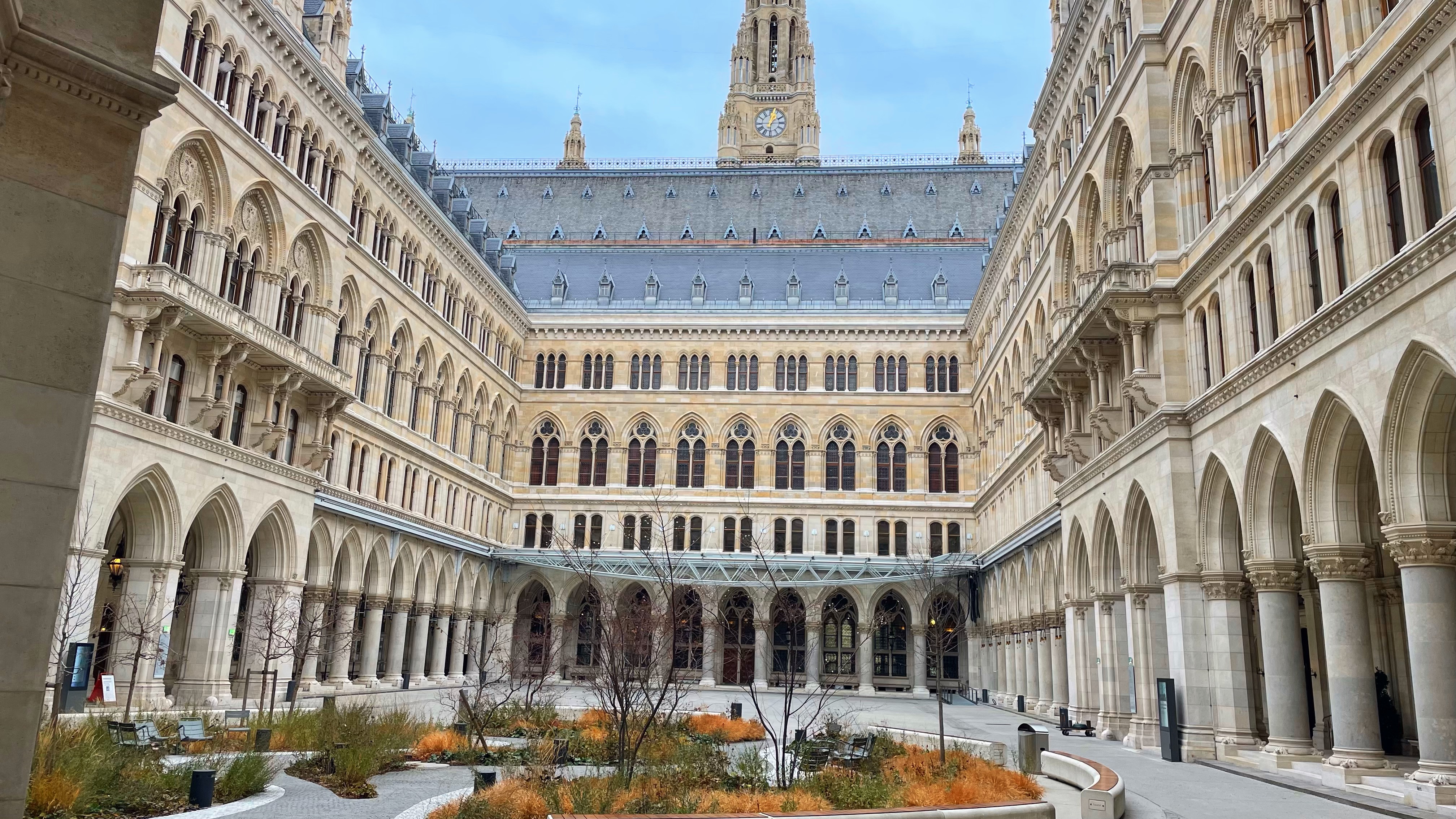
Rathaus is Vienna’s city hall. It is touted as the most expensive monument built in Vienna in the 19th century. Designed by Fredrick von Schmidt, the construction of this incredible neo-gothic marvel started in 1872 and lasted till 1883. Today, it is the seat of local government of Vienna and houses its mayor’s office. Rathaus has 5 towers including the central tower which is 98 meters high. The height of the central tower was purposefully limited so that no secular building could be larger than nearby Votive Church. But Frederick von Schmidt was not impressed. So, he created Rathausmann statue and placed it on top of the central tower. Rathausmann is 5.4 meters high and weighs about 600 kg. It is standing because of an 800kg spherical counterweight which makes Ratausmann act as a pendulum. During strong winds, it can sway up to 25 cm.
Important tip – There is a free walking tour every Monday, Wednesday and Friday at 1PM. But this tour cannot be booked online. You must purchase tickets at the Town Hall. It is available on a first come, first served basis to first 50 tourists. The website says you can pick up your tickets by 10AM, but it gets filled very fast. So, it is important that you are at the City Hall to reserve your spot at 8 AM when it opens. You can find more details here – Guided tours through the Vienna City Hall.
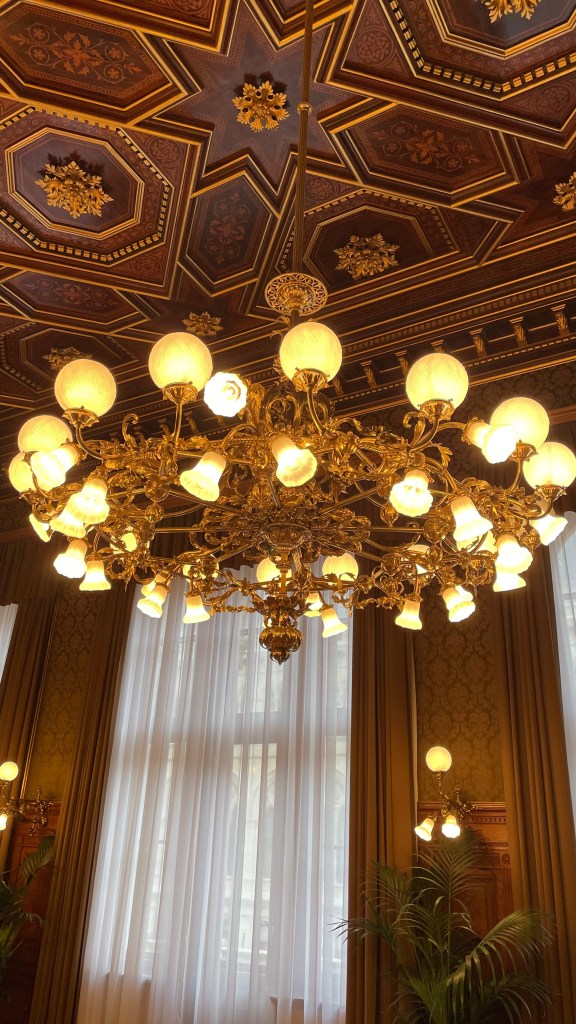
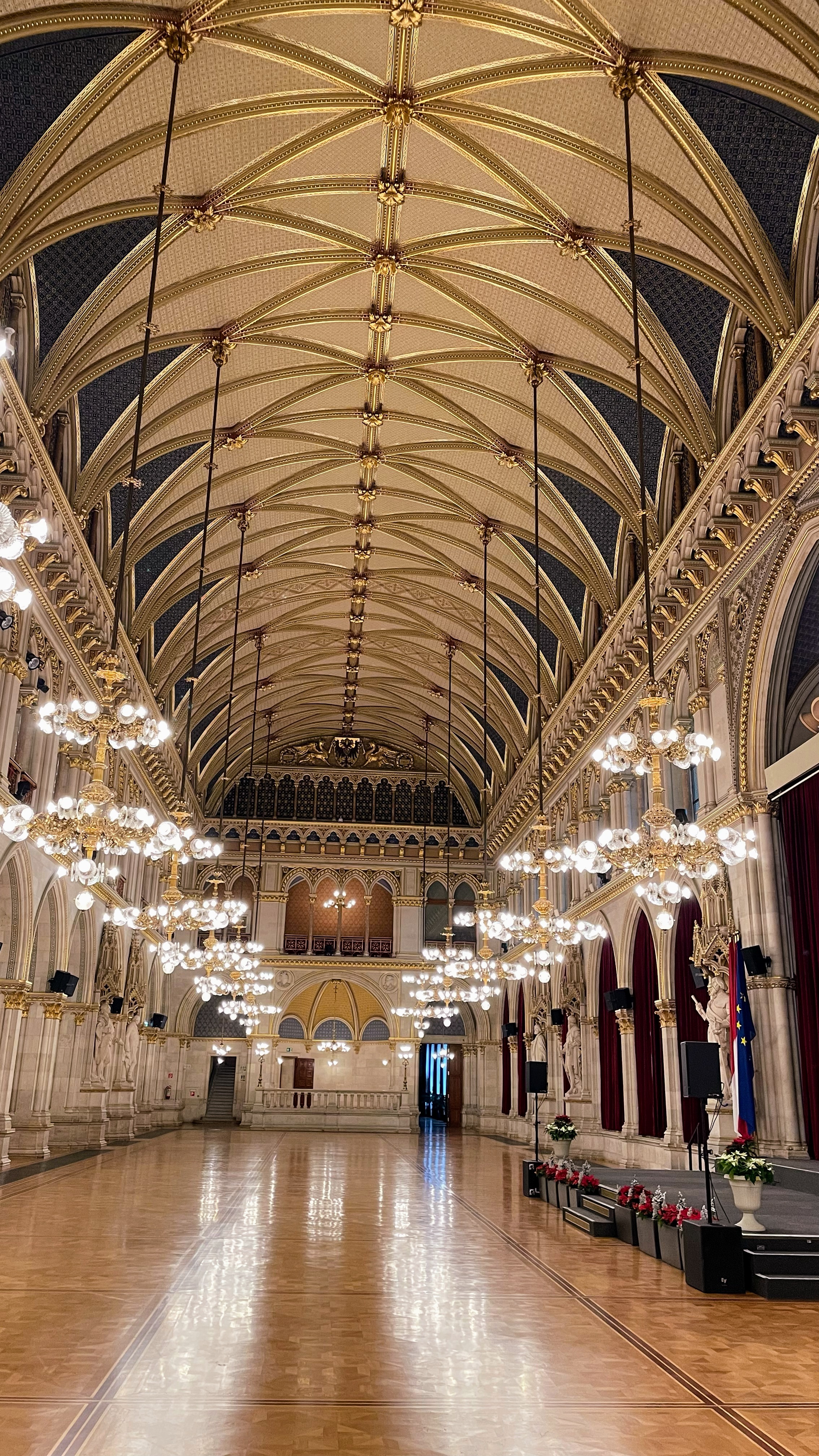
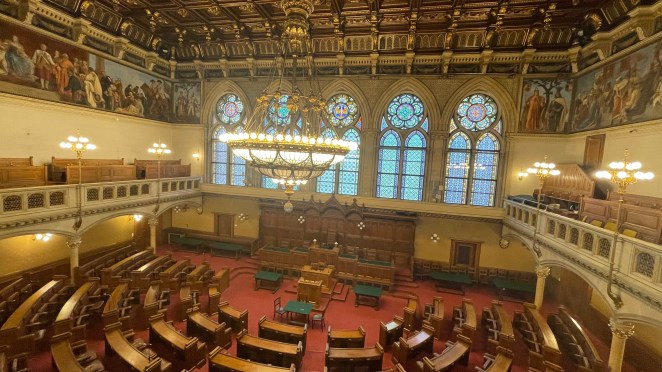
We had picked up our tickets for the guided tour at 8 AM that day before heading to Café Sacher. Our walking tour ended at 12.30 PM, so we quickly took the metro towards Rathaus for the 1-hour guided tour. The tour is in German, but you get a free audio guide in English. The guide took us through different halls inside Rathaus like senate hall, and festival hall. At 1450 square meters, the festive hall of Vienna City Hall was the largest in entire Austria. We ended the tour with council chamber where legislative assembly meets. The ceilings of many of these halls were made of expensive rosewood or mahogany and adorned with 22-carat gold lining. With ornate chandeliers hanging at the center. The heating system of the palaces and chandeliers used gas till 19th century after which electricity was used.



Christmas market
Significance of Christmas markets
Christmas markets in German is called Christkindlmarkt, literally meaning Christ child market. These Christmas markets are held during the four weeks of Advent (waiting for birth of baby Jesus).
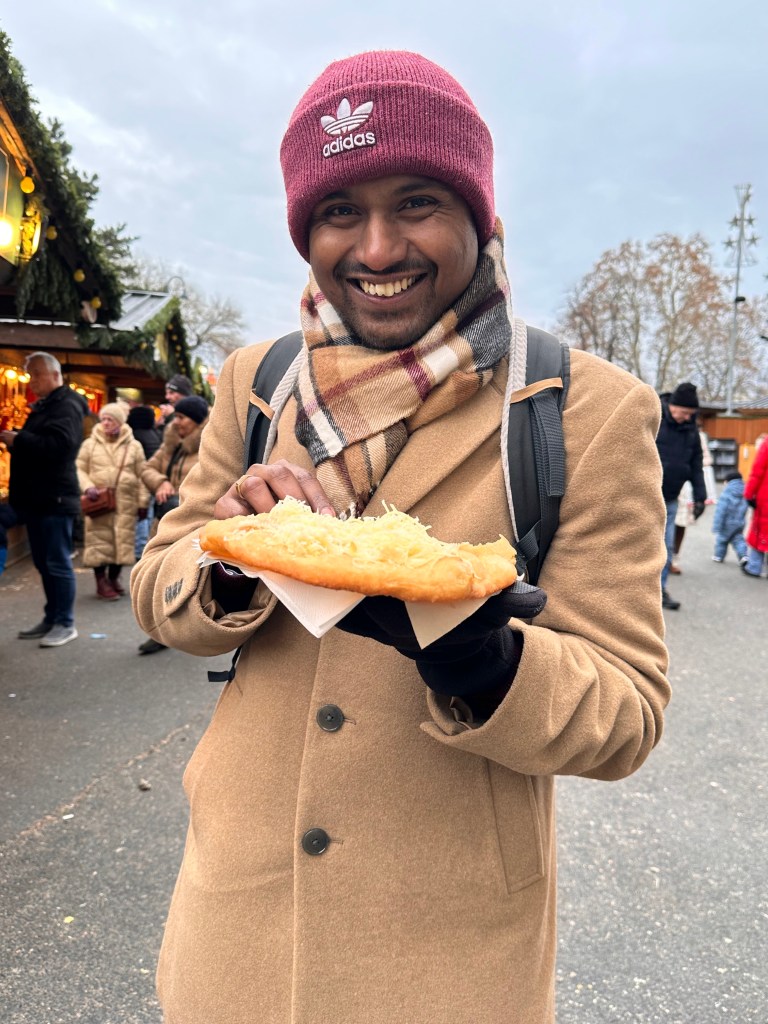
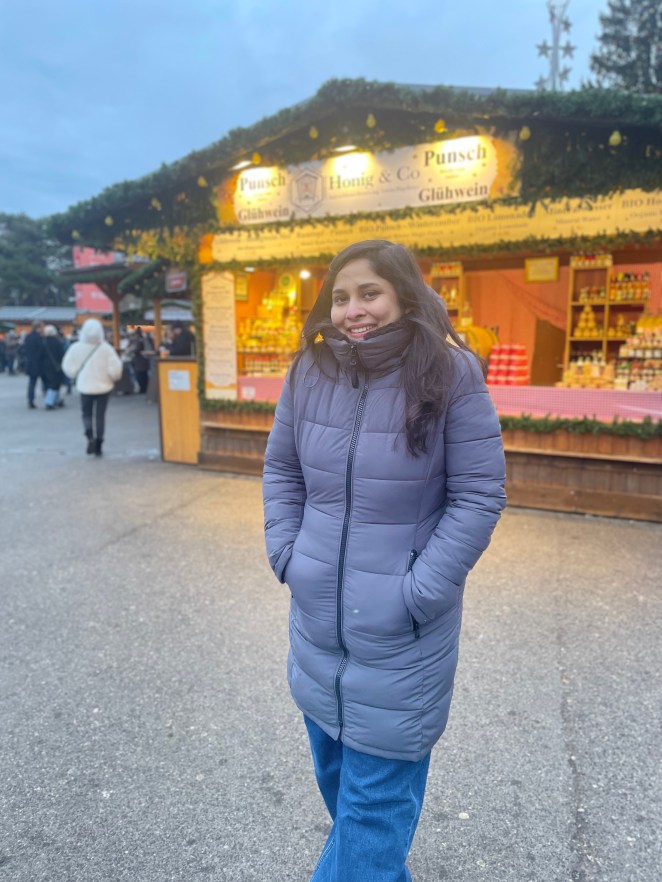
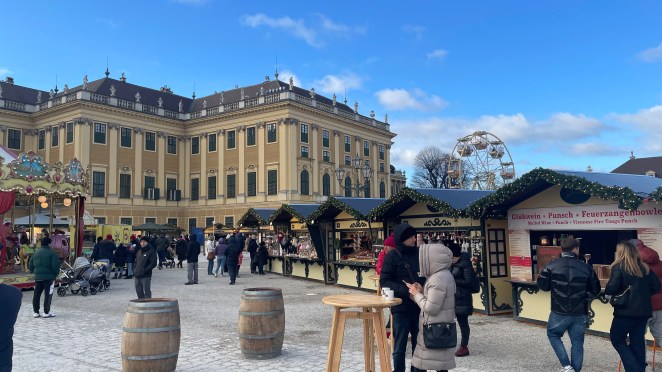
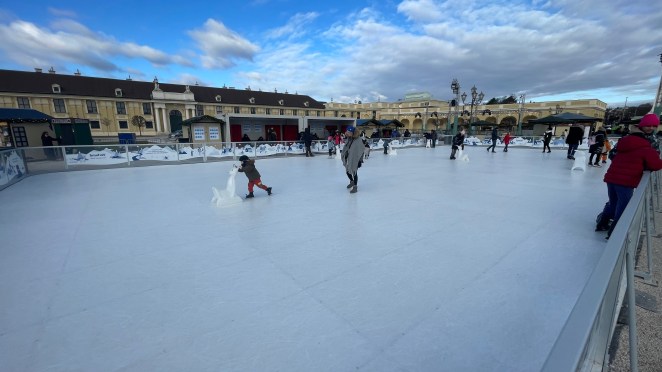
The vast area outside Rathaus is called Rathausplatz which hosts Vienna Christmas World – largest Christmas market in Vienna and one of the most well-known across the world. The Christmas market at Rathaus was much bigger than what we saw in Prague. It had big ice-skating rink, carousels and even a giant wheel. We tried different delicacies there including cream roll and ultra popular langos.
Around 4 PM, we came back to our Airbnb. We cooked our dinner and rested for the remainder of the day.



Day 8, Dec 24th 2024
I purchased Sisi ticket which combines 3 imperial attractions – (1) grand tour of Schonbrunn Palace, (2) Imperial apartments of Vienna Hofburg and (3) Sisi museum. It is valid for up to 1 year since the date of purchase and the admission does not restriction of any timeslot. Regular price is €49, but the Vienna City Card holders pay €45. The price also includes an audio guide. For me this was a better deal because I can explore it at my own pace. More details here – Sisi Ticket | Sisi Museum.
Schonbrunn Palace
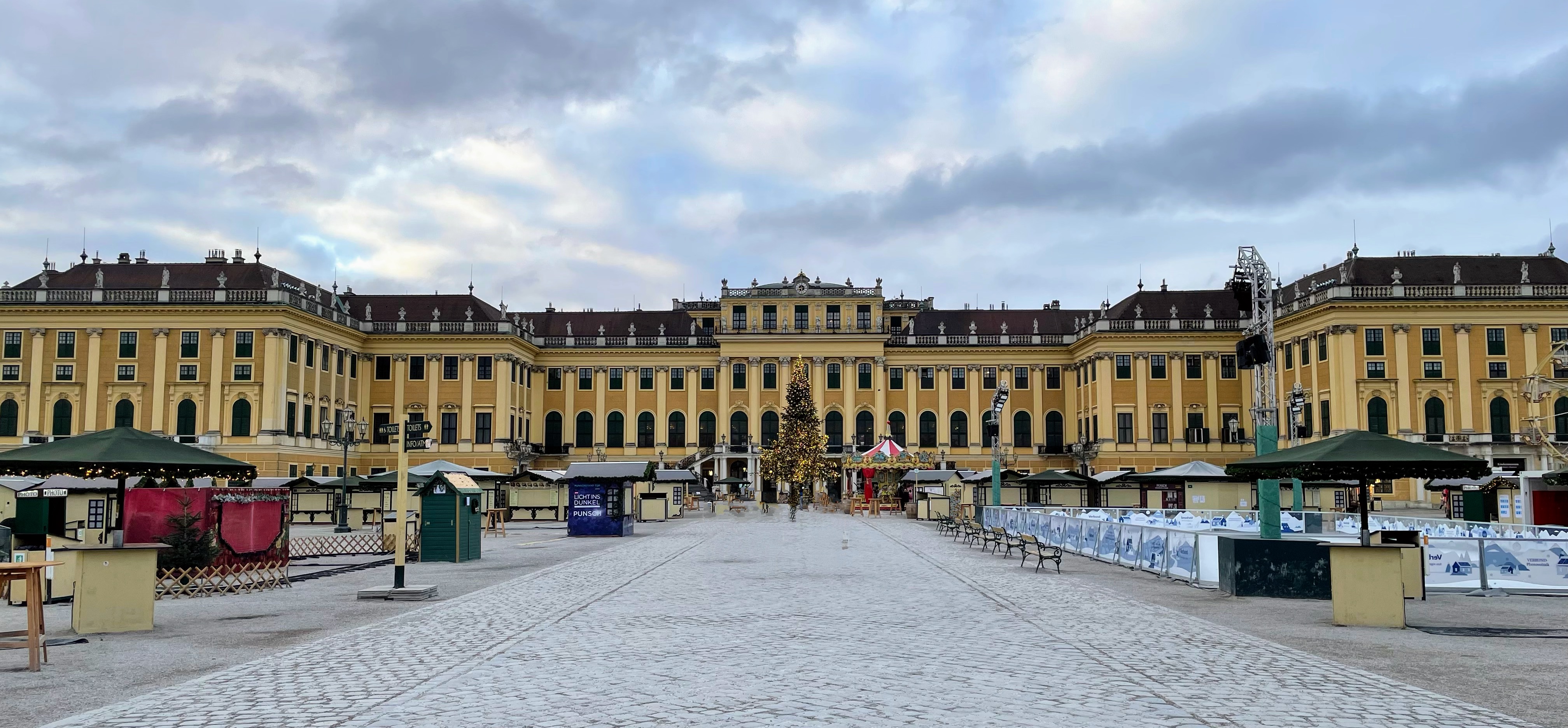
Schonbrunn is a treasure trove of Viennese history and a testament of opulent luxury. It was built in its current neoclassical style under the reign of Maria Theresa in 1740-1750s. This palace was summer residence of Habsburgs. Franz Jospeh, the longest reigning emperor of Austria, was born at Schonbrunn and he also died here at the age of 86 on 21st Nov 1916. Following the downfall of Habsburg monarchy after the 1st World War in 1918, this palace became the property of Austrian Republic.
Schonbrunn exterior façade is characterized by a grand yellow façade with brown roofs adorned with beautiful sculptures. The expansive gardens feature meticulously manicured lawns, and ornate fountains create a picturesque setting that compliments the palace’s majestic aura. Inside the palace there are 1441 rooms.
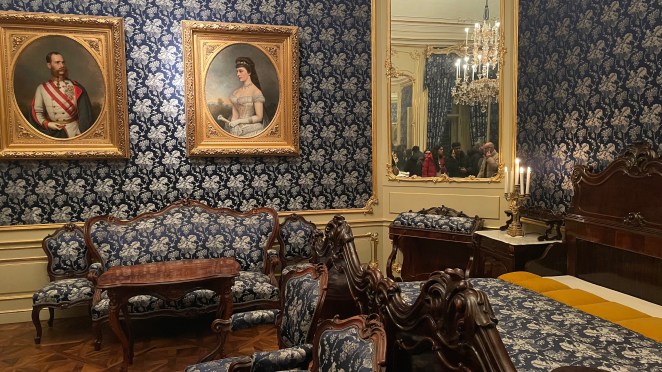
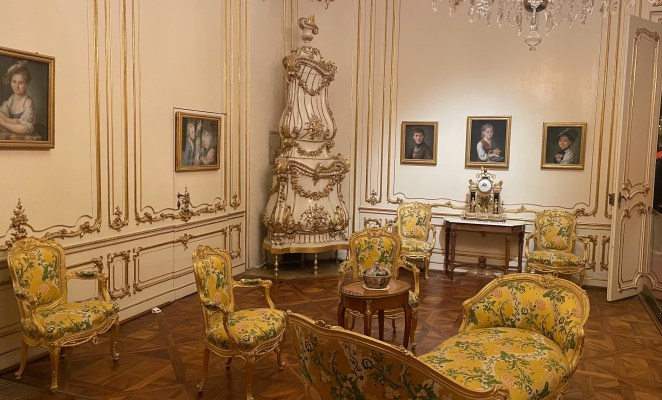
The grand tour of Schonbrunn included about 40 rooms. The tour takes you through several rooms that were occupied by Emperor Franz Joseph I and his wife Empress Sisi. On display is also the bed where he took his last breath. We saw the meticulously designed bedroom of Franz Joseph and Empress Sisi and the guest room. Each and every room had interiors that were characterized by lavish decorations, intricate stucco work and elaborate frescos.
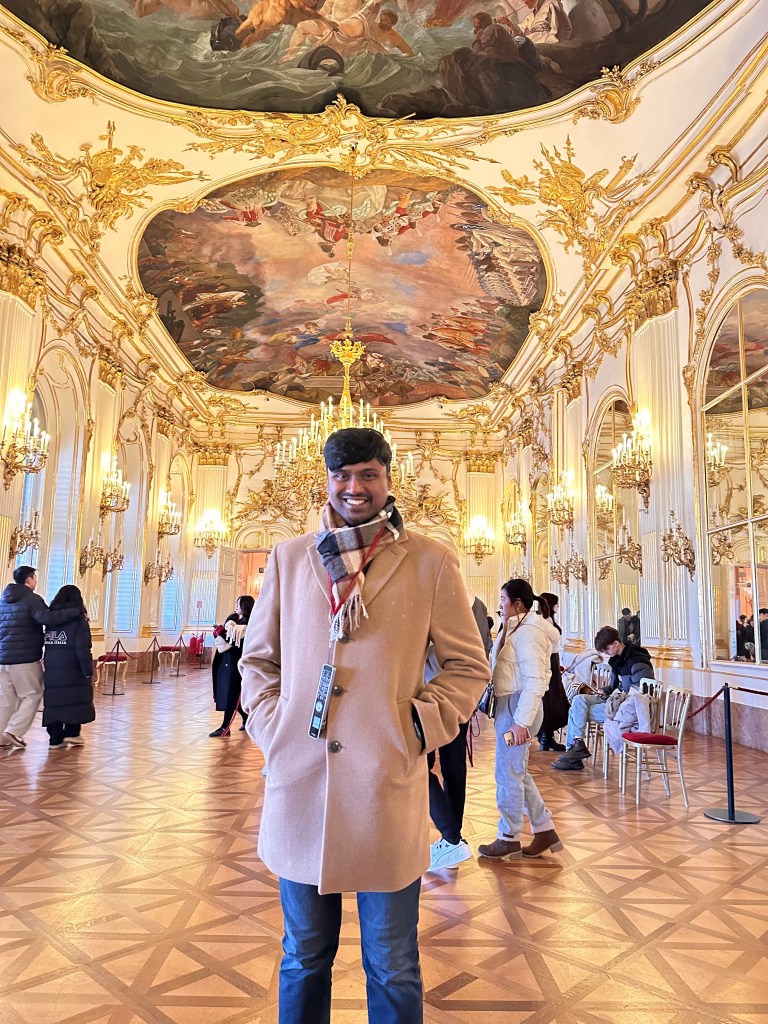
The highlight of entire tour was The Great Gallery. Measuring 43 meters in length and nearly 10 meters in width, this grand hall was the ceremonial heart of the entire palace with ideal setting for courtly events such as balls, receptions, and banquets. The interior of the hall is delicate gilt stucco work and ceiling frescos painted by Italian painter Gregorio Guglielmi. These frescoes depict allegorical scenes glorifying the Habsburg rule under Maria Theresa, with personifications of virtues and representations of the Habsburg Crown Lands. The hall has tall windows which allowed the natural light to flood the space which was further accentuated by large mirrors. This created an illusion of even greater expansiveness. It has numerous chandeliers and wall sconces originally placed to hold candles but were later adapted for electric lighting. The very hall was the place John F. Kenndy and Nikita Khruschev met in 1963.
Overall, Schonbrunn palace is a harmonious blend of different architectural styles. From simple minimalistic neo-classical façade to rich opulent baroque and rococo interiors, it reflects the passage of time and influence of different rulers.



Naschmarkt
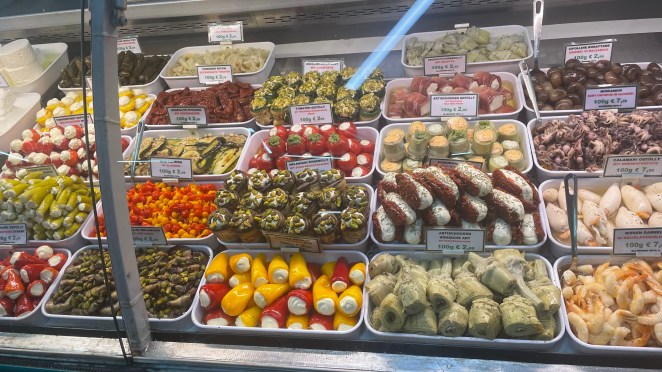
Naschmarkt is an open-air food and gourmet market that stretches for about 1.5km. Naschmarkt has two main alleyways. One of them is lined with restaurants while the other is dominated by food stalls. You want olives or baklava? Name your size, color or flavor. Shop owners rush over to offer free falafel or cheese. On the one hand there are shops selling fresh produce, stuffed dates, pickles, exotic herbs, and sea foods of all types, while on the other the irresistible aroma of freshly baked bread fills your nostrils, enticing you to explore further. As you walk along the narrow, yet bustling pathway lined by shops on both the sides you will witness a sudden blast of colors, aroma and Vienna’s cultural and culinary diversity.
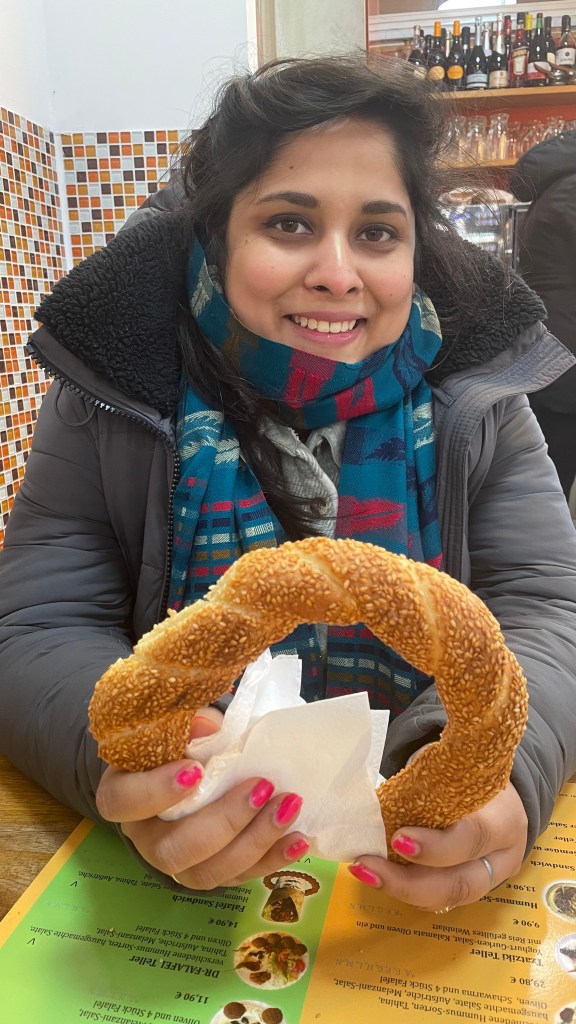
We couldn’t resist ourselves. We tried falafel wrap and “currified” chicken shawarma at Dr. Falafel. The chicken shawarma was so unique and delicious that the next day we went there again but the shop was closed due to Christmas.



St. Stephen’s Cathedral
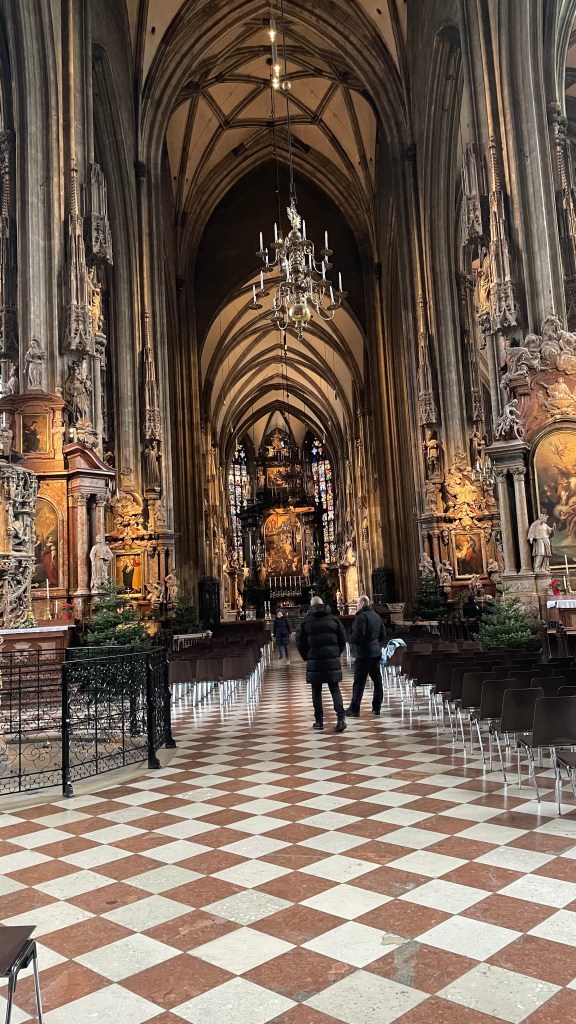
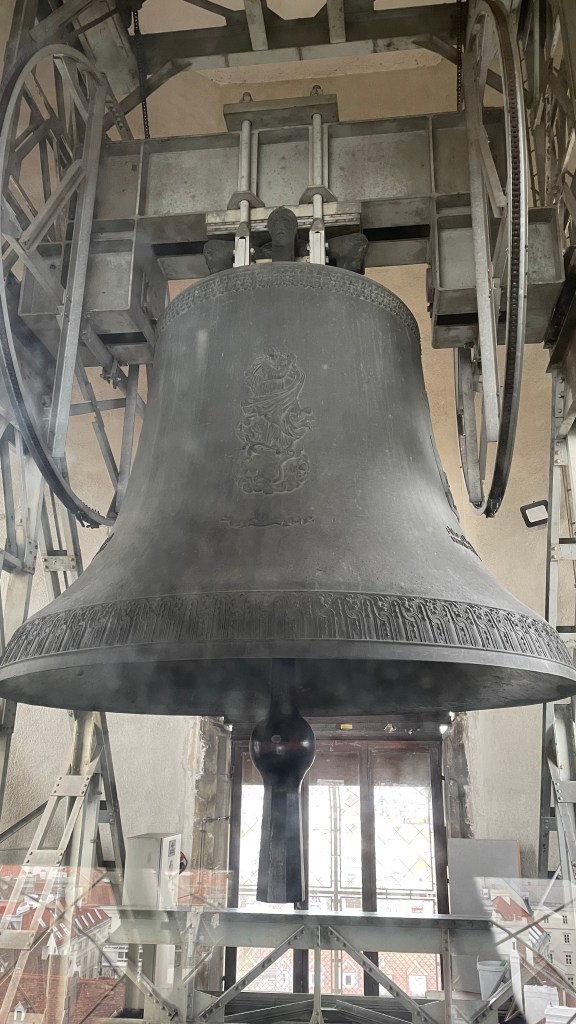
St. Stephens cathedral is the main mother church of the Roman Catholic Archdiocese and is where the seat of the archbishop is, therefore, it is the most important Roman Catholic church in the whole of Austria! The history of St. Stephen’s Cathedral or Stephansdom, dates back to the 12th century. The original church was constructed around 1137 and consecrated in 1147. However, it was largely destroyed by a fire in 1258. The current Romanesque and Gothic structure was initiated by Duke Rudolf IV in the 14th century and stands on the ruins of the earlier churches. Built of limestone, the cathedral is 107 meters long, 40 meters wide, and 136 meters tall at its highest point. It has two main towers. The construction of the south tower, which is taller of the two, stands at 136 meters tall and lasted for 65 years, from 1368 to 1433. The north tower, originally planned to mimic its southern sister, couldn’t get itself funded and stands at meagre 68 meters. However, it houses a 20-ton bell which is the second heaviest in the entire Europe.
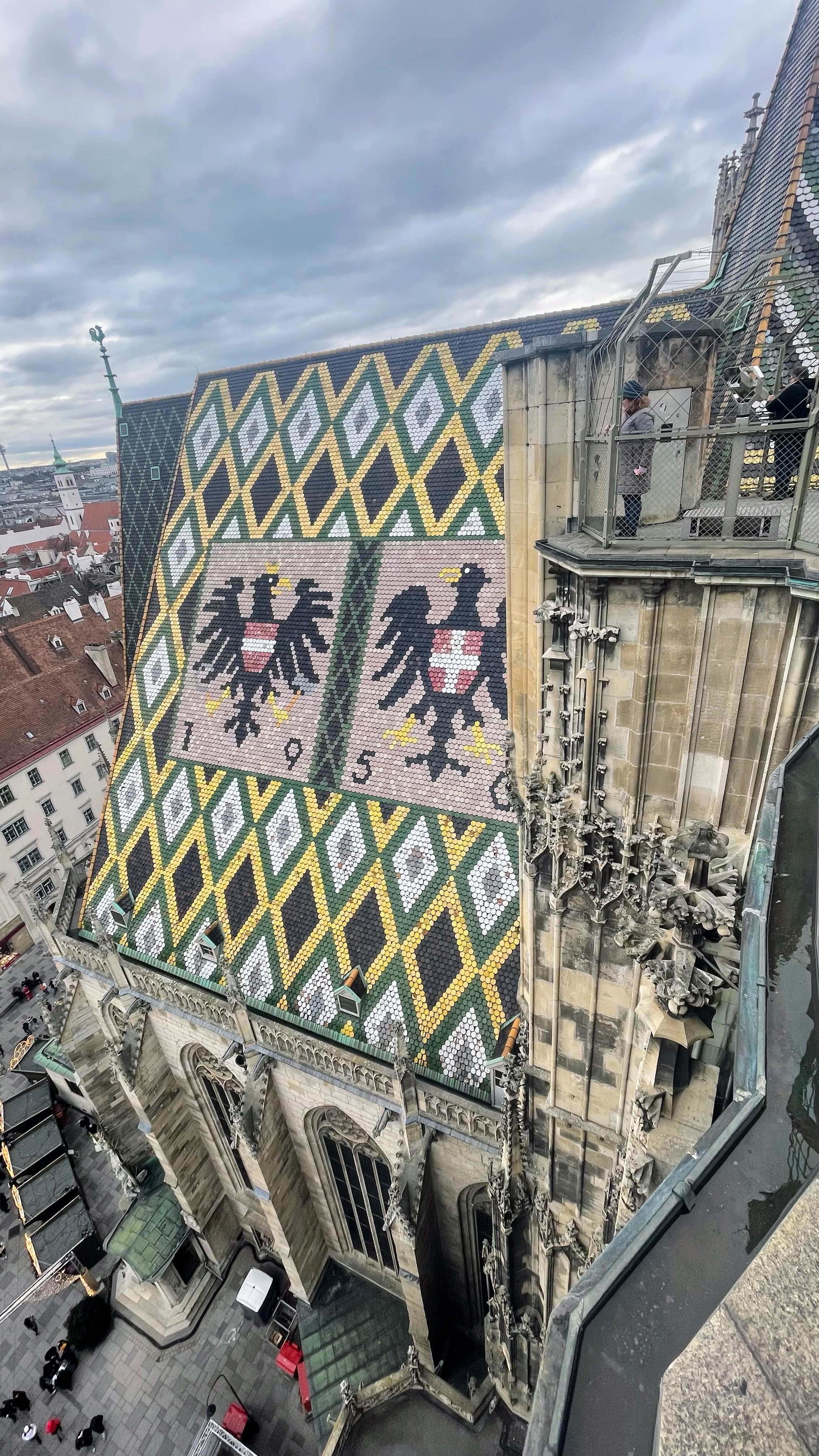
The most striking feature of the cathedral is its striking multi-colored roof made up of 230,000 tiles, which features a distinctive diamond pattern in white, yellow, green, and brown. The 17-degree roof doesn’t allow any snow to accumulate and cleans itself with rainwater. During 2nd world war, a fire destroyed the timbered roof and didactic stained glasses of the church. It was reconstructed with people’s contributions to its original colorful splendor in 1950.
The high altar of the church depicts the stoning of St. Stephen on a marble slab. St. Stephen was the first martyr of Christianity. It has another Wiener Neustädter Altar to its left and the tomb of Frederick III to its right. Another remarkable feature is its intricately carved stone pulpit with relief portraits of four original church fathers (St. Augustine, St. Ambrose, St. Gregory and St. Jerome).
St. Stephens Cathedral has witnessed many significant events of Austrian history including Mozart’s wedding and Anton Vivaldi’s funeral. It is that Gothic needle around which entire Vienna spins.


Café Mozart
Just round the corner from Café Sacher and in front of Albertina is yet another legendary coffeehouse – Café Mozart. It was established by Georg Pohlein in 1794. In 1825, Simon Corra introduced an outdoor seating area which was first of its kind in Vienna. Whether you’re looking to enjoy a leisurely breakfast, a business lunch, or a late-night glass of wine, Café Mozart provides a welcoming and sophisticated environment that embodies the spirit of Vienna.
We tried warm apple strudel, café Mozart chocolate cake (a rival to Sachertorte) and traditional Viennese coffee.

Day 9, Dec 25th 2024
Sisi Museum
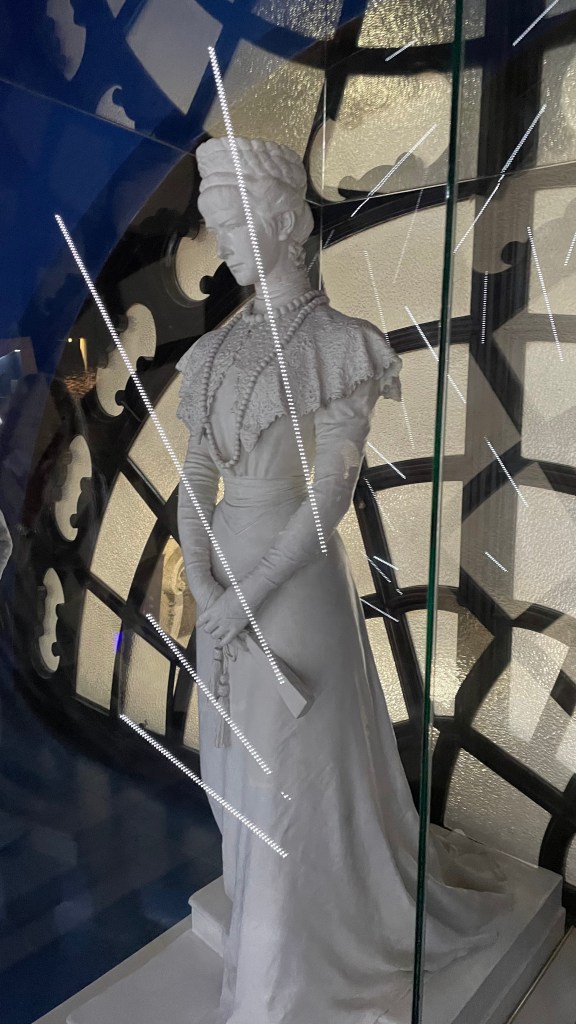
This museum is dedicated to Empress Elizabeth of Austria, wife of Franz Joseph I, who was affectionately called Sisi. She was of a very carefree nature and felt stifled amidst the rigid traditions of Habsburg court. She met with a tragic end when an anarchist murdered her in 1898. Located within the Hofburg Palace complex, this museum offers an intimate glimpse into the life of Empress Sisi. The museum houses over 300 personal items that belonged to the Empress including her dresses, parasols, gloves, and beauty preparations.


Hofburg
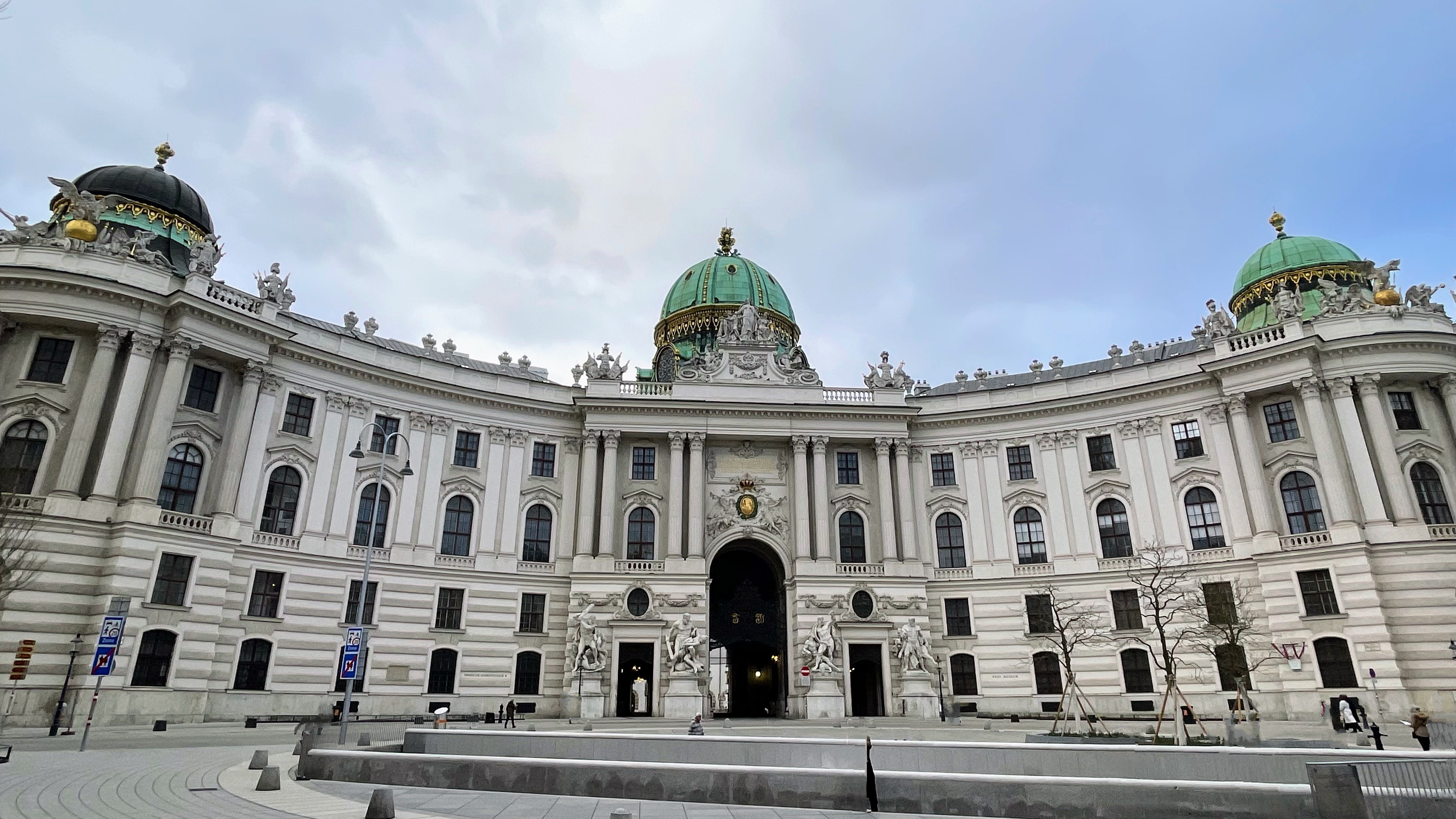
Hofburg translates to “castle of the court”. This palatial complex has been the residence of Habsburg for 600 years and thus the center of Holy Roman Empire. After the creation of Schonbrunn palace, it became their winter residence. Hofburg is the second largest palace complex in the world behind Louvre Palace in France. Located in the center of Vienna, it was built in 13th century by Ottokar II, the Bohemian king who was defeated by Habsburg king Rudolf. It was expended significantly under the Habsburgs.
The 3 key attractions of Hofburg are – (1) Imperial apartments, (2) Imperial treasury and (3) Spanish Riding school. Our Sisi ticket included a visit to imperial apartments.
Similar to Schonbrunn Palace, lavishly decorated rooms of the imperial apartments of Hofburg provide insight into the opulent lifestyle of the Habsburgs. Visitors can explore the private chambers of Emperor Franz Joseph and Empress Sisi, adorned with exquisite furnishings and artworks. The Hofburg Palace is an architectural marvel, showcasing a blend of Gothic, Renaissance, Baroque, and Rococo styles. The complex is home to several museums, including the Sisi Museum which we visited before.
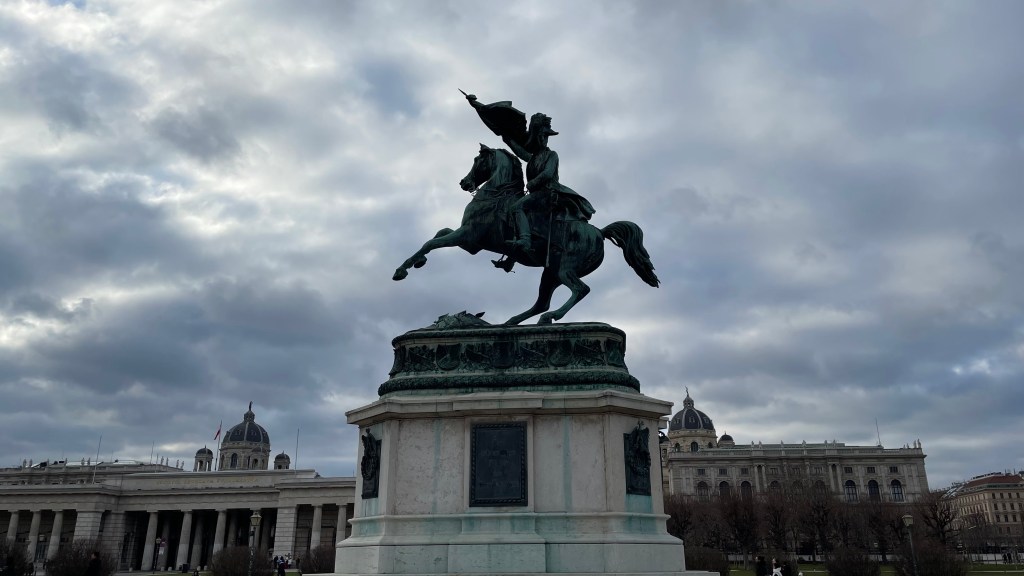
In front of the palace is a vast open public space in front of – Heldenplatz, or Hero’s square. It was ordered to be built by Emperor Franz Joseph I. It boasts of two equestrian statues of Archduke Charles of Austria and Prince Eugene of Savoy. The statue of Prince Charles stands on just two hoofs of the horse. It is said that the sculptor could not recreate his own masterpiece the second time. So, the statue of Prince Eugene rests on two hoofs and the horse’s tail. It is this place from where Adolf Hitler made ceremonial announcement of annexation of Austria into Nazi Germany on 15th March 1938. The balcony where Hitler stood for his speech has been permanently closed now.


St Peter Catholic Church
St. Peter’s Church (Peterskirche) in Vienna is a stunning example of Baroque architecture, both in its exterior and interior design. The exterior of St. Peter’s Church is characterized by its impressive Baroque façade, which was inspired by St. Peter’s Basilica in Rome. But it is not as expansive as its Vatican sister. This is much smaller and constrained in space. It was constructed between 1701 and 1722. The altarpiece portrays the Healing of the Lame by St. Peter and St. John in Jerusalem.
We got the unique privilege to listen to Vienna boys’ choir who were performing mass on this Christmas day at St. Peter’s Church.
Café Demel
Café Demel in Vienna is a historic and iconic coffee house that has been a staple of Viennese culture since its establishment in 1786 by confectioner Ludwig Dehne. In 1857, Dehne’s apprentice, Christoph Demel, took over the business, and it was later managed by his sons, Joseph and Karl, who moved the café to its current location at the Palais am Kohlmarkt in 1888. The patrons of Café Demel included Emperor Franz Joseph and Empress Sisi. They have the title of Purveyor to the Imperial Royal Court. This title is granted to businesses who provide services or goods to the royal court.
One of the signature deserts here is Kaiserschmarrn, which literally means “Emperor’s mess” as Franz Joseph loved it. It is shredded pancakes topped with plum sauce and powdered sugar. And sure, we tried it.

Auf Wiedersehen, Wien!
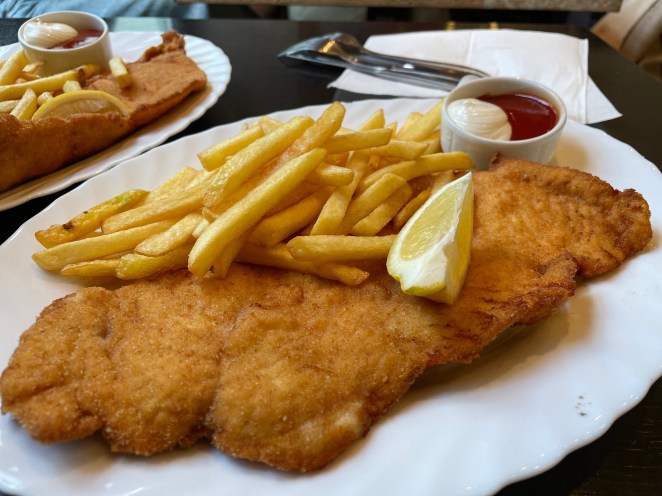
We couldn’t have left Vienna without trying its famous Schnitzel. We went to Opern Schnitzel near Naschmarkt to try. It was different than fried chicken you get in United States. The meat was beaten thin, and the crust was super crispy. It was served with lemon and ketchup.
This was our last full day in Vienna. Next day we took a day trip to Bratislava and left for Budapest the day after.
Vienna exudes an enchanting charm that captivates visitors with its rich cultural heritage, stunning architecture, and vibrant arts scene. During my leisurely strolls, I was reminisced of Richard Linklater’s masterpiece “Before Sunrise” which not only tells a captivating love story between Jesse and Celine but also showcases Vienna as a city where magic and romance are always in the air. A city of dreams indeed…
 Abhijeet Kumar Sinha