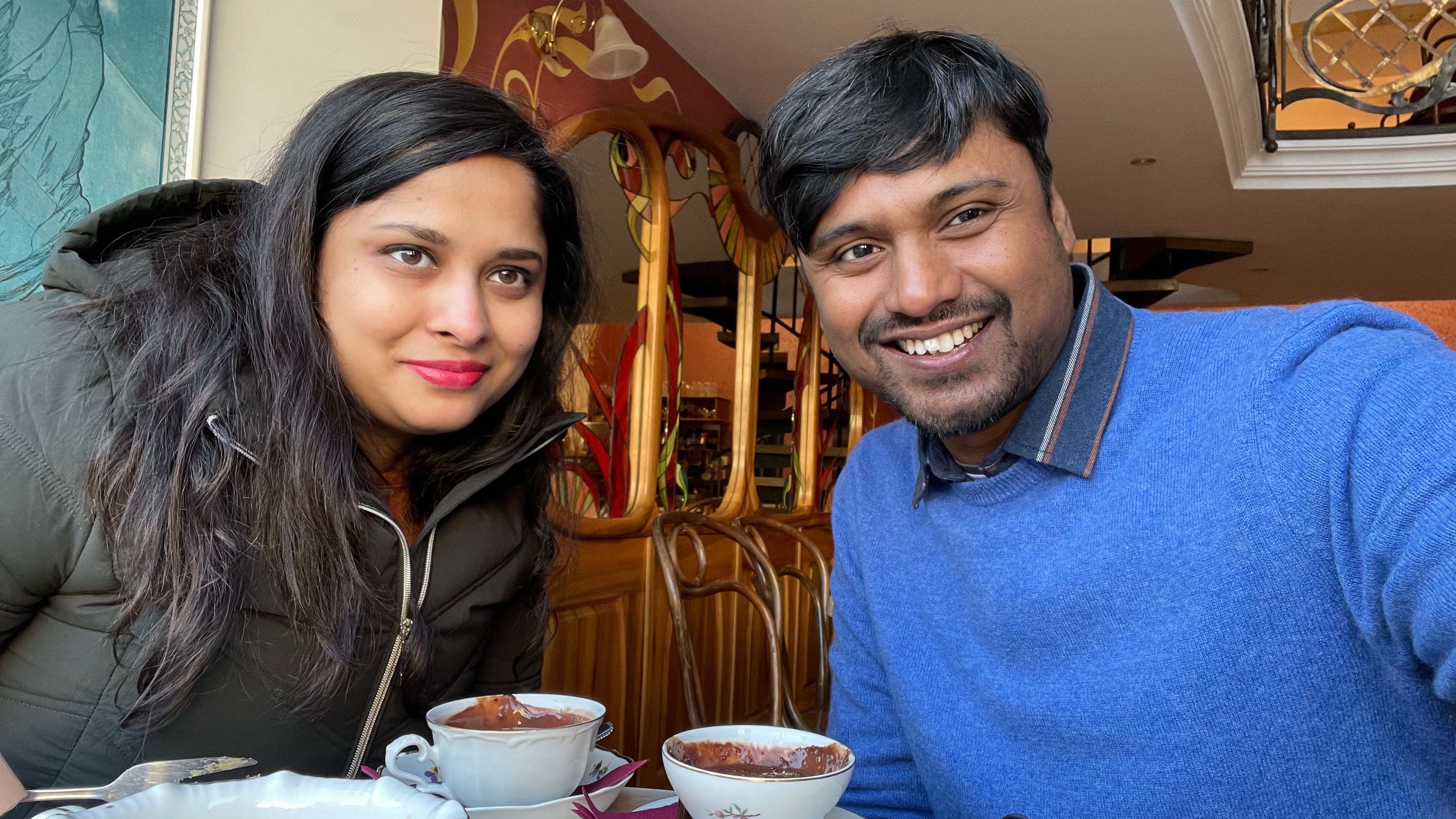
As I was doing my research on Vienna, I stumbled upon a blog that talked about a day trip to Bratislava, capital city of Slovakia. Bratislava and Vienna are among the closest capital cities in the world. They are approximately 79 kilometers (49 miles) apart. I only had a day in Bratislava, but wow – what a gem of a city! Compact, walkable, and full of charm, history, and a few surprises. Armed with a solid breakfast and a free walking tour, I explored the capital of Slovakia on foot, soaking in centuries of stories stitched into its cobbled streets and colorful facades.
A glimpse into Bratislava history
In the medieval period, Bratislava, known then as Pressburg, became an important center under the Kingdom of Hungary.
The oldest tribe to settle here were the Boii tribe around 300 BC. Slovakia fell under the Roman empire who use it as their military settlement. They created watch towers, forts and legion camps. These military encampments paved the way for civilian settlement. Later Slovakia became part of great Moravia kingdom. Mongol invasion in 1241 under Genghis Khan destroyed the kingdom but due to his untimely death Mongol generals did not proceed to Western Europe. Kingdom weakened and many wealthy landlords emerged who created castles and forts. Later, Slovakia became part of Kingdom on Hungary. It reached its apex under Hungarian King Matthias Cornivus (1469 to 1490 AD). Ottomans had become very powerful by this time. Suleiman the Magnificent destroyed Kingdom of Hungary and captured most part of it in the battle of Mohacs in 1526, but he couldn’t capture Pressburg. Bohemia and whatever was left of Hungary fell into the lap of Habsburg dynasty who ruled this land until the formation of Czechoslovakia in 1919. Even under Habsburgs, Slovaks succeeded in keeping their language, culture and traditions alive. Pressburg flourished as capital of Hungary Habsburg rule. But in 1783, Budapest became new capital of Hungary. All Hungarian Crown Jewels were taken to Vienna in order to strengthen relations between Austria and Hungary. On 27th March 1919, Pressburg adopted the name of Bratislava to honor early medieval Czech leader Vratislav I and to promote glory of Slavs and Slovaks.
Hitler had his eyes in Czechoslovakia as he was very interested in its munition plant – Skoda Works, which provided Austro-Hungarian army with mountain guns, mortars and machine guns. Additionally, controlling Czechoslovakia was the key to control Eastern Europe. Hitler signed Munich agreement to acquire the northern German-populated part of Czechoslovakia. But later violated the agreement and took over the entire Czech Republic and created a puppet state of Slovakia. Slovaks initially supported Nazis but later switched to Allies.
After 2nd world war, Czechoslovakia reunited and remained in Eastern bloc till 1990. In 1993, Slovakia separated from its Czech brother and became an independent Slovakia state.
Travelling to Bratislava from Vienna
We booked Vienna to Bratislava train ticket with OBB a day in advance. Book your train ticket with OBB – https://www.oebb.at/en/tickets-kundenkarten . While booking, make sure that you select “Bratislava ticket”, not Standard ticket. This ticket costs the same 18 euros but is valid for all public transport in Bratislava as well as the return journey from Bratislava to Vienna.
You can thank me later 😊

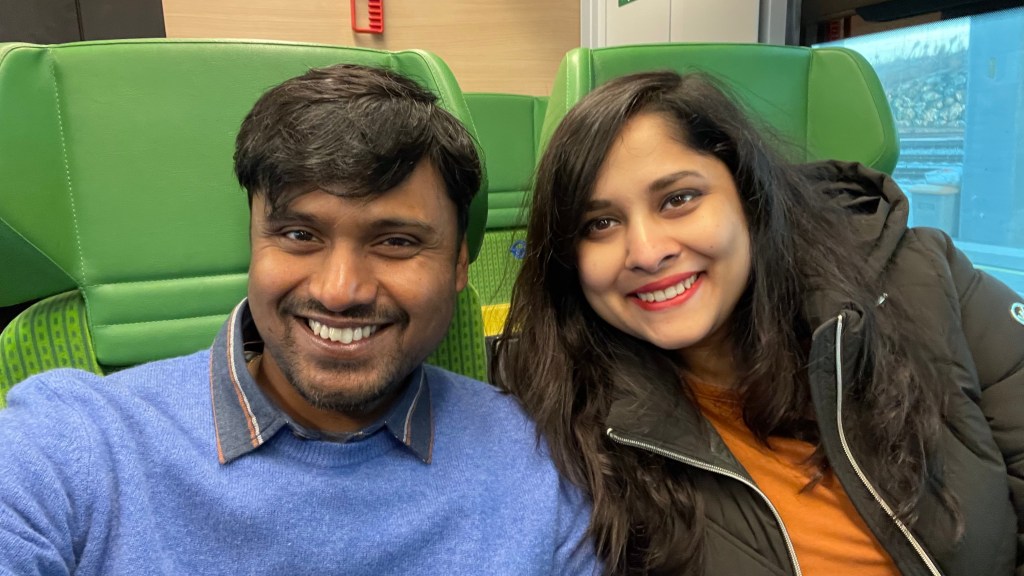
Discovering Bratislava on foot, Dec 26th 2024
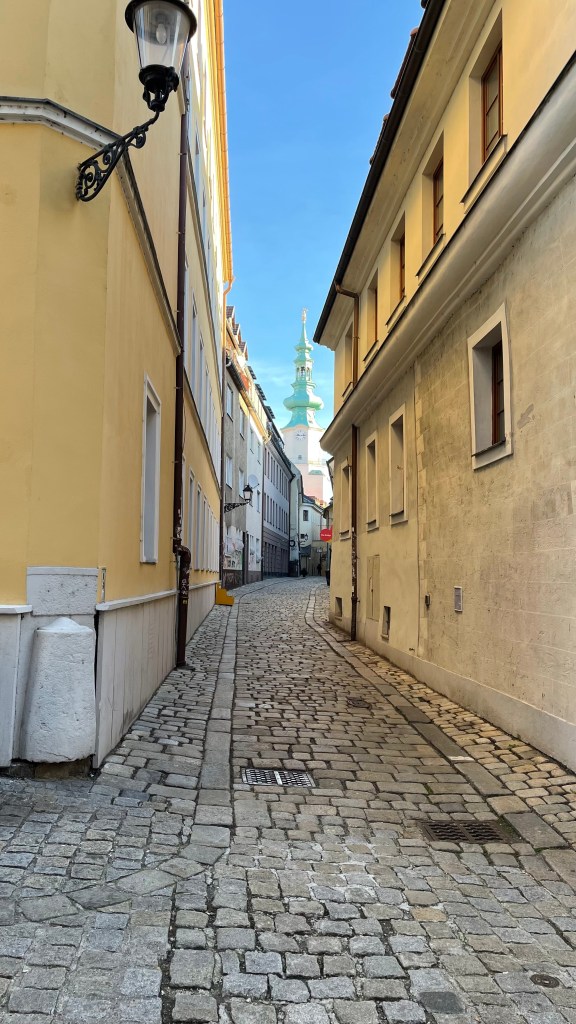
The cobblestone streets of Bratislava had a rustic charm. The buildings were more aged, streets were narrower, and the ambience was much quieter than its adjacent European sister. It was biting cold outside. The chill was finding its way through my shoes from the frigid stone beneath. The strong wind was piercing through multiple warm layers and sending shivers down the spine.

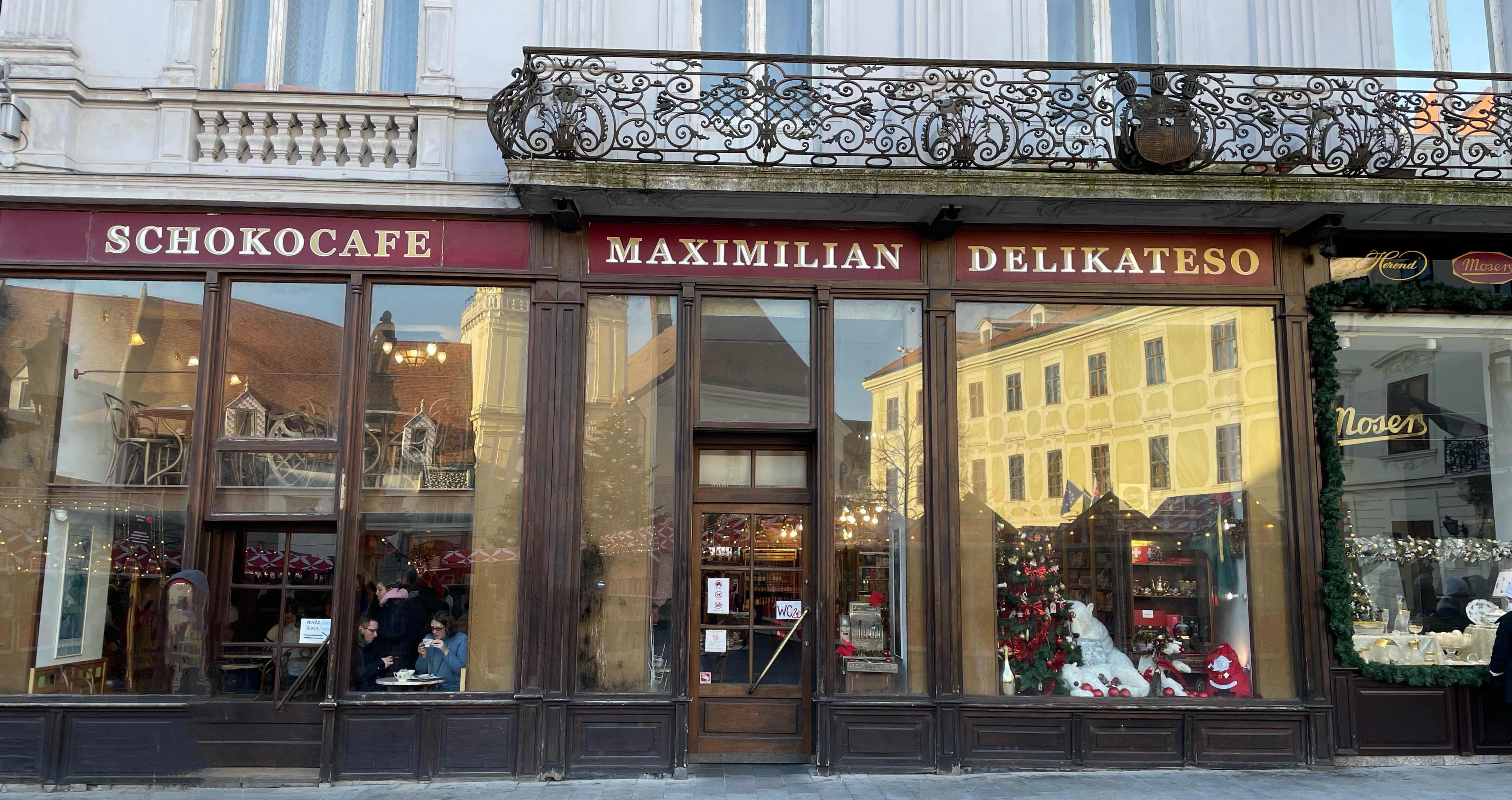
Schokocafe
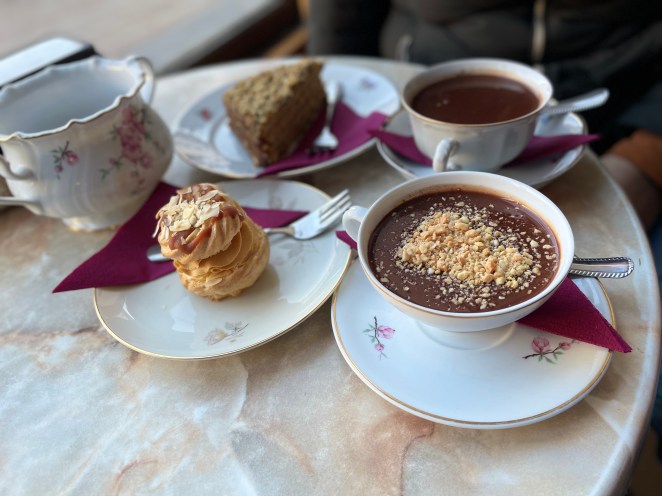
December 26th is celebrated as St. Stephen’s Day in Bratislava and an official holiday. So, most of the shops were closed early in the morning. But thankfully, Schokocafe was not one of them. Located right in the town square, this small cozy café served one of the best hot chocolates I had ever had. It was literally melted hot chocolate. If you’re a dessert lover, this place is non-negotiable. We paired it with a buttery pastry that was so flaky it practically exploded when I took a bite. Sitting there, watching the city slowly come alive, was the perfect start.

City hall tower
Right after breakfast, we joined the free walking tour. Bratislava is a small city and explored best on foot. So, we decided to do a free walking tour – Free City & Castle Tour – Free Walking Tours in Bratislava. As suggested on the website, we didn’t book anything; we just showed up at the meeting point. The tour guide was easy to find.
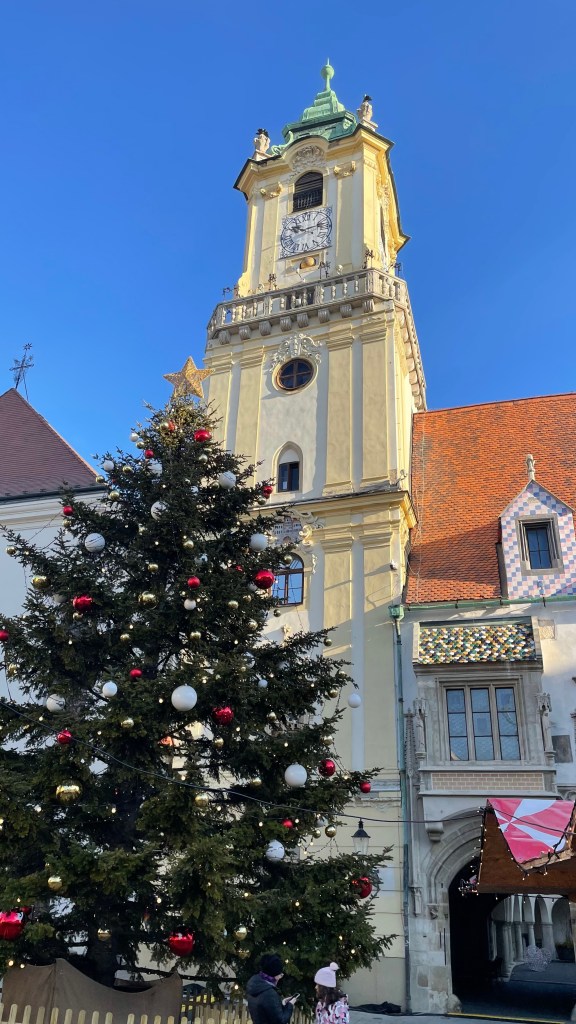
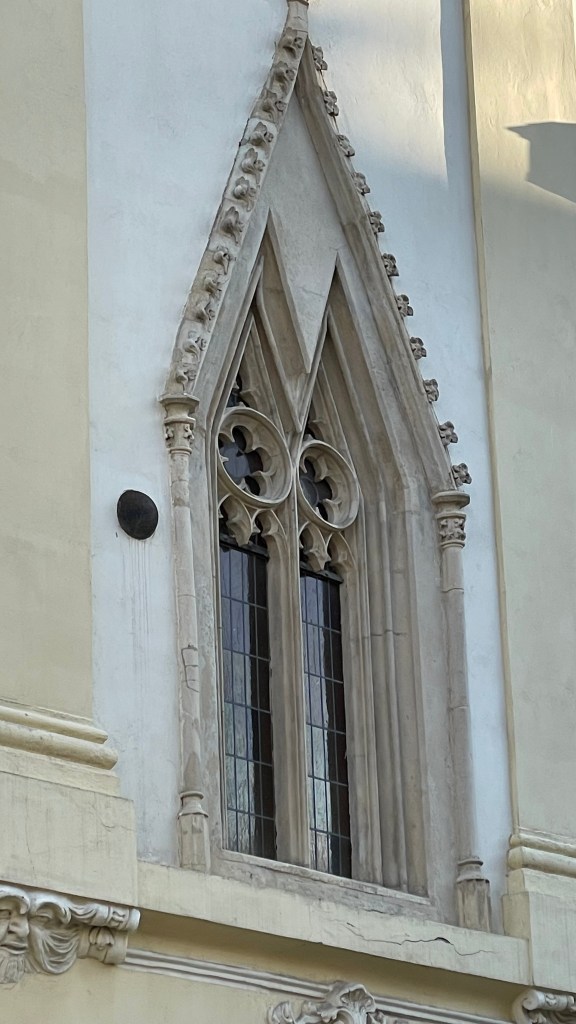
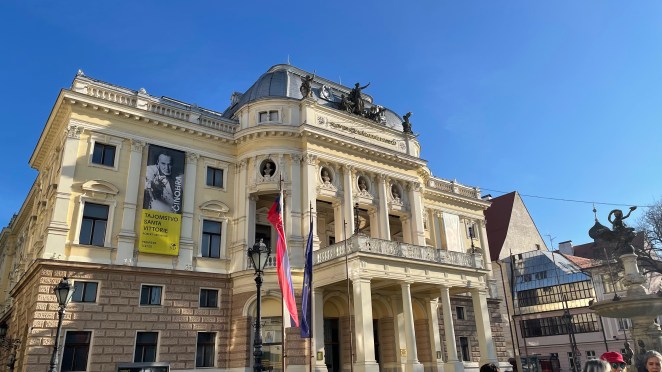
Our guide led us to the Old Town Hall – an unmistakable yellow building in the heart of the main square. The tower has seen a lot. My favorite story? A cannonball from Napoleon’s troops is still stuck in one of its walls! Napoleon actually stayed in Bratislava (then called Pressburg) and left his mark – quite literally.
A Curious Building with Nehru’s Name
Now this was unexpected – a building with India’s first Prime Minister, Jawaharlal Nehru’s name inscribed on it. Our guide explained it was part of a brief era of post-war socialist camaraderie between Czechoslovakia and India. You don’t really expect to find connections to your home country in a medieval European city, but Bratislava had surprises at every turn.

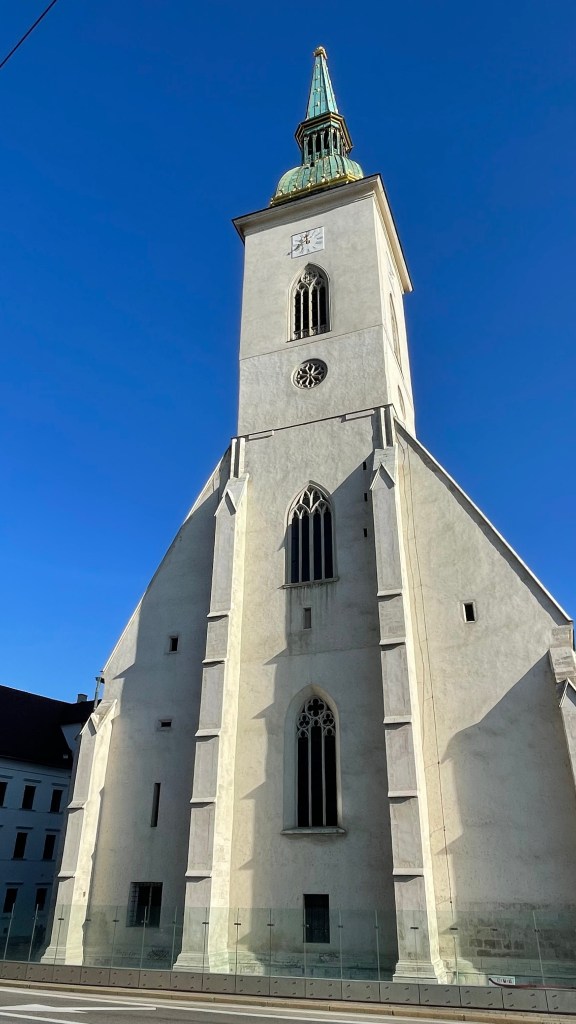
St. Martin’s Cathedral – Crowns and Fortresses
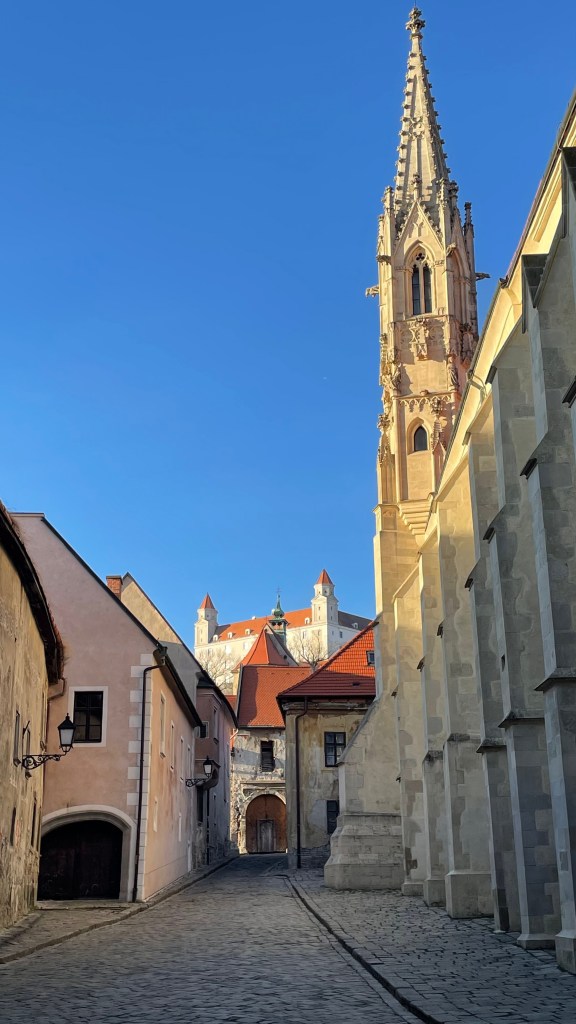
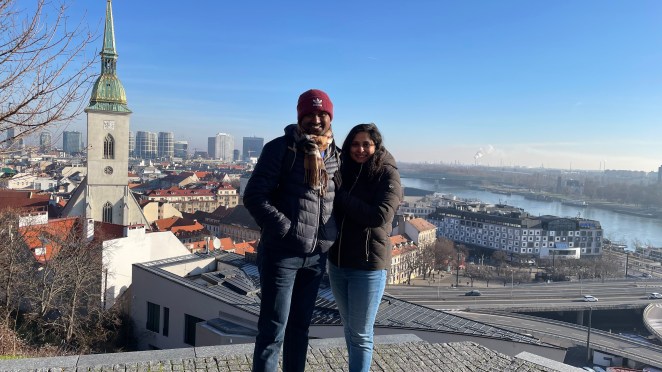
This Gothic cathedral, built in 1311, is full of secrets. It was constructed right on the fortification wall, essentially turning the church into part of the city’s defense system. When the Ottomans were expanding their empire, churches like this weren’t just for prayers – they were shelters too.
St. Martin’s was where Hungarian kings were crowned, and if you look down at the pavement in front, you’ll spot golden crowns embedded into the cobblestone streets – marking the coronation path. It’s a beautiful touch that ties present-day Bratislava to its regal past.
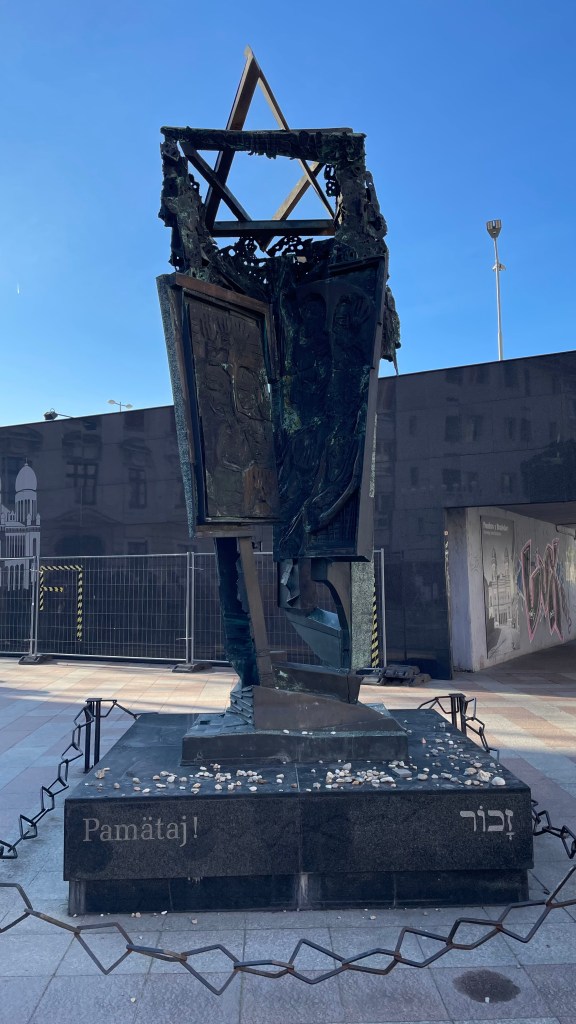
Remembering What Was Lost – The Demolished Synagogue
One of the most emotional parts of the tour was standing at the site of the demolished synagogue near the cathedral. It was torn down in 1969, during the Communist era, to make room for a highway that never quite justified its destruction. There’s now a solemn memorial for Jewish Slovaks. It was sobering to know that 80% of Slovakia’s Jews were deported to Auschwitz, and the Communist regime later erased many of their neighborhoods and places of worship. This part of Bratislava’s history isn’t talked about enough – but the city doesn’t shy away from it either.
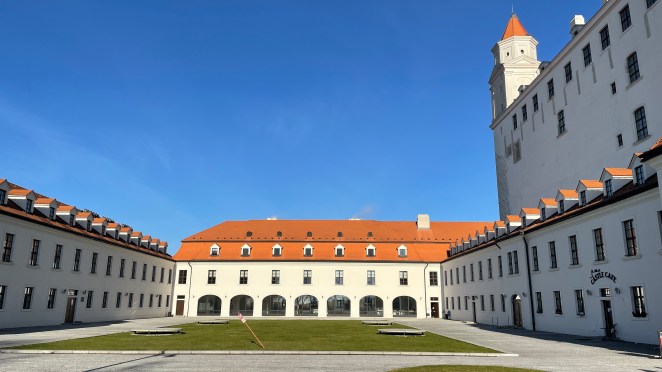
Bratislava Castle – Where Royalty and Fire Met
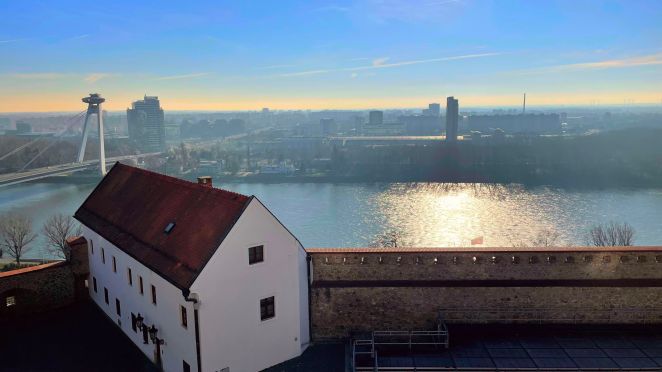
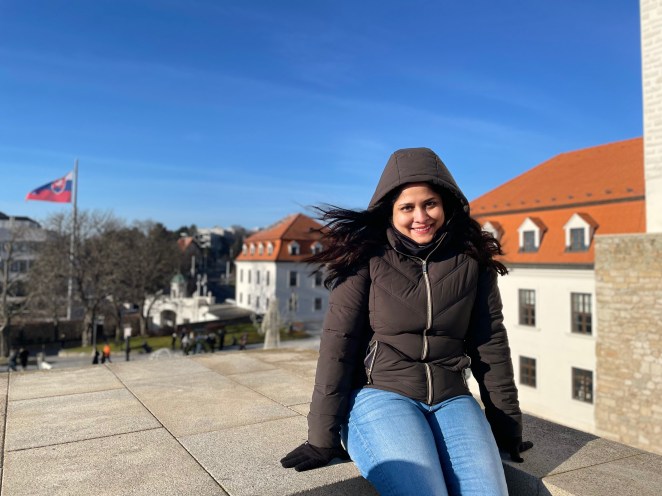
Sitting high above the city like a white guardian, Bratislava Castle dates back to 907 AD. Originally Gothic in style, it started out with just two floors. Maria Theresa of Austria expanded it and added those now-iconic four corner towers that make it look like a giant upside-down table. Under her reign, it transformed into a luxurious Baroque residence. Napoleon stayed here during his campaigns, and then, in a cruel twist of fate, the castle was destroyed by an accidental fire in 1811. It remained a ruin for over 150 years, a ghost above the city, until the Communists decided to restore it in the 1950s. Today, it’s fully restored and offers incredible views – especially of the UFO bridge in the distance.



Lunch at Meanto – Much Needed Refueling
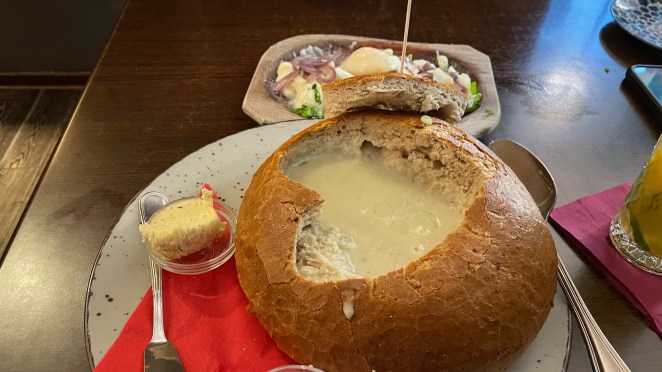
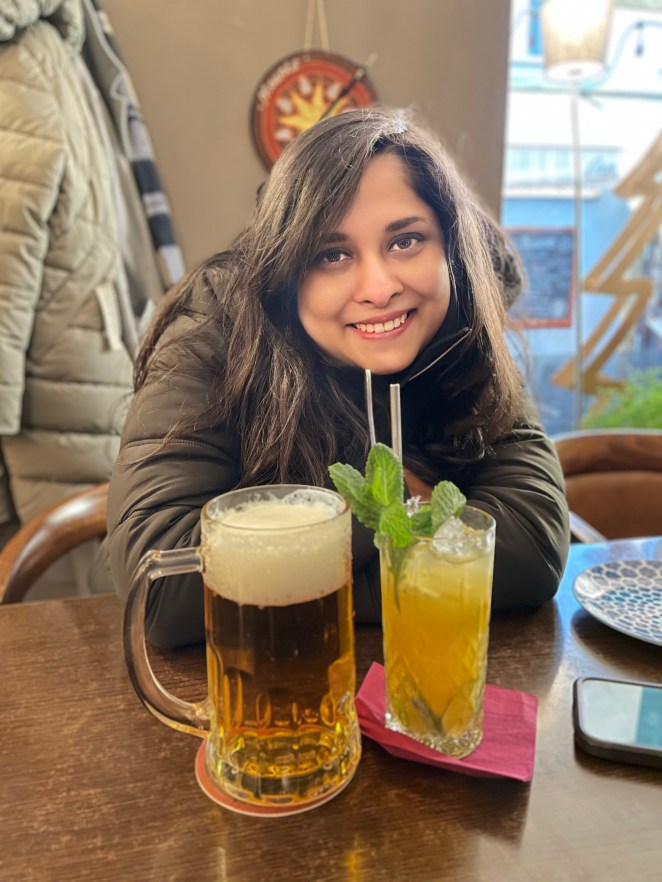
Walking and storytelling really work up an appetite. Meanto was the lunch stop, and it was perfect. It was suggested by our tour guide at the end of the tour. We had garlic soup which came in a bread bowl and dumplings with local craft beer. I don’t know if it was authentic Slovak food or not, but the taste was really good.
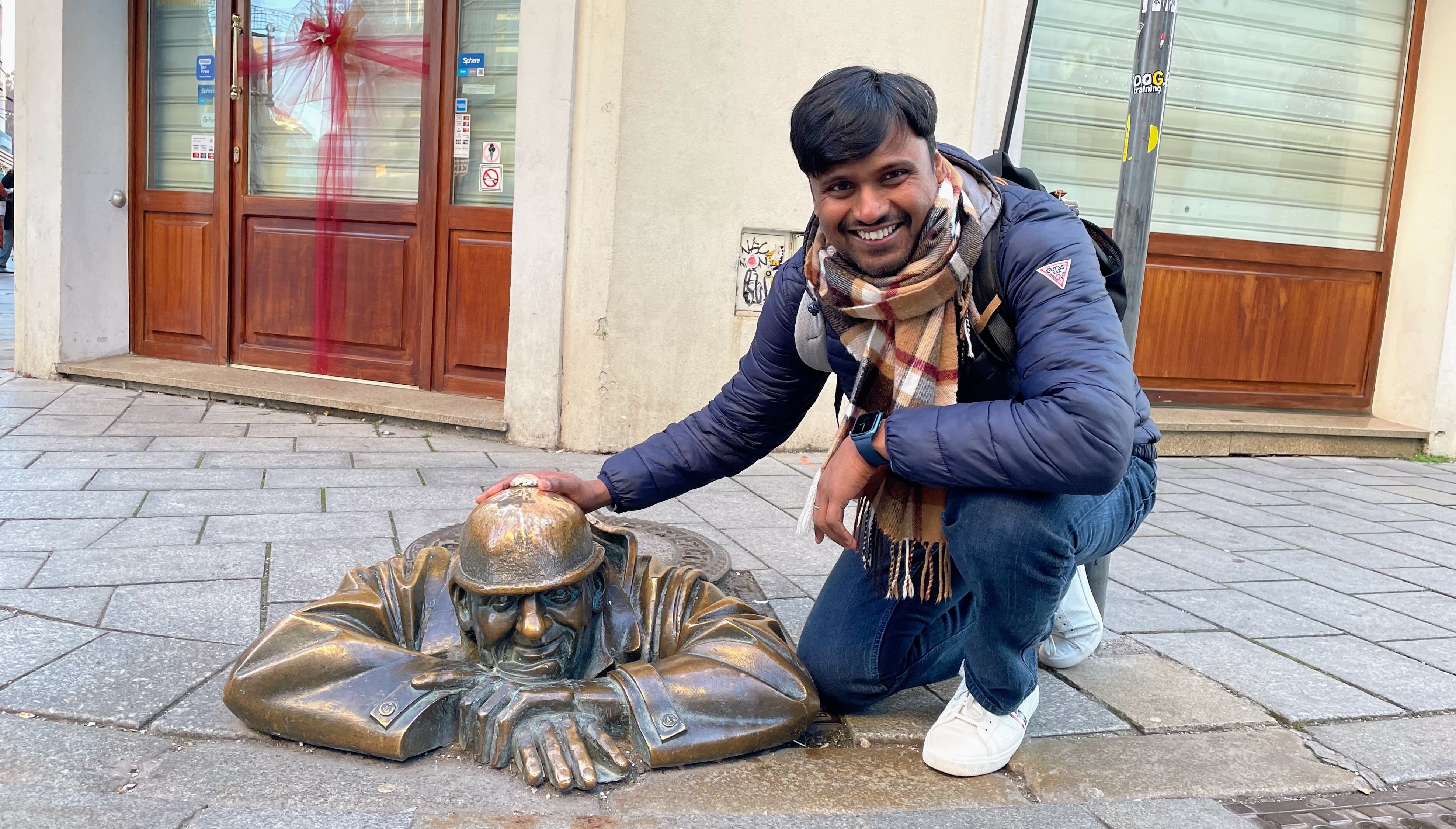
Čumil – The “Man at Work” Statue
Possibly the most famous resident of Bratislava is Čumil – the bronze statue of a man peeking out from a manhole. No one knows exactly what he’s doing (some say he’s just resting, others say he’s a cheeky voyeur), but tourists love him.
I had to wait a bit to get a clean photo, but it was worth it. Don’t forget to rub his head – locals say it brings luck!
The Blue Church – Art Nouveau Dream
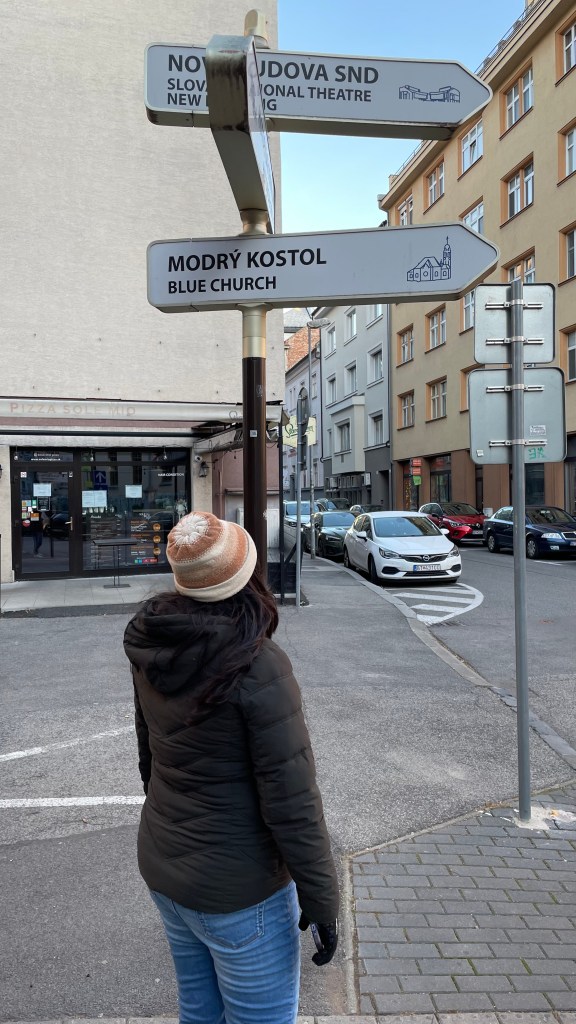
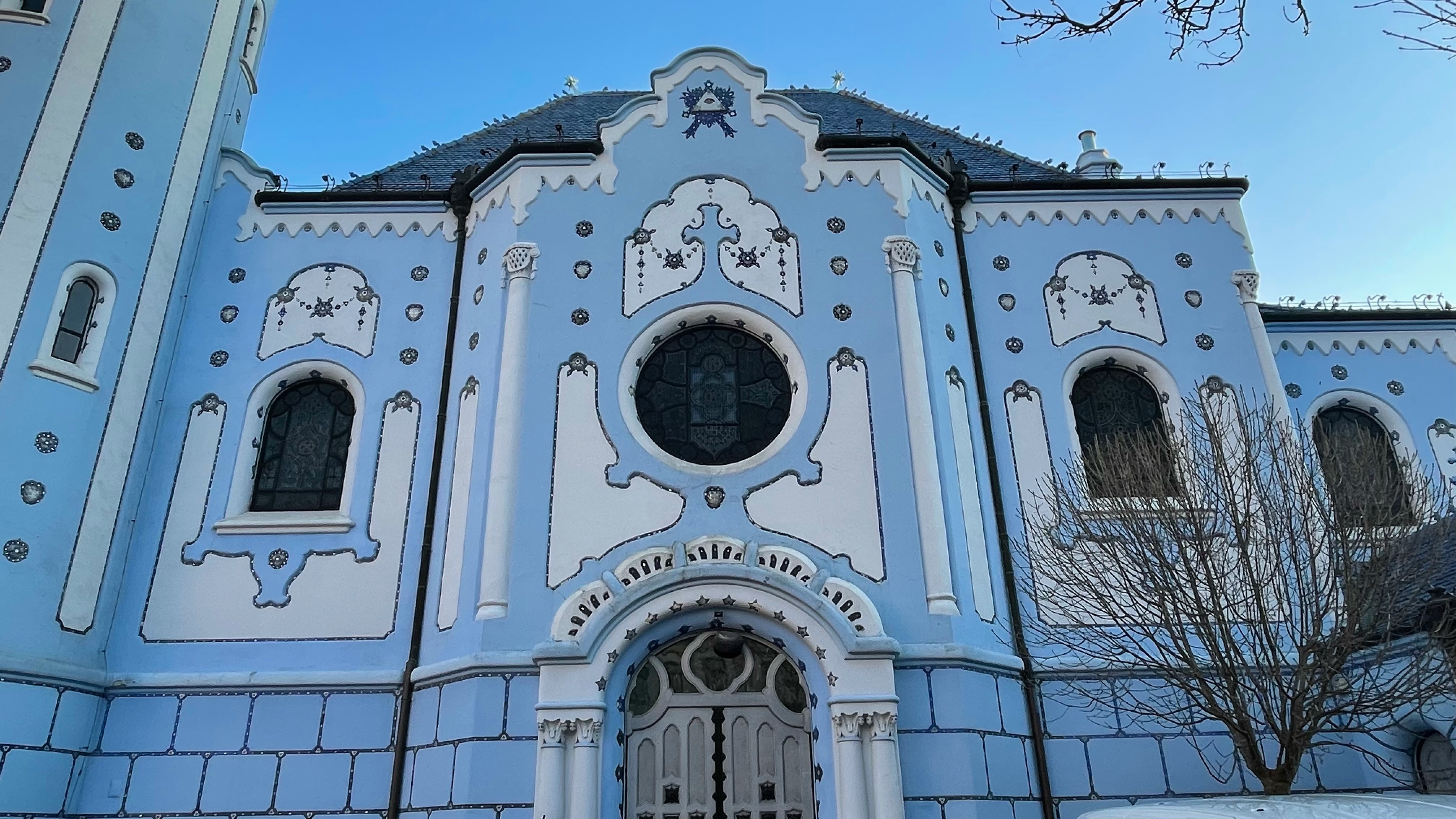
We took local bus to witness this art nouveau dream. Built in the early 20th century, the Church of St. Elizabeth, aka the Blue Church, looks like a fairytale come to life. It’s powder blue from top to bottom, with swirls, curves, and whimsical details that would make any Disney architect proud. Honestly, it feels like someone dropped a frosted cake in the middle of Bratislava. I couldn’t stop taking photos.


Bratislava Christmas Market – Mulled Wine and Magic
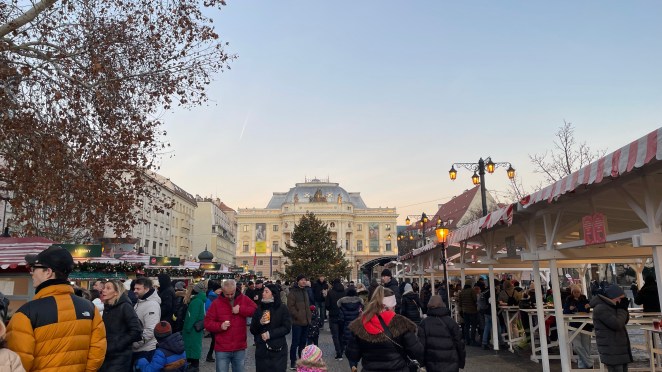
Our day ended with a stroll through the Christmas market in the main square. Twinkling lights, wooden stalls, the smell of cinnamon and mulled wine – it was everything you can expect in a European winter experience. And cheaper than Vienna!
Final Thoughts
Bratislava might not be as loud as Vienna or as Instagram-famous as Prague, but it has a quiet confidence. Its layered history, quirky art, delicious food, and warm people left me completely charmed. If you’re ever in the region, give it at least a day.
From melted chocolate to cannonballs, from castles to communist ruins, this little capital packs a punch.
 Abhijeet Kumar Sinha