Day 11, July 3rd
A spontaneous ascent into the Hatcher Pass highlands
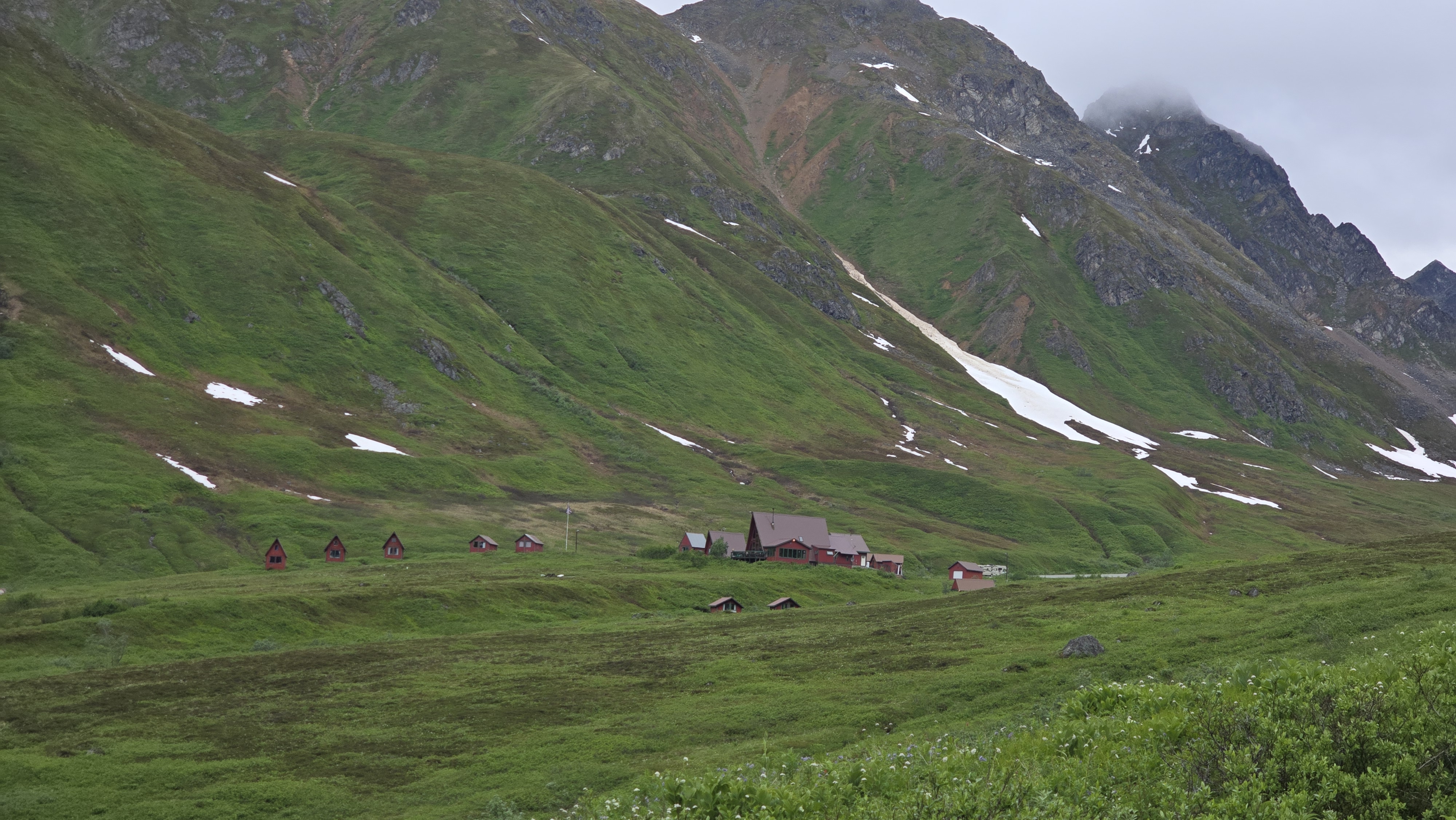
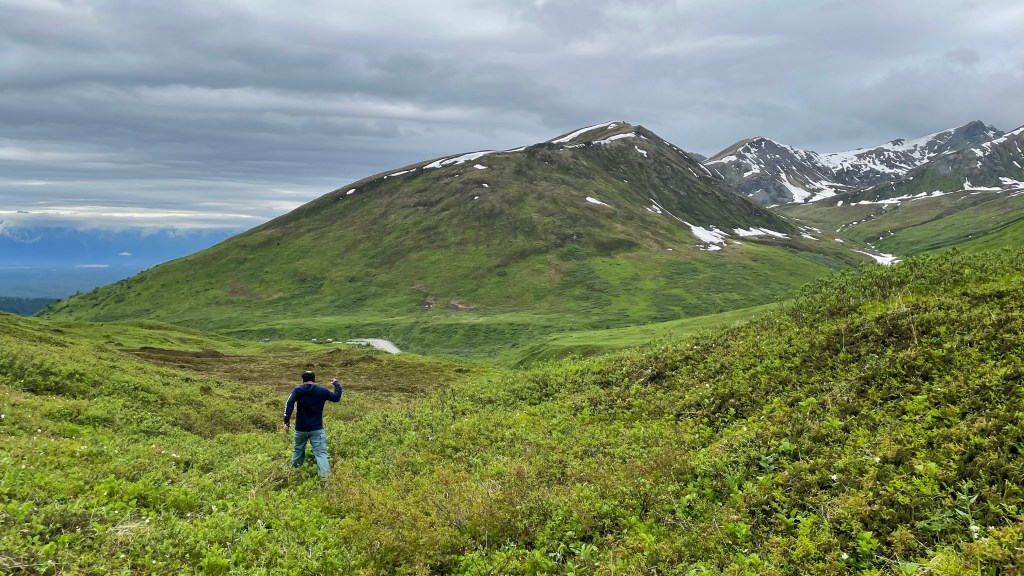
Our Day 11 began without a plan—just the crisp alpine air, the soft crunch of gravel under our shoes, and the quiet company of the mountains surrounding Hatcher’s Pass. Raj and I stepped outside the RV for a casual morning stroll, but the moment we saw the ridgeline above us glowing in the early light, something sparked. Before we knew it, we were climbing straight toward the summit, no trail, no map, just instinct and joy guiding us upward.
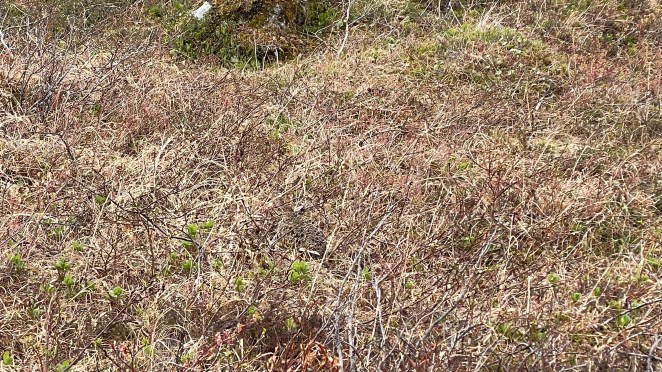
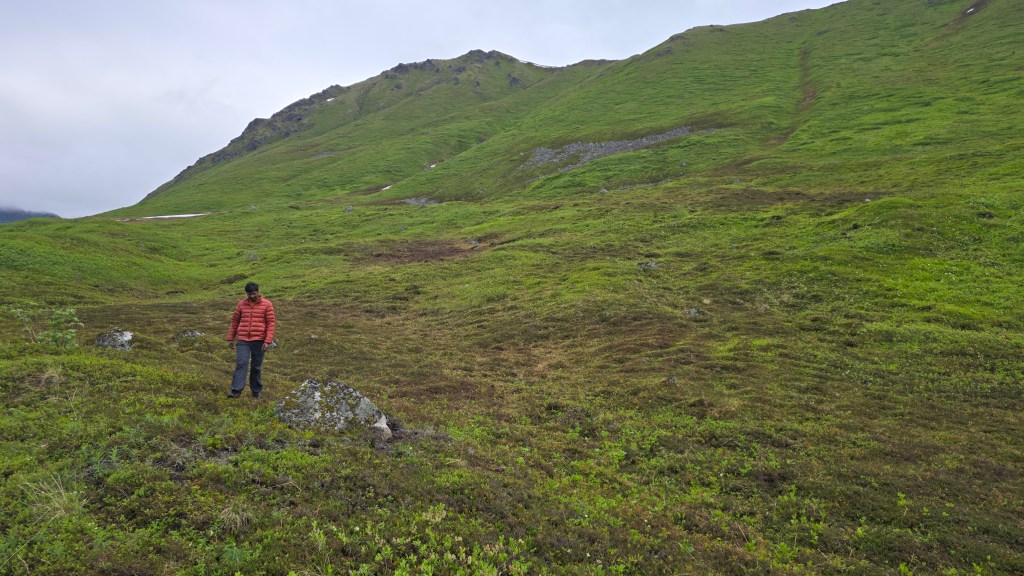
The slope was gentle at first. The ground under us was covered in thick mosses creating a soft, velvety cushion. Every step felt springy, as if walking on nature’s own mattress. We spotted a bird—so perfectly camouflaged in the low shrubs that it took us a moment to see it move. This was the Willow Ptarmigan, Alaska’s state bird. In summer, its feathers are mottled brown and speckled, blending seamlessly with the tundra. But in winter, it undergoes one of the Arctic’s most remarkable transformations: its entire plumage turns snowy white, a perfect camouflage against endless winter snowfields.
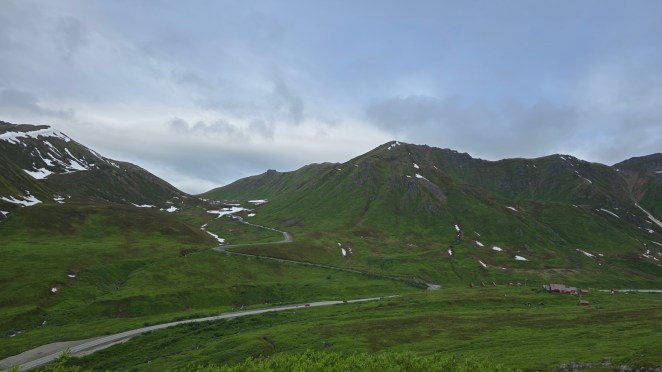
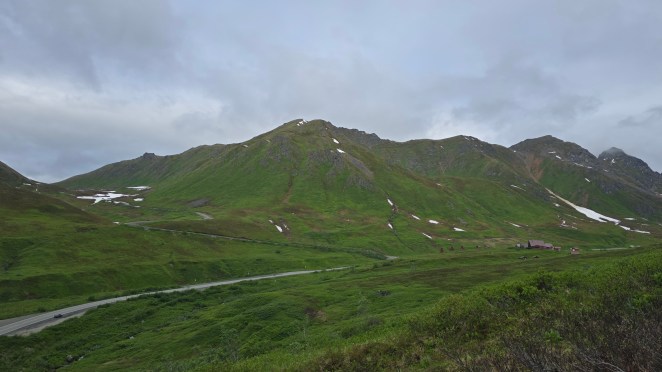
The higher we climbed, the more Hatcher’s Pass unfolded into a breathtaking panorama. Green rolling meadows stretched endlessly, dotted with the iconic red wooden cabins that have become the signature of this valley. These bright huts stood out like lanterns in a sea of alpine green. Occasional patches of snow clung to the slopes, remnants of winter hanging on stubbornly in shaded corners. The whole scene reminded me of Bedni Bugyal from my Roopkund trek in the Himalayas—those same undulating meadows that made you feel like you were walking through a living painting.
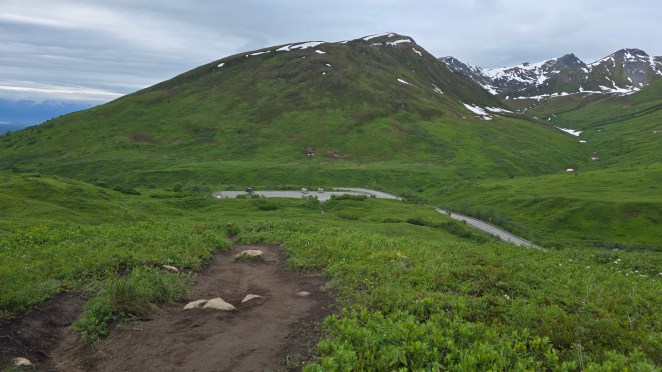
Reaching the top took about an hour and a half. From the summit, the entire valley opened like a grand amphitheater—ridges swooping down in graceful curves, roads snaking across the hillsides, and our little RV far below, shining softly in the morning sun. It became our compass for the descent.
With no trail and slippery moss underfoot, we zigzagged carefully, choosing whichever slope looked safest. Eventually, we stumbled upon a faint trail that cut right toward the campground. We could see our RV far down the slope. This is when Raj and I broke into an impromptu race, laughing like kids. Within five minutes, we were back at the RV—breathless, exhilarated, completely fulfilled. It wasn’t planned, but it became the best hike of the trip.
After the climb, we rewarded ourselves with warm bowls of Saffola oats—simple, comforting, perfect for a mountain morning.

Back to Anchorage
By noon, we rolled into Anchorage and headed straight for lunch at Taco King. Dessert was at Wild Scoops, Anchorage’s beloved artisan ice cream shop. We tried the rhubarb crisp and Alaskan blueberry flavors. The highlight was the burnt marshmallow topping that they caramelized right in front of us. Sweet, smoky, tart, creamy. We wandered around downtown Anchorage afterward, soaking in the blend of modern buildings, murals, and shops set against massive mountain backdrops.


Alaska wildlife conservation center
Our next stop was the Alaska Wildlife Conservation Center, a vast nonprofit sanctuary dedicated to rescuing and rehabilitating animals native to Alaska. The center sprawls across hundreds of acres of land, surrounded by glaciers and towering peaks. Here, animals who cannot return to the wild find a safe, expansive home. We saw massive brown bears, black bears, arctic foxes, coyotes and many other animals. For me the highlight was the surrounding snow-clad mountains which form the backdrop of this conservation center. This place is not out of the world but if you have extra time then you can spend a couple of hours here.

Return to Whittier
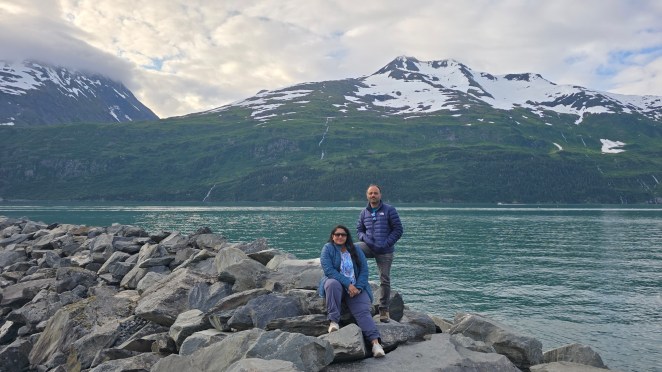
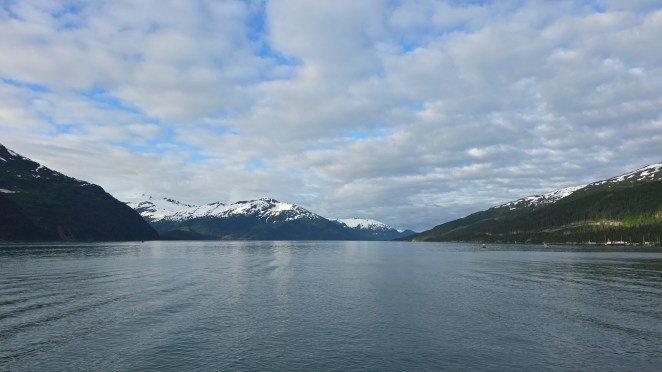
With time still on our hands, we decided to return to Whittier, hoping that the weather might favor us this time. And it did. The skies were clear, the mountains sharp and gleaming, and the water shimmering like glass.
This time, knowing the Anton Anderson Memorial Tunnel schedule helped immensely. The tunnel—almost 2.5 miles of single-lane passage drilled straight through solid mountain—is an engineering marvel. Built originally for wartime military access and later opened to the public, it is the longest one-lane highway tunnel in North America. Trains and vehicles take turns using it, and the fact that it was constructed without disturbing the glacier above makes it even more remarkable.
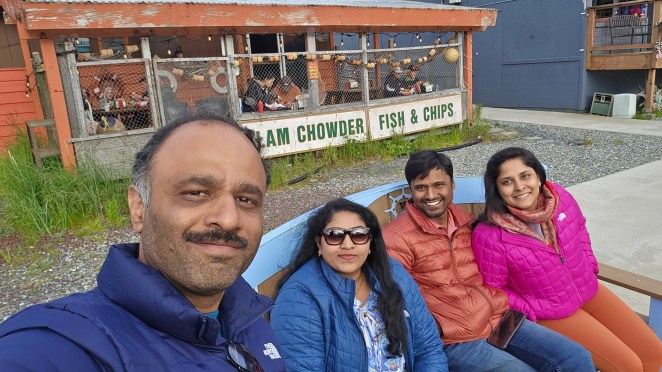
Whittier itself looked transformed in the bright light. The harbor sparkled. The steep mountains encircling the town were glistening. The town, small and isolated, felt magical. Locals were out and celebrating eve of July the 4th with hot dog and burgers.




Portage Lake viewpoint
Knowing this was our final night in Alaska, we drove to the Portage Lake viewpoint, a quiet open space with glacier-fed water shimmering under the pale evening sky. There was no phone signal here—just mountains, silence, and us. Initially, the stillness felt eerie. But as time passed, it became soothing. The sky dimmed but never went fully dark—just a deep, glowing twilight, the kind only Alaskan summers can conjure.
We boondocked in the parking lot, wrapped in the quiet, watching the mountains fade into soft silhouettes. It was a peaceful and contemplative farewell—a final embrace from a land that had amazed us day after day.
Day 11 ended not with noise or adventure, but with calmness—a reminder that sometimes the quiet moments, the mountains, and the lingering glow of an endless northern evening is what takes your breath away. And Alaska has bountiful of these.

 Abhijeet Kumar Sinha