Day 9, July 1st
We woke slowly on Day 9, savoring our final moments in Valdez. We had a simple breakfast of oatmeal. Jyothi had already cooked egg curry to carry us through lunch and dinner — a comfort we appreciated later in the day. By 11 AM, we rolled out of our campground, filled up the RV with gas, and officially began our long journey back toward Glennallen and onward to the Matanuska region. The sky was clearer than the last few days, a gift we didn’t realize would transform this drive into one of the most beautiful of our entire Alaska trip.

Valdez museum
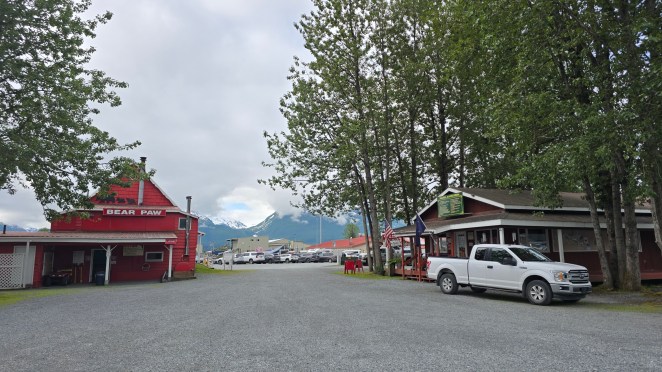
Before leaving town, we wanted to immerse ourselves once more in Valdez’s deep past, so we began our day at the Valdez Museum.
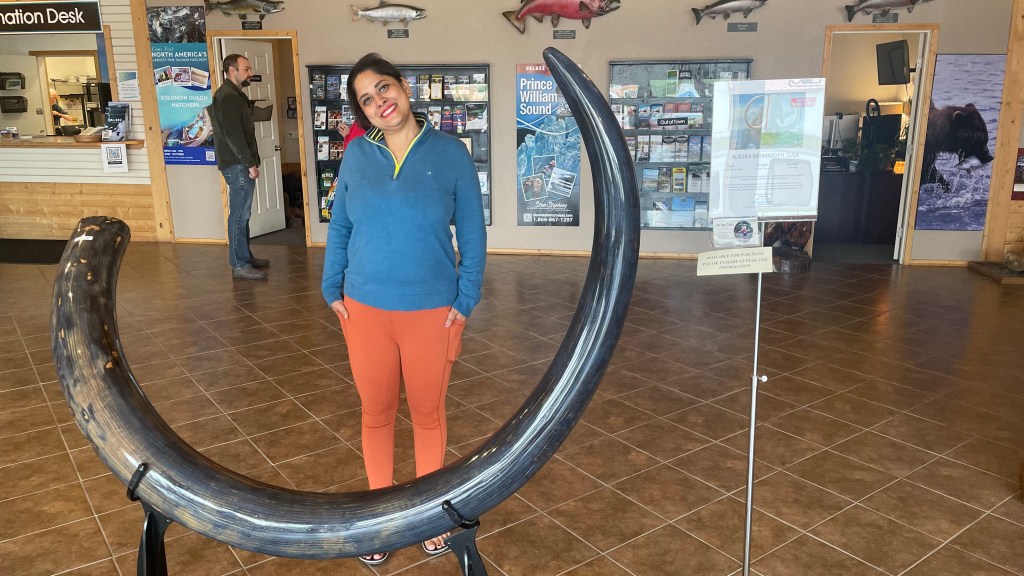
The highlight of the museum was impossible to miss: a mammoth tusk so large and so brilliantly blue that it felt like a work of art rather than a relic from the Ice Age. This 10-foot, 100-pound tusk was discovered 30 miles north of Fairbanks while miners searched for gold. What made it remarkable was the mineral Vivianite, which had slowly seeped into the tusk during its 10,000–60,000 years entombed in the Alaskan permafrost. Over time, Vivianite transforms from clear to blue to deep emerald, giving the tusk an otherworldly glow — like frozen lightning captured in bone.
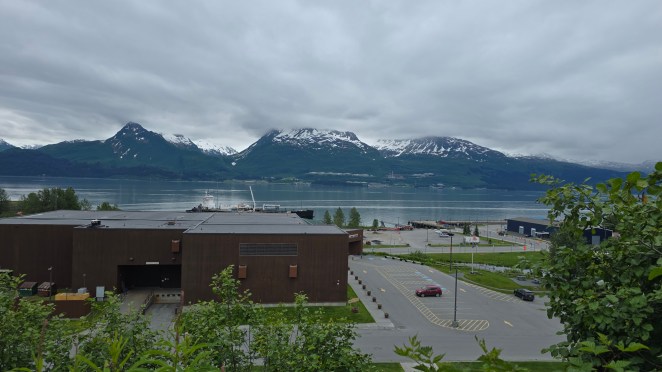
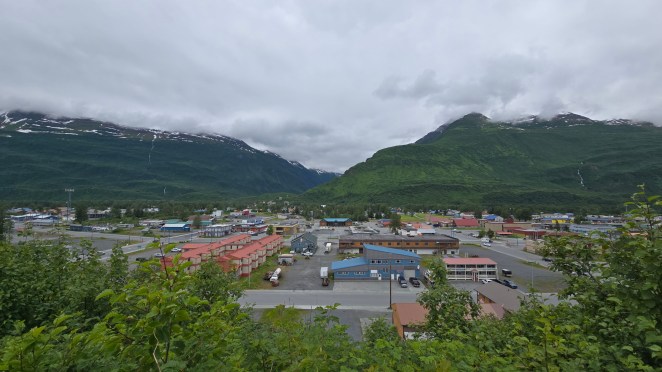
Before leaving town completely, we stopped for a short walk near the Valdez Civic Center Overlook, enjoying the last sweeping views of the harbor and mountains. The air felt crisp, almost celebratory. We then returned to the Valdez Ferry Terminal, parked the RV, and warmed ourselves with the homemade lunch we had cooked earlier. Eating a familiar meal while watching ferries glide into Prince William Sound felt grounding — like a soft goodbye before the wildness that awaited us.


Kayaking among icebergs
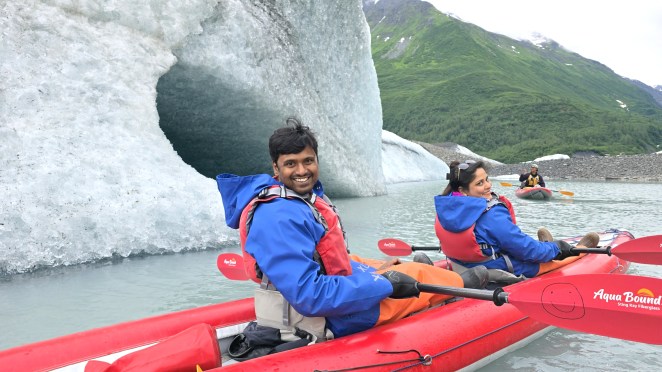
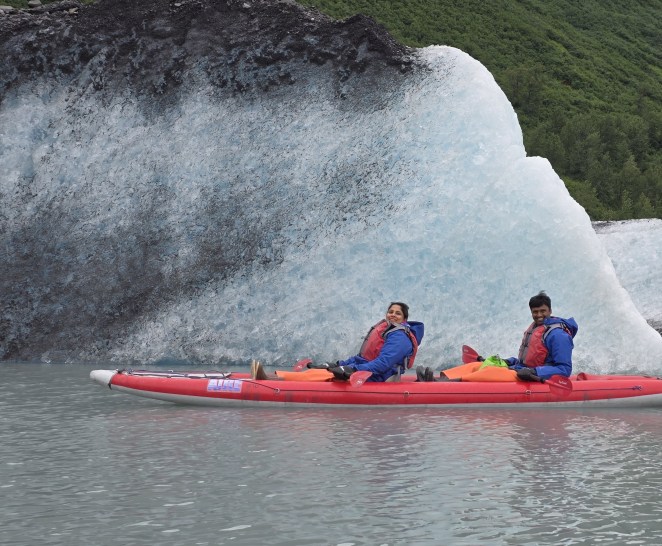
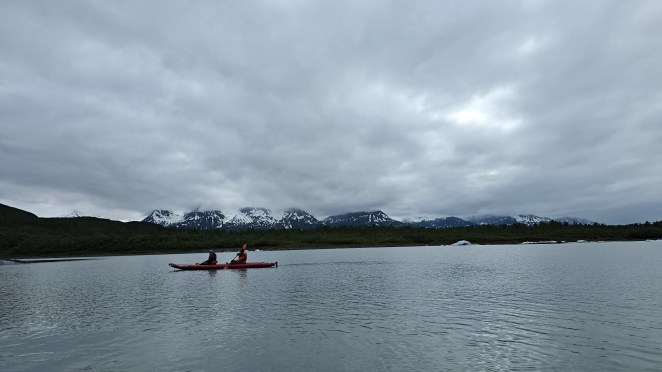
The adventure portion of our day began at 2:30 PM when we arrived at Anadyr Adventures for our kayaking tour on Valdez Glacier Lake. After an hour of orientation and safety instructions, our group of eight — split into four kayaks — geared up. We left our valuables in the office, pulled on the thick boots and jackets they provided, and pushed off onto the lake at 3:30 PM. Shalini and I shared a tandem kayak, gliding into cold and clear waters.
The lake was scattered with massive ice chunks, some the size of cars. These icebergs carried streaks of rock and debris — imperfections that actually help slow melting by shielding the ice from sunlight. Some pieces showed fine striations, natural lines that reveal the history of how the glacier formed and aged. At one point, we kayaked near a mini ice cave, glowing faintly blue from within. The sight felt unreal — like discovering a hidden room inside a crystal palace. By late afternoon, we stopped at a tiny island for a break. Hot chocolate and protein bars never tasted so good. We, again, went into the water and kayaked our way back to the shore. We wrapped up around 7 PM, tired but filled with the kind of joy that stays with you for years.
The lake with those massive ice bergs were amazingly beautiful. But I must also admit that there were all green mountains all around. To some, it may feel a bit underwhelming. Had the entire scenery around been snow-clad with white mountains, the experience would have been even dreamier.



Driving back towards Glennallen
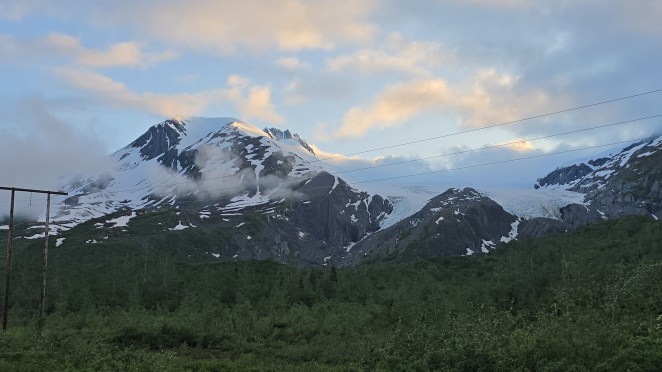
When we entered the town two days ago, clouds had smothered the mountains. But today, the sky finally opened. For the first time, we saw the true scale of the Chugach Mountains — thousands of glaciers pouring down like frozen rivers, peaks so tall their summits vanished into new clouds almost as quickly as the old ones drifted away. The Chugach Range traps moist air from the Gulf of Alaska, creating a rain shadow effect, which results in dramatic snowfall on one side and drier conditions on the other. It is this very process that feeds the countless glaciers carving the land into sharp ridges and knife-edge valleys.
We stopped repeatedly, unable to resist the pull of new views. The mountains looked as if snow was flowing down like lava, frozen mid-motion.

Purple sky
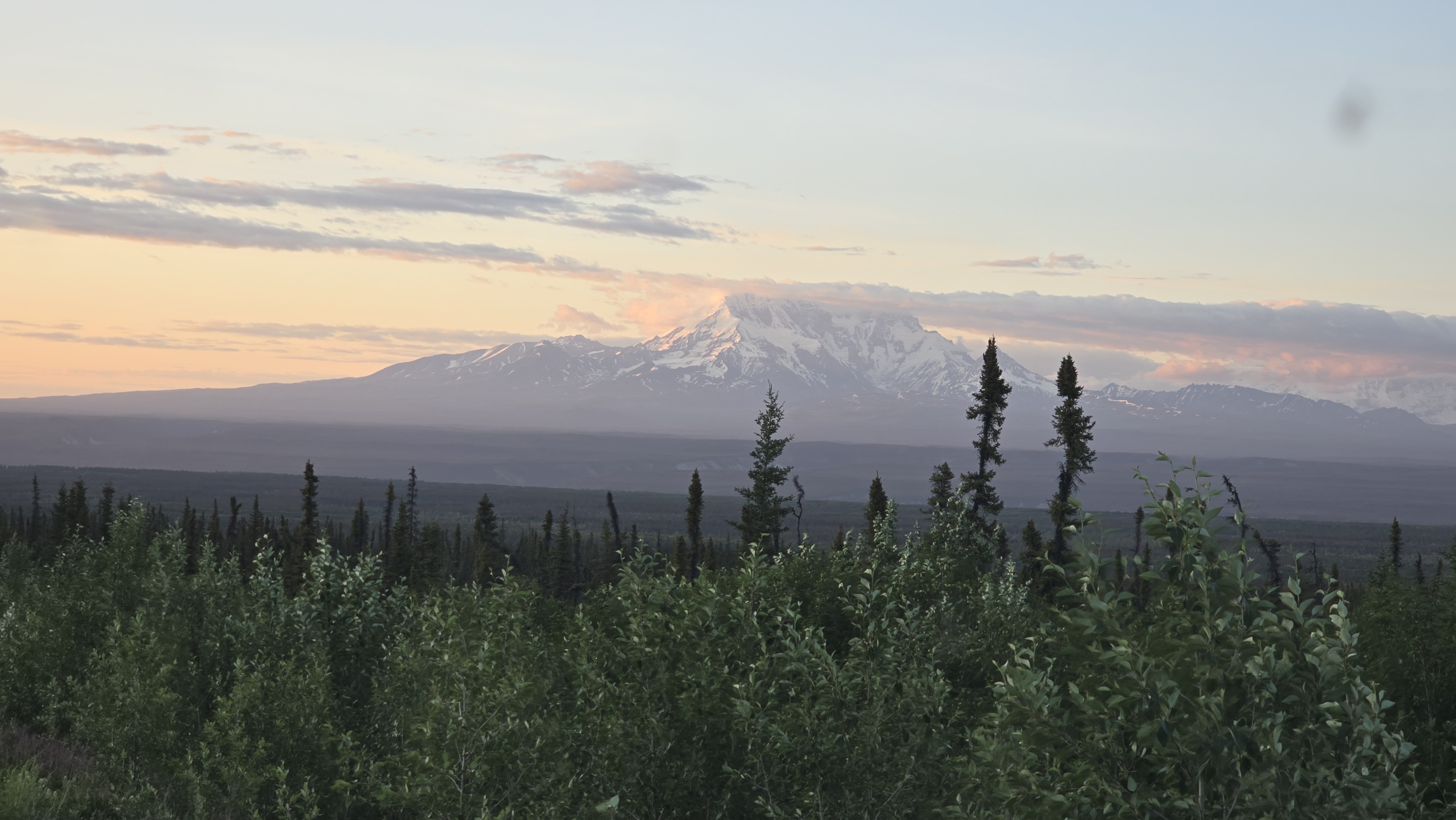
Around midnight, we stopped near Willow Lake to have dinner. The sky shifted into a surreal shade of purple. When sun is low on the horizon its light travels longer distance. The shorter wavelength like blue scatters giving sky its familiar blue color. The remaining light that continues toward us is dominated by yellows, oranges, and reds. That reddish light then illuminates any clouds that are still high enough to catch the light, so the clouds act like a screen reflecting mainly those longer wavelengths toward our eyes, making them appear pink, orange, or red instead of white. These pinkish or reddish clouds lit by that filtered sunset/sunrise light while the rest of the sky around them still has a deeper blue tone from scattered light, our eyes blend the colors, and the overall scene can look violet or purple.
But for this purple sky, a lot many things need to get aligned. Atmospheric particles like aersols must be fine enough to scatter the blue. Local weather matters: thick clouds can block the Sun completely, no clouds give only a red–orange gradient with little contrast, and only certain storm or post‑storm situations provide the layered structure that makes purple stand out. Even geometry and timing matters. Geometry is also tight: the richest purple often occurs briefly during civil twilight (Sun a few degrees below the horizon, after sunset and before sunrise), so if you are not looking at exactly the right time or in the right direction, you miss the short-lived effect.
Read more about afterglow- Afterglow – Wikipedia.
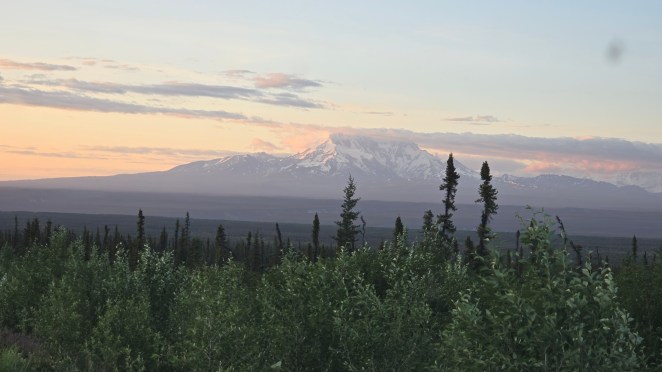
In this magical twilight, the three giants of Wrangell–St. Elias National Park revealed themselves: Mt. Sanford, Mt. Drum and Mt. Wrangell. Clear skies allowed us to see all three at once, their silhouettes dominating the horizon like ancient guardians.
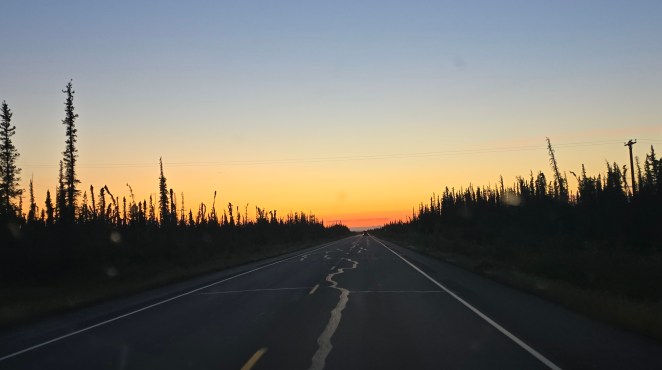
As we drove westward from AK-4 and merged on AK-1, the lone pyramid of Mt. Sanford followed us in the rearview mirror, glowing under the lavender sky like a final blessing from Alaska. We finally stopped to boondock around 1 AM, about an hour before the MICA Tours office. Even at this late hour, the world was still lit with a gentle brightness, as if dusk and dawn had decided to meet and hold hands for the night.

 Abhijeet Kumar Sinha