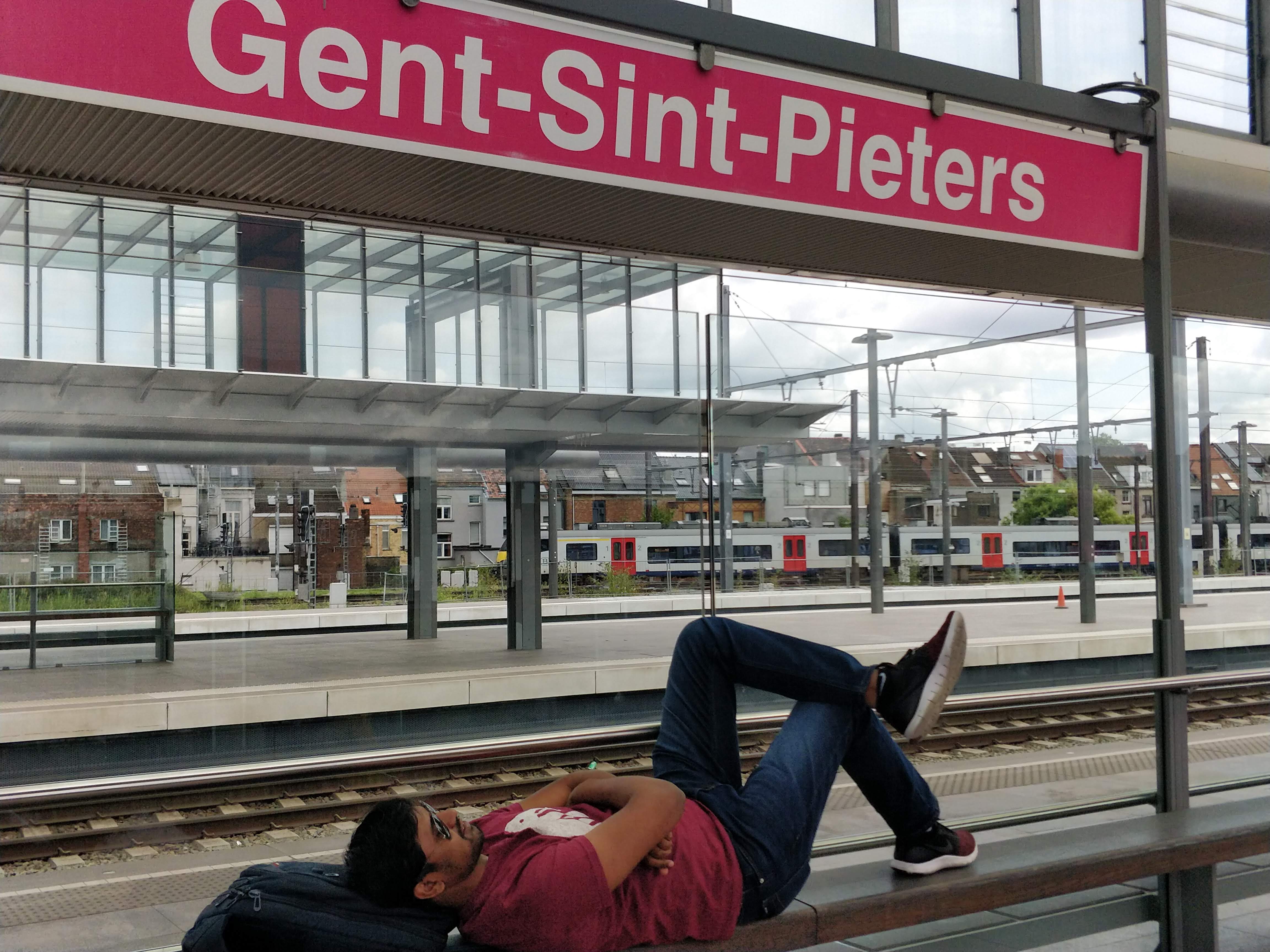
13th August 2019
After spending one and a half beautiful days in Bruges, we reached Brussels on 12th evening. I didn’t like Brussels one bit. Probably I would have liked it on any other day, but I was coming to Brussels after spending 4 days in Amsterdam and Bruges. Comparison was bound to happen, and Brussels didn’t score well. So, instead of spending next day in Brussels, we chose to take a day trip to Ghent. And boy, what a good decision it was!
Next day, on 13th August, we took a train from Brussels and reached Ghent by noon. It was a 45 minutes train ride. Ghent is one of the largest cities in Flemish region of Belgium. It has an aura of modernity with a medieval heart. A commercial juggernaut of medieval ages, Ghent was second largest city of Europe after Paris. Under the aegis of County of Flanders, it flourished and became a center of trade along with Bruges. When we came out of train station, it didn’t look like a medieval town. Modern buildings dotted the streets. This was the modern outskirt of Ghent. We walked for about half an hour to reach the heart of the city. And then we saw what we had seen in pictures. Gothic towers, picturesque canals, cobbled alleys.
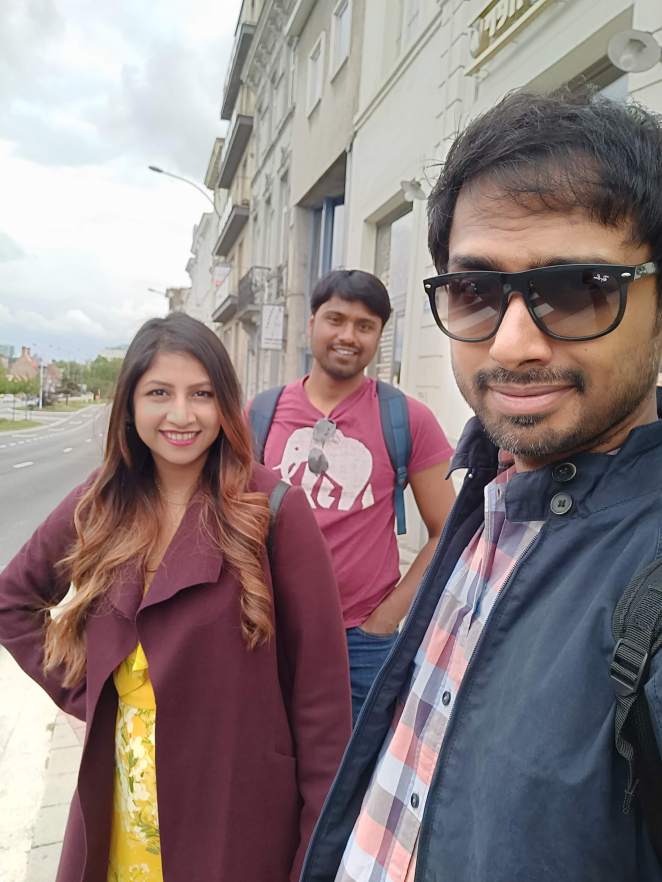
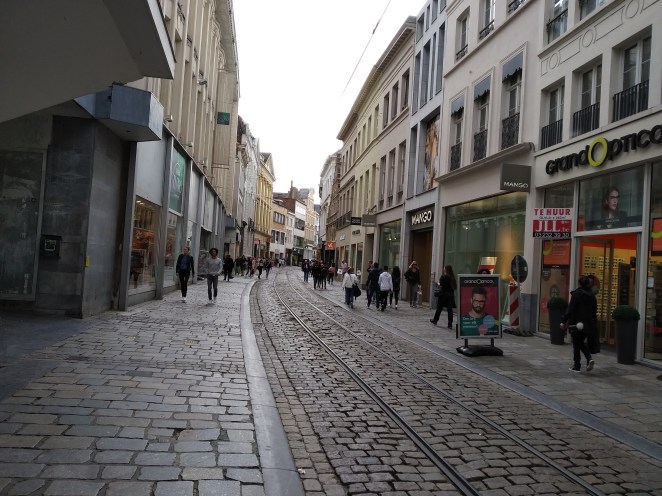
Gradually entering the medieval part of Ghent
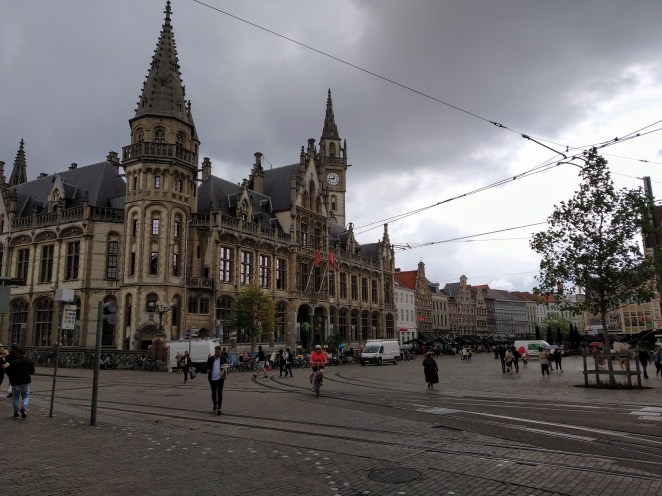
Reached the old city
By this time, we were famished. So, after reaching Ghent, we first went to Otomat and had good pizzas for lunch. It was at a walking distance from the meeting point of our free walking tour which was scheduled at 2 PM.
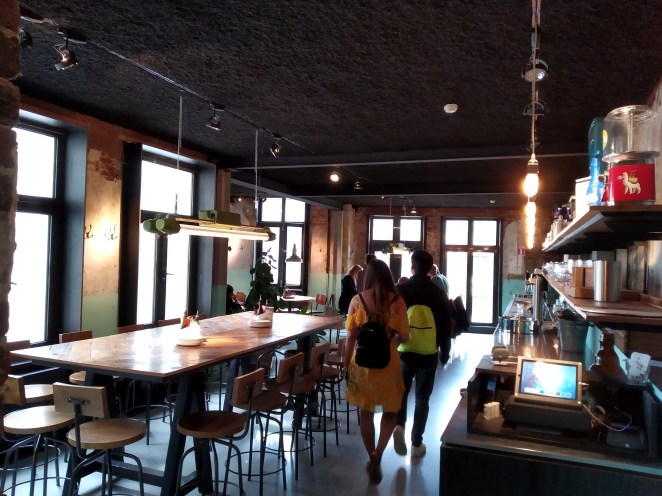
Otomat Ghent
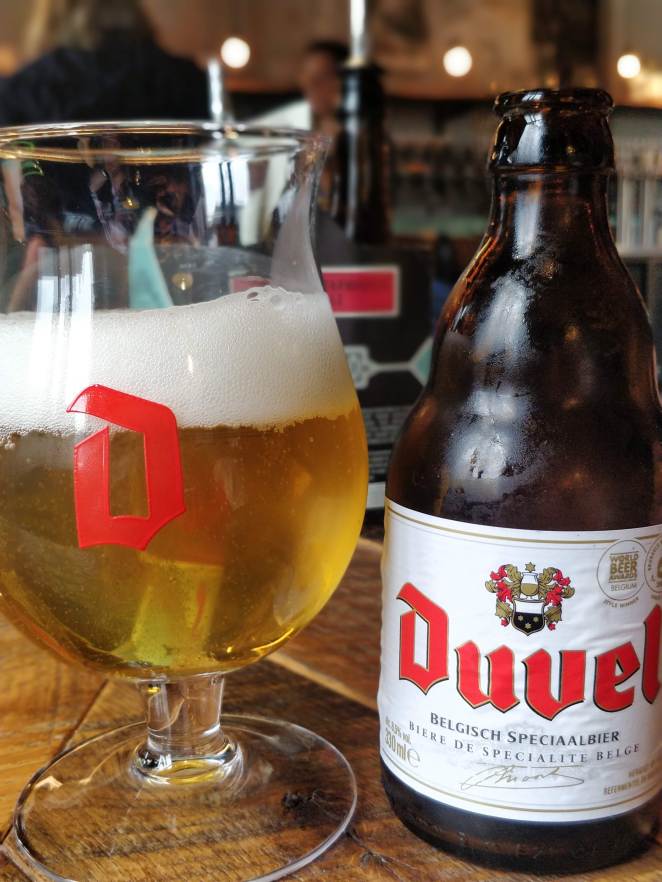
#BeersOfEurope
Aya, our tour guide was waiting at the Belfry of Ghent with an orange umbrella. We waited for additional 5 minutes for other people to join and then did what we had come for, started walking 😉. Aya educated us about the history of Ghent a bit. Its astonishing prosperity was based on the manufacture of Flemish cloth; Ghent’s luxury cloths made from English wool were famous throughout Europe until the 15th century. She showed us St. Bavo’s Cathedral first. It is a 89-meters tall gothic cathedral that houses one of the most important paintings in the world – Adoration of the mystic lamb. It’s an altarpiece. This was painted by Hubert Van Eyck and his younger brother Jan Van Eyck. It was the first masterpiece done in the new medium of oil, and the first to portray the stark realism of the everyday world. Just behind St. Bavo’s Cathedral is the Belfry of Ghent. This 91-meter tall imposing bell tower is similar to the Belfry of Bruges and served similar purpose during old days. There is a gilded dragon atop the Belfry of Ghent that was brought from Bruges towards the end of 14th century. It is still disputed as to who was the actual owner of it. People of Bruges says that it was theirs, while people of Ghent claim it to be theirs. To this day, people of Bruges and Ghent are at loggerheads. Behind the Belfry is St. Nicholas Cathedral. St. Bavo’s Cathedral, Belfry and St. Nicholas Cathedral form the trinity of towers that adorn the skyline of Ghent. St. Michael’s bridge is that vantage point from a person can get a good view of all three together.
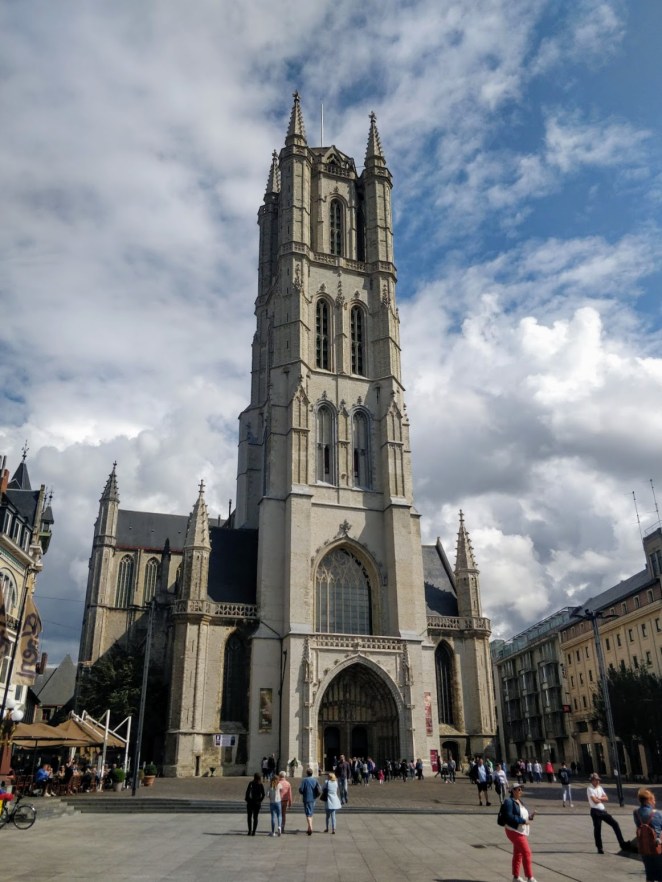
St. Bavo’s Cathedral
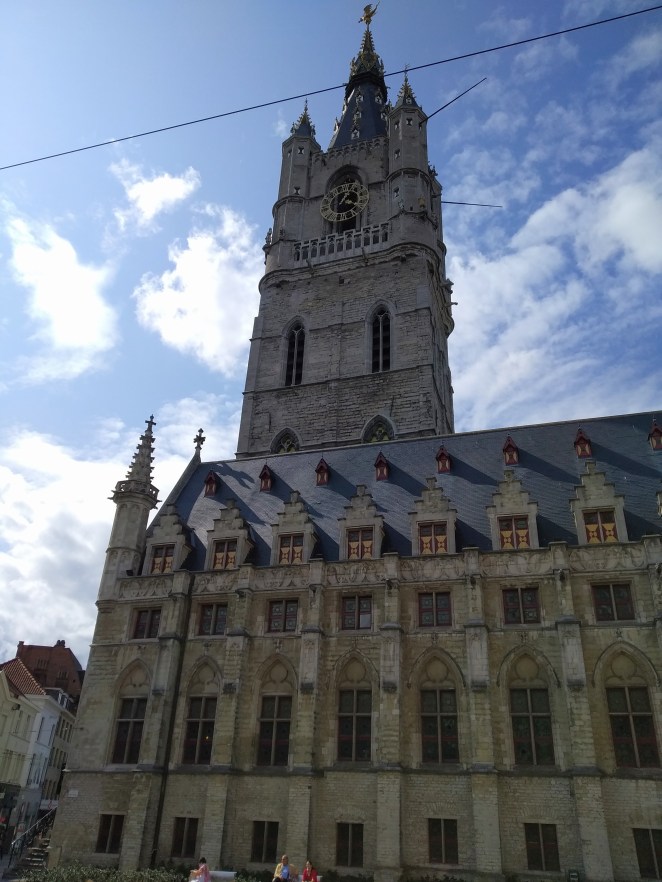
Belfry of Ghent
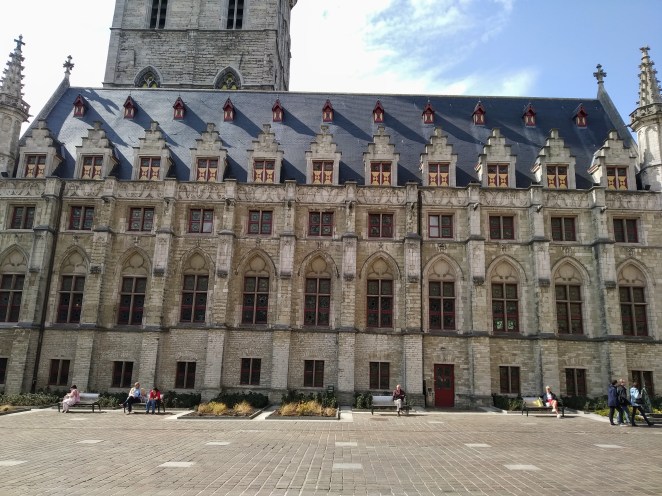
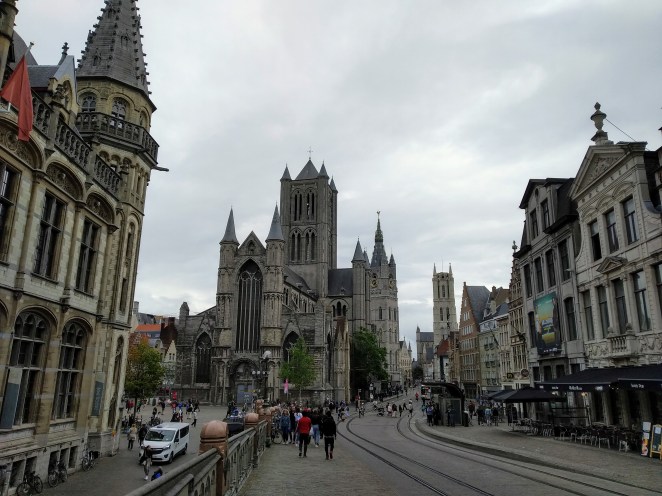
St. Nicholas Cathedral, Belfry and St. Bavo’s Cathedral one after another forming beautiful skyline of Ghent
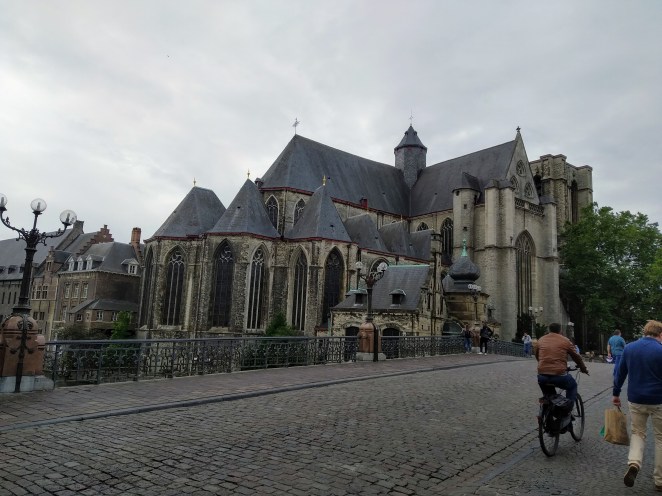
St. Michael’s Cathedral
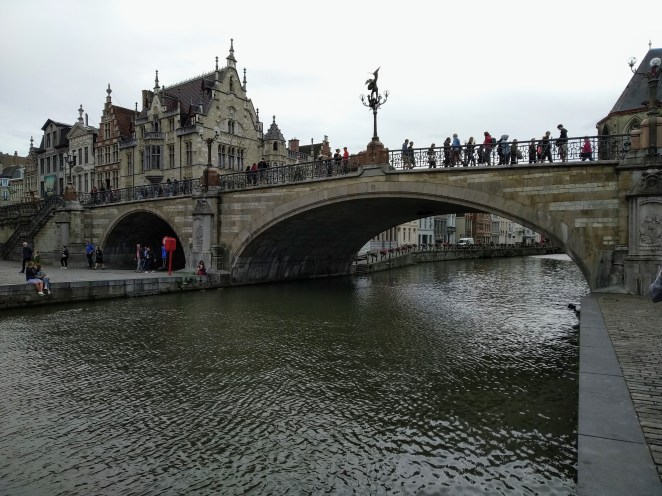
St. Michael’s bridge
Near St. Michael’s bridge was Korenmarkt (or Grain Market). Korenmarkt was the center of historic Ghent. In older days, a group of traders with same profession formed a guild. Each guild had its office in Korenmarkt. The unique insignia of their profession was etched on their respective offices. River Lys flows nearby. Now flocked by tourist-laden boats, it was a busy harbor at one point of time. All these guild offices situated on either side of canal had iron hooks to pull the big sacks of grains up into their building. But while pulling the sack up, it used to rub against the lower end of the wall and get damaged. A lot of grain used to spill over. So, the engineers at that time came up with a novice idea. They deliberately tilted the upper part of buildings forward by a few degrees. The grain sacks no longer rubbed against the lower walls of the buildings and spoilage reduced.
Since, Korenmarkt was a hub for merchants, there was also arrangement for their entertainment here. Yes, I am talking about brothels. Brothels had an insignia of two swans facing in opposite direction. Two swans facing in same direction makes a heart shape signifying love. So, facing opposite meant “no love” 😉. Today, a Marriott hotel runs in one such brothel house of older days. Ghent has not shied away from modernizing itself. Renovations are happening in the old city. However, government has mandated that the medieval façade should be kept as-is; the back side can change.
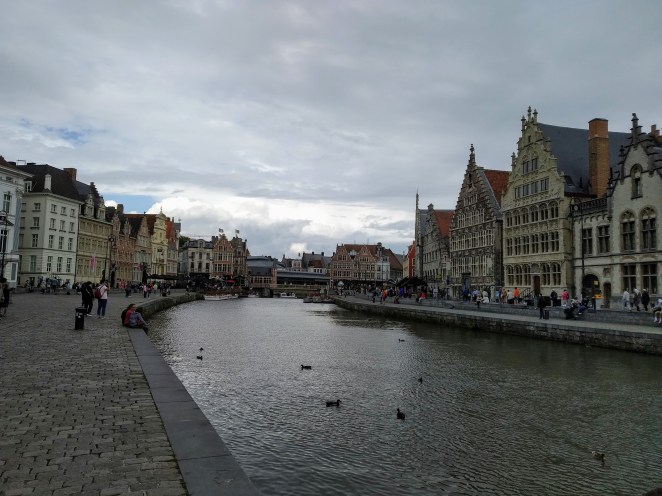
Korenmarkt with river Lys flowing nearby
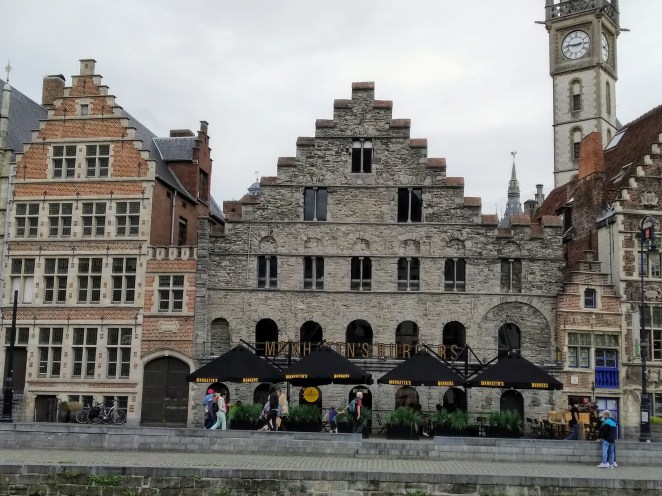
This building with stepped gable roof was titled a few degrees forward.
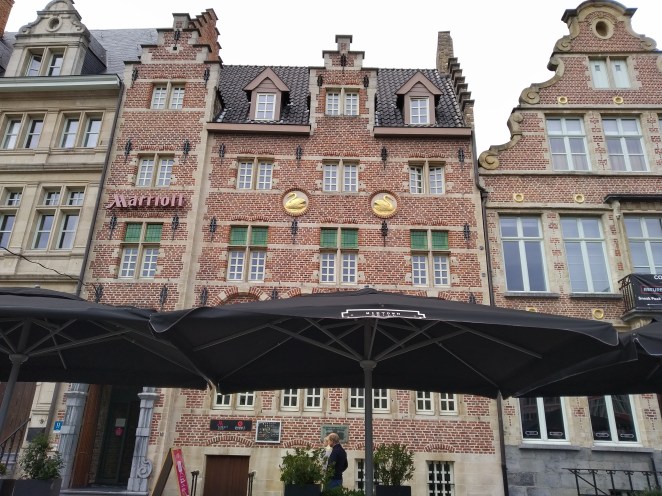
This was a brothel in older days, notice the swans facing in opposite direction. Marriott runs its hotel in it now.
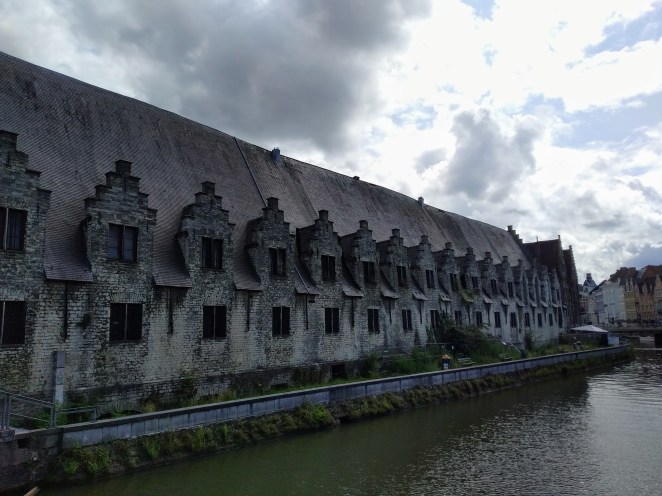
Groot Vleeshius aka Great Butcher’s Hall
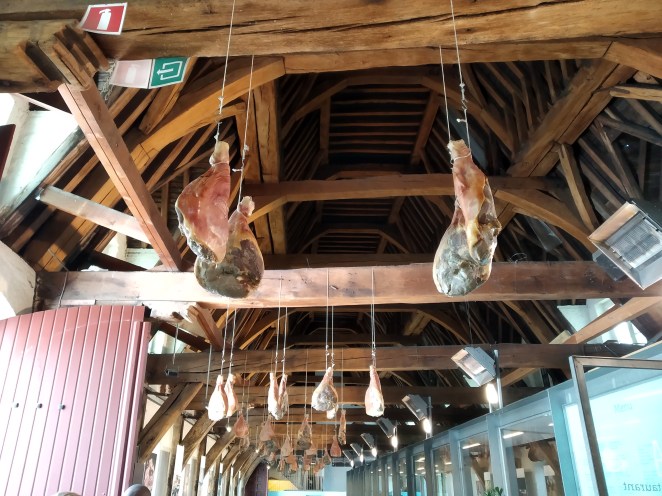
Ham is hung from wooden roof and left for 9 months inside Groot Vleeshius
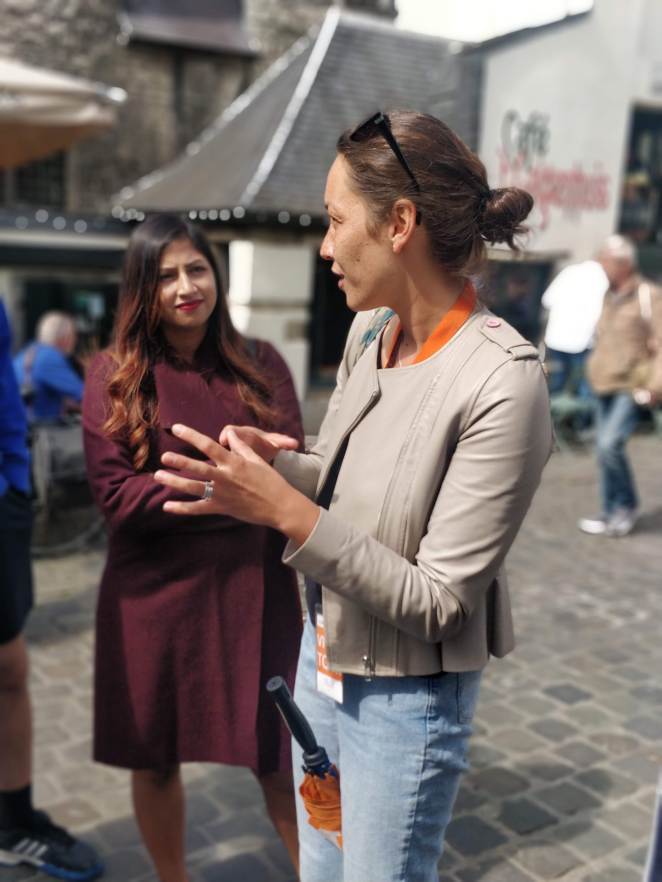
Aya explaining enthusiastically, Sneh listening mindfully
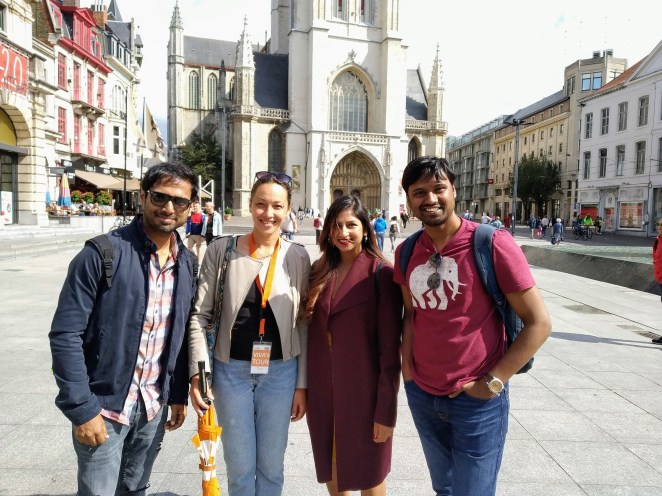
With Aya, our tour guide
After our walking tour, we quickly headed to visit Graventeen. Built in 1180 by Philip of Alsace, this rough-stone fortress was built not to protect people, rather to intimidate some independent-minded citizens. This fortified castle with massive turrets and large moat fed with water from nearby Lys river, was the residence of Counts of Flanders until 1353. It was then repurposed as a court and prison. The castle has original swords and armors of soldiers of medieval era. Not just that, the gory torture devices are also on display inside this castle. This castle was the first place where open air chimney was built for the first time. The top of the castle gives a nice view of entire city of Ghent. Just outside Gravensteen, there is a square with 2 lamp posts. These lamp posts are lighted every time a new baby is born in Ghent hospital. There is a switch in hospital that connects it to these lamp posts. The idea is to celebrate human life which was tortured at one point right here at Gravensteen.
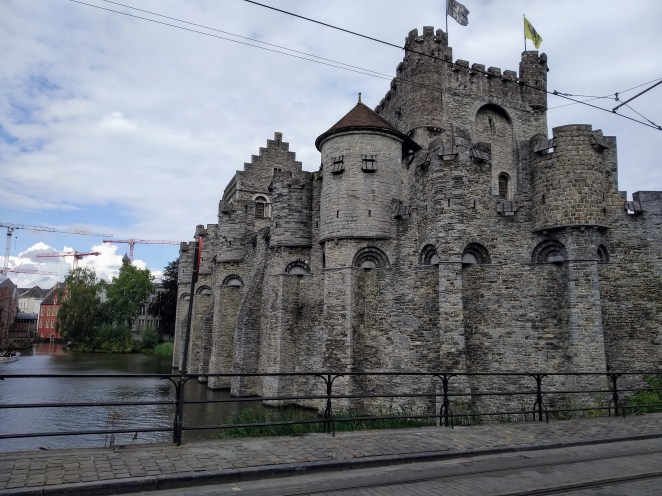
Turrets and water-fed moat of Gravensteen
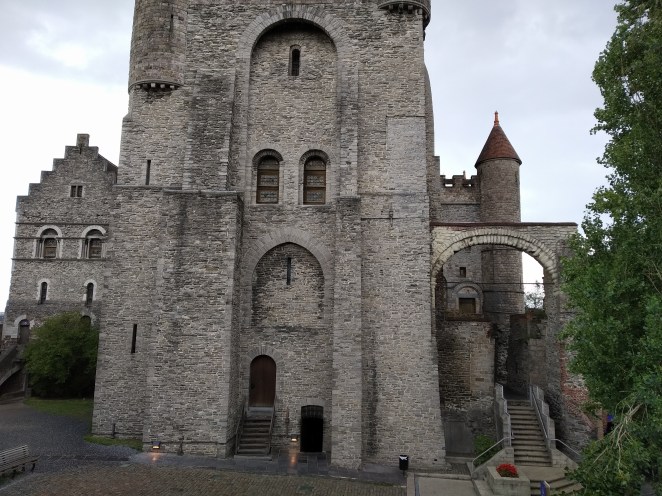
Inside Gravensteen
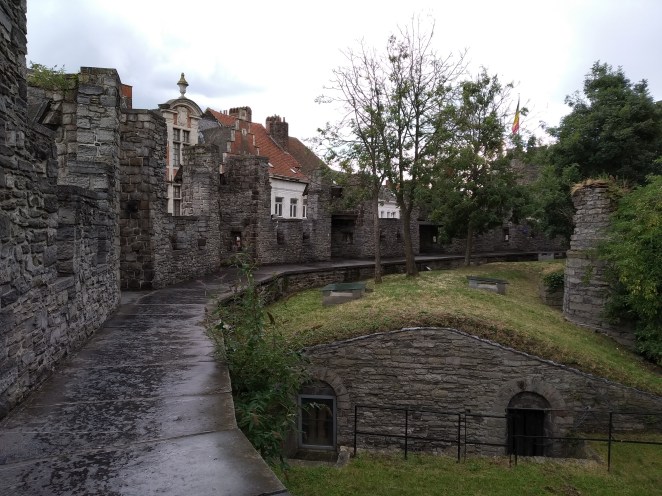
Walls of castle as seen from inside
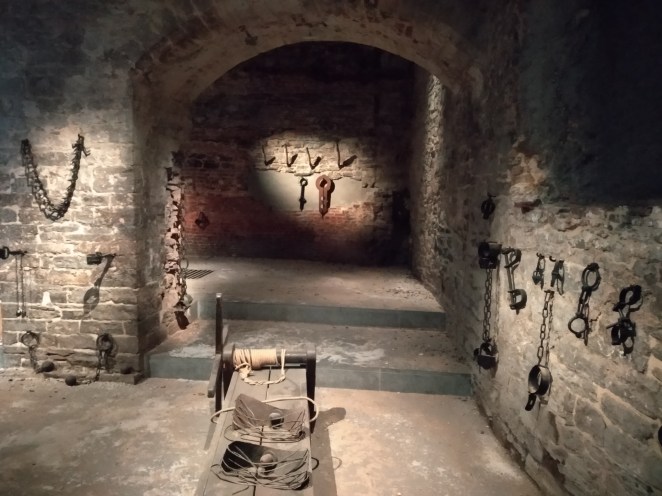
Gory torture devices once used in this castle
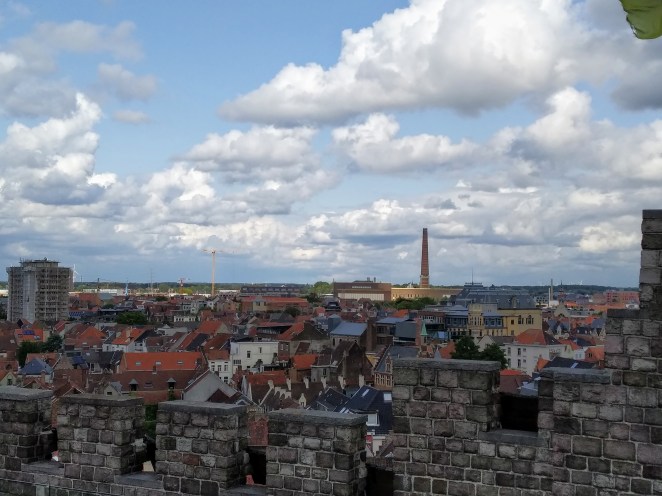
View of Ghent from top of Gravensteen
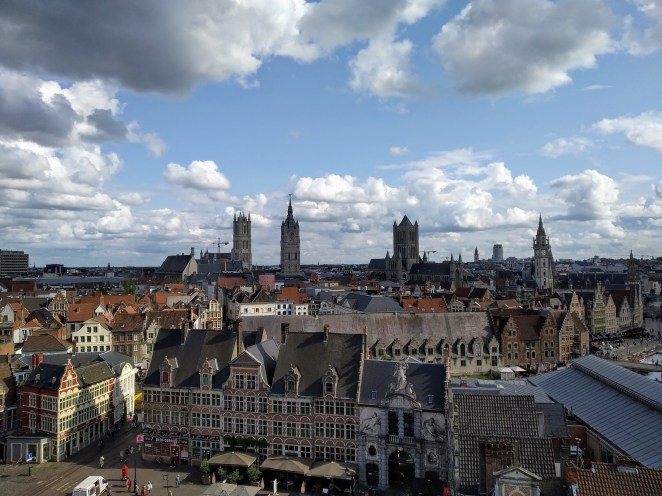
View of Ghent from top of Gravensteen
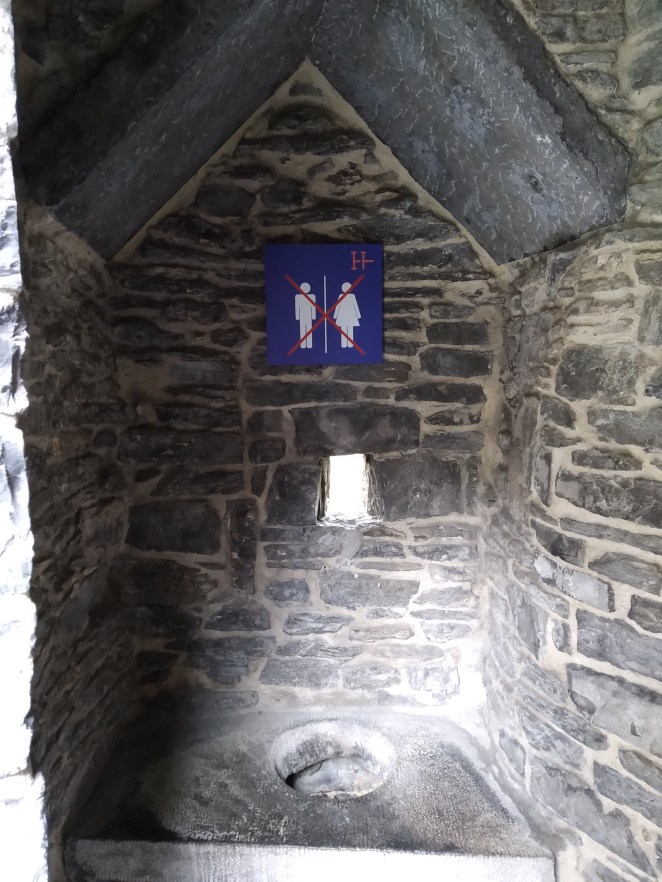
Bare hole latrines inside Gravensteen was a luxury at that time
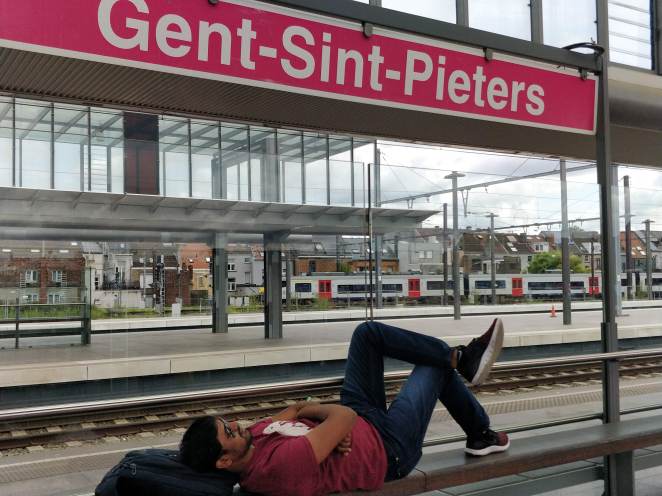
After almost 4 hours of continuous walking I was a bit tired. So, I sat near a canal at Korenmarkt and read my book on kindle. Anshu and Sneh chose to wander around further and buy some souvenirs. We left for Brussels at around 9 PM. On our way back to Airbnb, we picked up burgers from McDonald’s and two special Belgian beers.
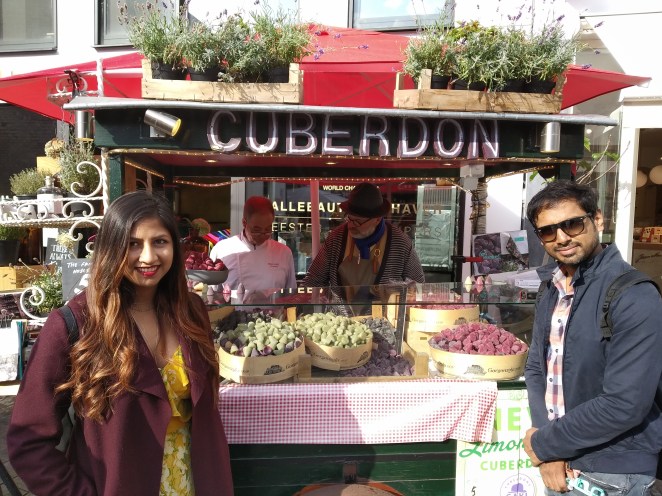
Cuberdon, also called Nose of Belgium
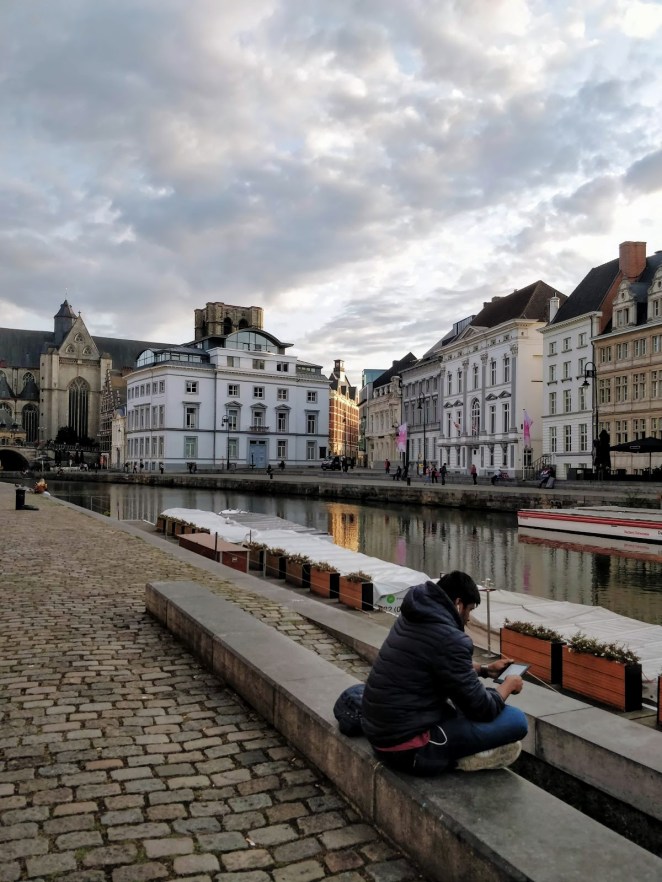
Anshu clicked this when I was enjoying a lone time with my book

#BeersOfEurope
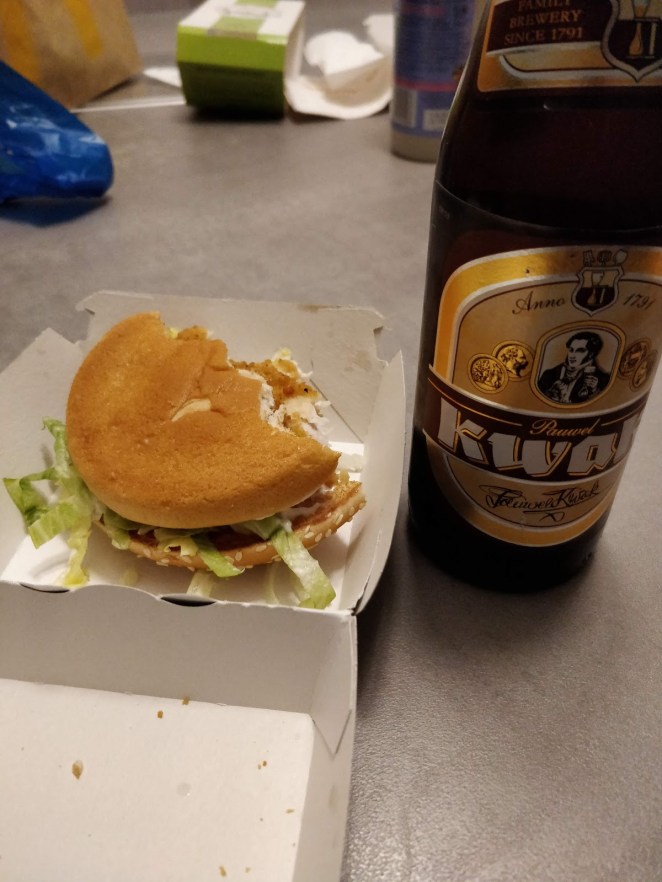
#BeersOfEurope
Final thoughts
Ghent is Belgium’s best kept secret. Most of the tourists think of Bruges and Brussels when they think of Belgium. Nothing could be further from truth. Ghent has the heritage of medieval era with concomitance prosperity of urban world. It’s a visual treat.
 Abhijeet Kumar Sinha