
Idaho trip was on the cards for the fourth of July weekend, but we were unable to get any Airbnb reservation. The ones available were so exorbitant that it was nonsensical to spend that much. So, we decided to take a day off and visit the place a couple of weeks ahead.


A bit about Idaho’s hot springs…
Idaho has the maximum number of usable natural hot springs in the United States, with about 130 soakable out of 340. Nevada has most hot springs overall, but the majority of them are not soakable.
Hot springs are water bodies which are heated by geothermal activity, i.e., from earth’s interior. There are 2 ways in which hot springs can form –
- In areas of high volcanic activity, magma (molten rock) may be present at shallow depths beneath Earth’s crust. Rainwater or snowmelt that percolates in the ground comes in contact with these shallow magma bodies and rises to the surface as hot spring. Depending on the amount of heat and surrounding environment, we can get either a hot spring, fumarole, mudpot or a geyser.
- Even in areas of non-volcanic activity, the temperature of rocks increases with depth. When water penetrates deep enough inside the earth’s crust, it comes in contact with hot rocks. This happens mainly along faults, where shattered rock beds provide an easy passage for water to reach greater depths.
Idaho has many seismic fault lines. 90% of Idaho’s 340 hot springs are the result of leftover energy heating water near fault lines whereas the remaining hot springs are traditionally heated by volcanic activity.
This is an informative video on geology of Idaho – Geology for you in Southern Idaho 1 – YouTube.
Bonneville hot springs, 19th June 2021
Similar to our Yellowstone trip, we started late on Friday and drove all night. We reached Kirkham hot springs directly at around 8 in the morning. But Google maps took us to a spot where we were unable to figure out how to get into the spring. We were unable to spot any pool to soak in. A bit disappointed, we decided to drive northeast towards Bonneville hot springs, about 30 minutes’ drive from Kirkham.
Google maps take you to the parking lot; Bonneville hot spring is about a quarter mile walk from there. The water near the source is quite hot. You can see steam wafting out of the narrow channels. However, this hot water flows downwards and merges with a cooler Warm Spring creek. It is this place where there are several natural pool formations that provide the optimum temperature and depth to soak in.
Rajendra and I were excited to find this secluded hot spring with no one in the vicinity. We put on our swimming trunks and jumped right into it. The kid inside everyone took over and in no time, we were joined by Naveen, Mansa, Shruti and Chitte. Cradled in the arms of mountains and canopied by verdure all around, we were bathing at a place that someone can unarguably call a natural jacuzzi. We had the entire place to ourselves for most of the part; a few other people joined later. We enjoyed the hot spring for about 2 hours before heading to our Airbnb for check-in.



Craters of the Moon National Monument and Preserve, 20th June 2021
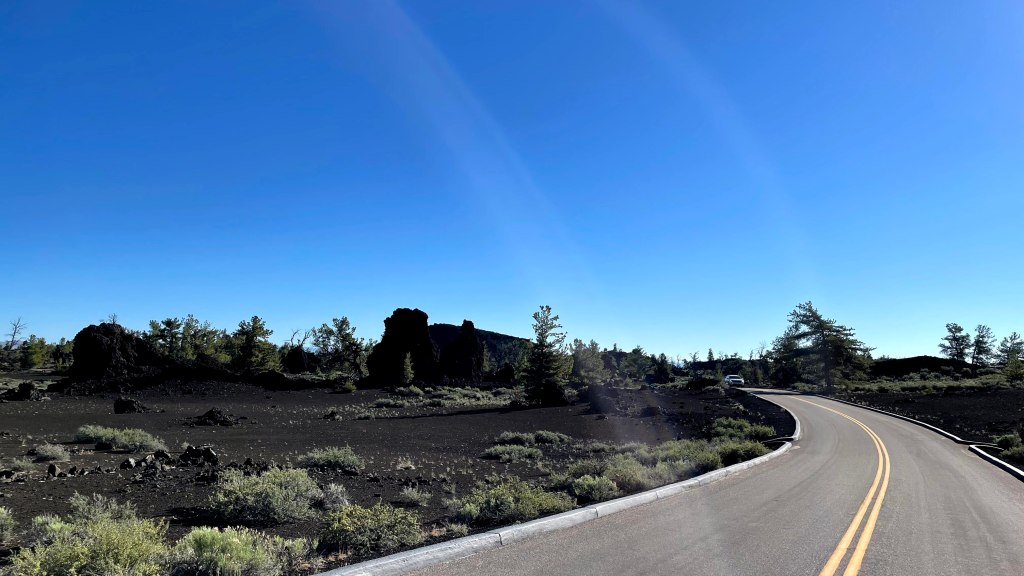
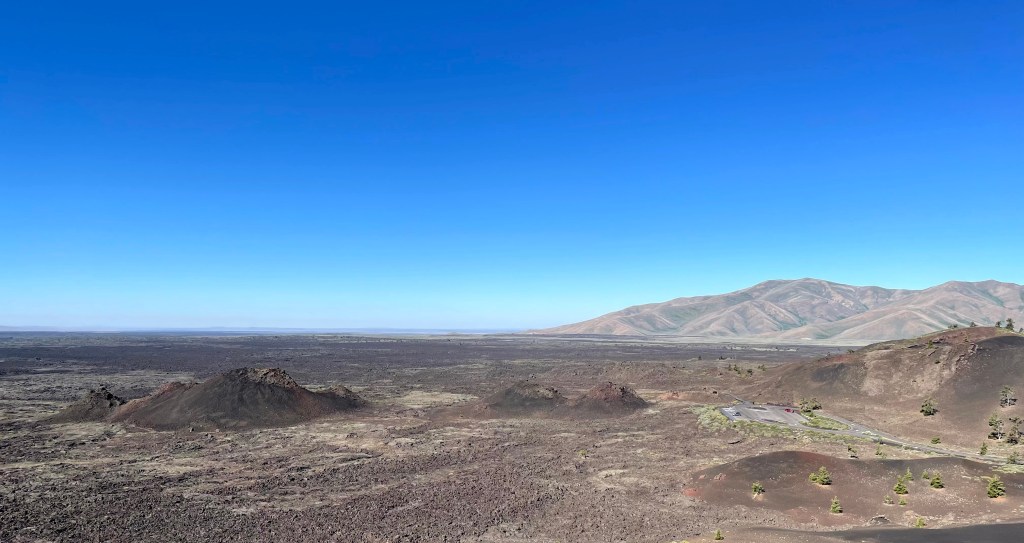
Craters of the Moon is a vast ocean of lava flows with scattered islands of cinder cones and sagebrush.
You may ask where the volcanic activity in Idaho comes from. The source is the same hotspot that powers Yellowstone National Park today. The John Day lava field in Oregon, Craters of the Moon and Yellowstone’s active hydrothermal activity depicts the tectonic shift of North American plate in west direction. Hotspot remains fixed as they are plumes of magma in the mantle. It is the crust (either continental or oceanic) that floats over dense mantle. In this case, the North American continental crust moved in west direction leaving behind lava fields of Oregon and Idaho in its wake. As the crust above the hotspot continues to shift, Yellowstone will eventually look like Craters of the Moon of today. We see a similar shift of Pacific tectonic plate (an oceanic plate) leading to creation of Hawaiian islands (more on my Hawaii adventure here).

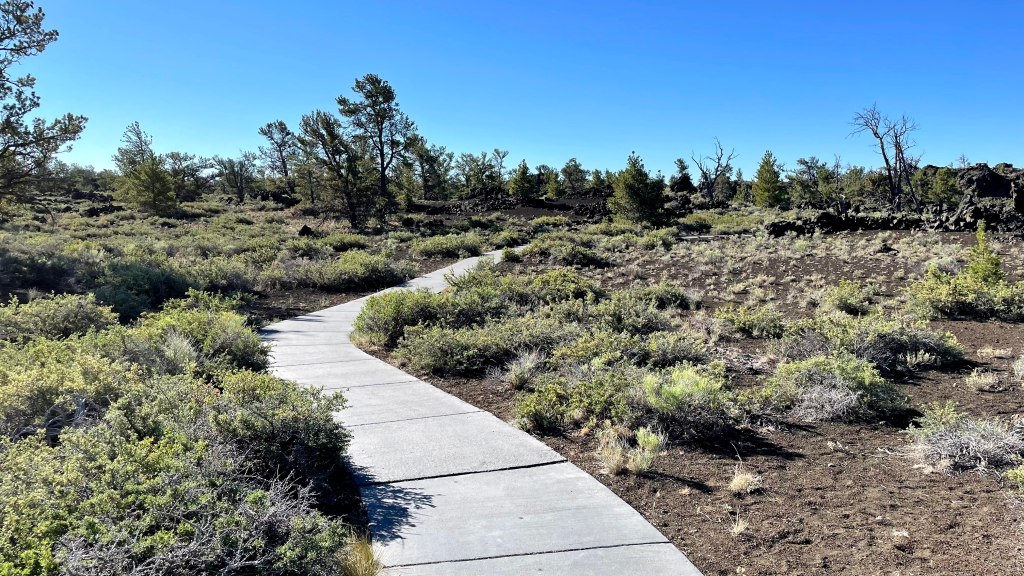
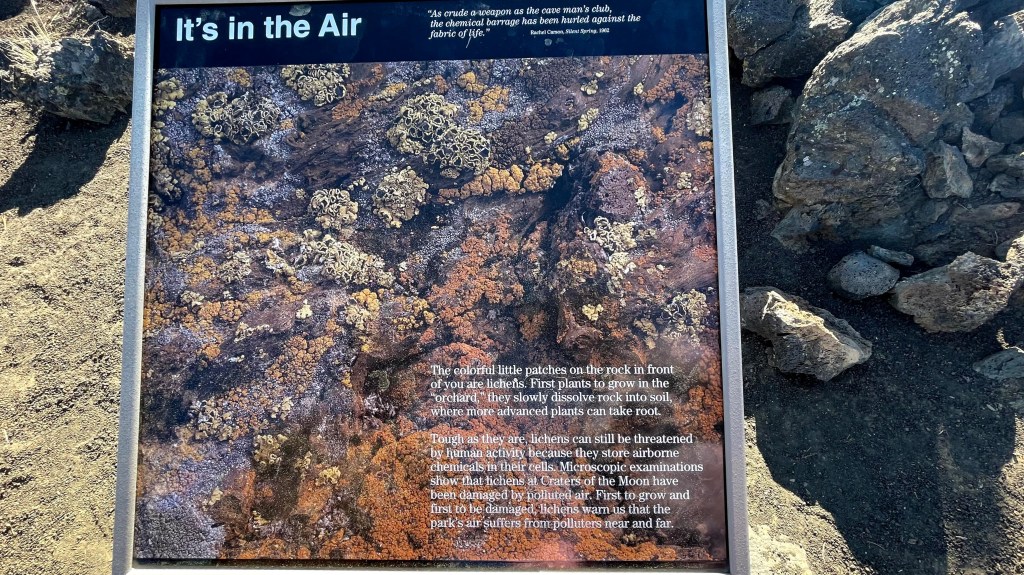
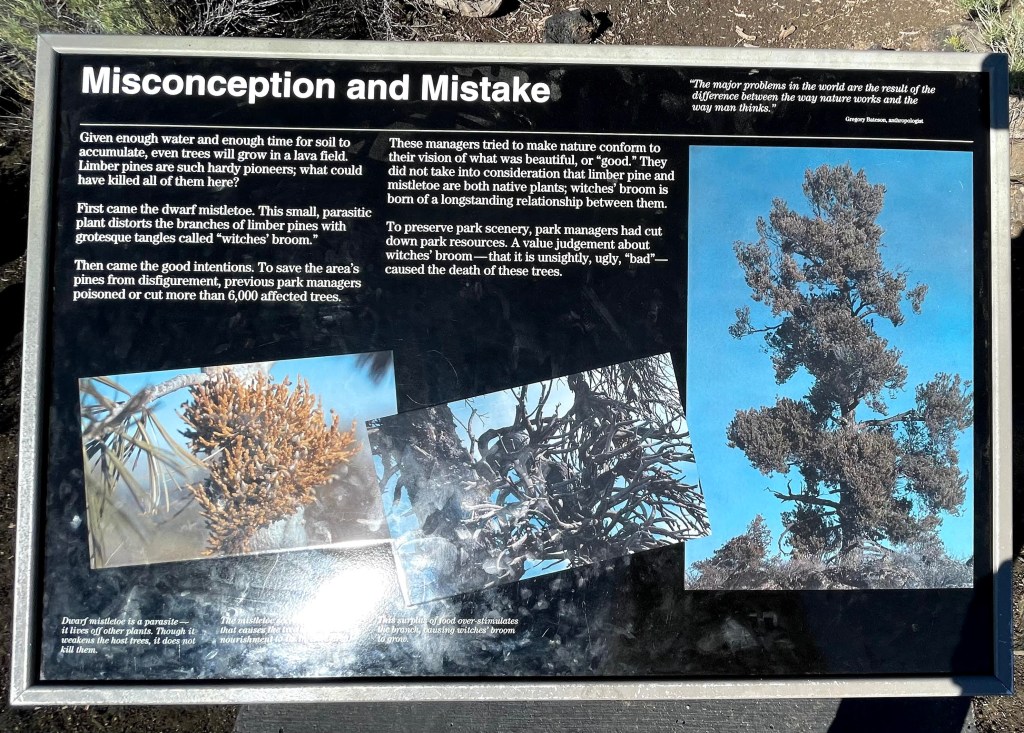
We started with doing Devil’s Orchard Nature trail. As I was walking through the trail, I could see numerous trees here. This was different from the lava fields I saw in Iceland. The answer also lies here – lichens. These lichens dissolve the rocks into soil, where much advanced plants like sagebrushes can take root.



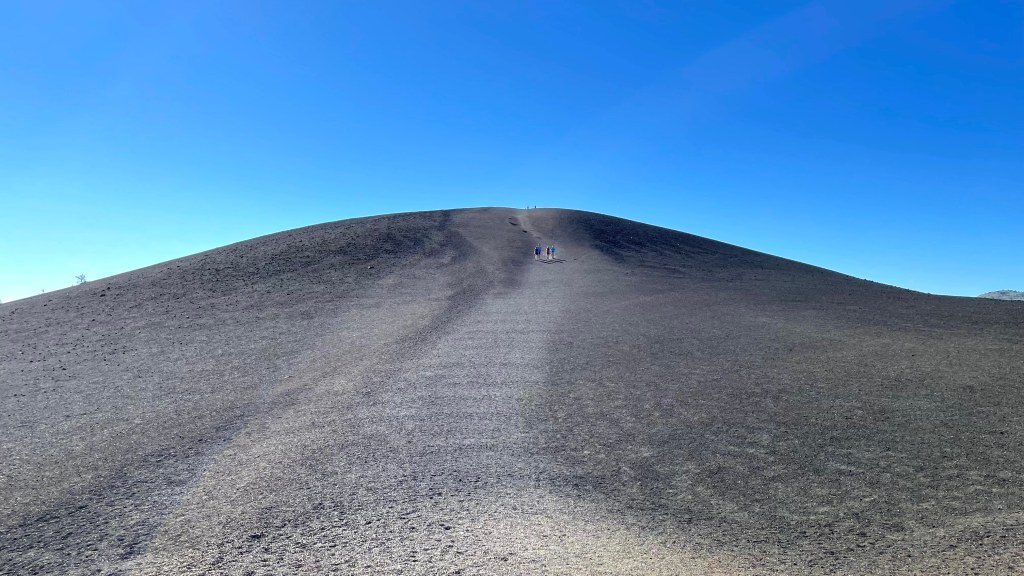
After Devil’s Orchard trail, we headed to Inferno cone. It is a cinder cone. Cinder cones are large mounds that develop near volcanic vents during an eruption. In an eruption, hot pressurized lava is spewed skyward. Upon contact with cool air, the airborne lava at least partially solidifies, preserving tiny bubbles created by escaping gases. The small, round, bubble-like cavities owing to small amounts of gas trapped in the rock at the time of its solidification are called vesicles. The light, hole-filled rocks, called cinders, accumulate around the vent, and form a cone-shaped hill. Once settled, fragments may melt or weld together.
Then came the highlight of the trip – Indian tunnel. It is a lava tube where a hot stream of lava flew many years ago. Lava flow becomes lava tube when the exterior of the flow cools down forming hard surface while allowing the hot, lava fluid to flow beneath undeterred. This place uncovered a spectacular underworld where fiery lava sluiced for miles through hardened, self-insulated tube without losing any heat.


Shoshone falls, 20th June 20201
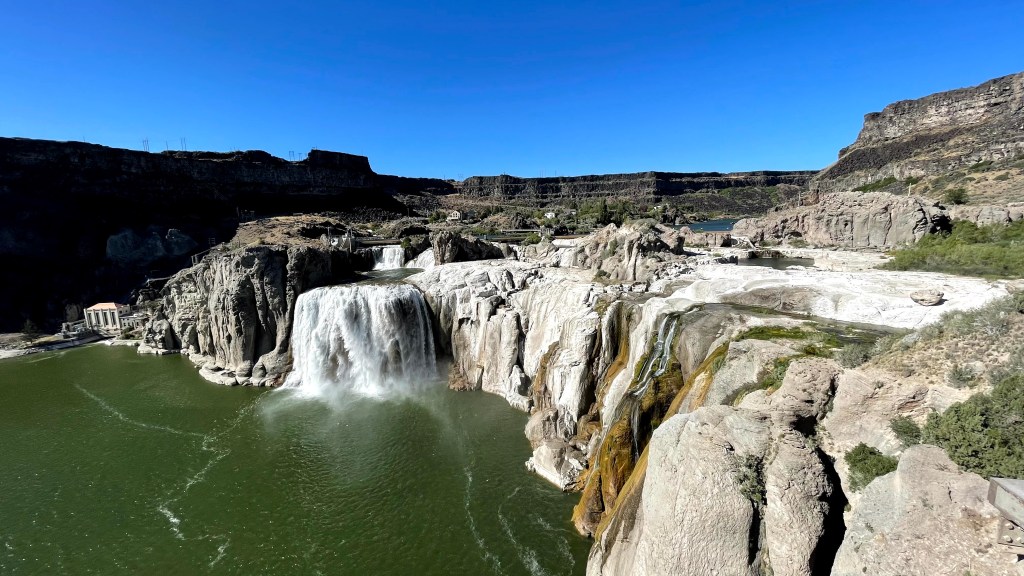
Shoshone falls was created by Lake Bonnevillle flood. Lake Bonneville was a Pleistocene (i.e., ice age) lake around present day north Utah. It was a land-locked lake nourished by rainwater and snowmelt. About 15,000 years ago, constant erosion along the shoreline broke the natural dam at Red Rock Pass and a huge amount of water flowed for weeks carving out many geographical features that we see today. One of them is Shoshone waterfall. 400 feet of water spilled over Red Rock Pass into Snake River canyon depositing hundreds of square miles of sediments. The flood scoured walls and gouged holes in the canyon floors creating Shoshone falls and Twin falls. The flood then entered Hells canyon widening it further before falling into Pacific Ocean via Columbia river. Today what is left of Lake Bonneville is much smaller Great Salt Lake.
Shoshone falls is called Niagara of the west. However, I wish the Shoshone fall were as beautiful and fascinating as its history was. I have certainly seen better waterfalls than this. It could be because of a man-made dam that was created on this waterfall in early 20th century.
After spending half an hour at this place, we headed to nearby Dierkes lake. This lake has a recreational area for both adults and kids. Many people were out there with their paddle boards and kayaks. There was a springboard for swimmers to take a jump and enjoy their time. We left the place at around 7 PM and headed to our Airbnb. On our drive back, we also came across the scenic overlook of Snake River canyon under Perrine bridge.


Boise, 21st June 2021
The next day we checked out and returned to Redmond via Boise. At Boise, we spent some time at Boise’s Aquarium and Julia Davis Park. The park was empty given that it was a Monday. So, we had a quiet, relaxing time there. The highlight of Boise, though, was Boise Fry Company. BFCs (yeah, it’s a chain) specialize in potato fries. They serve fries made of different types of potatoes in varied cuts topped with 9 different types of sauces. No wonder their slogan is ‘burger on the side’. We tried fries made of purple and red potatoes seasoned with garlic and rosemary. Their blueberry ketchup and fiery hot sauce was just yum.
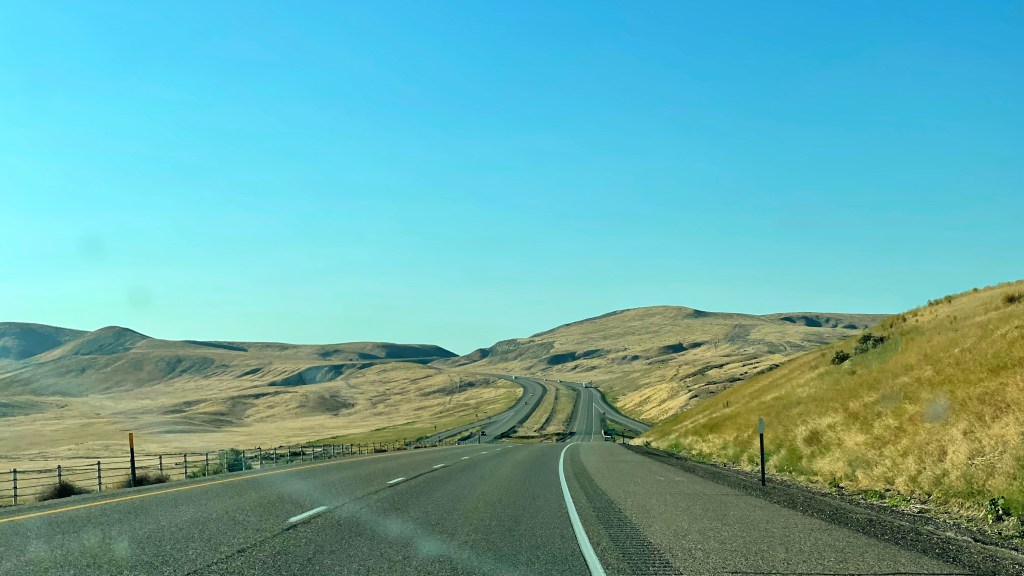
We left Boise at 4 PM that day and returned home at around 2 AM. Landscape enveloping I-84 is so much more picturesque than I-90. It slithers through undulated hills, going all the way to the top of the mountain at some places. I will always remember this drive going up and down the hills with the sky painted with an orange hue and sun setting in the distant horizon. The trip, certainly, ended on a high note.

 Abhijeet Kumar Sinha
That lava tube cave is amazing
LikeLike