
Raj has been nudging to do this road trip for quite some time. But some or the other thing had been happening. Either one of us were occupied or we had to trade this trip with some other place. But not this time. Winter holidays is a good time to take long vacation without really missing out on any office work. But we also wanted to avoid the holiday rush. With Omicron variant of corona virus lurking around, it got underscored. So, we decided to take off a bit early and come back home before Christmas. It turned out to be a very good decision as we were able to avoid rush at many places, most notably San Diego Zoo and SeaWorld. Yeah, the day ended much sooner than summers but it was a worthy tradeoff.
Itinerary at a glance
| Date | Stay | Activity |
| Dec 14th 2021 | Santa Barbara | Fly to San Jose, Drive from San Jose to Santa Barbara Google maps route: Day 1 |
| Dec 15th 2021 | San Diego | Drive from Santa Barbara to San Diego via LA Google maps route: Day 2 |
| Dec 16th 2021 | San Diego | San Diego Zoo |
| Dec 17th 2021 | San Diego | SeaWorld |
| Dec 18th 2021 | Palm Springs | Drive from San Diego to Palm Springs Google maps route: Day 5 |
| Dec 19th 2021 | Santa Maria | Drive from Palm Springs to Santa Maria via LA Google maps route: Day 6 |
| Dec 20th 2021 | San Jose | Drive from Santa Maria to San Jose Google maps route: Day 7 |
| Dec 21st 2021 | — | Fly back to Seattle Google maps route: Day 8 |
A bit about California…
California has been the home of Native Americans for almost 10000-15000 years. When Spanish explorers arrived at this place, their population thinned, primarily due to diseases Spanish brought with themselves. It all started in 1542 when the Portuguese explorer Juan Rodrigues Cabrello sailing under the flag of Spain anchored his ship at San Diego. At that time, he named the place San Miguel in observance of the feast day of Saint Miguel the Archangel. He crossed the Baja Point in New Spain (present day Mexico) and entered uncharted waters, where no Spanish ships had been before. In 1602, Sebastian Vizcaino reached San Diego Bay and named this place as such after Saint Didacus of Alcala, Spain.
In 1768, fearing Russian encroachment, King Carlos III of Spain instructed his Viceroy of New Spain (present day Mexico) Jose de Galvez to establish settlements along the coast of Alta California (or Upper California) to claim the land of Spain. Galvez wanted that the motives of this plan should appear religious, not political, so he chose Franciscan order of catholic priests led by Padre Juniper Serra to accompany the military and be responsible for converting the native population to Christianity. On July 16th, 1769, on a site overlooking the bay, Mission San Diego de Alcala was founded as the first mission in Alta California. San Francisco bay was later discovered that year during land exploration.
This marked the beginning of Spanish colonial period of this region till 1821. Spanish empire divided California into 2 parts – Alta California (present day US state of California) and Baja California (present day Mexican states of Baja California and Baja California Sur). Alta and Baja literally mean upper and lower respectively. Spanish missionaries began settling 21 California missions on the coast of Alta California beginning in San Diego to mark their legitimacy over this newly discovered land. During the same time period, Spanish military forces built several forts and two small towns (pueblos). Two of the pueblos would eventually grow into today’s cities of Los Angeles and San Jose.
In 1821, Mexico gained independence from Spanish empire and Alta California came under Mexico. However, this was short-lived. In May 1846 there was a declaration of war between US and Mexico. After the war, Mexico had to relinquish all claims to Alta California, and it became the 31st state of USA in 1850.
Around the same time California Gold Rush happened which brought people from all over United States and abroad. This influx led to new immigrants, new settlements and new ideas. In 1869, railroad linked it to rest of the world. Remember, around the same time, due to lobbying by many industrialists Yellowstone National Park was designated the first national park in United States on March 1st, 1872. This led to a deluge of tourists and further development of railroads in the western coast.
And a bit about Highway 1…
Prior to the construction of this highway, there was a rough wagon road that stretched from Monterey to San Simeon. In 1894, Monterey area physician Dr. John L.D. Roberts was summoned to a shipwreck near Point Sur Light Station. After spending hours in his horse-drawn wagon, he became convinced of the need for an improved scenic road between Monterey and San Simeon. His cause was championed by California governor and the construction started in 1922 after World War 1. The lion’s share of labor was provided by the convicts from San Quentin and Folsom state prisons. It served 2 purposes – solution to overcrowding of prisons as well as rehabilitating first-time offenders. A series of 31 bridges were constructed to circumvent the creeks on this rugged coastline. Most of them have been replaced, except 7 concrete bridges. The very popular Bixby Creek Bridge and Big Creek Bridge are among those exceptions.
Day 1: San Jose to Santa Barbara, Dec 14th 2021
We had a morning flight to San Jose which landed at 9.30 AM. After picking up car at the airport we went to nearby Costco and Indian store to pick up grocery and snacks for the trip. We picked up our lunch at Costco itself – chicken bake, cheese pizza and hot dog. And then the trip began, in true sense 😊.
It is advised to drive Pacific Coast Highway (PCH) southbound so that you have ocean on your right side making it easier to pull over and click pics. And that is what we were doing. We took SR 17 South that connects to Highway 1 at Monterey Bay. SR 17 has nice twisting roads especially between Lexington and Glenwood. So, it was a welcome prep for the what the trip had in its skuttle. We left the highway and hopped on Ocean View Blvd which runs closer to the ocean. This is something that we did regularly on the trip – we drove off the Highway 1 or Highway 101 an took roads closest to the ocean. I think you get to see much better views that way.
We stopped at Lover’s Point Park and Asilomar State Beach. Both of these are located in northern part of Monterey Bay and gives a good view of sea-side houses and shops of cities in Monterey County. Lots of sea gulls and squirrels were present here who were surprisingly unperturbed by the humans present there.
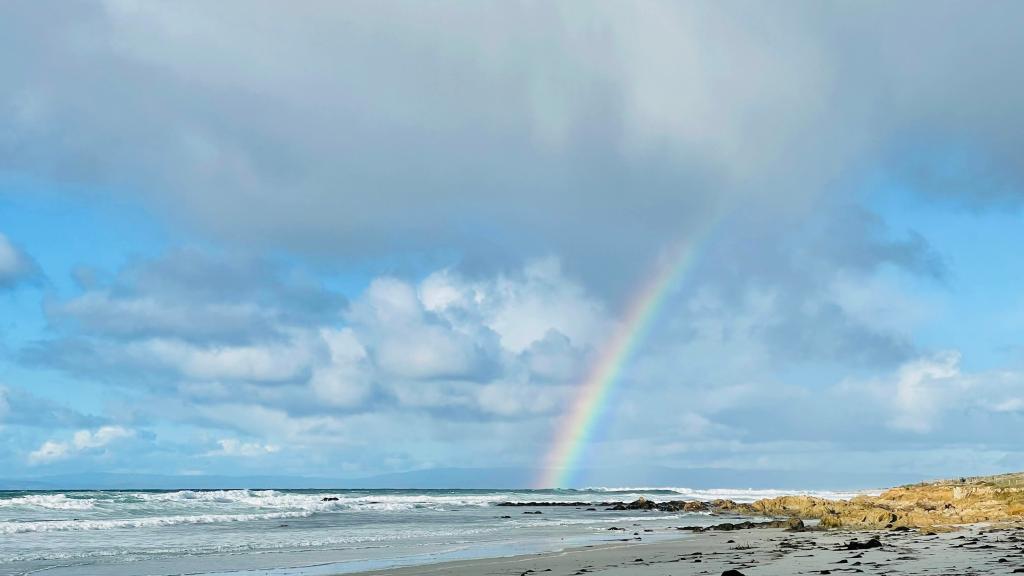
From there we went to 17-miles drive in Pebble beach. Note that this drive is now paid. I think this area is owned by Pebble Beach company. There are parking stations created at entry points which will ask you to pay $10 entrance fee. We were not able to find our way around. Anyway, as you enter 17-miles drive, there are different sightseeing points. Spanish Bay Beach is where Spanish explorers in 1769 had camped. They were trying to find Monterey Bay. When we reached there, it had just rained. So, we got to see a beautiful rainbow by the beach. Bird Rock is another good point on this drive. It is lone rock in the bay which has become a wildlife hub with buzzing birds and roaring sea lions. Further along, we drove past Pebble Beach Golf Links which is considered one of the most beautiful courses in the world. By the time we reached Carmel, it was 4 PM. Jyothi had packed some gobhi parathas from the Indian store this morning. We ate that in the car and roamed around the downtown of Carmel for some time.
We had a mixed bag of luck that day. Rain was forecasted but besides occasional spurts, weather was mostly clear. However, there was a road closure between northern end of Big Sur and Hearst Castle. As a result, from Carmel we took Highway 101 for Santa Barbara instead of Highway 1. Moreover, it had started getting dark by the time we were at Carmel, so there was no benefit of taking longer and tortuous road of Highway 1.


Day 2: Santa Barbara to San Diego via LA, Dec 15th 2021
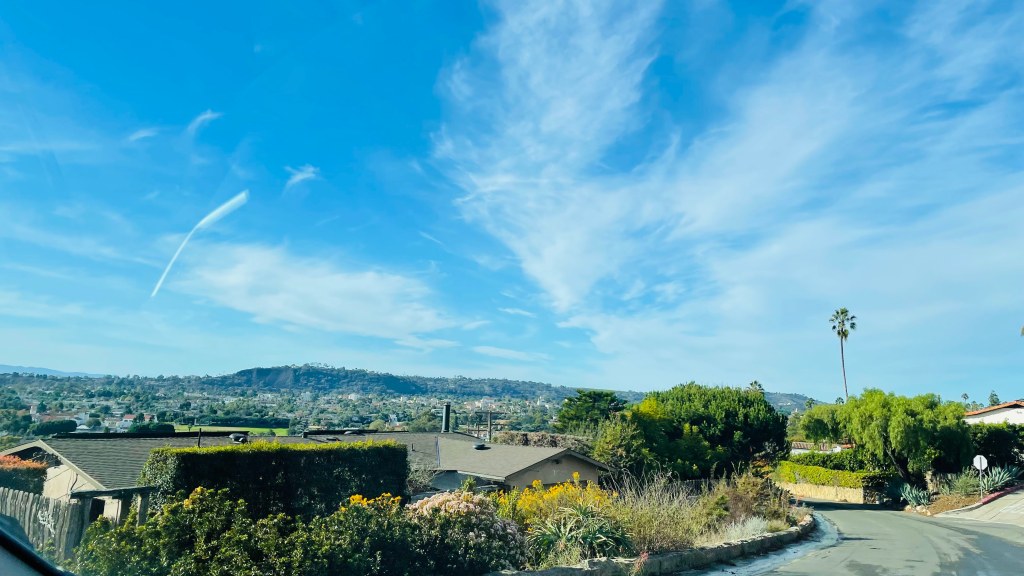
The day started with a good, sumptuous breakfast at the hotel. Santa Barbara is small sleepy town. Driving around Santa Barbara reminded me of hill stations in India – sun kissed morning, sinusoidal roads, small, cute houses with plenty of trees planted in the front yard. Trees in this part of California were different from what I am used to seeing in Puget Sound area. The vegetation here was much similar to northern and central India. Probably because the latitude and climate are similar. There were beautiful orange and lime laden trees in many houses.
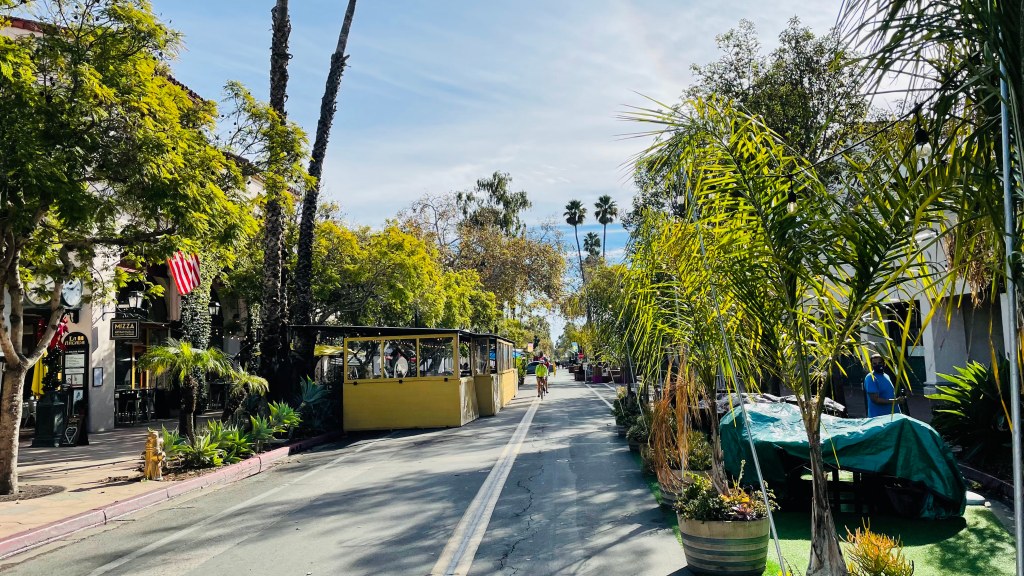
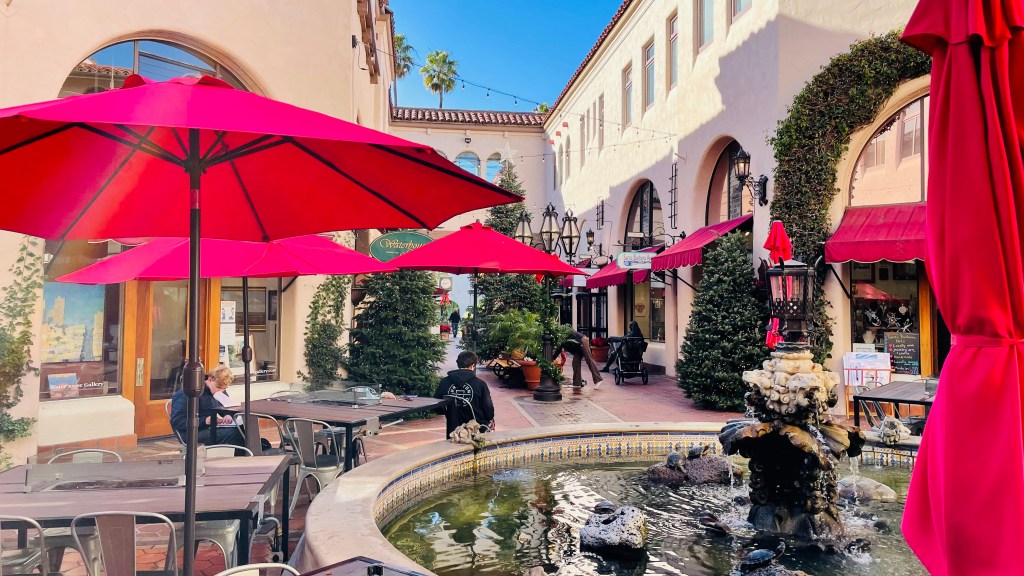
We started exploring the town by starting with Santa Barbara Mission. The Santa Barbara Mission, a National Historic Landmark, was the 10th of the 21 Spanish colonial missions founded in what is now US state of California between 1769 and 1833. The mission was consecrated December 16th, 1786, by Father Fermin Francisco de Lasuen. We didn’t get chance to explore the mission from inside as it was closed. We just clicked a few pics from outside and headed towards Santa Barbara downtown. As I mentioned before, Santa Barbara is a sleepy town. It was 11 AM and shops were still opening. We roamed around the downtown for about an hour and then headed towards LA.
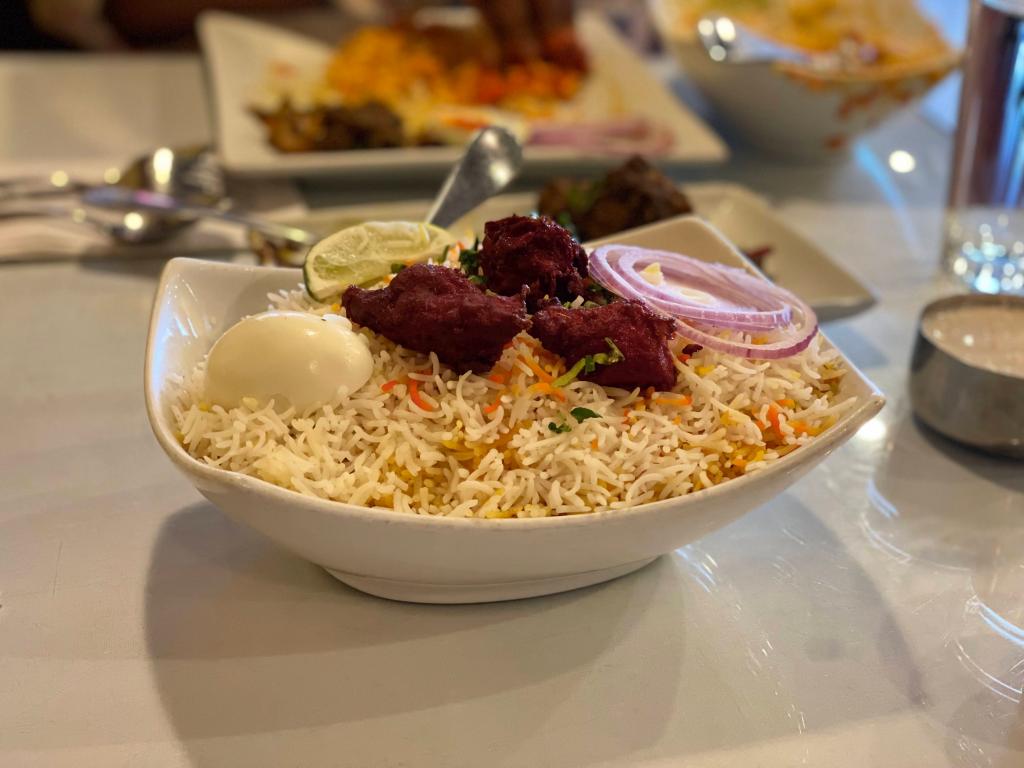
The traffic in LA is quite aggressive compared to that in Washington – frequent honking, over speeding, cars cutting into your lane by a whisker. It took me about a couple of hours to adjust to this style of driving. Guess what, now that I am back here in Redmond, I am unlearning all those things. We started LA with a spicy Indian lunch at Paradise Biryani Pointe. Oh boy, the goat pepper fry was seriously hot. Capsaicin showed its effects not only at that time, but also the next morning 😉.
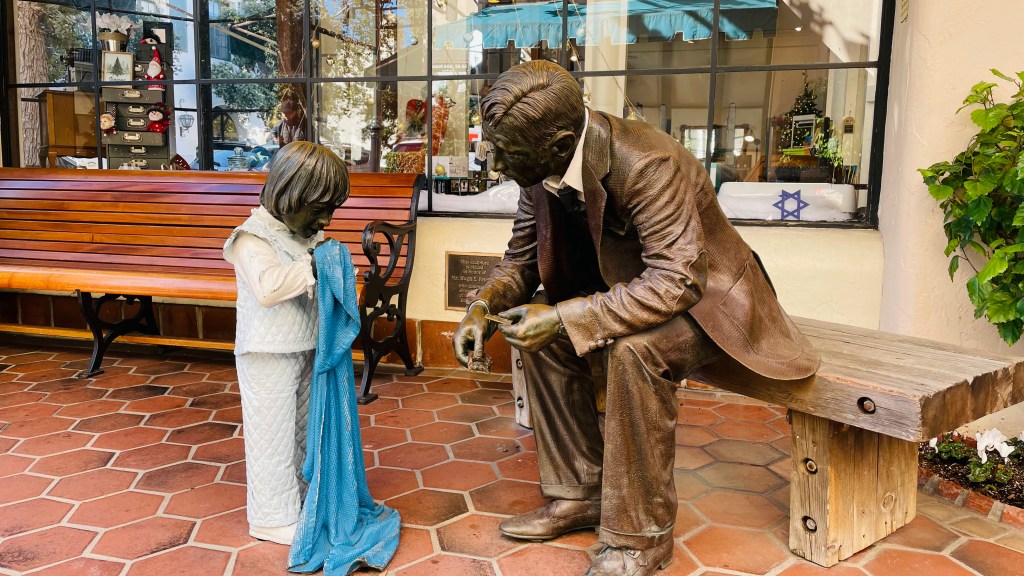
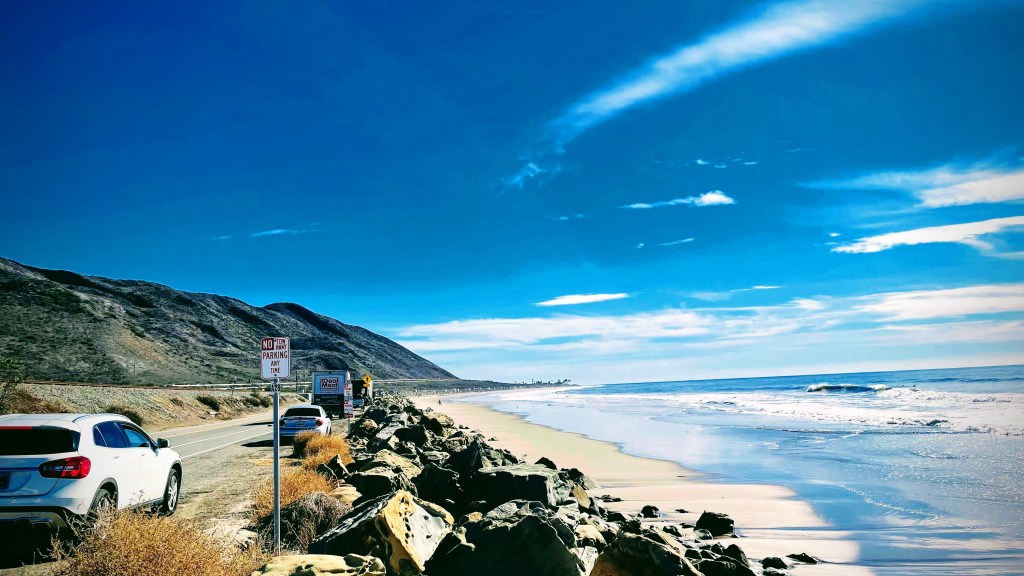

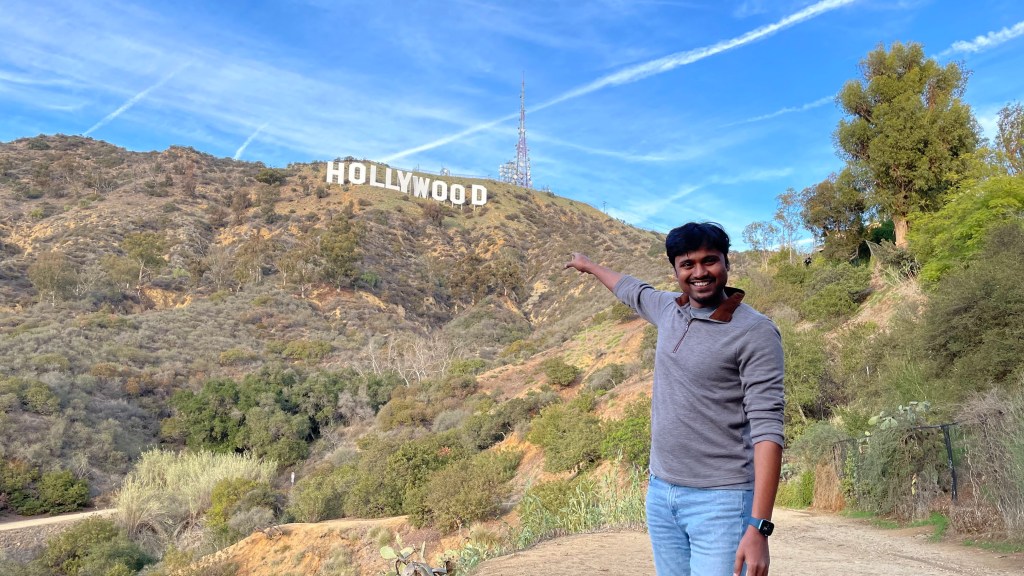
After lunch, we headed to the famous Hollywood sign. Web search shows many places from where Hollywood sign could be seen – Griffith Observatory, Dolby Theater and what not. But most of them are worthless. Enter ‘The Last House on Mulholland, 6101 Mulholland Hwy, Los Angeles, CA 90068’ in Google Maps. It will take you to a point up the incline to a house though a narrow circuitous road. Just off the fork between Mulholland Hwy and Ledwood Dr, there is a point called Innsdale Trail which gives the best view of the sign, in my opinion. It is sufficiently close and is sparsely crowded. The parking could be an issue here but parking just off the road for 5-10 minutes and clicking some pics should not be a problem. At least it worked for us.
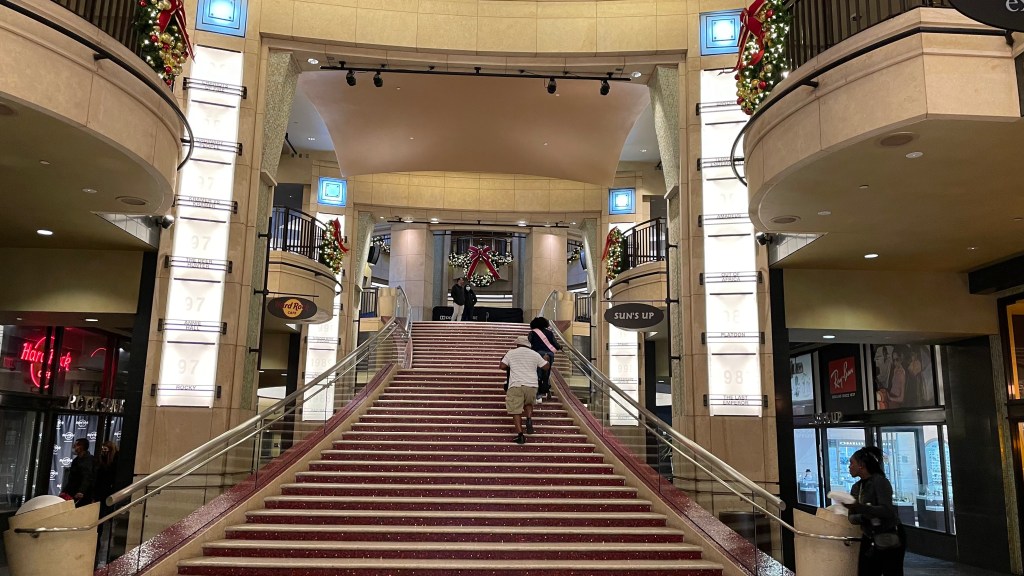
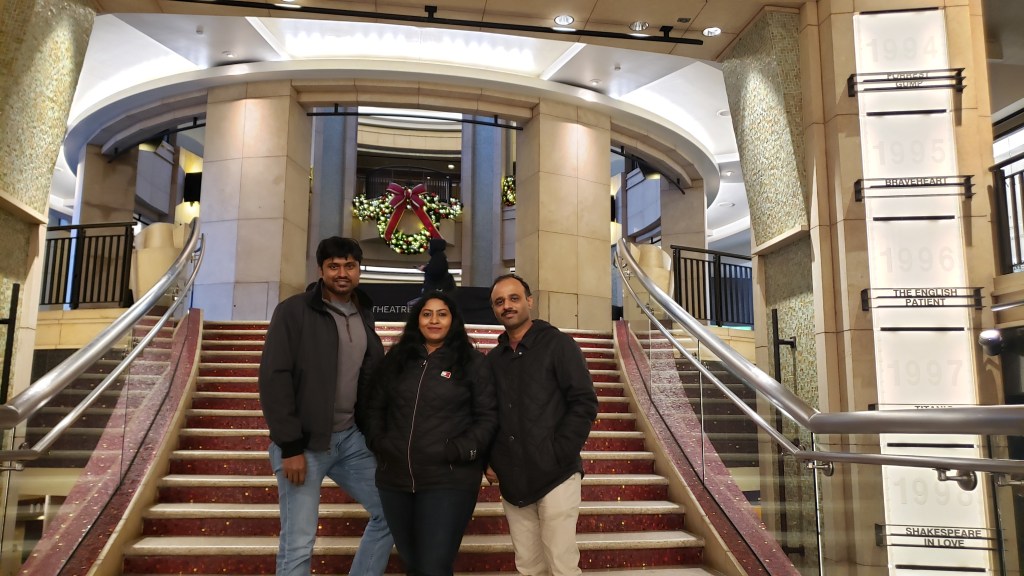
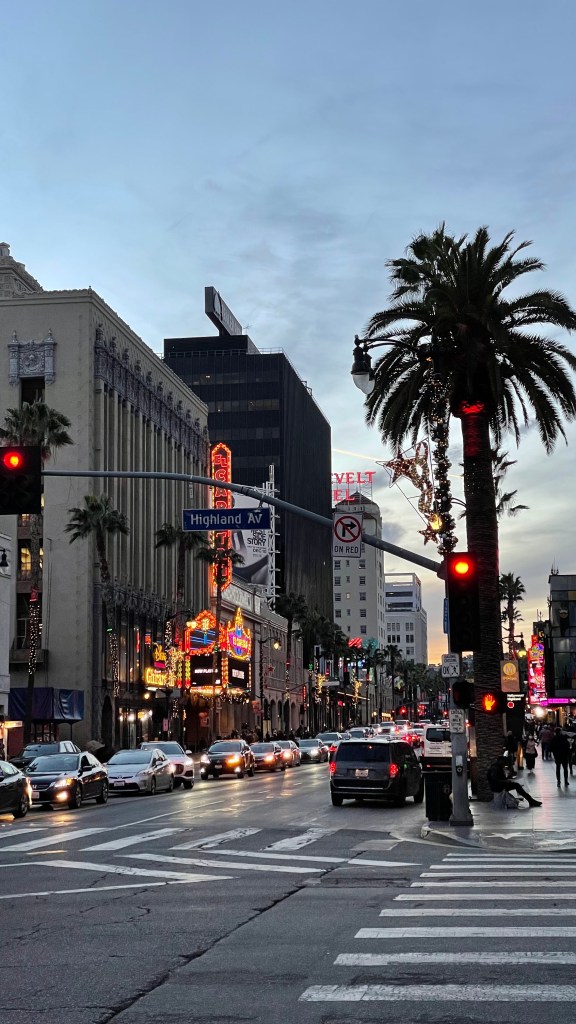
After the customary pic at the famous Hollywood sign, we headed towards Dolby Theater. It is a live-performance auditorium in Hollywood and Highland Center shopping center which has been the venue of the annual Academy Awards ceremony since its opening on Nov 9th, 2001. The entrance of Dolby Theater is adorned by a grand staircase leading to Awards Walk which features Best Picture Oscar plaques for every film to win the honor till date.
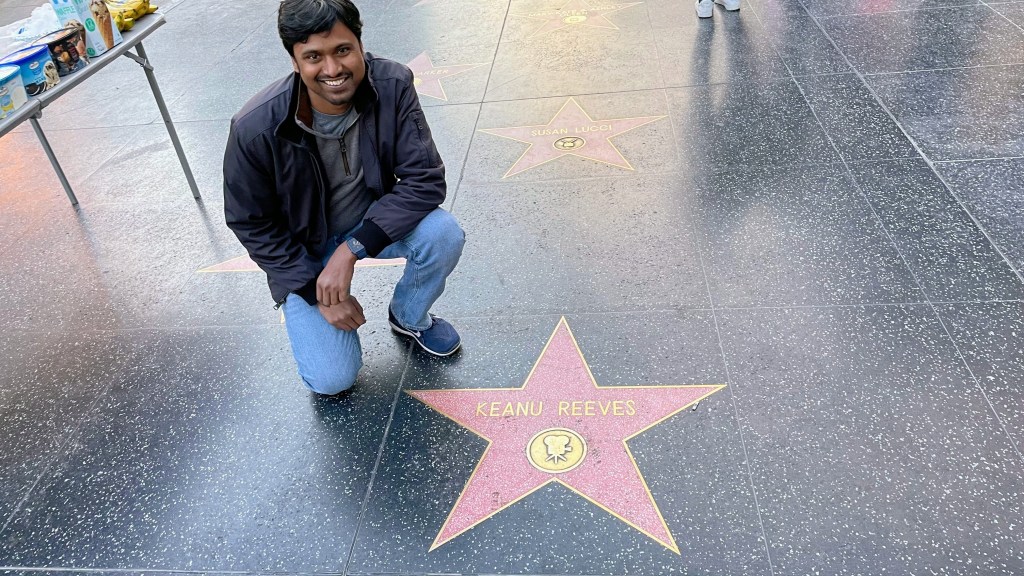
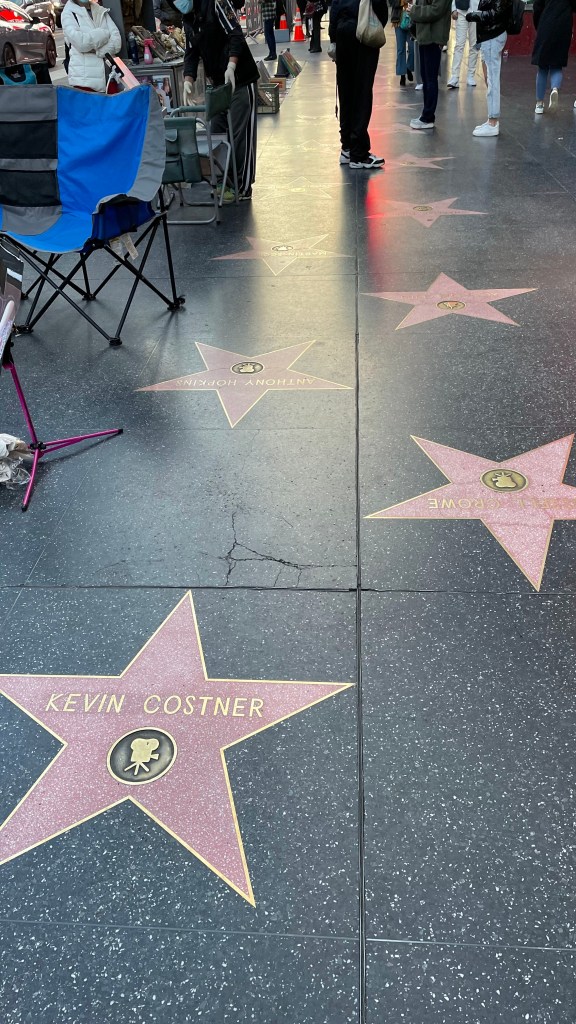
Just outside of Dolby Theater, at the intersection of Hollywood Blvd and Vine St starts the famous Hollywood Walk of Fame. The Hollywood Walk of Fame is a historic landmark which consists of more than 2,700 five-pointed terrazzo and brass stars embedded in the sidewalks along 15 blocks of Hollywood Boulevard and three blocks of Vine Street in Hollywood neighborhood of LA. We tried to search for Robert Downy Jr’s star but were not successful.
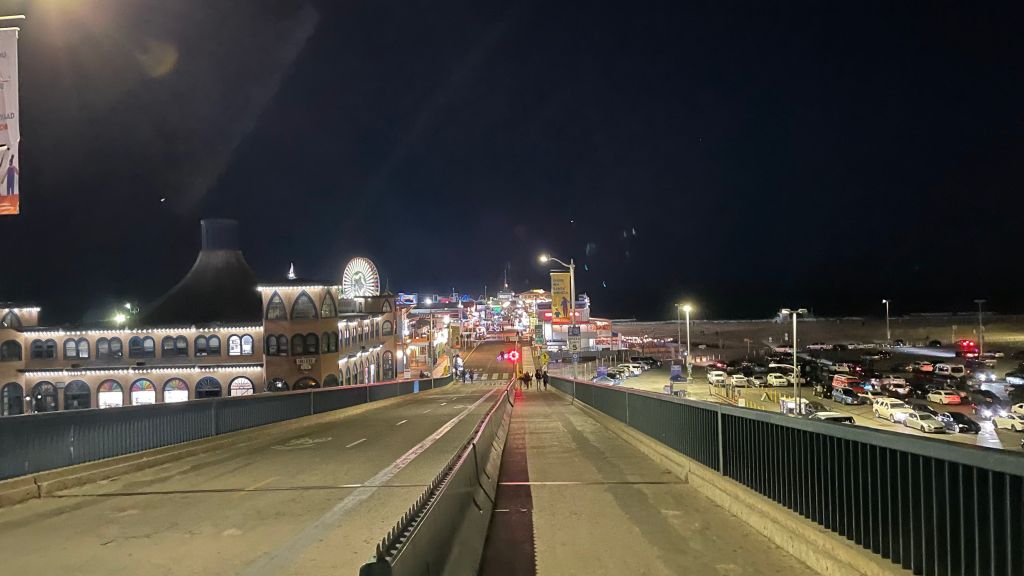
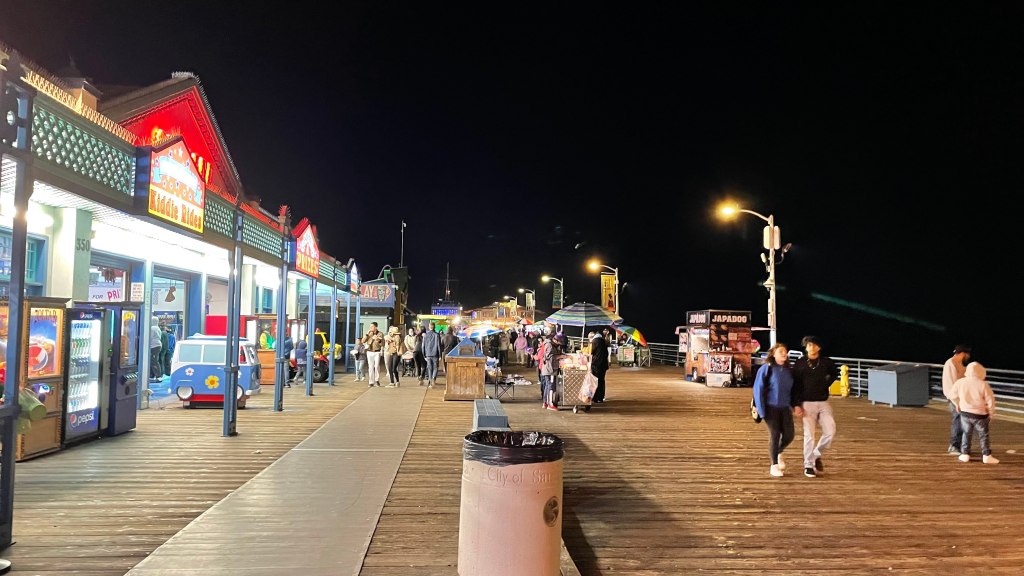
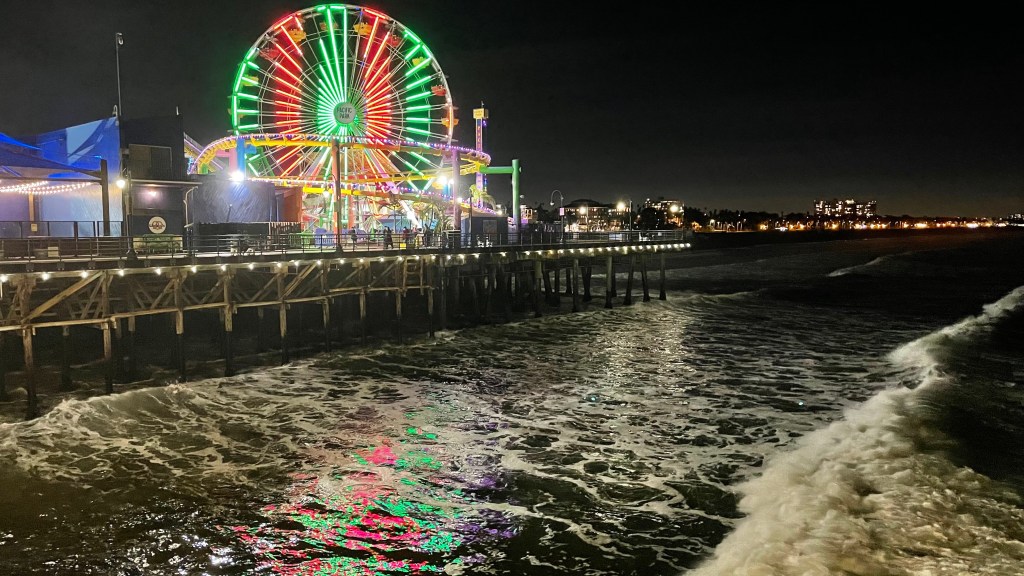
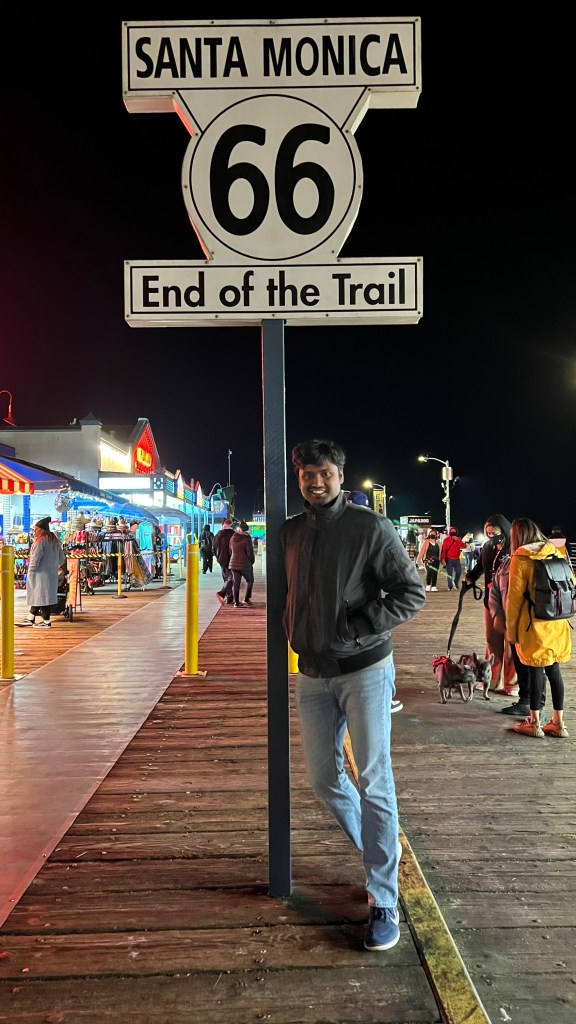
By this time, it was 5 PM and getting dark. We drove to the adjacent city, Beverly Hills, where we clicked some pics at Beverly Hills Sign. Not far away from it was the famous 2-mile street lined with palm trees – Rhodeo Dr – which houses the showrooms of world-famous and most expensive brands. Santa Monica pier was also not far away. So, we decided to take a look at it before starting the long drive to San Diego. On that day, I learnt that Sant Monica was the western most edge of Route 66 which ran from here all the way to Chicago, before being replaced with Interstate highways. I had explored Route 66 during my trip to Grand Canyon when I stayed at Williams which was the last city to be taken off the Route 66.



Difference between mission, chapel, church, cathedral and basilica?
By the way, while roaming around the Santa Barbara mission, a question came up in my head – what’s the difference between mission, chapel, church, cathedral and basilica? At the time of writing this blog, I finally got a chance to google and understand it. This article explains it in simple terms – What’s the Difference Between a Church, Chapel, Cathedral, and Basilica? – What’s the Difference? (whatsthediff.org).
Christian missions are an intentional effort to lead others to follow and believe in Jesus Christ. The people who do so are called missionaries. The word “mission” comes from the word “to send,” and most Christians who are involved in full-time missions are sent to another location. The term can be used for both the activity as well as the religious outposts used a center to evangelize the Christian faith. An old mission today could be a church, chapel or even a museum. List of Spanish missions in California – Wikipedia.
A church is any place of worship that has a permanent congregation and is run by a pastor or priest.
Unlike a church, a chapel is a place of worship that has no pastor or priest and no permanent congregation; it’s all about the physical space. In the classic sense, it’s usually smaller than a church—sometimes just a room—and can be within a church itself or in a secular place like a hospital or airport. (It’s also the term people use for the places to get hitched in Vegas, if that’s your thing.)
A cathedral is a church that’s run by a bishop; it’s the principal church within a diocese, the area of land over which a bishop has jurisdiction.
As for basilicas, there are two types: basilicas major and basilicas minor. The basilicas major are the four personal churches of the pope and are in and around Rome: the Archbasilica of St. John Lateran, St. Peter’s Basilica, the Basilica of St. Paul Outside the Walls, and the Basilica di Santa Maria Maggiore. Basilicas minor can be found around the world and are rewarded that status by the pope, usually because of some sort of historical, spiritual, or architectural significance. The term “basilica” is an additional label to whatever the structure already is; any cathedral or church can also be a basilica.
Day 3: San Diego Zoo, Dec 16th 2021
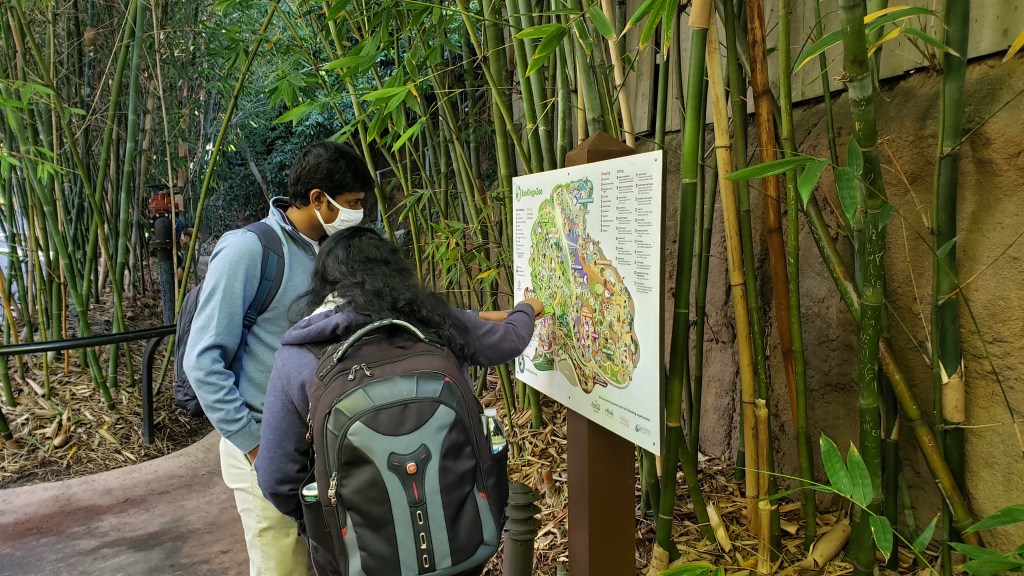
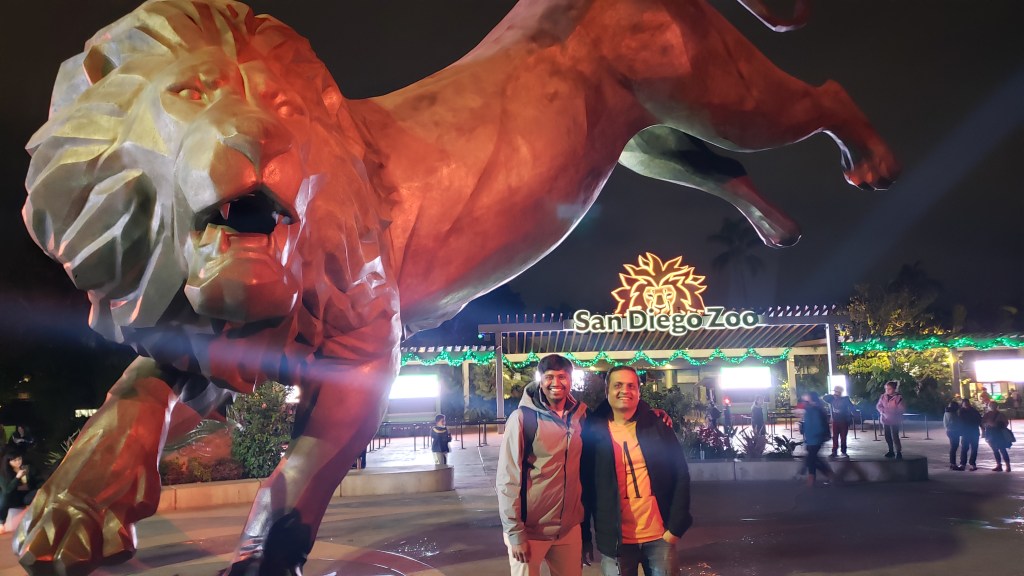
San Diego Zoo is the most visited zoo in US. Raj told me that they have giant panda as well. He had seen it last time he was here. I had never seen a giant panda before and was excited for this. So, as soon as I entered the zoo, I asked a volunteer where the panda enclosure was. That’s when I learnt that giant pandas from San Diego Zoo were repatriated back to China in 2019 ☹. All they have now is red panda, which is really not a panda. Red pandas are relatives of racoons. The Nepalese name for this animal, nigalya poonya, became “panda” among English speakers, and the name stuck ever since.
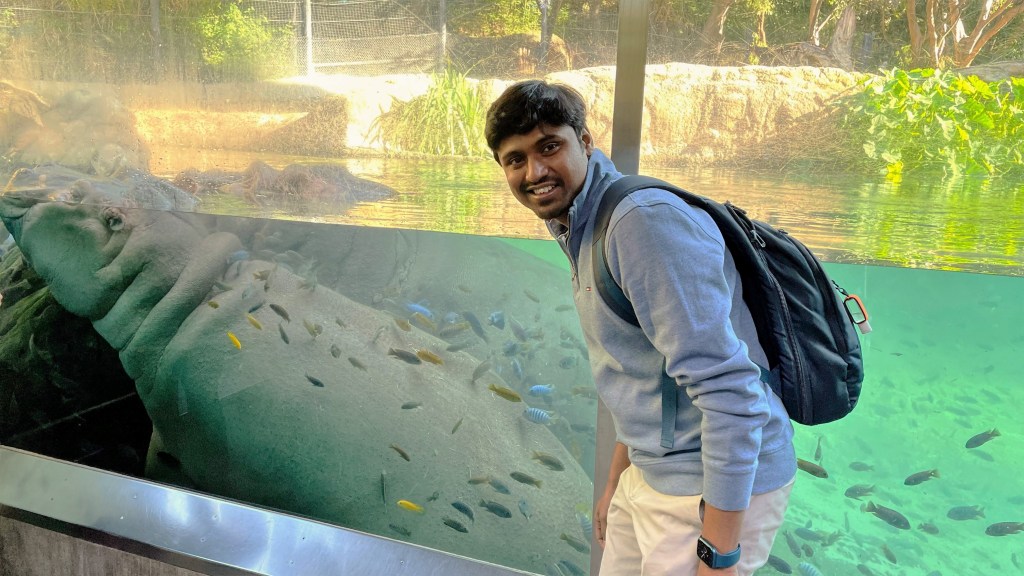
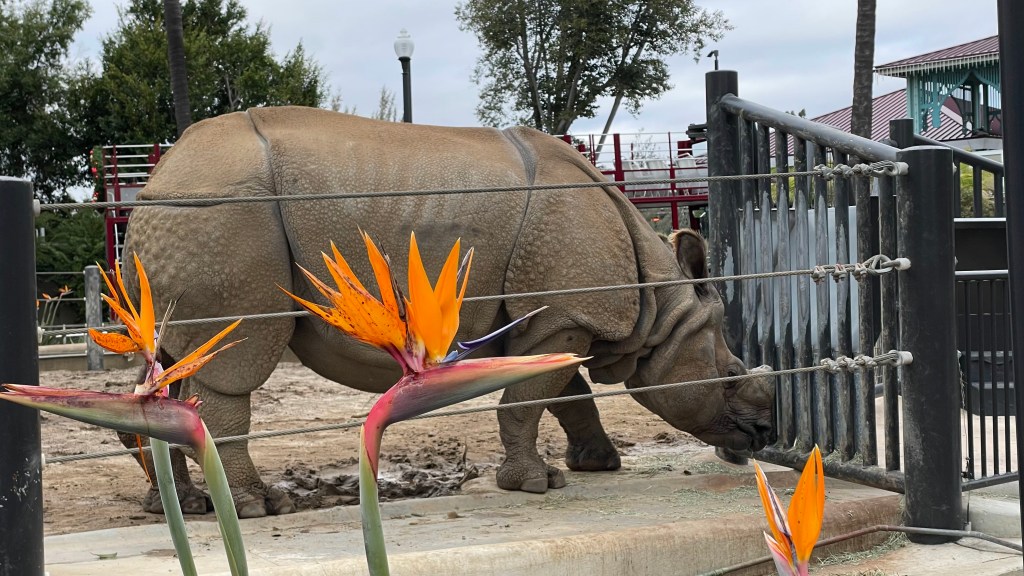
It didn’t start well but the zoo has a lot of other things to offer. The number of species of animals here is unparalleled. You can watch hippos and rhinos up close. I was awestruck to find how huge these animals are. I had seen rhino and hippos in past, but it has been always from a distance. San Diego zoo has polar bears as well. It evokes a natural question – how do polar bears survive San Diego’s climate? The answer is by swimming. The zoo keeps their pool chilled and has a small machine that sprinkle snow in their enclosure. Since they don’t need thick blubber to survive the extreme cold climate of Arctic, the polar bears here were much leaner.
Shruthi and her family were also visiting San Diego Zoo this day. We met inside the zoo and enjoyed its aerial tram, Skyfari, together. Skyfari allows tourists to go from one end to the other and enjoy the spectacular views of the zoo and Balboa Park from the top.
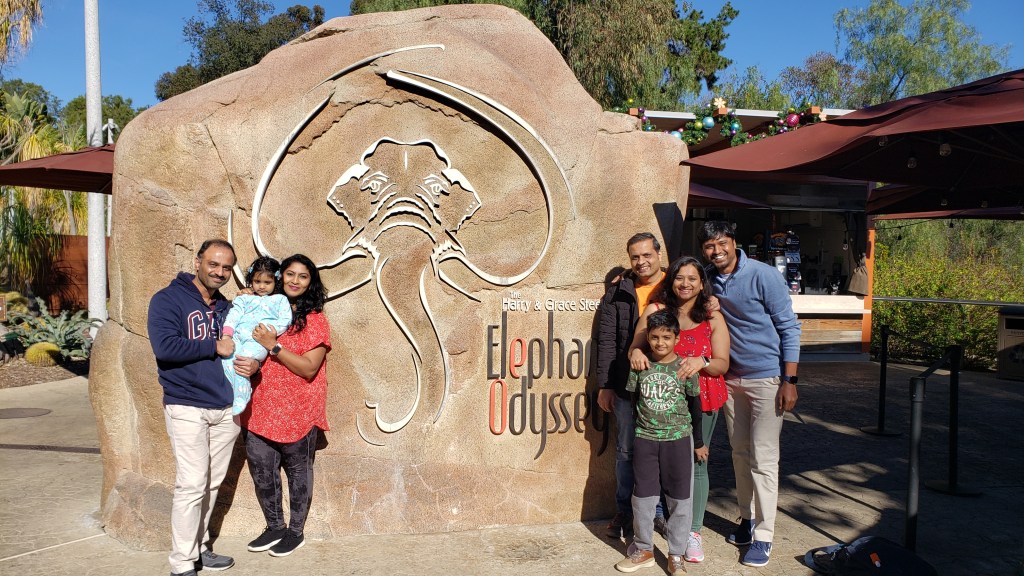
Fun fact – the first video uploaded on YouTube, Me at the zoo, by its co-founder Jawed Karim in 2005 was from Elephant Odyssey at San Diego Zoo.


Day 4: San Diego SeaWorld, Dec 17th 2021
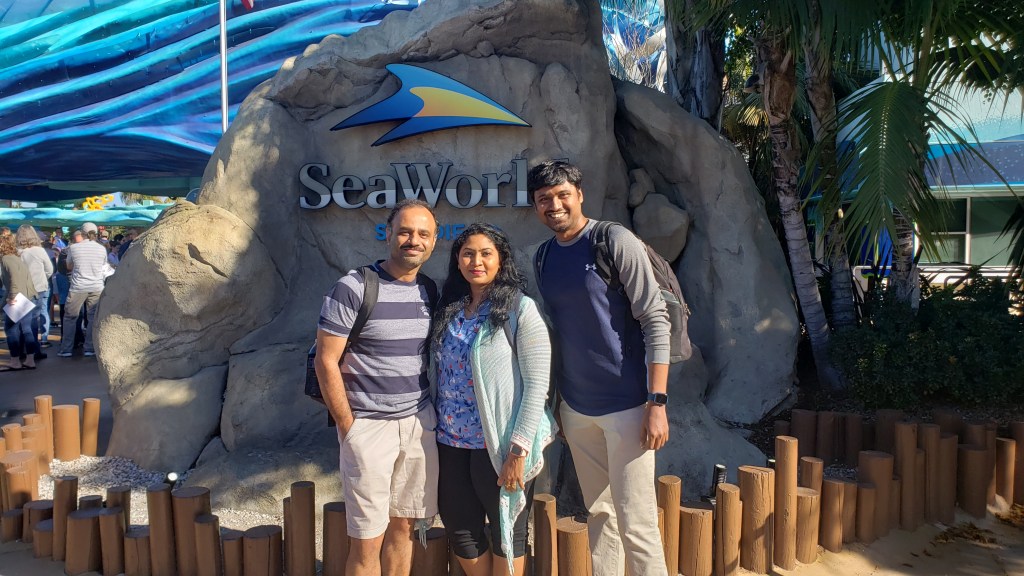
This was, undoubtedly, the most exciting day of this trip. SeaWorld has many aquatic exhibits and shows. The shows are seasonal and may change based on the time of the year. At the time we went, the most popular shows they had were Orca Encounter, Dolphin Days and Sea Lions Live.
The park opens at 10.30 AM and we were there right at that time. For the first hour, we went around watching otters, orcas, dolphins and other sea creatures. It has several touch pools where you can touch fishes like red garra, star fish and manta rays. Besides these, they have fun rides as well. Raj and Jyothi went on a roller coaster ride, Manta. I chickened out and cheered them from ground itself.

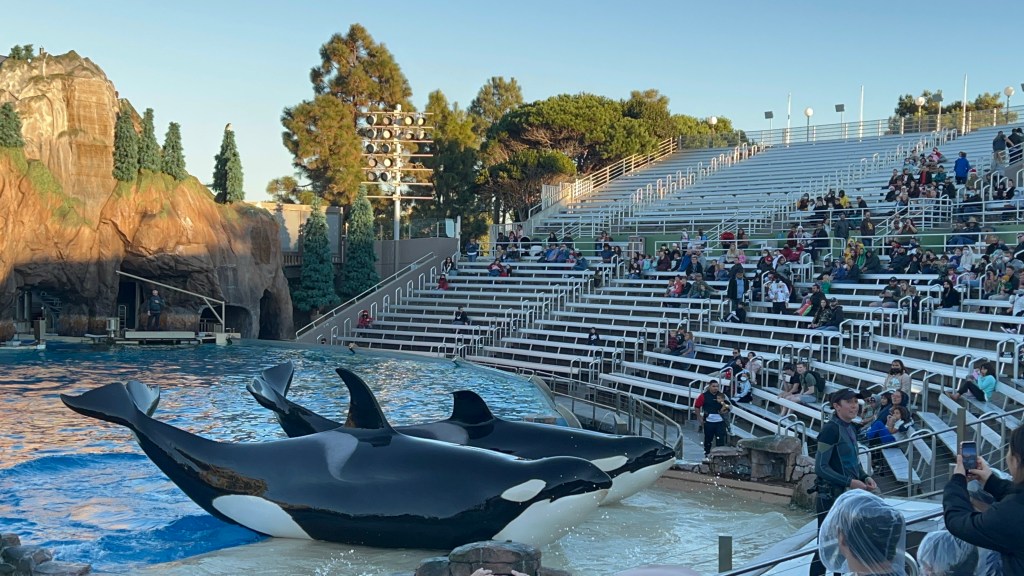
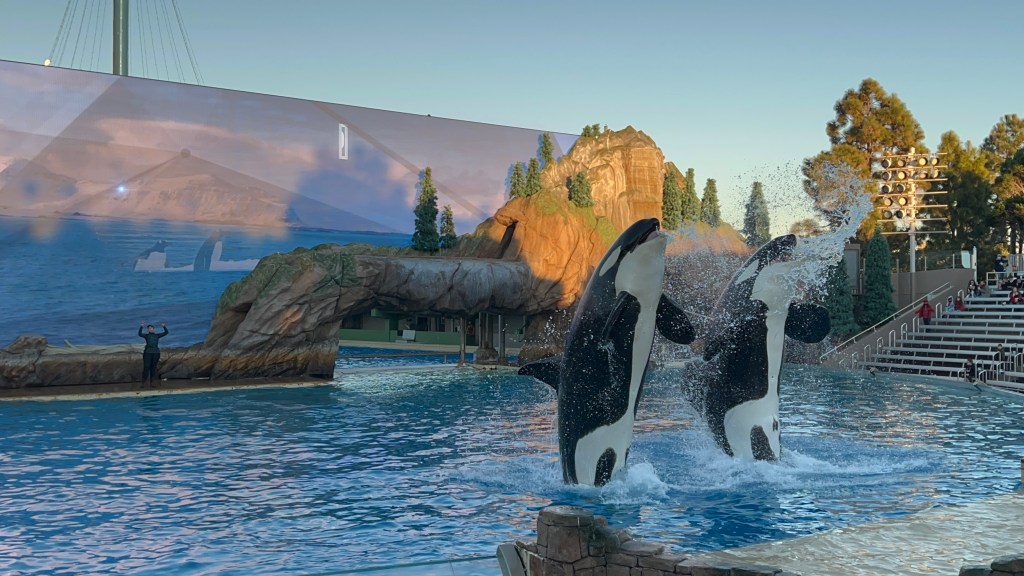
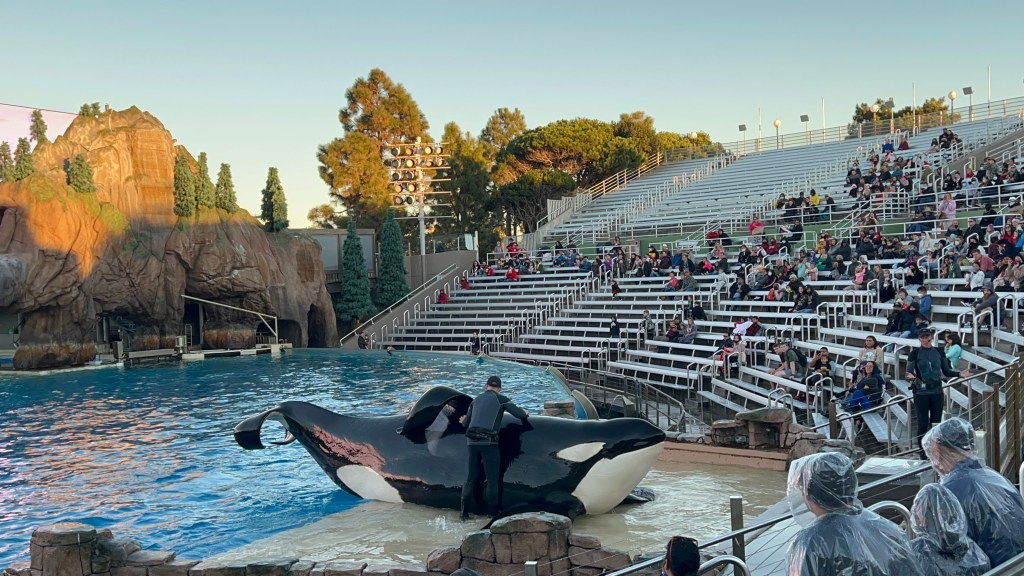
We, then, headed for 12 PM show – Orca Encounter. I was really up for a surprise. The skilled and courageous trainers made Orcas do stunts with a snap of their fingers. I say them courageous because other name of Orcas is Killer Whales. They can rip a human apart in a fraction of second. But these comparatively tiny trainers made them dance to the tune of their fingers.
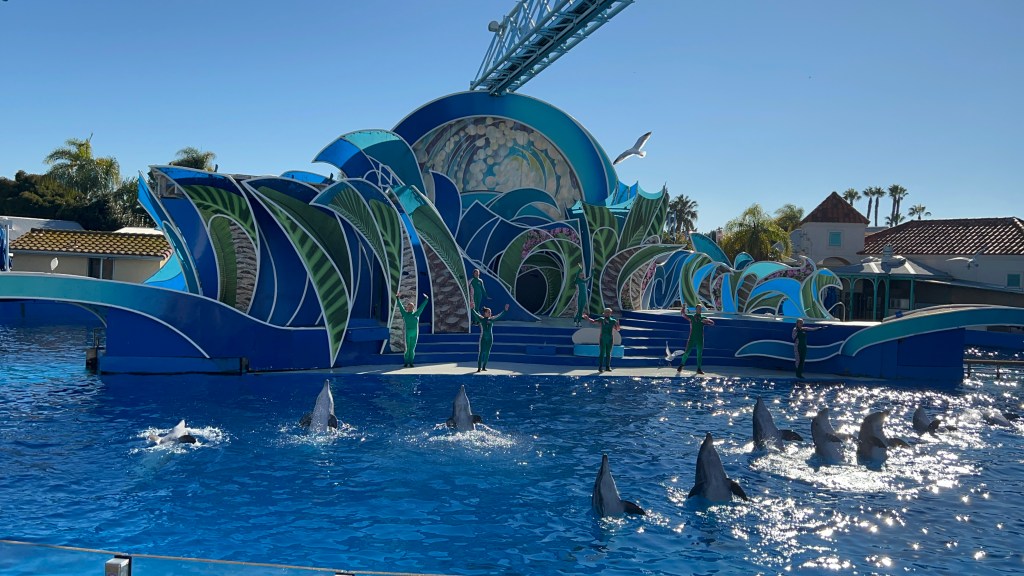
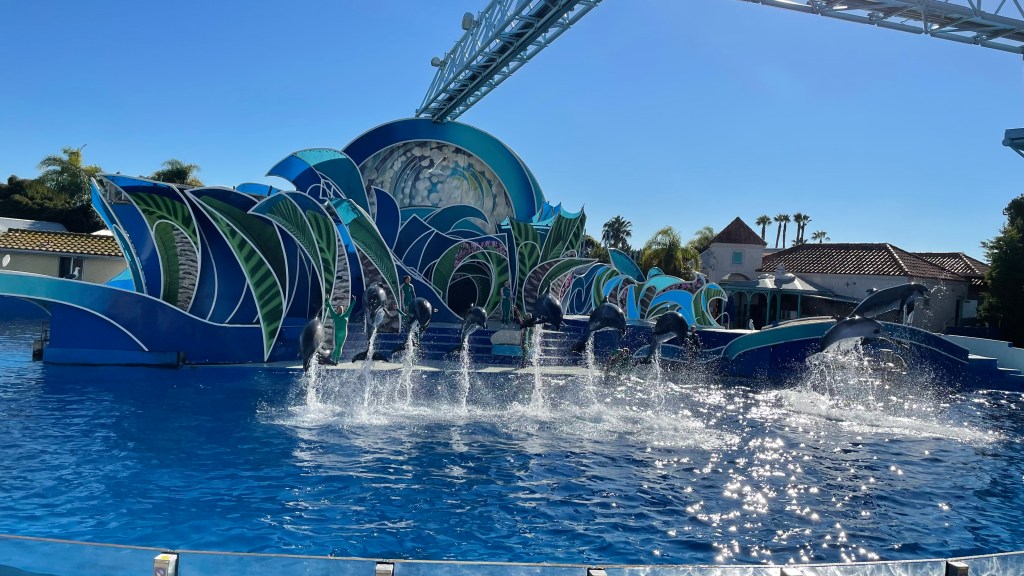
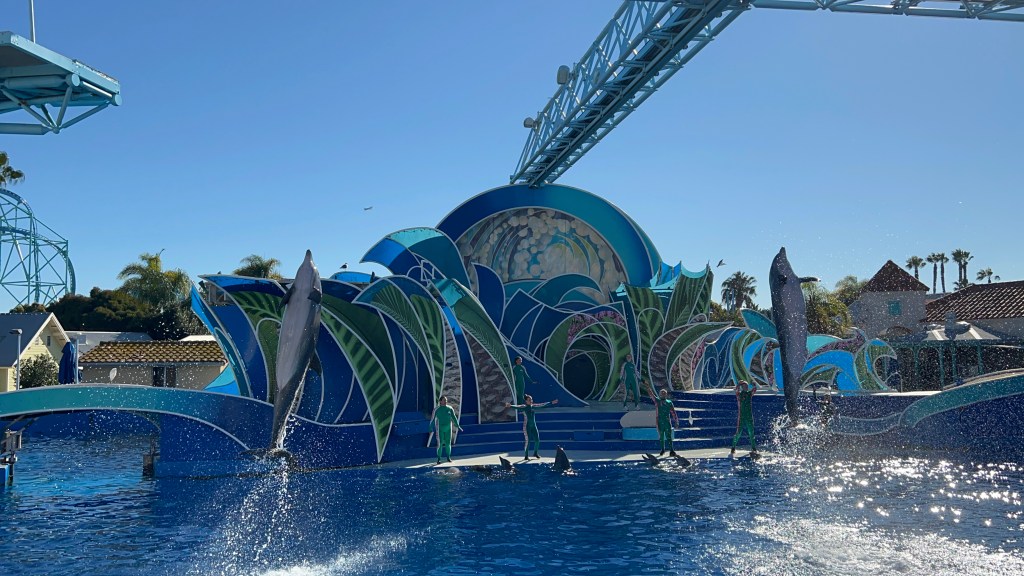
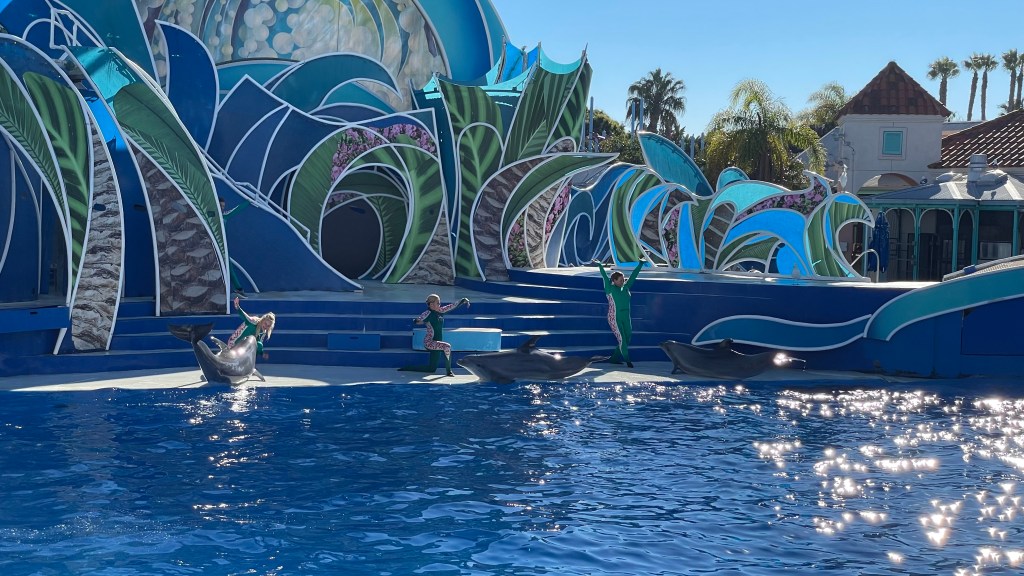
At 1 PM, we headed to Dolphin Amphitheater for our next show, Dolphin Days. Similar to Orca Encounter, here the trainers showed stunts with dolphins. They started with 3 mother dolphins but later introduced us to 16 baby dolphins. By the way, these baby dolphins were not small by any means. They were pretty big. It was fascinating to see 16 dolphins somersaulting in unison, slapping waters on audience with their tails and saying ‘hi’ with their pectoral flippers.
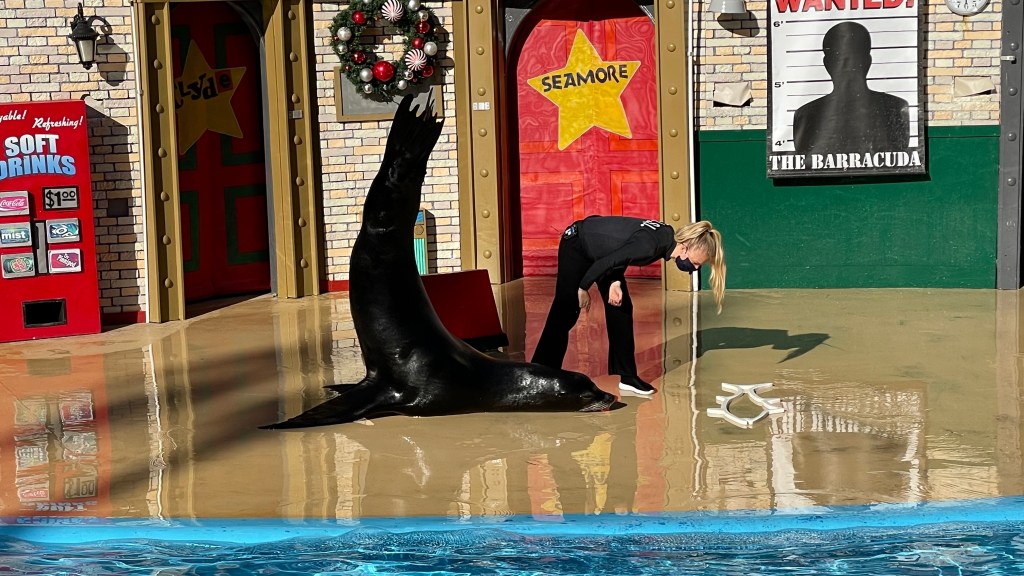
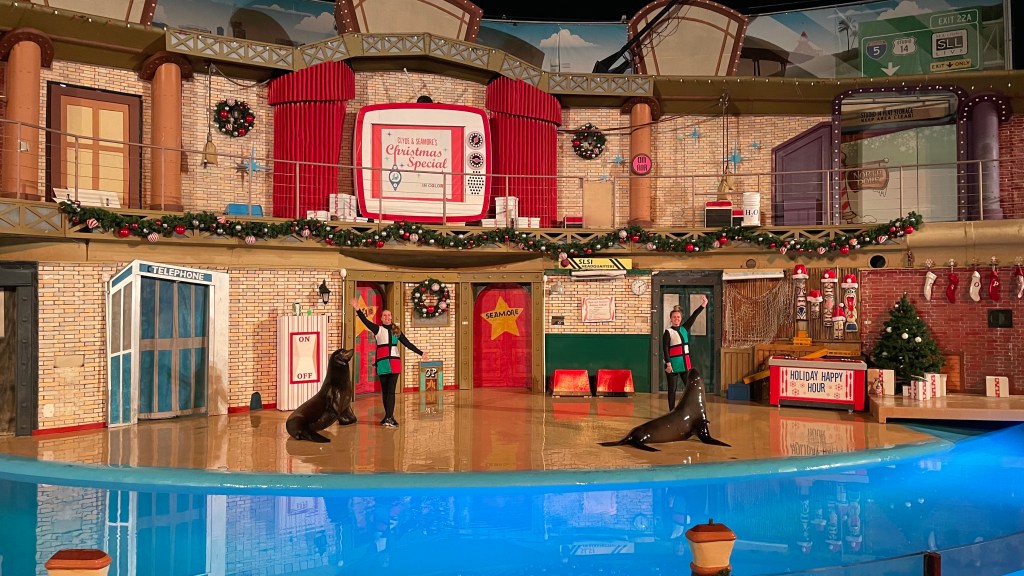
At 2 PM, we headed to Sea Lions Amphitheater to watch Sea Lions Live. After watching the previous two shows, I was awestruck and didn’t have high hopes from this one. But it exceeded my expectation by leaps and bounds. Sea Lions Live was not just sea lions performing stunts but it was actually a small theater act with two sea lions, Clyde and Seamore, and a few human actors. While the previous two shows left me awestruck, this one made me laugh as well. And to top it off, the show ended with a Gangnam Style dance performance by sea lions. Just imagine!
I was so impressed with these shows that I repeated each one of them later that day. At 2.30, immediately after Sea Lions Live, we went to Dolphin Days and at 4 PM we went to watch Orca Encounter. At 6.30 PM, there was another sea lions show which was a spoof of a nighttime television Christmas Special. Initially, I was a bit skeptical about this, but I convinced myself and Raj and Jyothi to give it a shot even though it was getting cold and dark. But oh boy, it was totally worth it.
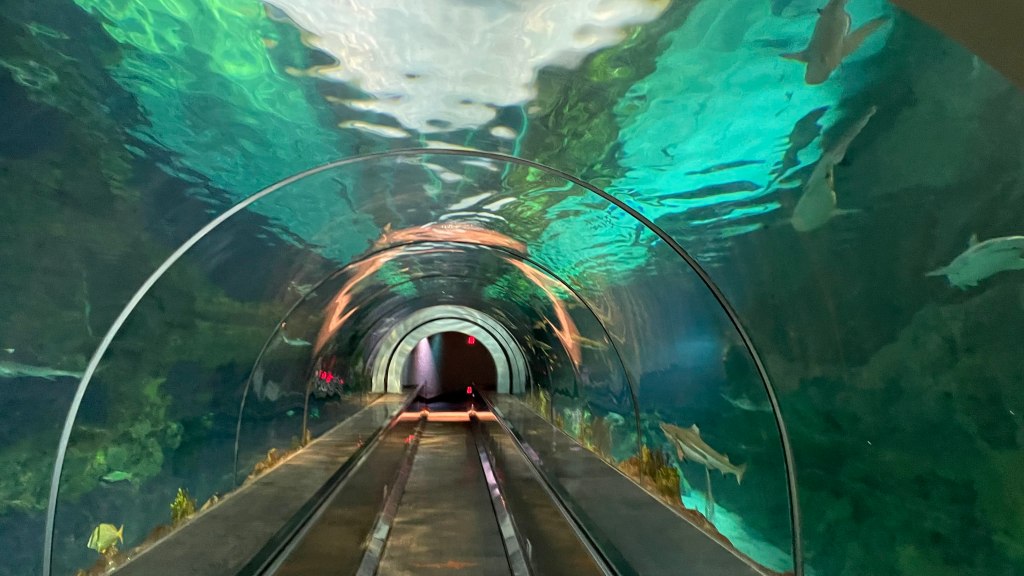
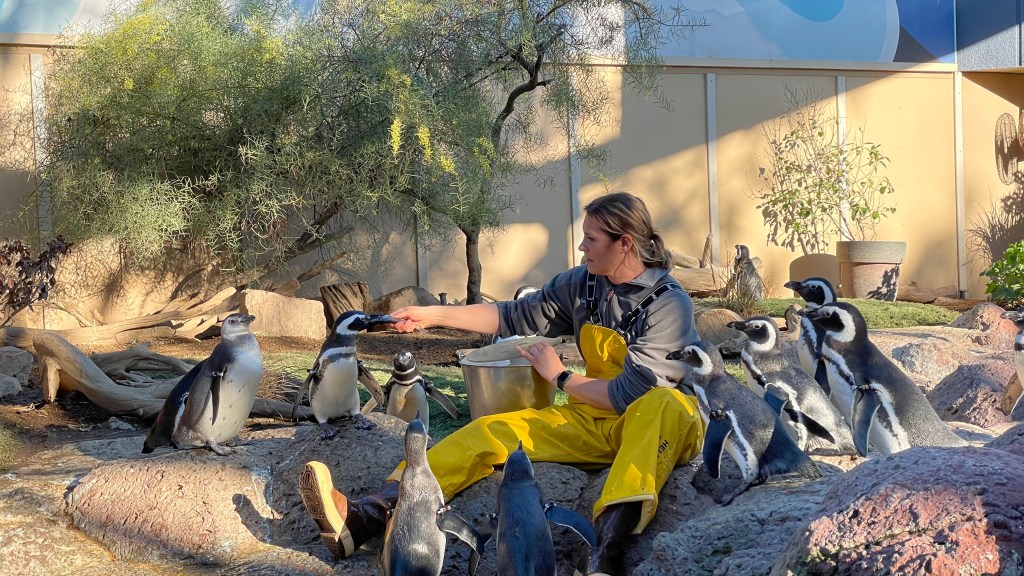
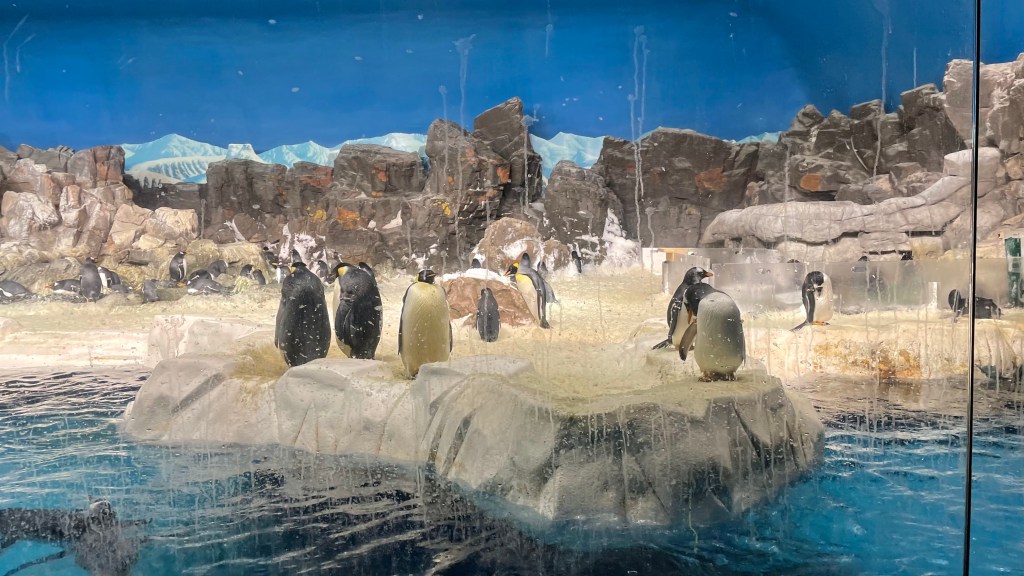
In between these shows, we also went around and saw different aquatic animals. SeaWorld has both Magellanic and Antarctic penguins. Antarctic penguins were kept in temperature-controlled enclosures to provide them Antarctic climate to thrive. Not all penguins live on ice and snow though. There are penguins like Magellanic and African penguins which thrive in warmer climate of south America and Africa respectively. They are equipped with bare patches of skin around their eyes and at the base of their bill to release heat to prevent overheating. Besides penguins, we also saw beluga whale and walrus. There was also an amazing underwater viewing tunnel to watch sharks of all shapes, colors, and sizes pass by you.
I must say, the presentation of the animal shows at SeaWorld was really nice – the speakers, trainers, background music, the storyline and of course the animals – everything was very well crafted and engaging. Overall, sea lions totally stole the show for me. Dolphins and orcas were wonderful, but sea lions’ acts made my belly ache with laughter too.



 Abhijeet Kumar Sinha
Wonderful trip. Thanks for sharing
LikeLiked by 1 person