
Straddling between Europe and Asia, this dreamy city once ruled by the affluent sultans has stood the test of time. Due to its strategic location, it has always been a prized possession for monarchs. No wonder it was imperial capital for more than 1600 years and the center of activity of two of the most prominent empires in the world history – Roman and Ottoman. Its importance is underscored by the fact that it derives its name from the Greek phrase “εἰς τὴν Πόλιν” (pronounced eis tin polin) meaning “to the city”. Yes, it was “the city”!
From the opulent palaces to minarets piercing the skyline, from the vibrant colorful houses to monochrome mosques, from the bustling bazaars to grand prayer halls, from the aroma of kebabs brimming the street to the piping hot black tea ensconcing the tabletops – every nook and cranny of this city has a story to tell. Istanbul is a city brimming with history and culture that mesmerizes you at every turn. Unleash your travel zest and dive into its historical waters.
A quick history of Istanbul
Hittites, Persian, Greek empire
Previously known as Anatolia, the area around present-day Turkey was ruled by Hittite empire around 2000 BC (Bronze age). After the fall of Hittites, Greek and Persian empires began to flourish. Anatolia was later incorporated into Achaemenid empire (Persian empire). Founded by Cyrus the Great in 550 BC, Achaemenid empire went on to become the largest the world had ever seen – stretching from Balkans and Egypt in west to Central Asia in northeast and Indus valley in southeast. Under the Achaemenid empire, Anatolia flourished due to vast road networks leading to successful trade relations between east and west.
Very soon, a conflict brewed between Greeks and Persians leading to Greco-Persian war between 499 BC to 449 BC. It hurt both Persians and Greeks alike. Good leadership under Philip II and his son, Alexander the Great, led to the growth of Macedonian empire. By 330 BC, Alexander conquered whole of Persian empire under successive battles resulting in Anatolia coming under Hellenic influence.
Roman empire
After Alexander’s death, Macedonian empire broke and most of its territories came under the rule of Ptolemaic kingdom and Seleucid empire. Anatolia fell under the latter. Seleucid empire got into conflict with Roman republic (remember, Roman republic which spanned 512 BC to 31 BC is different from Roman empire), and was eventually overthrown by its general Pompey in 63 BC. Anatolia came under the Romans now. Roman empire succeeded Roman republic in 31 BC when Octavian, who took the new title of Augustus, was given overarching power by Roman senate with Rome as its sole capital.
Due to rise in instability and raids from foreign invaders, Roman king Constantin shifted his capital from Rome to a city called Byzantium in 330 AD. It was renamed to Constantinople in his honor. Later, the Western Roman empire with Rome as its capitol collapsed in 476 AD, while Eastern Roman Empire (also called Byzantine empire) with Constantinople as its capitol survived for another millennium. The Hellenization of Anatolia which started with Alexander accelerated under Byzantine empire and ancient Greek language and culture was predominant here.
Ottoman empire
Over time, Turkic people and related groups migrated from Turkestan towards Eastern empire and built a strong Seljuk empire which spanned from Hindukush on its east to Eastern Anatolia on its west. Weak Byzantine rulers and constant war with the Seljuk empire ultimately led to vast swaths of Eastern and Central Anatolia falling under Seljuks in 1100 AD. As the Seljuk empire crumbled, many smaller principalities called Beyliks declared sovereignty. One such beylic was ruled by Osman I, the founder of the Ottoman empire.
Osman followers consisted of Turkish tribals as well as Byzantine renegades. Osman benefited from the instability of the region and weakening the Byzantine empire. By the year 1400, Ottomans were the true powerhouse having control over much of Anatolia, except Constantinople. In May 1453, Constantinople was conquered by Mehmet II marking the beginning of the golden period of the Ottoman empire. It reached its pinnacle under Suleiman the Magnificent, also known as Kanuni Sultan among his subjects. Besides his military success, he introduced several reforms including a common set of laws for crime and taxation for all. This was on top of existing Sharia laws, which were divine laws. He issued a firman denouncing blood libel to protect his Jewish subjects.
By 19th century, many rebellions started within the empire from different ethnicities including Serbians and Arabs. By 1850, Ottomans lost many territories to Greeks, French and other revolting groups. At the start of World War 1, the Ottoman empire’s countdown had begun. Ottomans were defeated in 1st World War and had to concede significant part of their land of British, France and other winners. This loss paved the way for a nationalist movement under Mustafa Kemal which eventually led to the abolition of the Sultanate in 1922, ending 623 years of Ottoman rule. Republic of Turkey was formed on Oct 29th, 1923, in the capital city of Ankara with Mustafa Kemal becoming the first president of Republic of Turkey.
Day 1, Dec 11th 2023
We arrived in Istanbul on Dec 11th around 12 PM. The immigration process was a breeze as we had eVisa with us. I had booked a car to my hotel through Booking.com. The cab company sent me a WhatsApp video and message on how to find their counter at the Istanbul airport. That was new and quite seamless indeed.
We reached our hotel by 1.30 PM. It was in Sultanahmet area which is one of the oldest areas of Istanbul. I wouldn’t call the hotel grand and lavish by any extent, but the location was just perfect. It was a walking distance from Sultanahmet Square where you can find Hagia Sophia, Blue Mosque, Topkapi palace and many other historical attractions, so couldn’t complain much.
We rested for a while before leaving for a late lunch at nearby Olive Garden Café. The highlight of this restaurant was pottery chicken. First, they gave us a clay pot to write a personalized message on it. Then they put chicken, vegetables and spices in the pot, sealed it with dough and let it cook in its juices in a tandoor. When ready, the blazing hot pot was brought and cracked in front of us. The entire content was then poured in a hot casserole for us to enjoy. It was a unique, tasty spectacle that satiated not just our empty stomach but our mind as well.
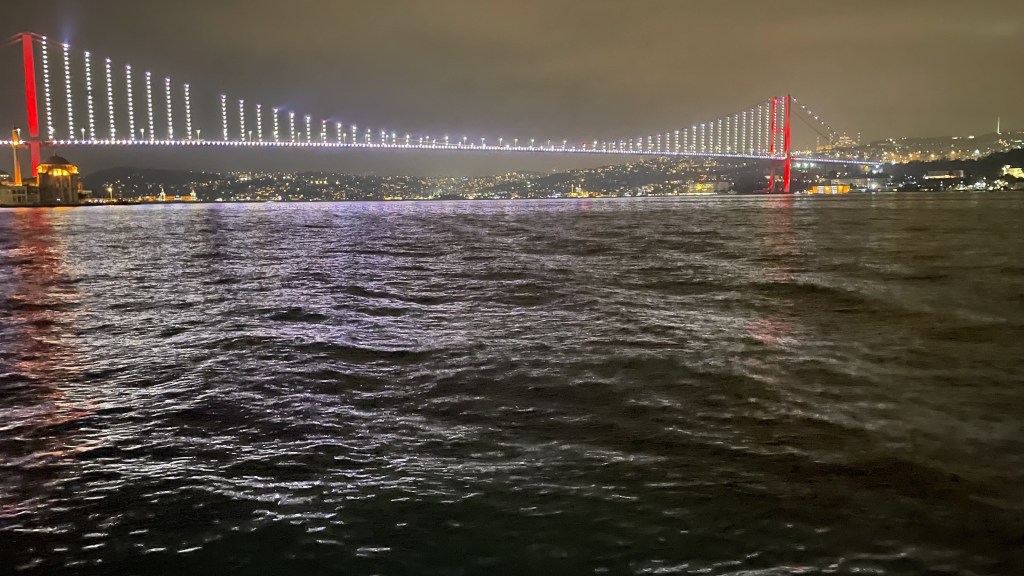
We roamed around the streets for some time before heading back to the hotel. With the help of the hotel staff, we booked a Bosporus cruise for the evening. It was 40€ per person. The cruise was for 2 hours which included dinner and pick up/drop.

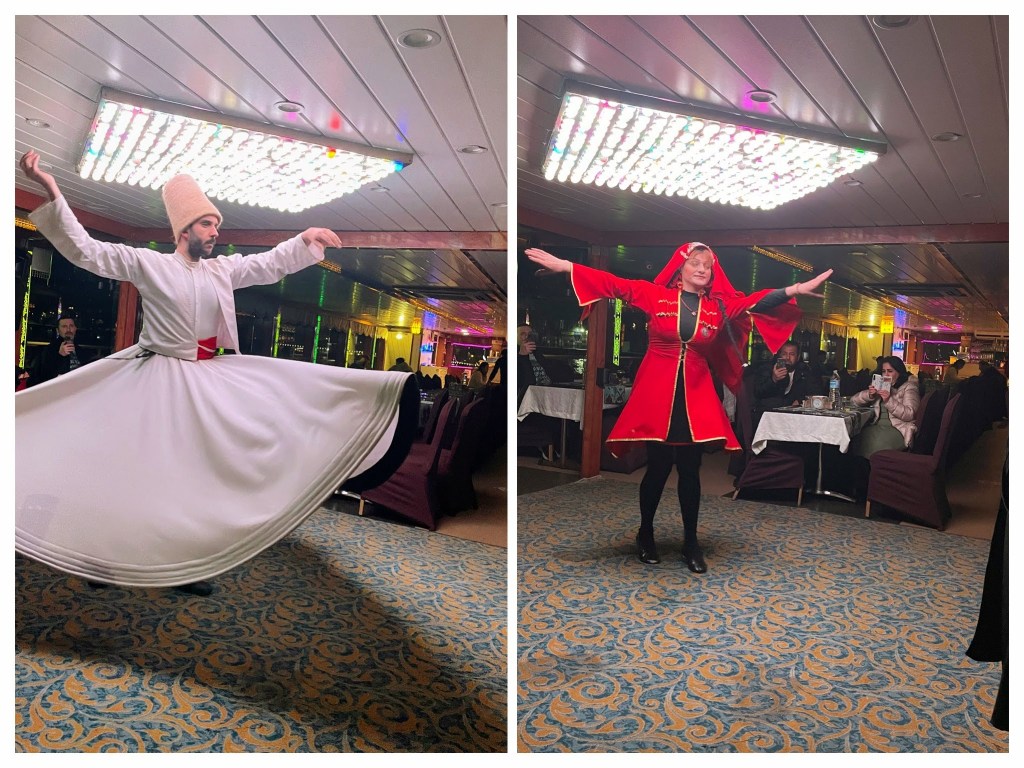
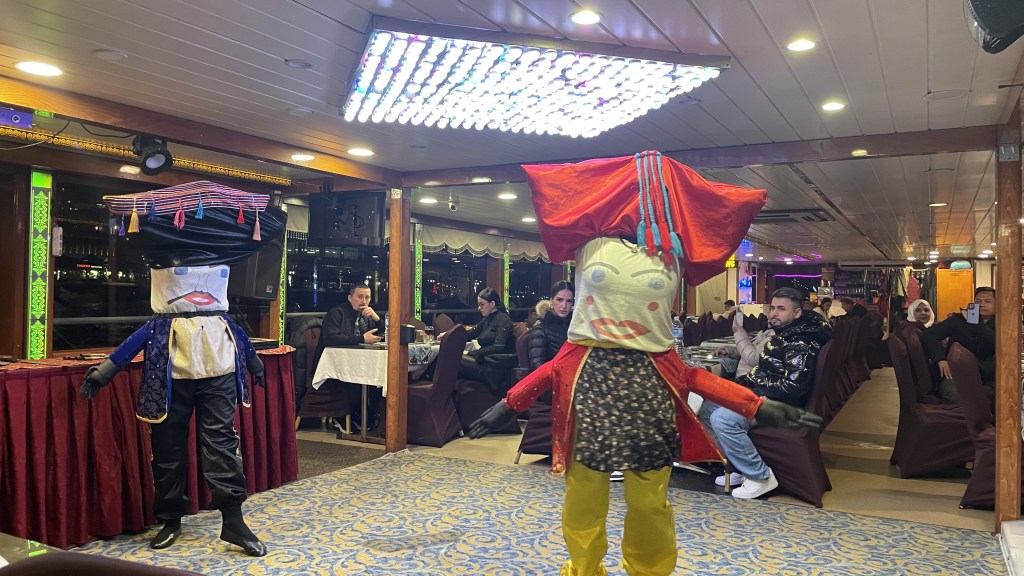
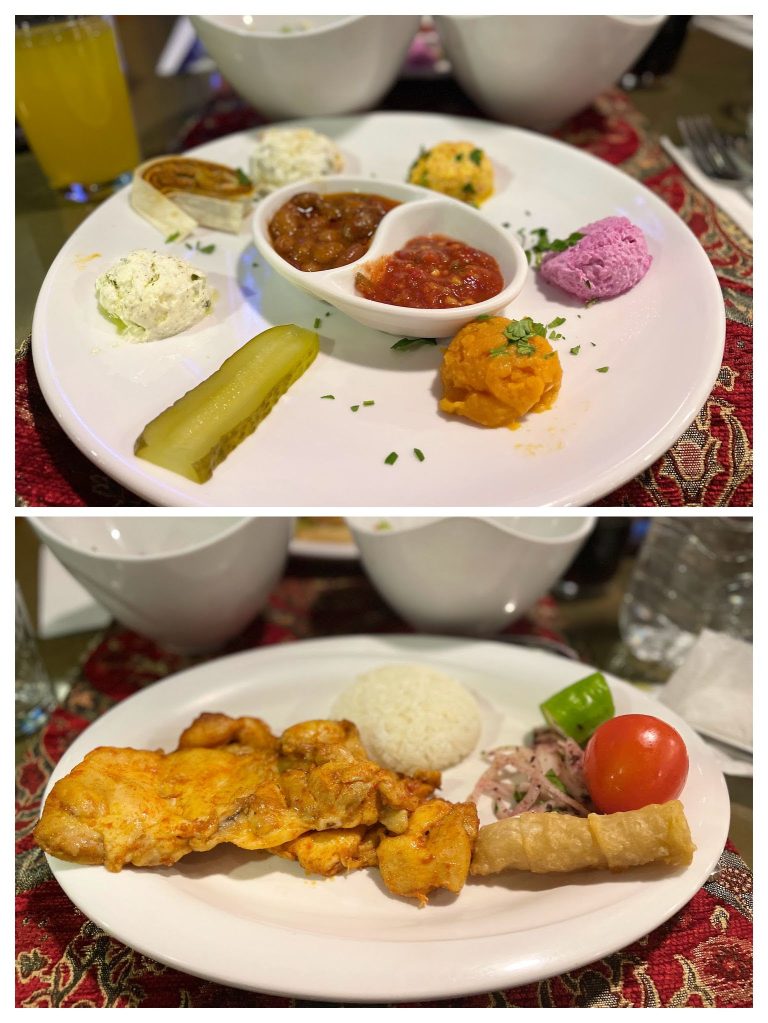
A minivan came to pick us up at 7.15 PM. There were other tourists as well in the van. When we reached the boat was docked. We were the first batch to arrive. Other tourists flocked the cruise around 8 PM. On the cruise, we were served different types of salads as appetizers followed by grilled chicken as entree. The boat left the dock around 9 PM. The dinner was followed by some local performances like whirling dervish, belly dance, folkloric shows, international singer and DJ.
The live singer was quite amazing. He asked every guest where they were from and sung a song from their land. That was quite impressive. But overall, I wouldn’t call the cruise amazing. The performances were too cheesy for my taste. The deck of the boat was not well maintained (probably due to off season) and was reeking of diesel/kerosene. One of the most important things I missed was that there was no proper tour guide. I wish we were told about historical places we were passing by along the Golden Horn. Probably, it was just me; others may have enjoyed the music and performances. By the way, I gave this feedback to the hotel staff as well. They were very courteous and took the feedback in its stride. They even offered to give a rebate for my old city tour as compensation.
Day 2, Dec 12th 2023
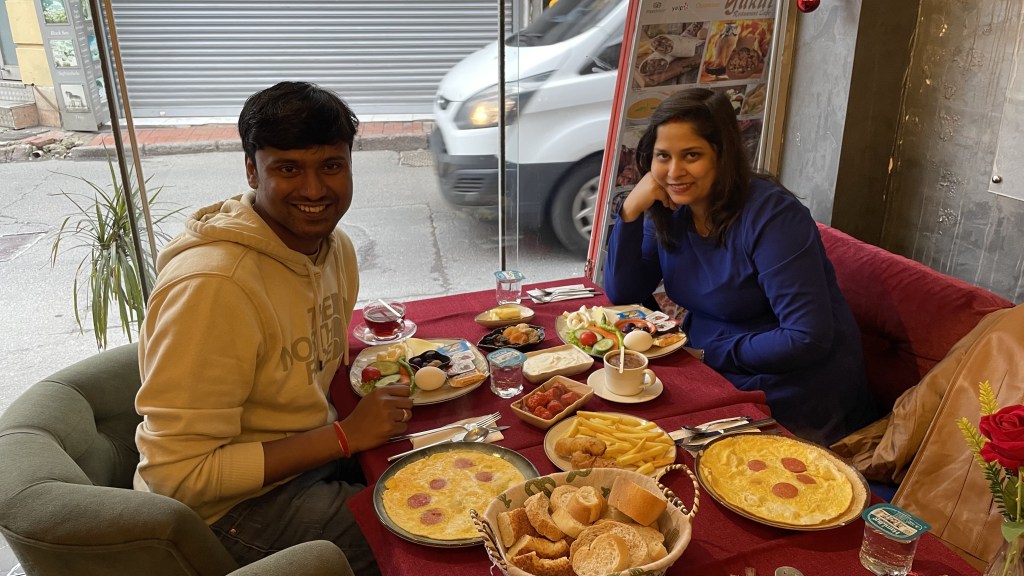
The day started with a sumptuous breakfast at the hotel. First, we were served a plateful of cheese – of different kinds, olives, yogurt, fresh fruits, and some dry fruits. Then came omelets and boiled eggs. But what stumped us over was Kaymak. It is clotted milk cream topped with honey. Spread it on simit, Turkish sesame bread, and enjoy the divinity that fills your mouth.
Hippodrome
Sultanahmet square was 10 minutes’ walk from our hotel. This square is the heart of Istanbul. It was called Hippodrome of Constantinople during Roman era. The word hippodrome comes from two Greek word, hippos meaning horse, and dromos meaning pathway. This open-air venue was used for chariot and horse racing which were popular pastimes in Hellenistic (Greek), Roman and byzantine era.
Walled Obelisk
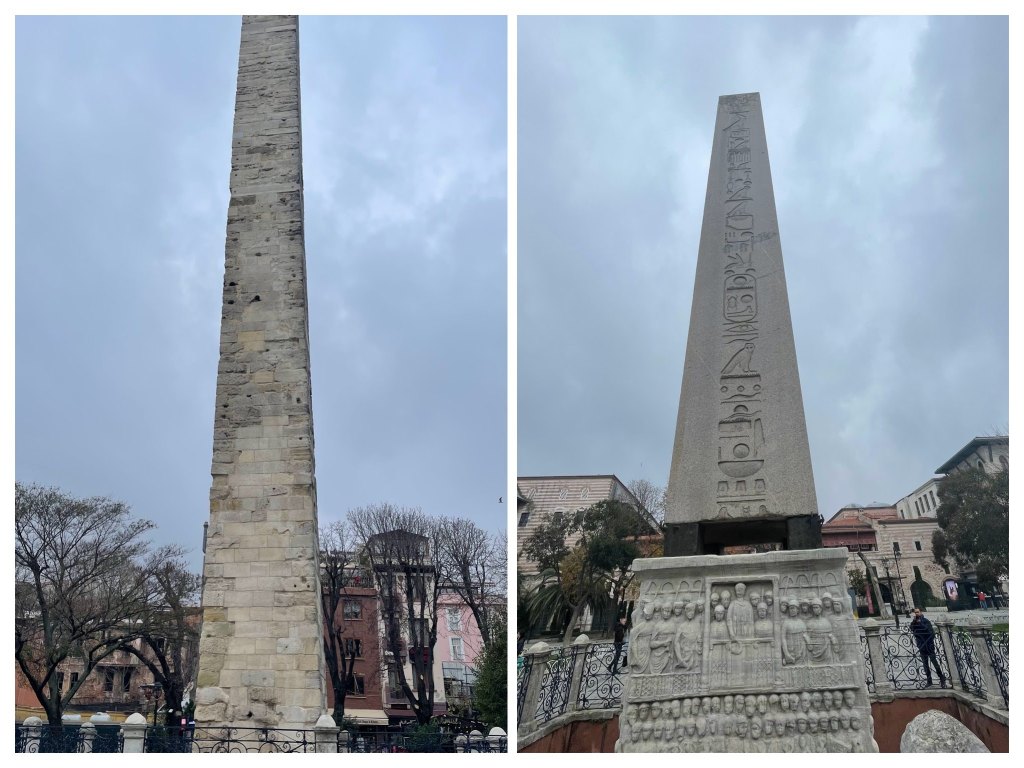
The first very thing we came across was the 32 meter high Walled Obelisk. Located at the southern end of ancient chariot racing track, its original build date is unknown but it was repaired in 10th century by Constantine VII, hence it is also called Constantine’s Obelisk. The obelisk was decorated with gilded bronze plaques, which were removed and melted down by crusaders in 1204 AD. It has an inscription in Greek at its base that names Constantine and his son Romanos and compares this four-sided marvel with Colossus of Rhodes.
Serpent’s column
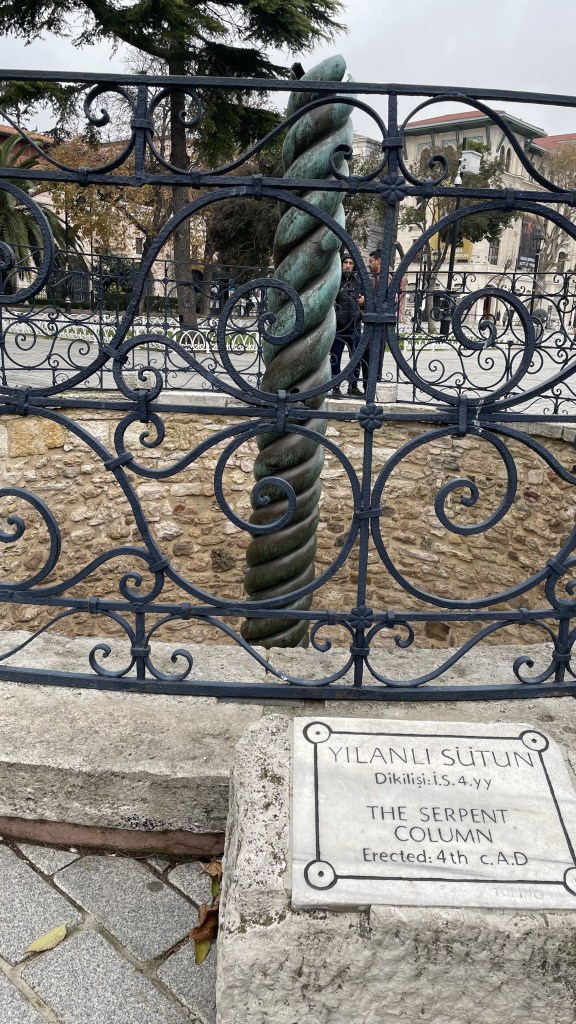
Just a couple of meters from Waled Obelisk is Serpent Columns. This ancient 8-meter-high bronze column was built by Greeks to commemorate their victory over Persians in Battle of Plataea (479 BC). It was relocated from Delphi to decorate the center of Hippodrome of Constantinople by Constantine in 324 AD, where it still stands today. Originally it had 3 serpent heads at the top, but it fell off around 1700 AD.
Obelisk of Theodosius
Not further away is the Obelisk of Theodosius. This is an ancient Egyptian obelisk erected by Pharaoh Thutmose III in 15th century BC. It was moved to Hippodrome by Theodosius in late 4th century AD, hence it was called Obelisk of Theodosius since then. This obelisk is made of single red granite stone and has hieroglyphs inscribed on all 4 sides. It sits on top of a marble pedestal which was added when it moved to Hippodrome by Romans. The pedestal has carvings of chariot racing, Theodosius and his staff.
German fountain
Moving further along is a German fountain. This octagonal domed fountain was constructed in 1900 to mark the 2nd anniversary of the visit of Kaiser Wilhelm II in 1898. It marks the northern end of Hippodrome and sits right across the Blue Mosque. This was built in Germany and assembled piece by piece at this location in 1900. It has a green dome which sits on top of 8 black marble columns.

Dolmabahce palace
The best way to roam around Istanbul is using tram – it is cheaper and faster. And the way to pay at these tram stations is Istanbulkart. There is a one-time fee of 70 liras to get Istanbulkart. We inserted 200 liras in the kiosk. After deducting 70 liras, our card was topped up with 130 liras. The same card can be used for multiple people; you just need to go one by one through the payment stations. The system is very much like the Delhi metro. Straightforward and seamless.
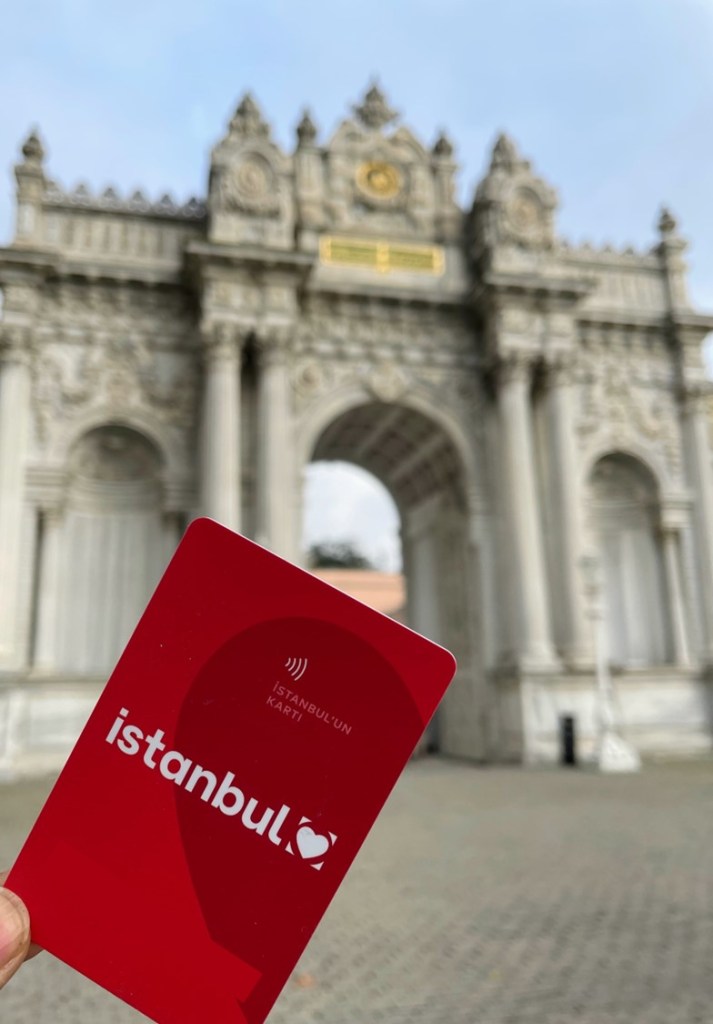
We took the tram from Sultanahmet to Kabatas which is 10-minutes’ walk to our next stop – Dolmabahce palace. The entry ticket to the palace is 650 liras per person.
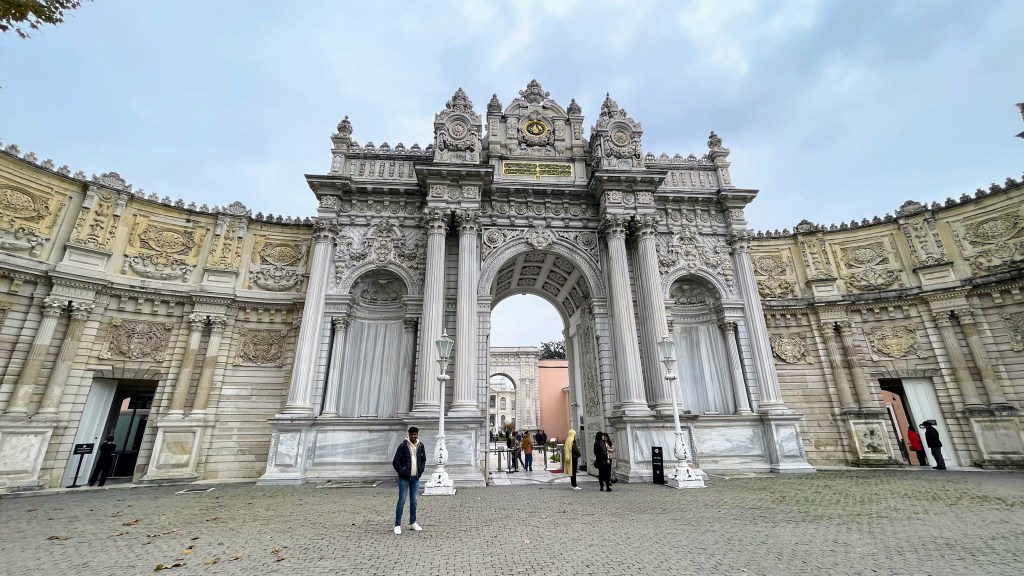
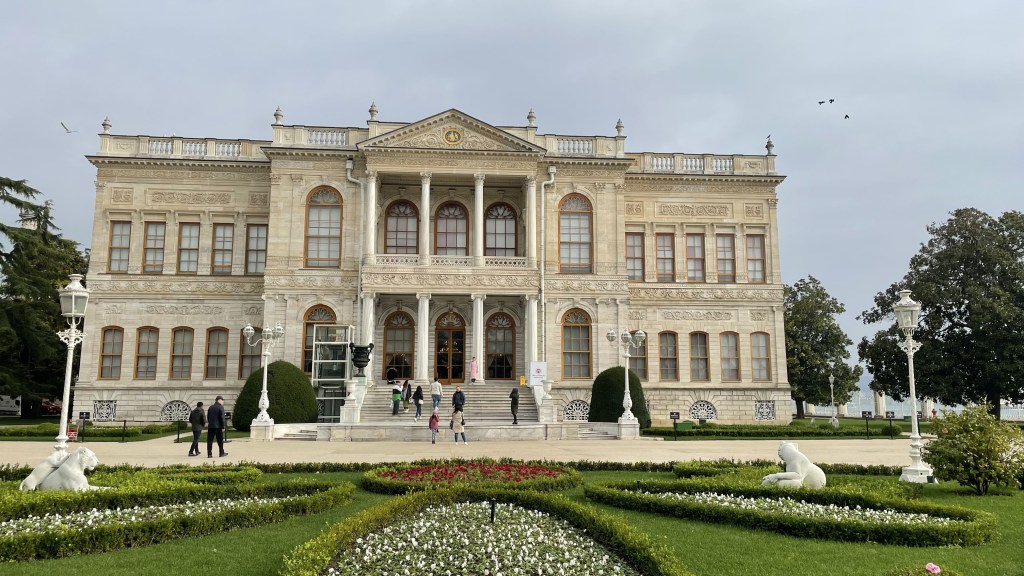
Dolmabahce palace was built was 31st sultan Abdulmejid between 1843 to 1856 and was the main administrative center of Ottoman empire till 1922. Before Dolmabahce palace, sultan and his family lived in Topkapi palace. The last royal to live here was Abdulmejid Efendi (or Abdulmejid II), who was also the last Ottoman ruler before the Caliphate was abolished in 1924 post World War I.
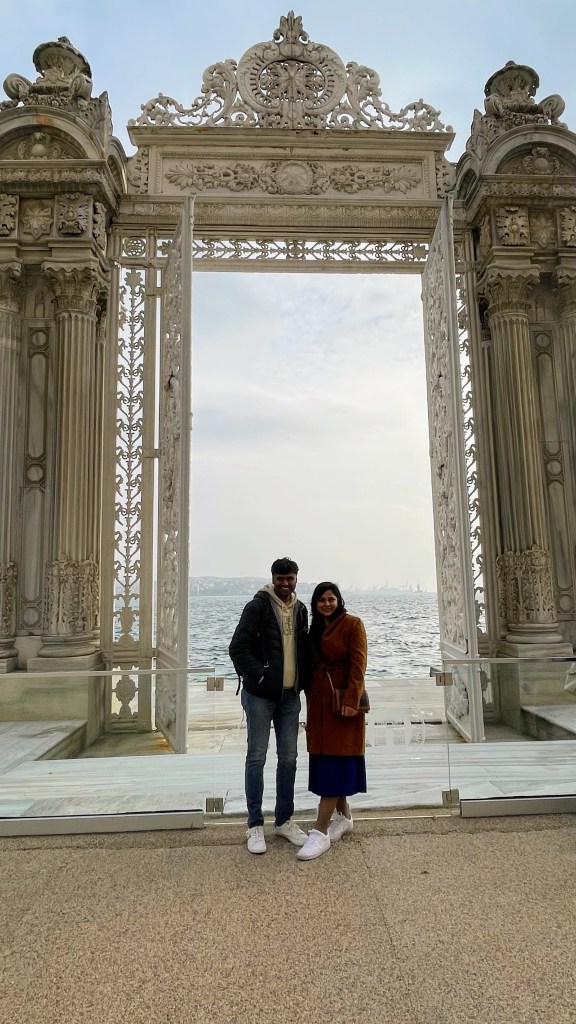
Dolmabahce is an elegant symphony of traditional Ottoman with European design. Set at the banks of Bosporus, Dolmabahce palace spreads over an sprawling area of 45000 square meters and has 285 rooms and 46 halls. One major difference stands out between Topkapi palace and Dolmabahce palace is the use of colors. Topkapi palace has exquisite use of iznik tiles and Ottoman carvings. The Dolmabahce palace, on the other hand, is extensively decorated with gold and crystal. The ceilings of this palace have been adeptly gilded with gold linings. It is estimated that almost 100 kg of gold has been used to decorate this palace. The most mesmerizing things for me were the chandeliers. Each one of them was one of a kind. No wonder, this palace is also home to the world’s largest chandelier – a Bohemian crystal chandelier sold to the sultan by Queen Victoria. This chandelier has 750 lamps and weighs 4.5 tonnes. This chandelier adorns the famous ceremonial hall of this palace. This 2000 square meter ceremonial hall separates the palace between northern and southern sections. The southern section of the palace had public representation rooms for the sultan and his administrative staffs to do day-to-day business. The southern section was harem which was for sultan’s wives, concubines and other family members.
Dolmabahce Palace was also the place where the revered Mustafa Kemal Attaturk breathed last. His room and deathbed is maintained as-is and the clock still says 9:05, the time at which he passed away.
Each and every room corner of the palace has been delicately decorated. A visit to the palace gives you a taste of Turkish royalty through its well-preserved artifacts and richly decorated interiors.

Galata Tower
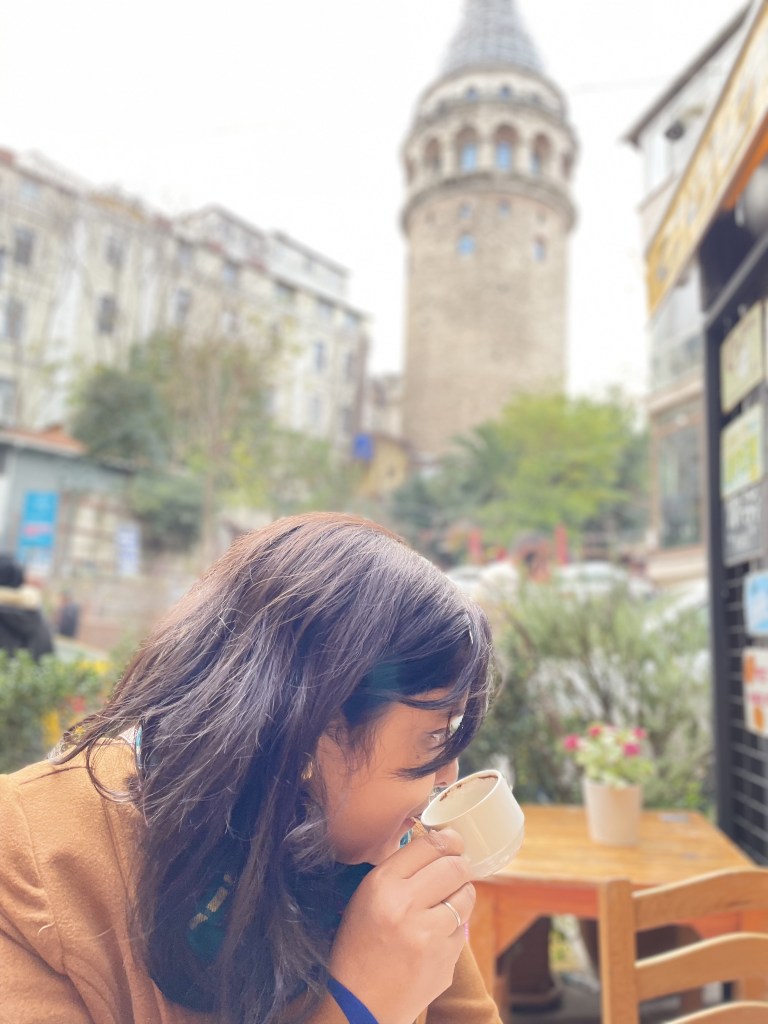
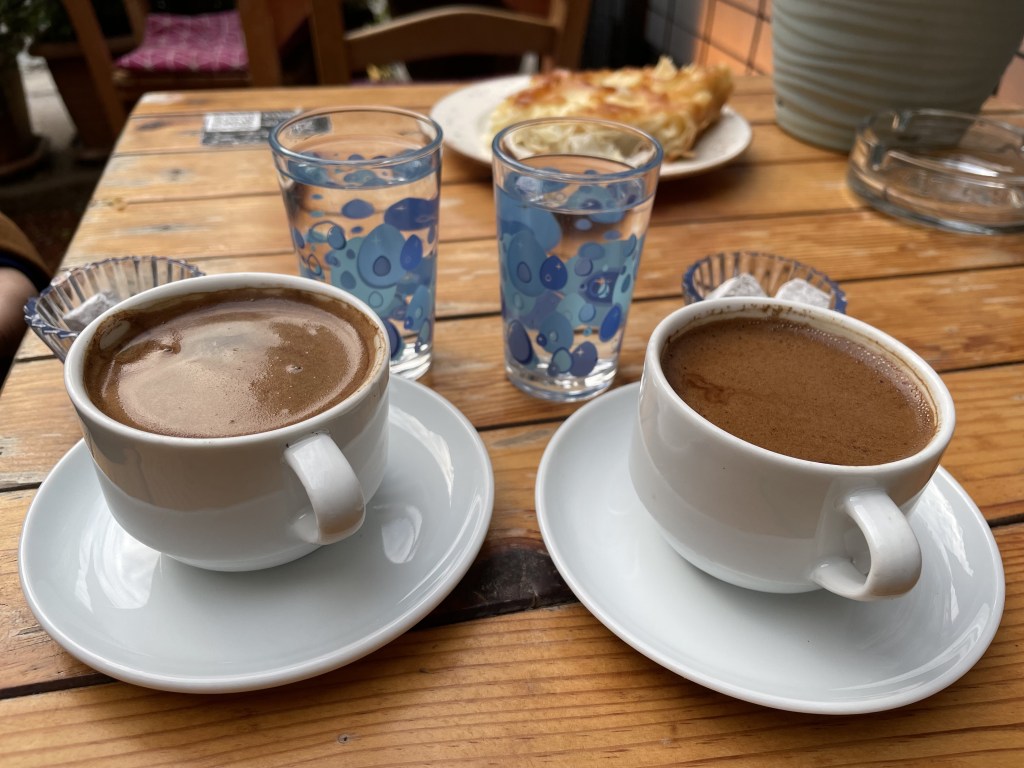
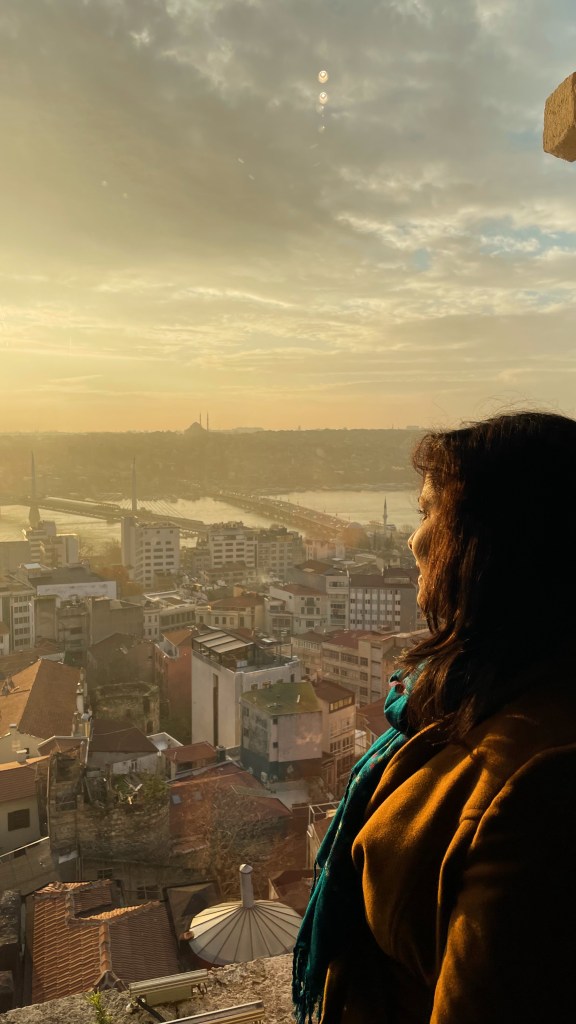
We spent almost 3 hours at Dolmabahce Palace. From there we headed to Galata Tower. But we really needed a coffee before that. We had a savory Turkish pastry and a strong Turkish coffee at a small cafe with Galata Tower just a stone’s throw away from us. The entry ticket to the Galata Tower was 650 liras per person. Unfortunately, the top floor of Galata Tower was closed for renovation; only until the 7th floor was accessible.
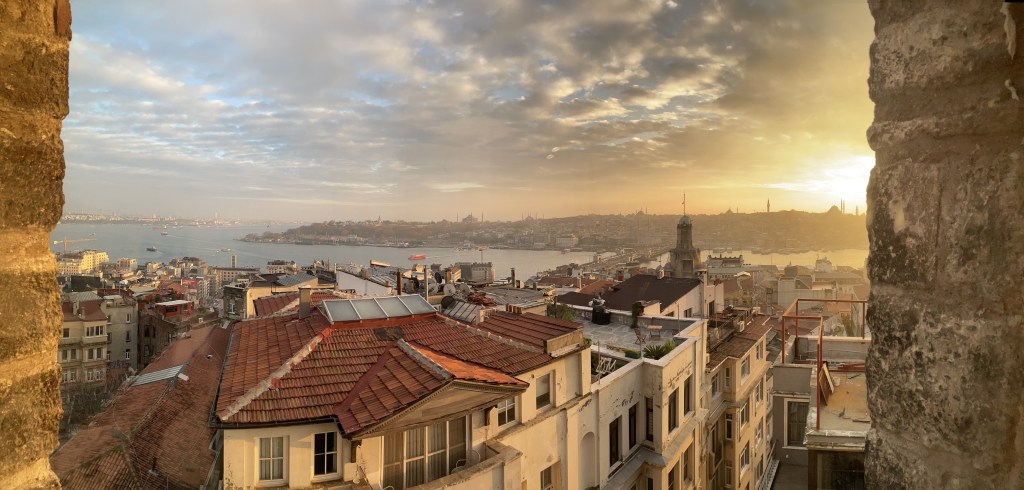
Built in 1348 AD, Galata Tower is 67 meters high and was the highest tower at the time of its construction. It was used as a watchtower to look out for fires. You can beautiful 360 degrees view of Istanbul from the top. One of the fun activities you can do is to try to identify different mosques from its large human-sized glass panels.
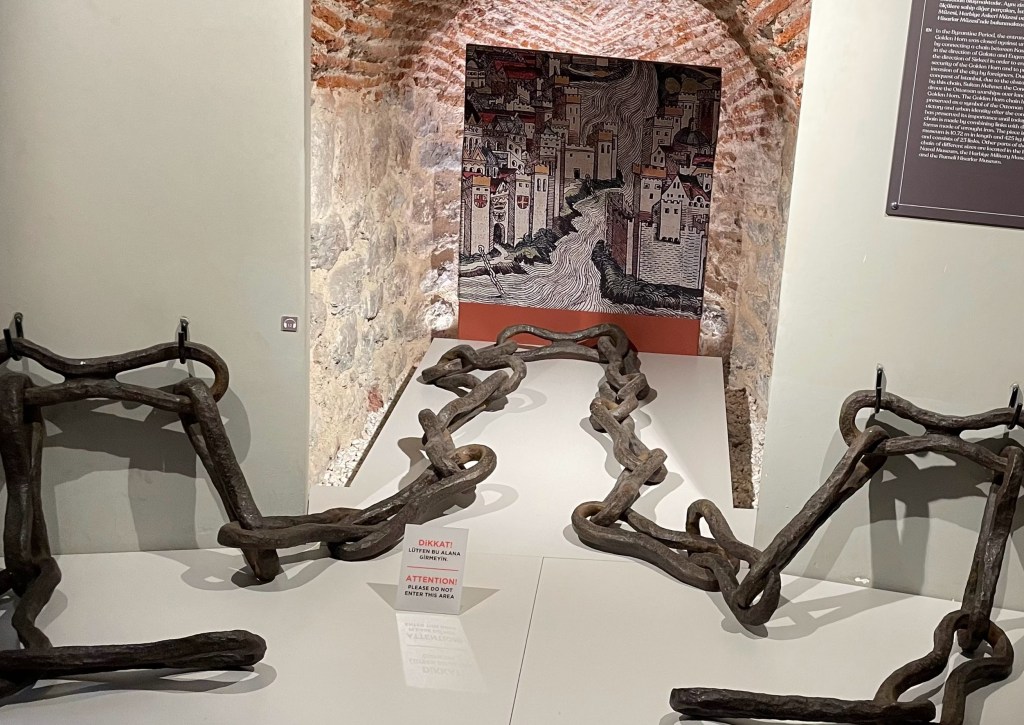
In the Byzantine period, the entrance to Golden Horn was closed for any unwanted ships or foreign intrusion by connecting a chain between north (Galata Tower) and south end (Eugenius Tower). During conquest of Constantinople, Mehmet the Conqueror sent his ships up the land into the Golden Horn to circumvent this iron chain. After the conquest, this iron chain was broken down into smaller pieces and preserved as souvenirs that exists to date. One such piece is kept at Galata Tower.
There is a vibrant market just beneath Galata Tower with lots of restaurants and cafes. Interestingly, you will also find many hawkers selling Chanel or Gucci perfumes for as little as 10€. Either it was fake or a stolen product. My conscience didn’t allow me to purchase such a product and encourage such illicit practices.
The day ended with a warm, cheesy kunafa and a turkish tea.

Day 3, Dec 13th 2023
Next day we booked a personal guide to do the walking tour of the old city. Our guide, Sadet, was right on time at 9.30 AM.
Hagia Sophia
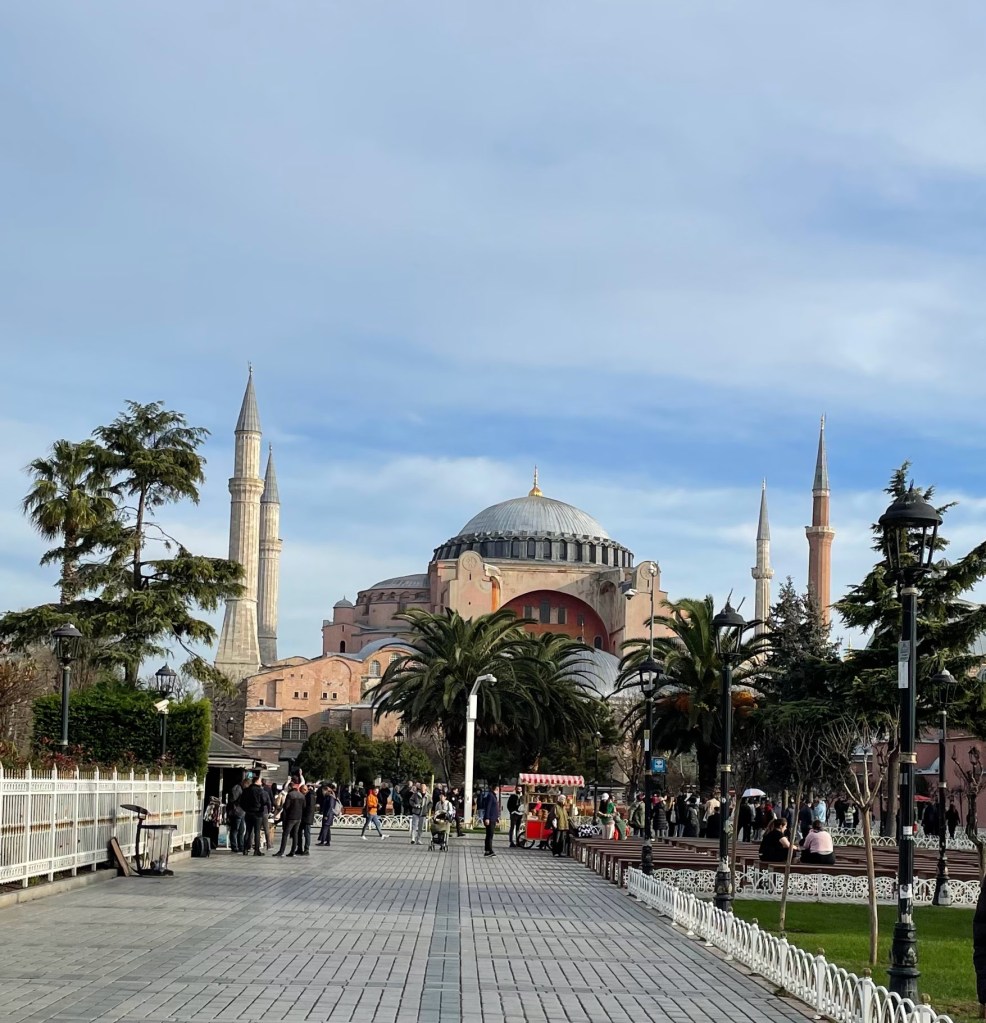
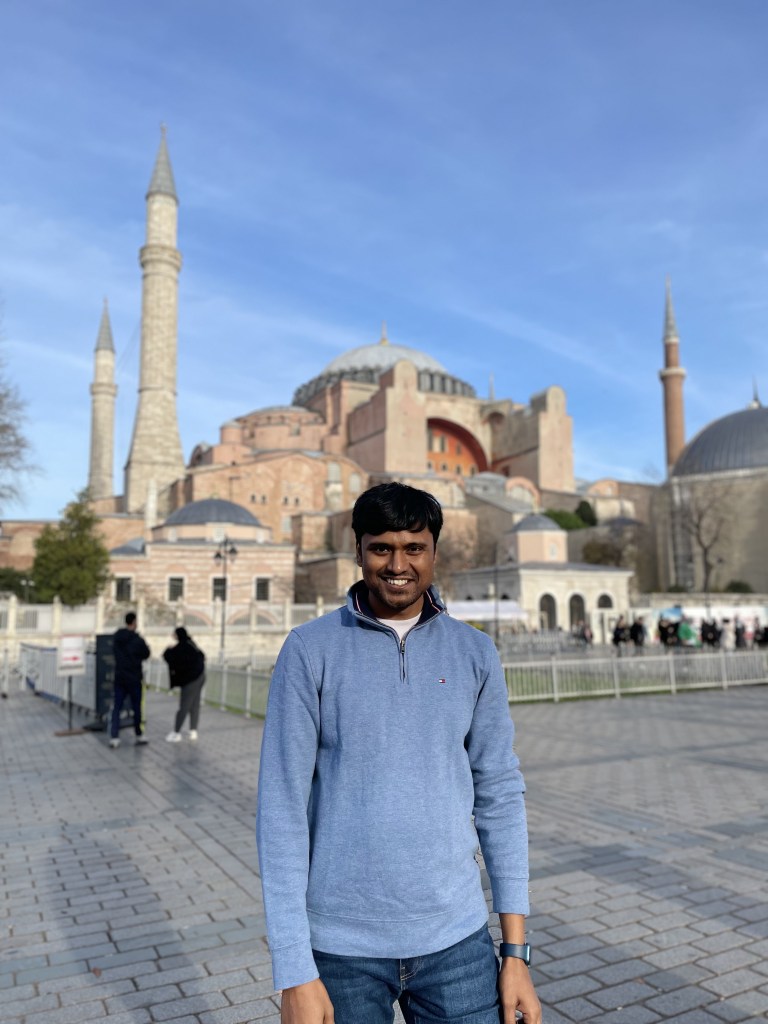
Hagia Sophia (pronounced Ayasofya in Turkish) was built three times in the same spot during the time of the Byzantine Empire. The final version, opened in 537 AD is the one that has lasted all the way to the present day — the third time really was the charm! Justinian built it to rival Solomon’s temple in Israel and folklore says that when he entered Hagia Sophia the first time, he exclaimed “Solomon, I surpassed thee!”. Hagia Sophia literally means holy wisdom and was the center of Eastern (or Greek) Orthodox Church (Western roman empire continued with Roman Catholic Church headquartered in Vatican). Standing 55 meters high, 82 meters long and 73 meters wide, it was the largest building in the entire world for about a thousand years until St. Peter’s Basilica and an engineering marvel to this day.
After the fall of Constantinople in 1453 AD, Hagia Sophia was converted to a mosque by Mehmed the Conqueror. The Christian elements like bells, altar, religious paintings, mosaics of Jesus and Mary were either removed or covered. Further, Islamic architectural constructs like minarets, a mihrab and a minbar were added. A minbar is a pulpit where the main imam delivers his sermons. Mihrab is a niche in the wall that indicates qibla, the direction of the Kaaba in Mecca towards which Muslims should face when praying. Mehmed the Conqueror built a wooden minaret over one of the half domes as soon as he converted Hagia Sophia to a mosque. That minaret does not exist today. A red brick minaret was built at its place, possibly by his successor Beyazid II. Of the other three, 1 was erected by Bayazid II and other two were built by Selim II.
In the early 1800s, eight circular medallions were hung inside. These circular medallions were painted with the names of Allah, Prophet Muhammad, 4 Rashidun caliphs (Abu Bakr, Umar, Uthman, Ali) and Muhammad’s 2 grandsons – Hasan and Hussain in excellent calligraphy. The Ottomans were great calligraphers. So great, that it was said that Quran was revealed in Saudi Arabia, written in Turkey, and recited in Egypt.
Hagia Sophia was converted into a museum after the fall of the Ottoman empire in 1922. It was reinstated as a mosque by President Erdogan in 2020.


Sultan Ahmet Mosque aka Blue Mosque
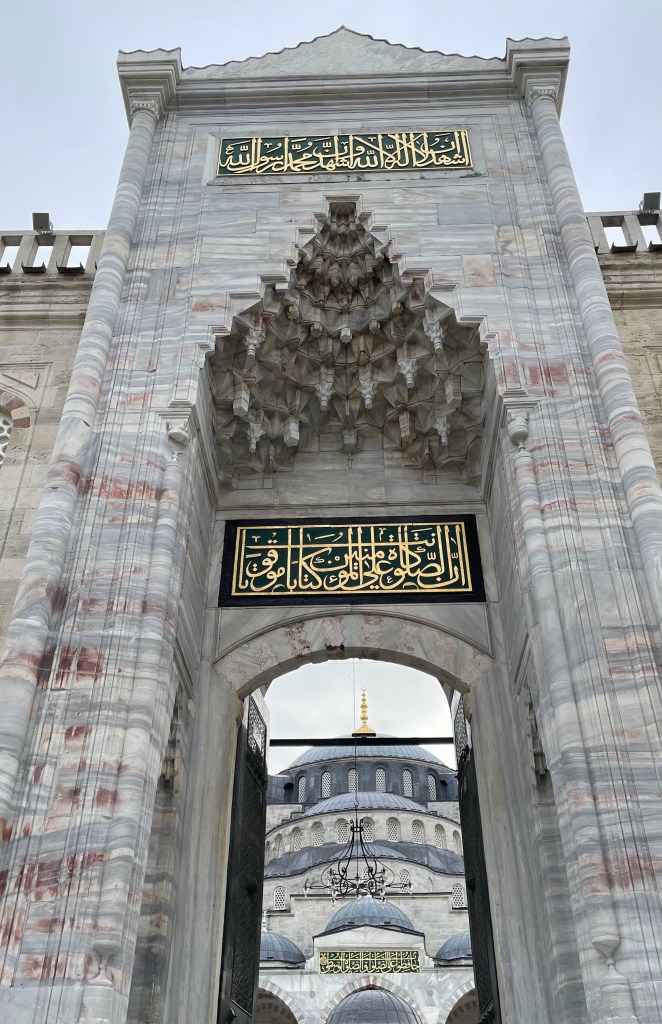
The Sultan Ahmet Mosque was sanctioned by eponymous sultan Ahmet I to boost the morale of his subject after the defeat at the hands of Persians. The work started in 1609 and was completed in 1616 under the aegis of Mehmet Aga, a student of the great architect Mimar Sinan.
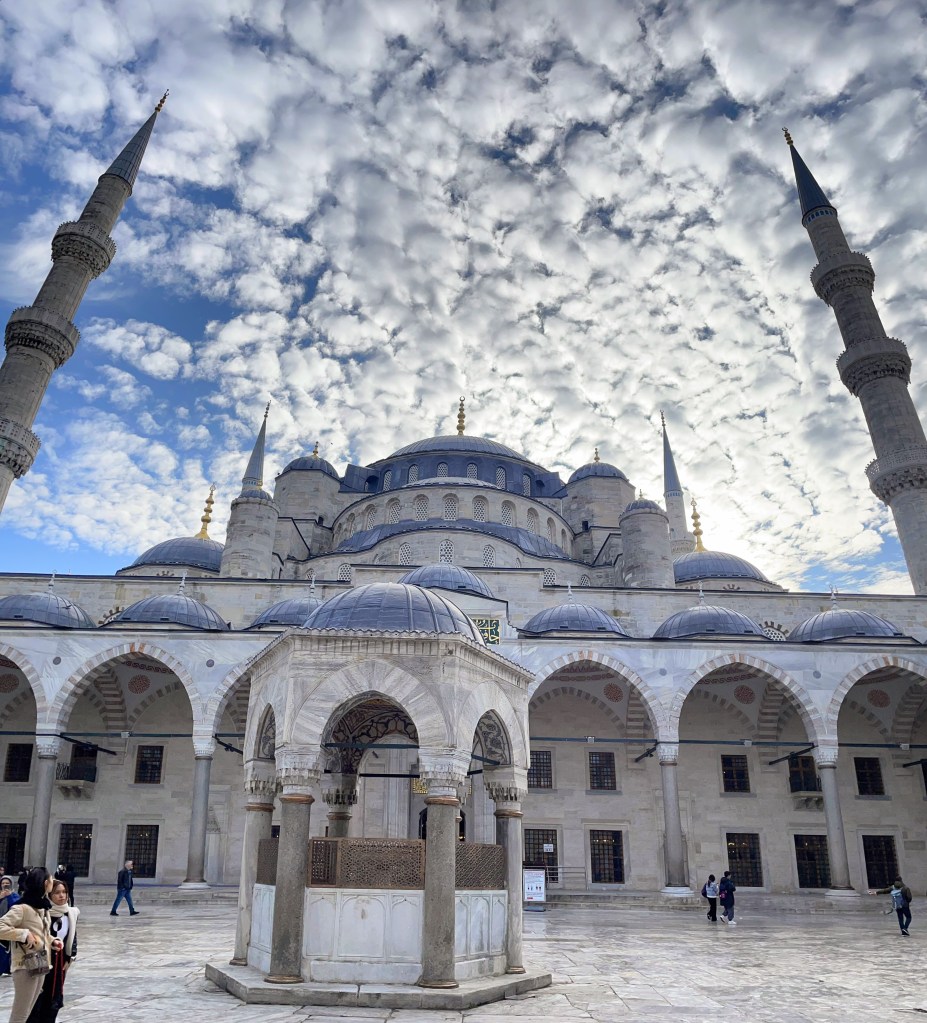
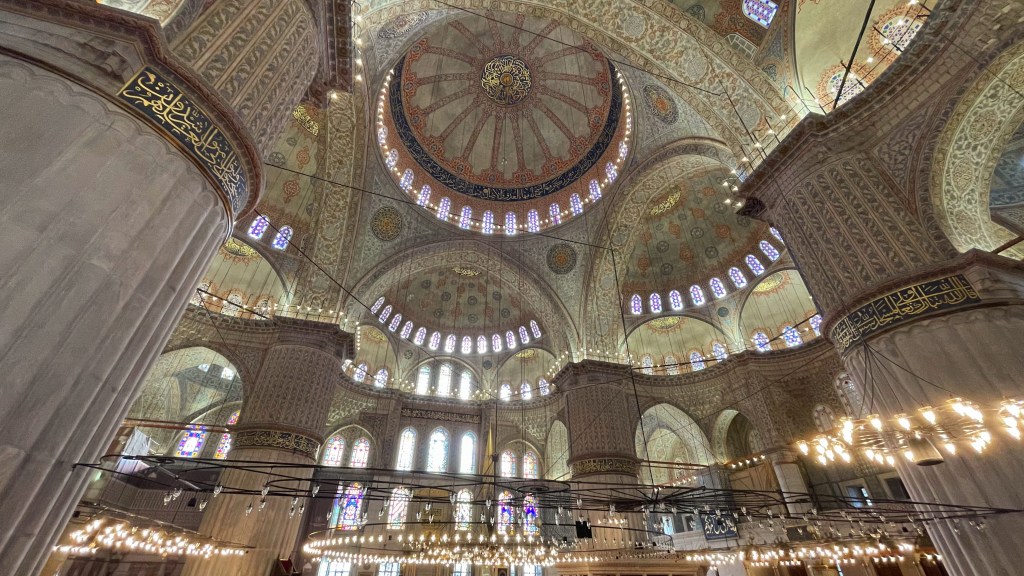
It has a classical Ottoman layout of a central dome accompanied by 4 semi-domes over the prayer hall. It has 8 smaller domes on corners of the prayer hall. The central dome sits on 4 columns. Sultan Ahmet wanted this mosque to be unique. So, he ordered 6 minarets to be built here. According to a folklore, sultan order “altin” minarets (gold minarets), but the architect misheard it as “alti” minarets (six minarets). But his decision of 6 minarets didn’t go well with the wider Muslim community as only the great mosque at Mecca had 6 minarets till then. So, to pacify them Sultan Ahmet commissioned a 7th minaret at Mecca. Four of these pencil-shaped minarets flank the corners of prayer hall while the remaining two guard the external corners of the courtyard. All the six minarets have delicately carved balconies.
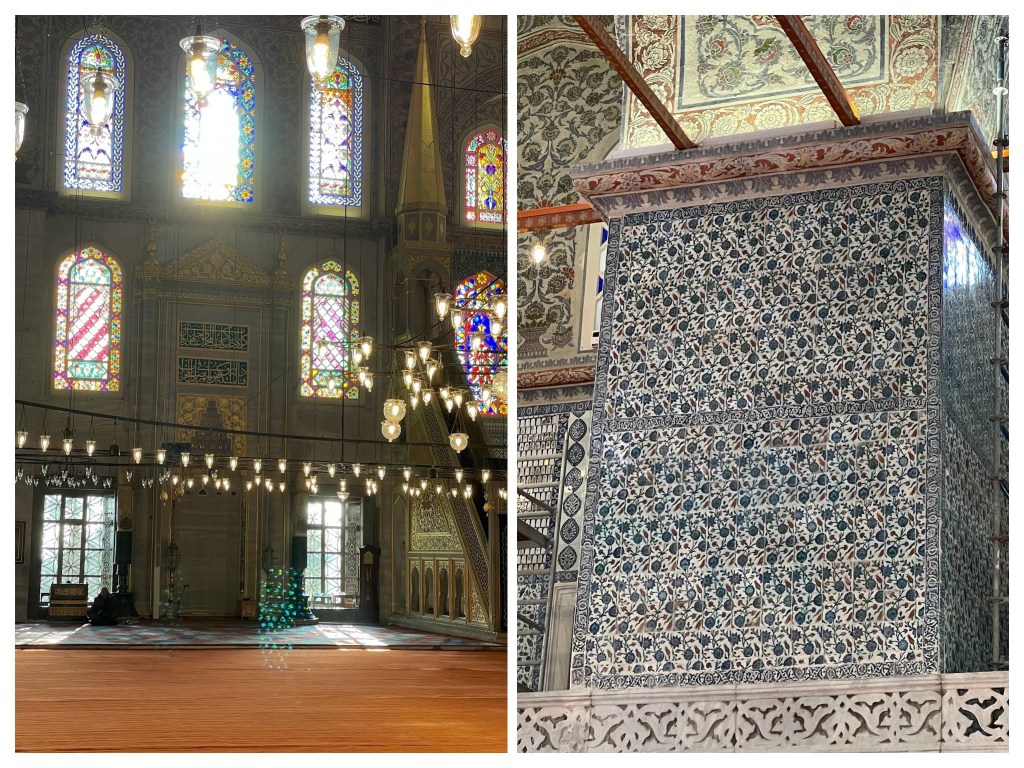
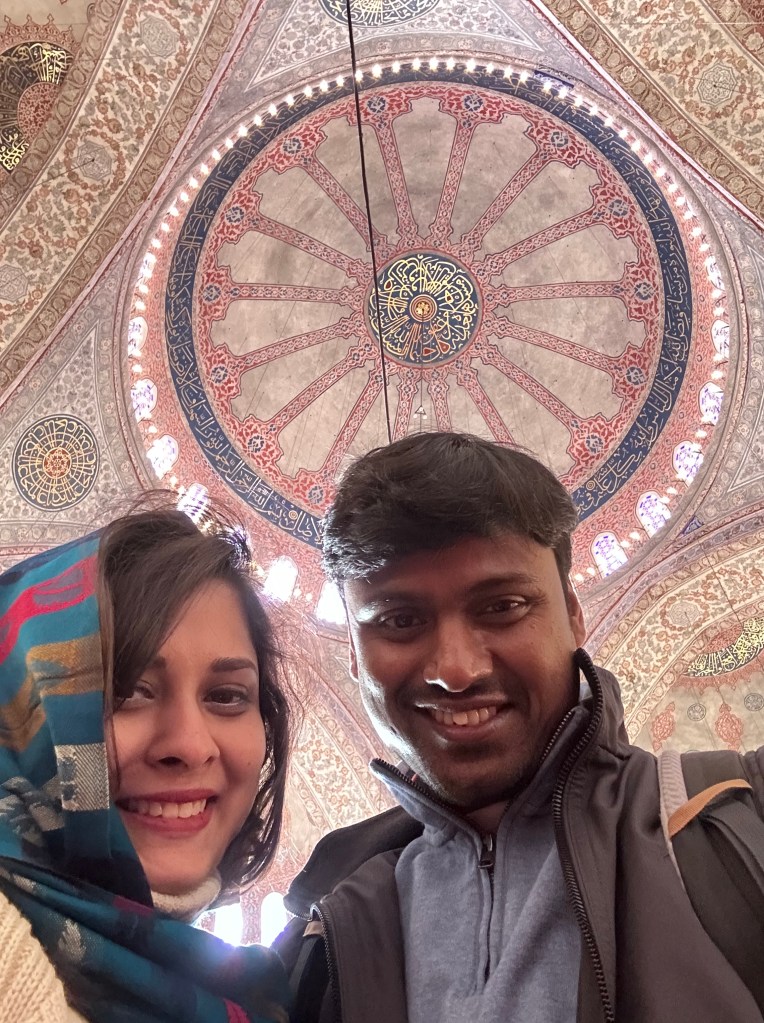
On one hand the mosque’s exterior looks grand and majestic, on the other hand the interior is intricately beautiful. Almost 20,000 blue iznik tiles and beautiful motifs covers the wall of the mosque. This mosque borrows its nickname, Blue Mosque, from these iznik tiles. Adding more atmosphere to this awe-inspiring attraction is the natural light that streams in through 200 stained glass windows.
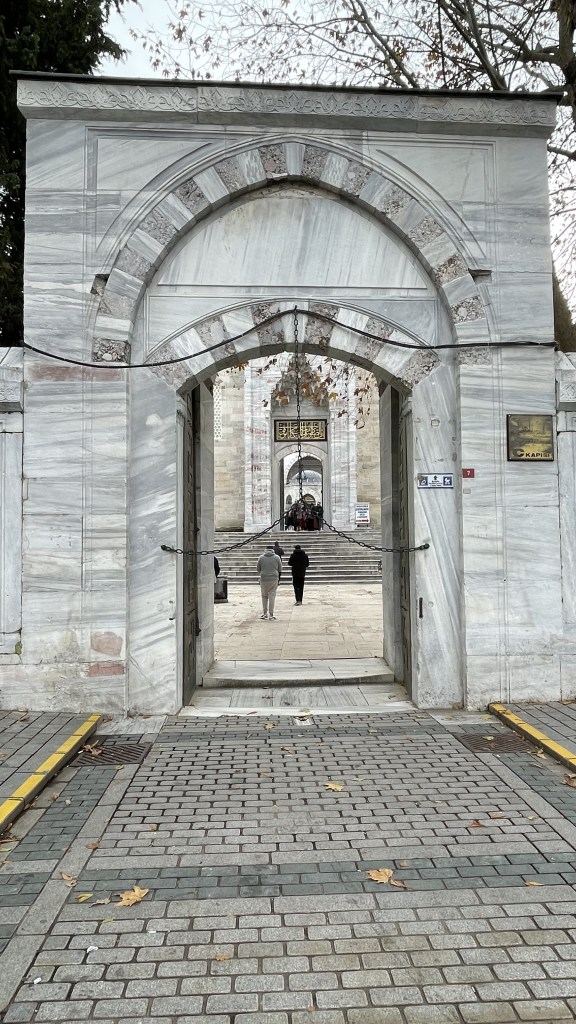
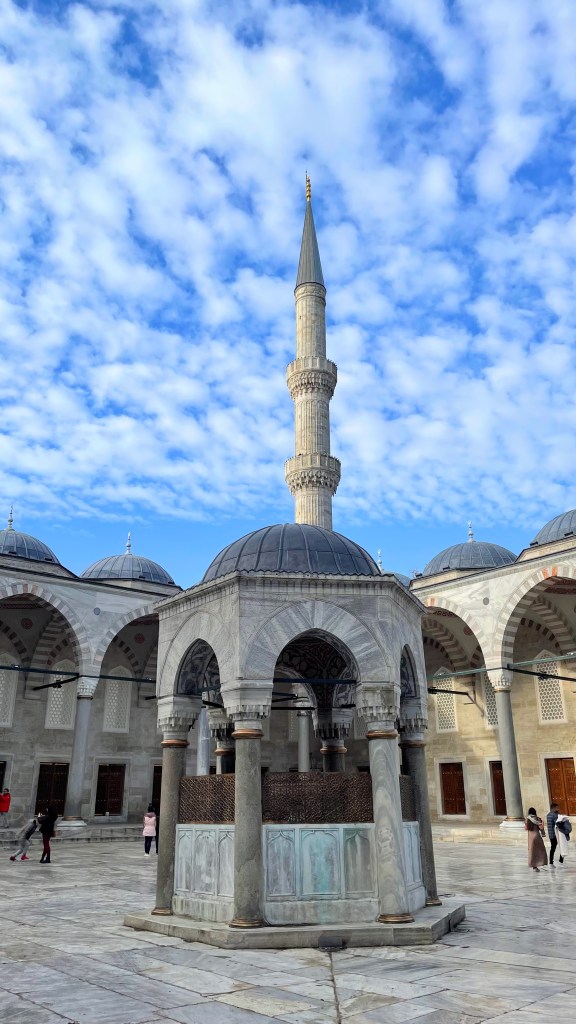
The mosque has a larger prayer hall under the central dome and an equally spacious extended courtyard. At the center of courtyard is a hexagonal shadivan, a fountain used in older times for ablutions. There is a huge iron chain that hangs at the entrance. This was placed so that whenever sultan came inside the mosque on his horseback, he had to lower his head – a symbolic gesture that even sultan must bow before entering the premises of God.
Standing opposite of each other, the majesty and beauty of the Blue Mosque and Hagia Sophia rival each other, with both staking the claim in the city’s old history.
Basilica cistern
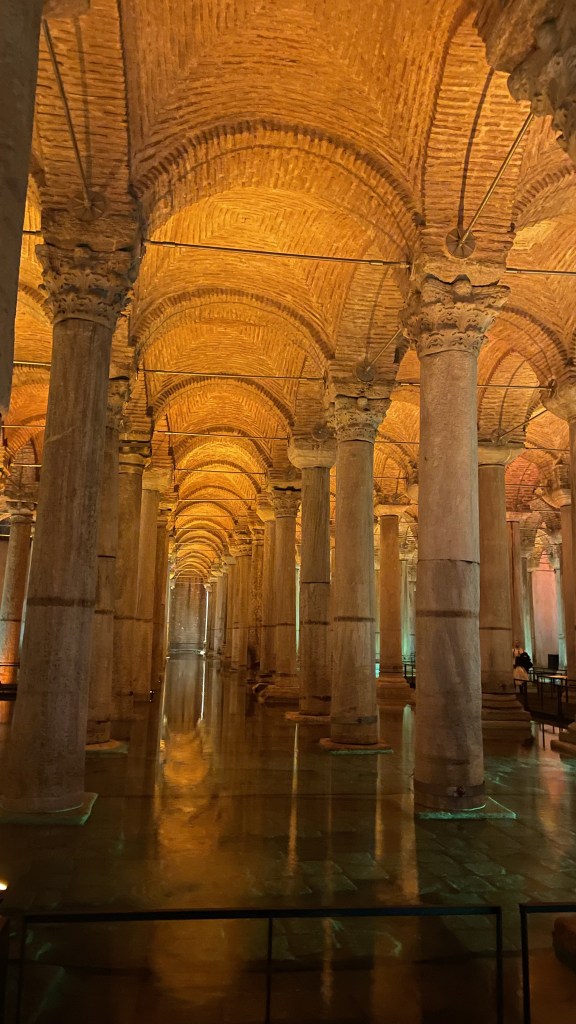
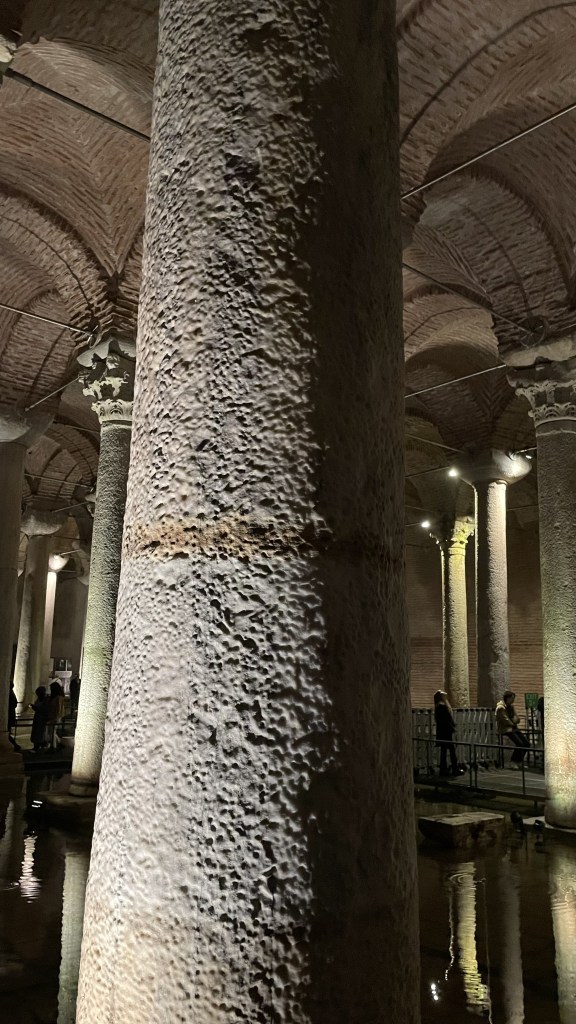
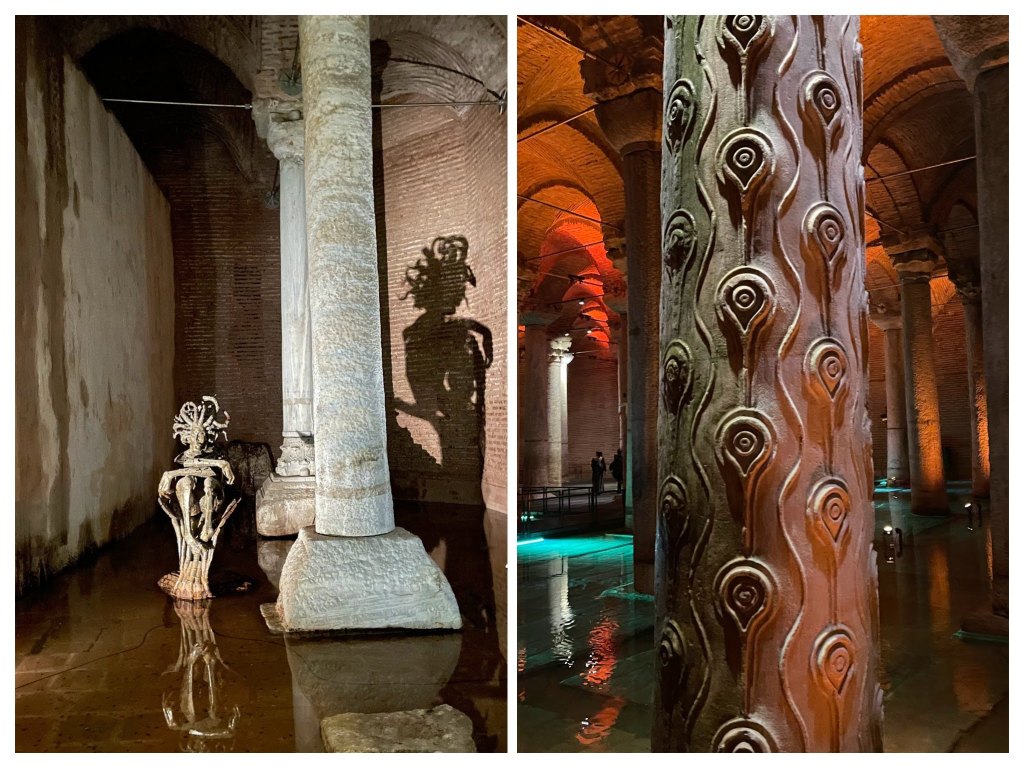
Basilica Cistern is an underground water reservoir or cistern built by Byzantine emperor Justinian’s order in 532 AD to hold the water brought through aqueducts from the Belgrade Forest. It has 12 rows of 28 columns, a total of 336 marble columns, each of them 9 meters in height. About 140 by 60 meters in size, this reservoir is capable of storing up to 80,000 cubic meters of water.
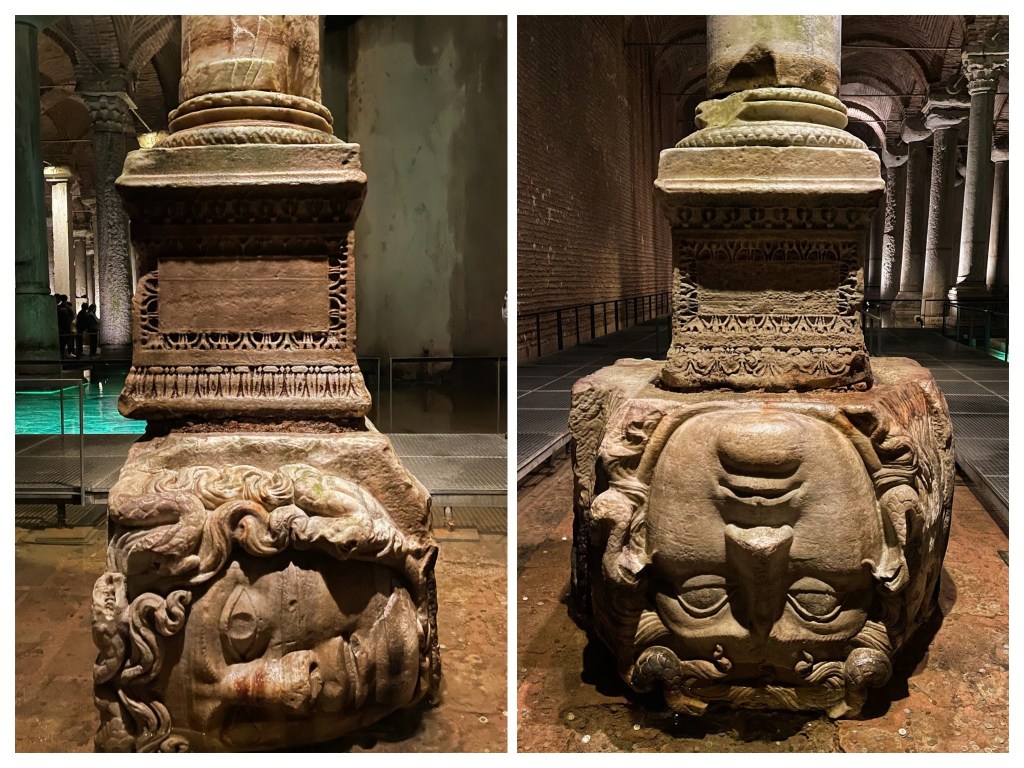
The most photographed or unique feature of Basilica Cistern are 2 pillars which are supported by gigantic plinths that depict Medusa – the legendary monster who turned people to stone when they gazed on her face. It is said that water was very important for Roman empire, so they wanted to protect it from evil spirit, hence they built Medusa’s head on these pillars. It was kept inverted to avoid people gazing into its eyes.
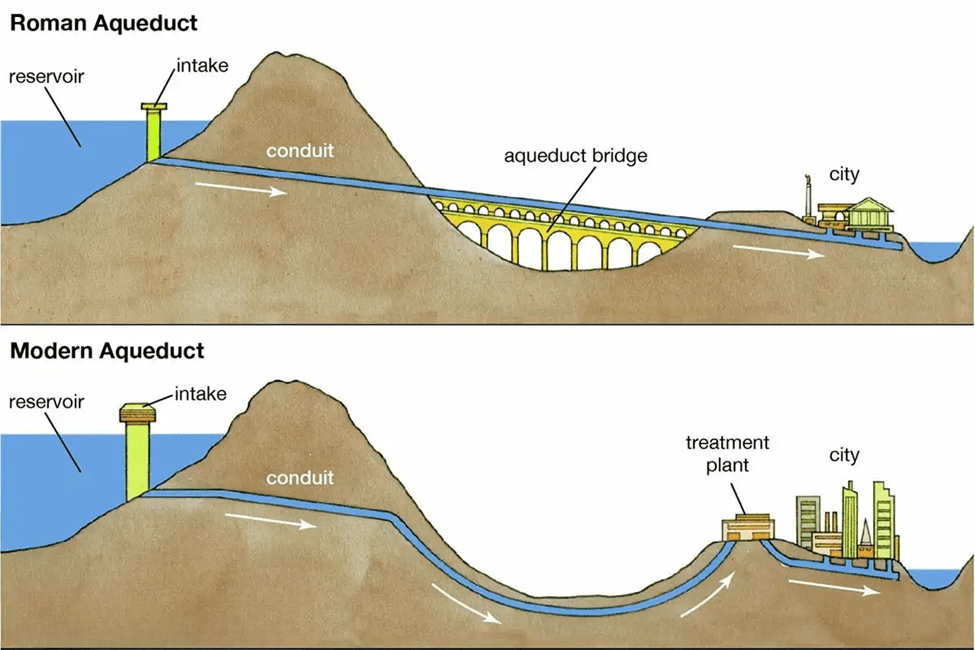
For me, even more fascinating part was to learn how these roman aqueducts worked. Roman aqueducts were an engineering marvel. A water source was found at an elevation higher than the city, preferably springs as they offered fresh running water. Then a pipeline, built with waterproof mortar, was set up from that source to the city. The gravity did the rest of the work. On its way, the pipes had to carve the hills and be elevated at valleys. As the water reaches cities, it had to be propped up on a series of arcades to maintain that gravity flow. By the time those channels arrived in the city, they came at a great height. You can learn more about roman aqueducts here – How Did Romans Build Aqueducts? (thecollector.com)
While going back to the airport, we saw a portion of Valens aqueducts which brought water to Basilica Cistern. Today, only the arcade exists, the pipeline that ran on top of the arcade is gone.


Topkapi Palace
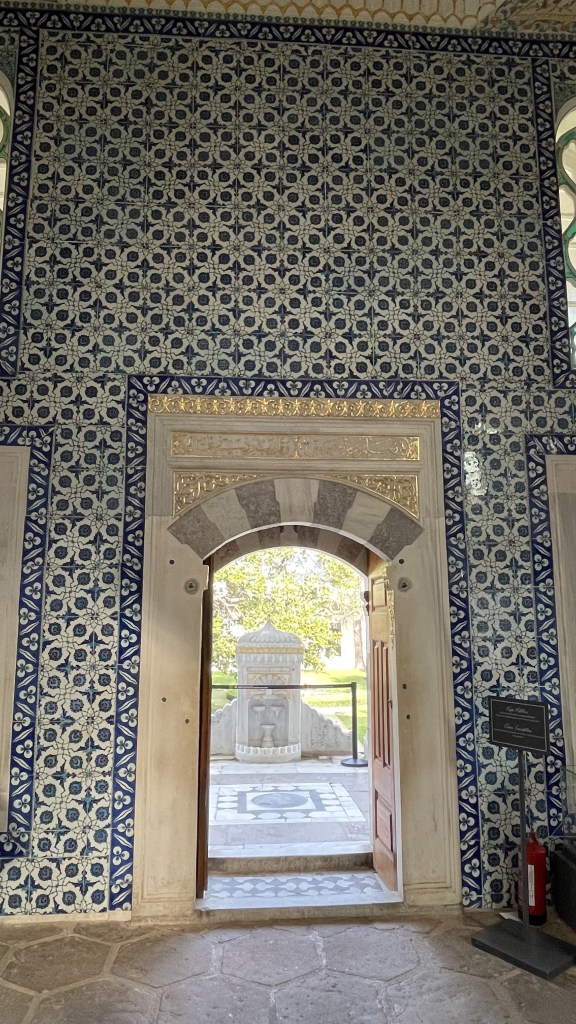
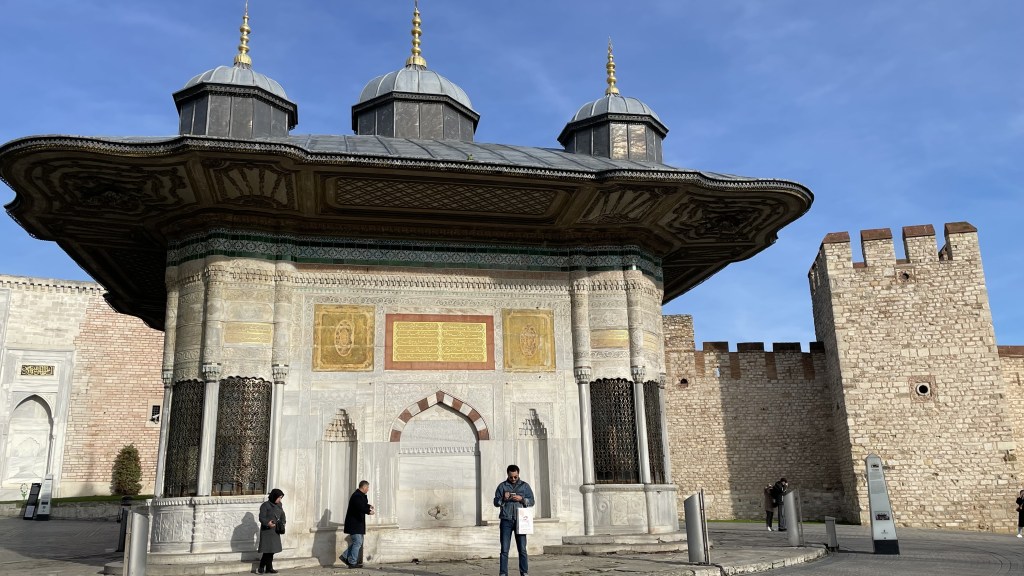
Topkapi Palace is a legendary place to visit in Istanbul. Its construction was ordered by Mehmet the Conqueror in 1459 and was completed by 1465. It served as the administrative center of Ottomans from 1465 to 1856, after which it was moved to Dolmabahce palace. The name of this place was Saray-i Cedid-i Amire , Imperial New Palace until 18th century. It was renamed to Topkapi meaning cannon gate in Turkish in Mehmud I’s reign.
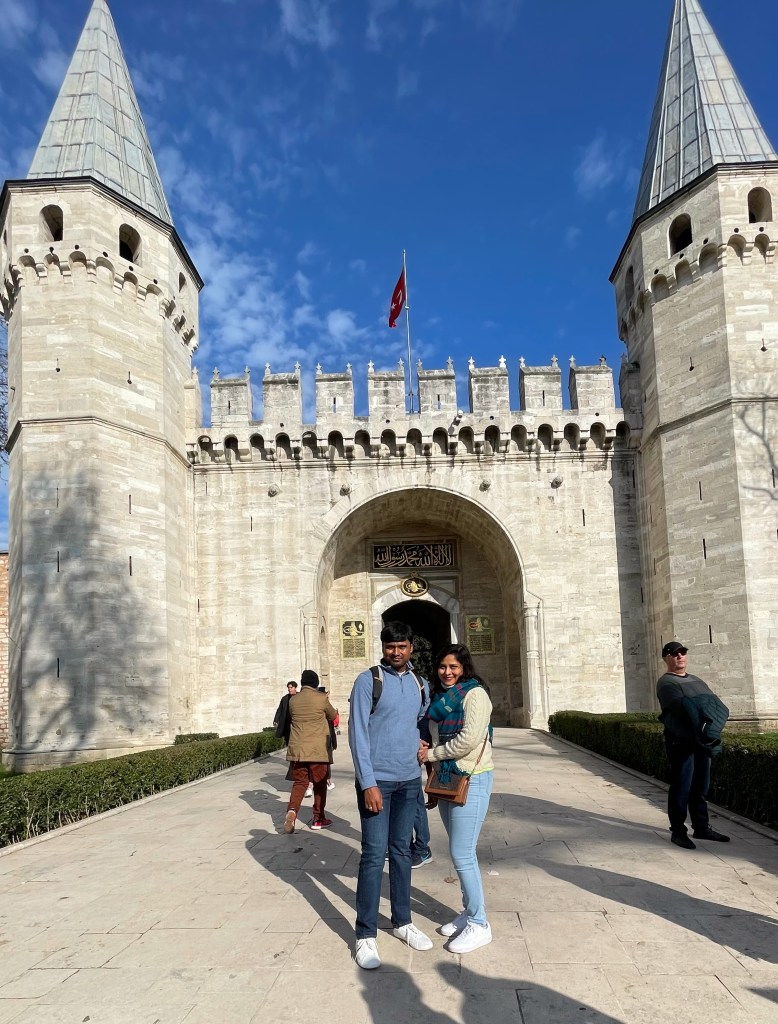
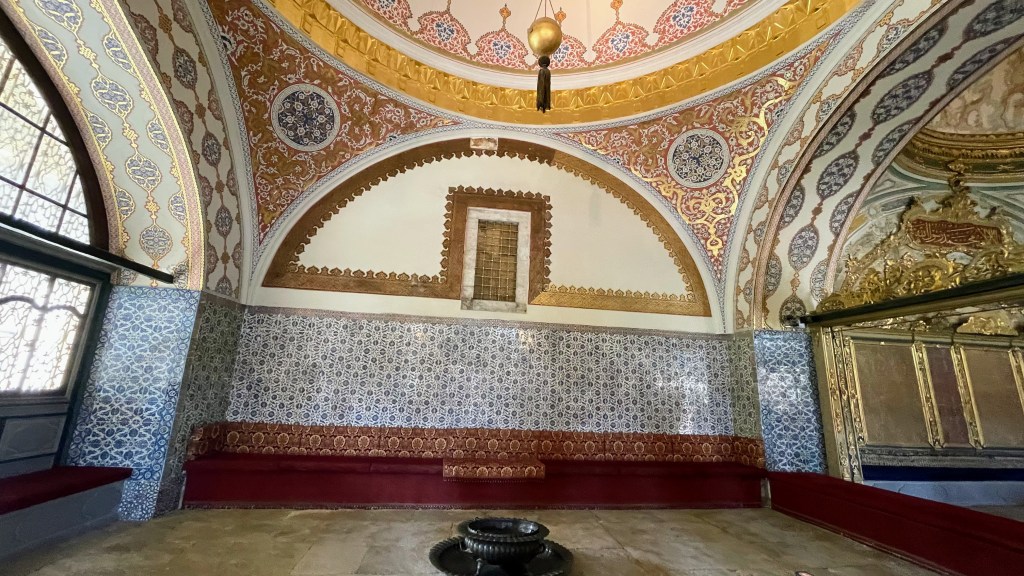
There are 2 gates that you need to cross. The outer gate is open to everyone, no tickets required. Then comes the middle gate – the gate of Salutation. It has a ticket-bound entry. My guide, Sadet, has already booked ticket for us. First, we entered the Imperial Hall, or Diwan-e-khaas. This was a place for grand viziers to state affairs. Sultan would usually listen to the proceedings through a lattice window; he used to interject only when a wrong decision was about to be made. This imperial hall at its inception was a wooden building commissioned by Mehmet the Conqueror. A major renovation was done by Sumeiman the Magnificent during 1527 to 1529. It took its present form in 1792 gilded latticework and rococo embossed doors were added on the orders of Selim III.
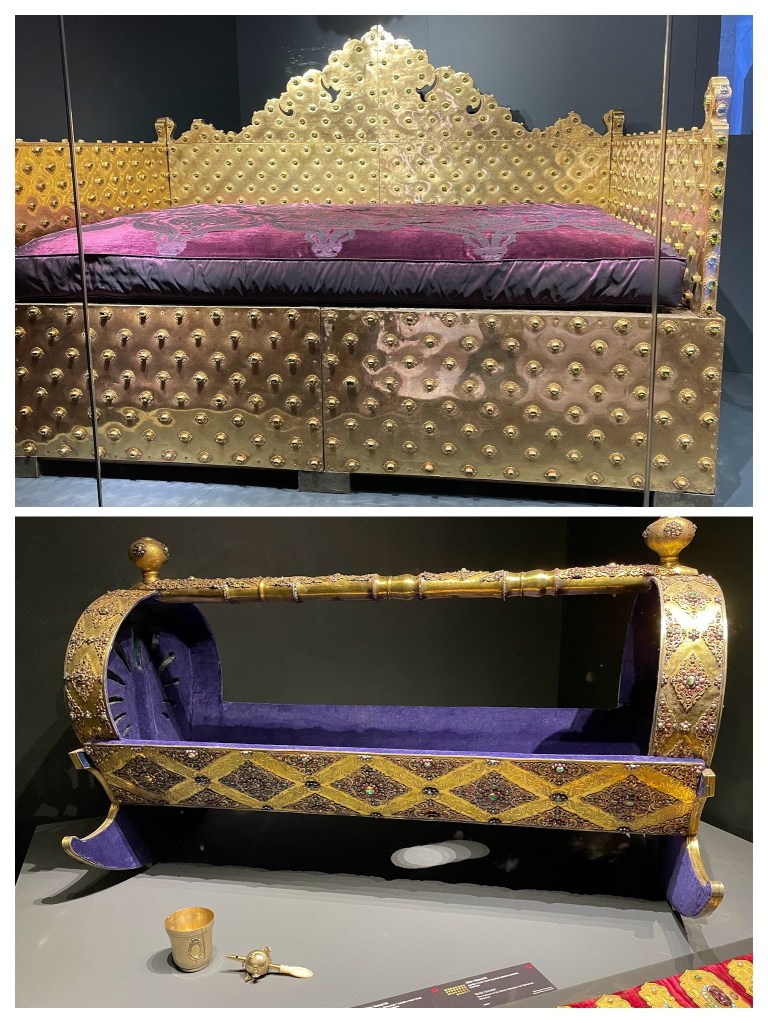
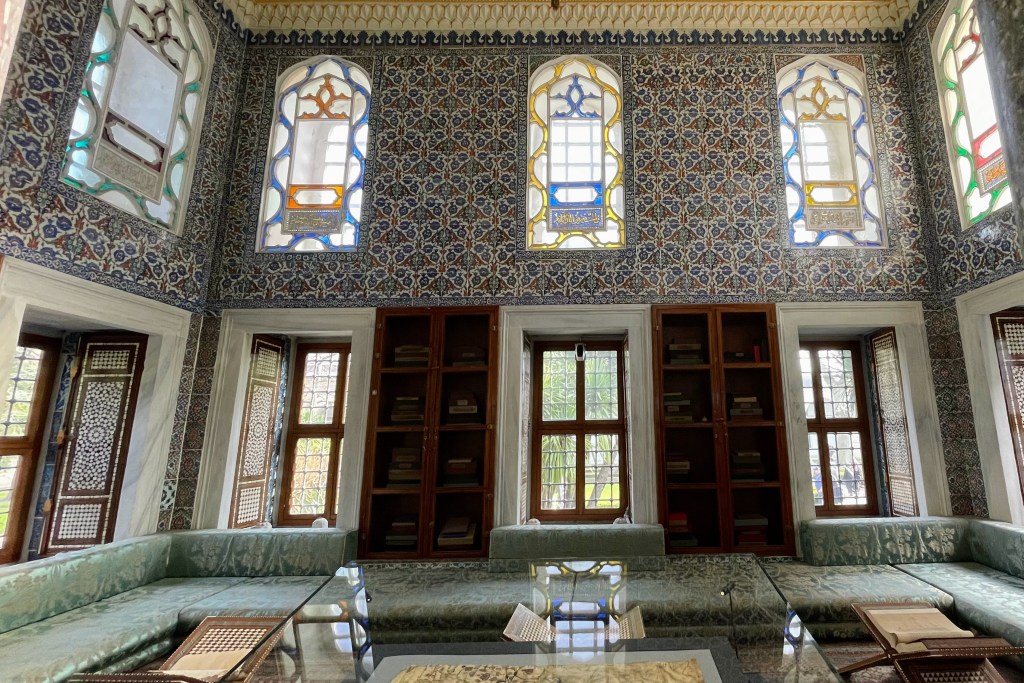
Then we went to other areas like Audience hall or Diwan-e-aam, library, arms & ammunition display section, kitchen section and so on. The most amazing of all of them was its treasury. The opulence of sultans is displayed in its full glory here. Each and every aspect of sultan’s life were filled with riches. Right from crib made of gold, to bejeweled comb, to emerald-studded purses to gold plated thrones – every single thing a sultan or his family touched throughout their life was unique. Among the other riches at display there are the 86-carat spoonmaker’s diamond and topkapi dagger.




Grand Bazaar
After spending about 2 hours at Topkapi palace we headed for a hearty lunch. We had lamb and chicken kebab along with a salad. We, then, walked our way to the famour Grand Bazaar.
The Grand Bazaar started with an indoor arcade with shops in 1461 and has since grown to include 60 alleys and around 4000 shops, on a total area of 30,000 square meters. It is the largest and oldest covered market in the world.
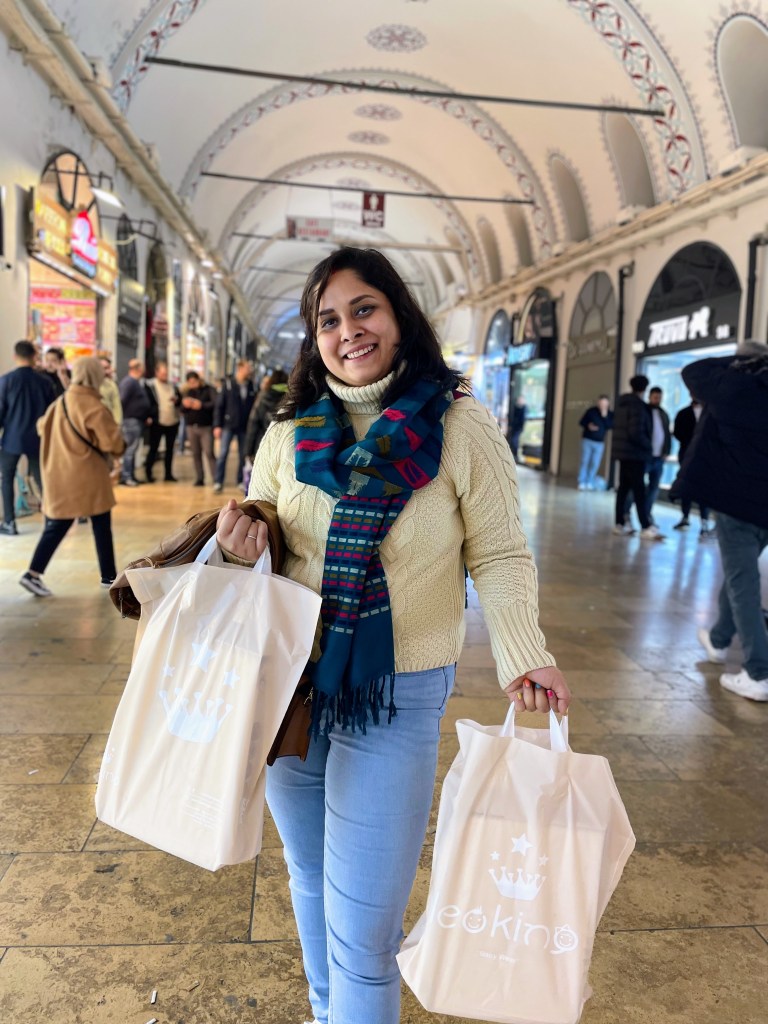
We said goodbye to Sadet here around 5.30 PM and roamed around this place for about an hour. My take is that Grand Bazaar is very hyped. The shop owners sell things at exorbitant prices, most often at least 2-3 times the actual price. So, I would suggest to not buy anything from Grand Bazaar and instead go to Egyptian or Spice Bazaar or other local markets if you don’t want to get ripped off. I am saying this because I bought a 6-piece tea cups for 550 lira at Grand Bazaar, which I was able to find in Egyptian Bazaar the very next day for about 250 liras.

Day 4, Dec 14th 2023
The benefit of staying at walking distance from Sultanahmet square was that on this day, we went to Blue Mosque and Hagia Sophia again. Yesterday it was a bit rushed with the guide as we had to cover many places. But today it was just the two of us.
Note – when you take a guide, prioritize those places which have entry tickets like Topkapi Palace and Basilica cistern. Entry to Hagia Sophia and Blue Mosque is free, so you can go again if time permits.
Sulemaniye Mosque
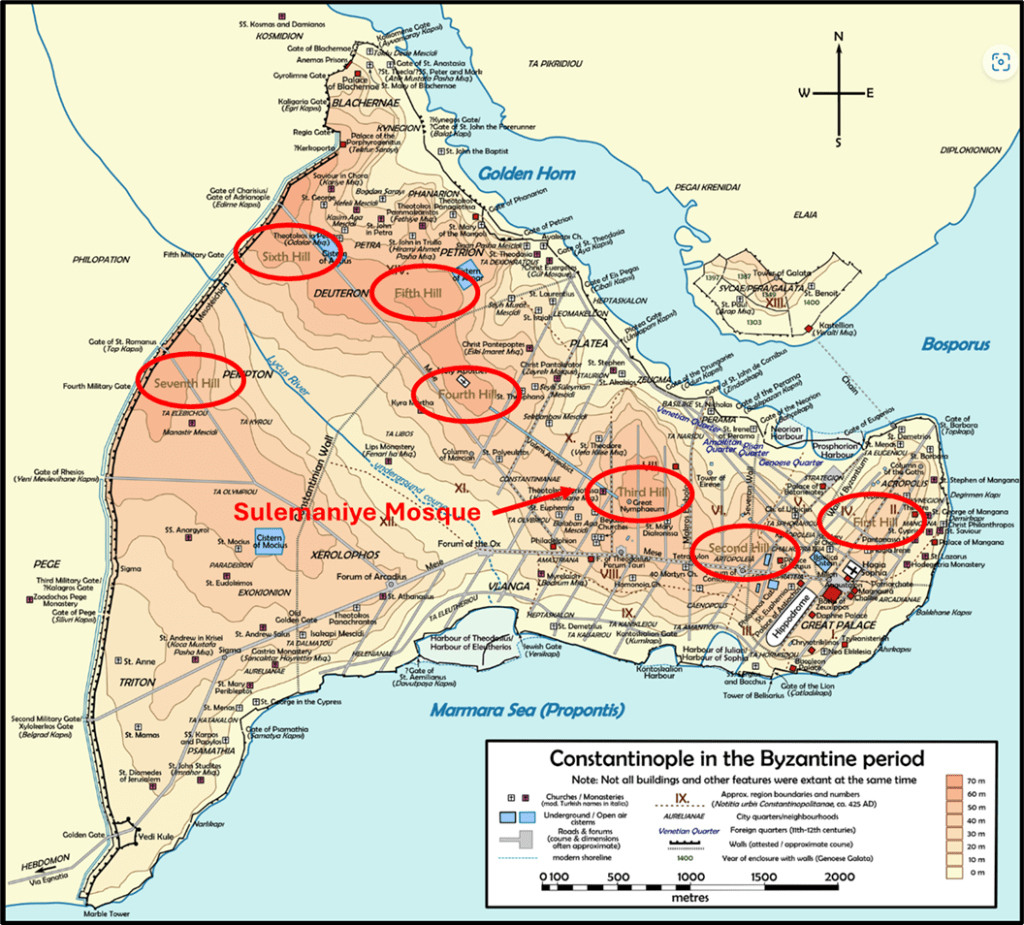
Istanbul is also known as City on the Seven Hills. During Byzantine age, these hills were surmounted by churches, while during Ottoman age by imperial mosques Sulemaniye Mosque is perched on the third hill.

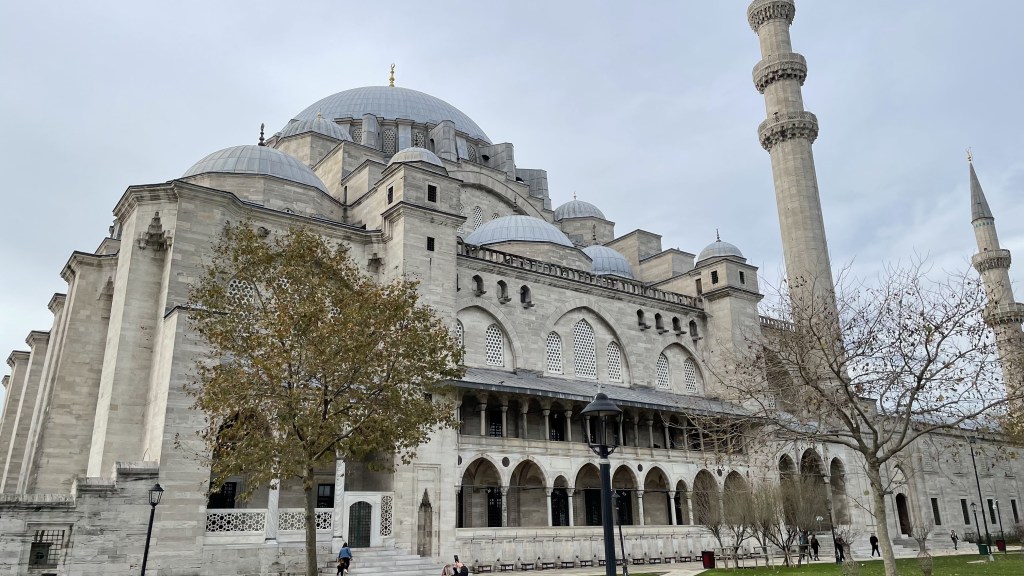
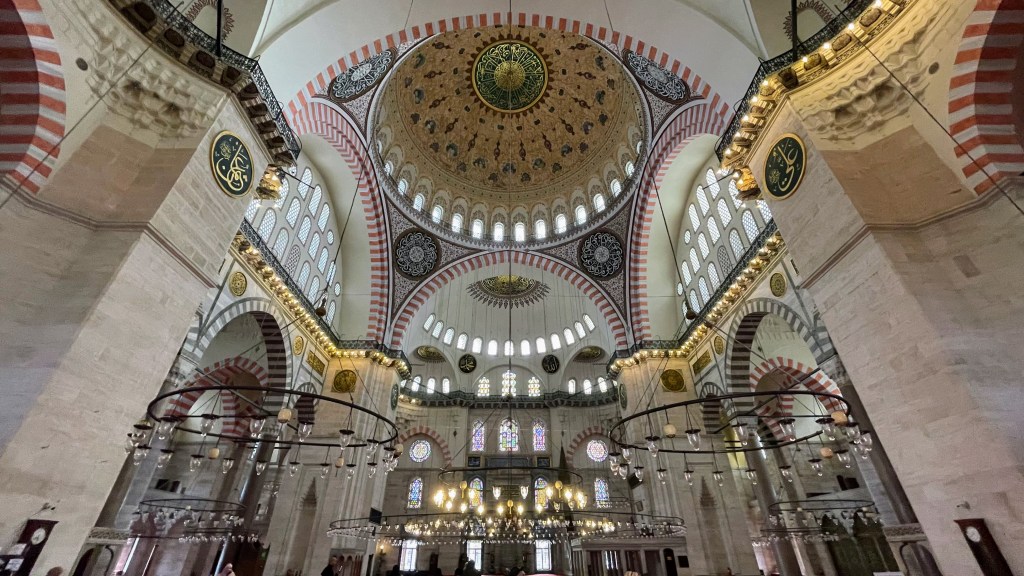
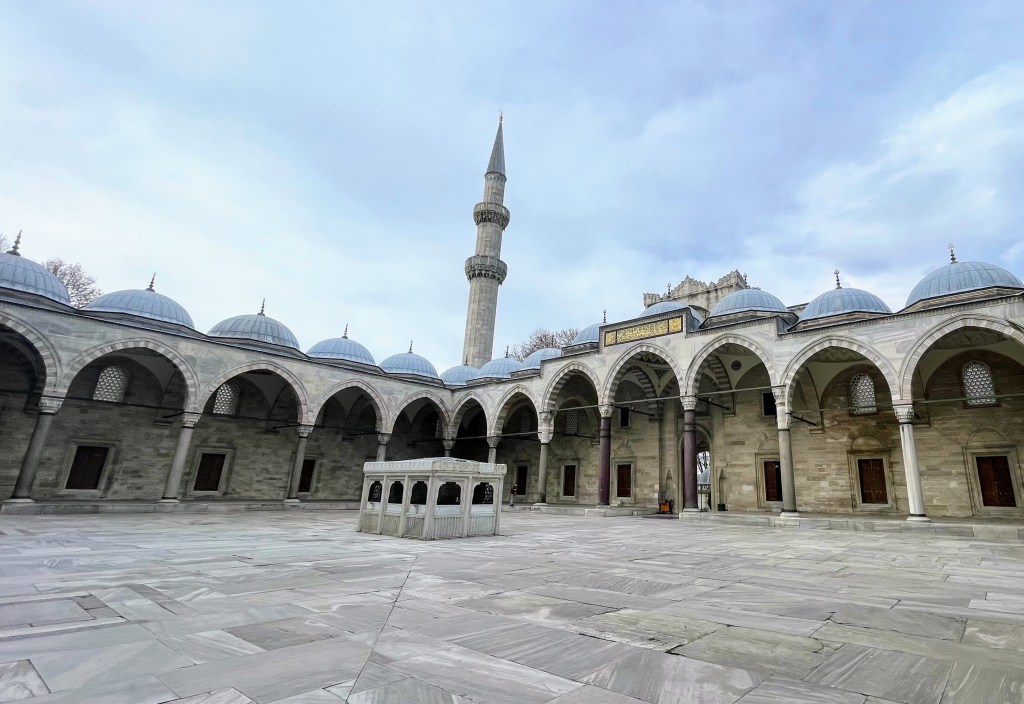
The mosque was commissioned by Suleiman the Magnificent and was built under the craftmanship of imperial architect Mimar Sinan. It was built in seven years (1550-1557). Just like other imperial mosques, Sulemaniye mosque was also designed as a complex to serve religious and cultural needs of the society. Within its complexes are 4 madrasas, a hospital, a Turkish bath, a hospice, a public kitchen and many others. Since it is perched on the third hill, the compound of Sulemaniye Mosque commands an extensive view of city around Golden Horn and Bosporus.
Like other mosques, this also has a central dome accompanied by four semi-domes. The central dome is 48.5 meters high and 27.25 meters in diameter. Four minarets flank the corners of a large courtyard at the center of which is a delicately carved fountain.
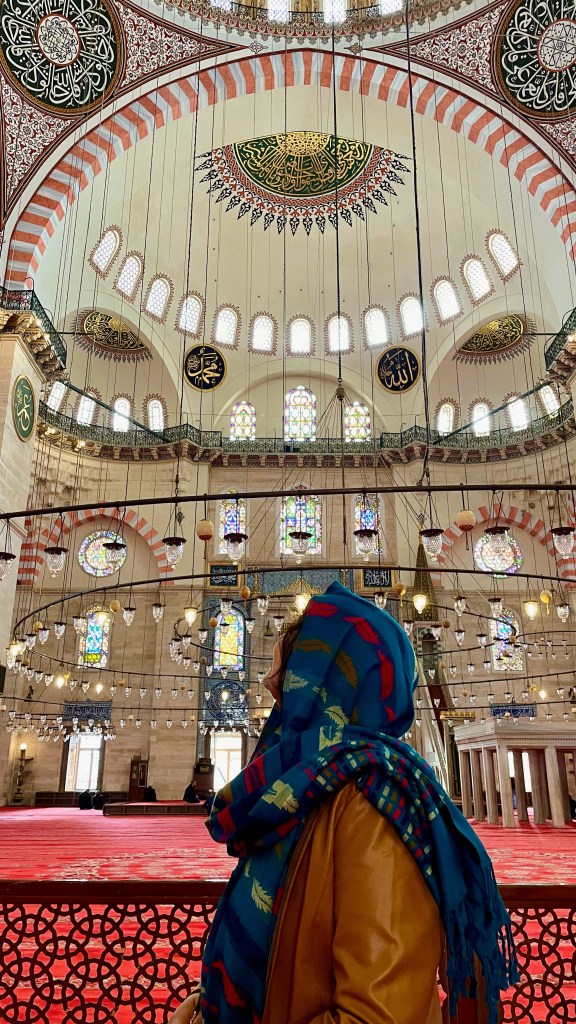
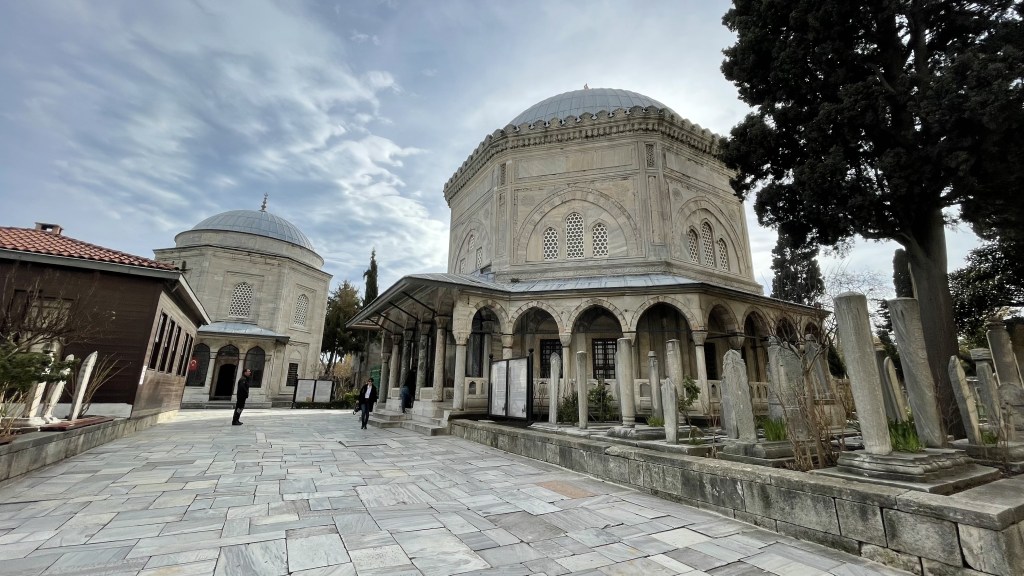
The interior if this mosque is much restrained than the Blue Mosque. The colorful glass-stained windows are largely restricted to qibla wall. The blue iznik tiles are used only around mihrab. This is different from the Blue Mosque which is filled with blue iznik tiles all around, hence the name. Behind the qibla wall of the mosque, there are octagonal mausoleums of Sumeiman and his wife Hurrem.
Sulemaniye mosque is the inspiration for many mosques to be built later including the Blue Mosque. Upcoming generations learnt from the genius architect Mimar Sinan and used similar architectural techniques. Many travelers restrict themselves to the Blue Mosque and Hagia Sophia, but I feel Sulemaniye Mosque has a mystic charm to it. Because of low footfall, you get ample amount of time and space to appreciate the grandeur, beauty and divinity of Ottoman mosques.
A bit about dome
A huge central dome represents the heaven where God resides. The hemispherical shape of the dome and its great height from the floor further accentuates this theory. Domes bring with them a great acoustic challenge though. Huge domes can reverberate the sound waves and cause echoes. During restoration work, it has been found that Mimar Sinan used earthenware along the domes to diffuse the sound energy. Another element used to this effect was carpet. I learnt about this fact from this article which even has some pics of such cavity resonators – Acoustic Solutions in Classic Ottoman Architecture – DocsLib. The same techniques have been used throughout other Ottoman mosques as well. Uncovering domes during their restoration work has proved this.

Egyptian Bazaar
We wanted to take a bus to Balat, so walked our way from Sulemaniye Mosque to Eminonu. On our way, we crossed Egyptian Bazaar. As mentioned above, Egyptian market near Eminonu is a much better place for shopping than the Grand Bazaar. In fact, there is a street just adjacent to Egyptian Bazaar which is filled with roadside shops where locals do their shopping from. The prices here are much more reasonable than what you would find at Grand Bazaar. We purchased Turkish delights and baklava from this place. The price was almost half of what was quoted at Grand Bazaar and the taste was the same.
Balat
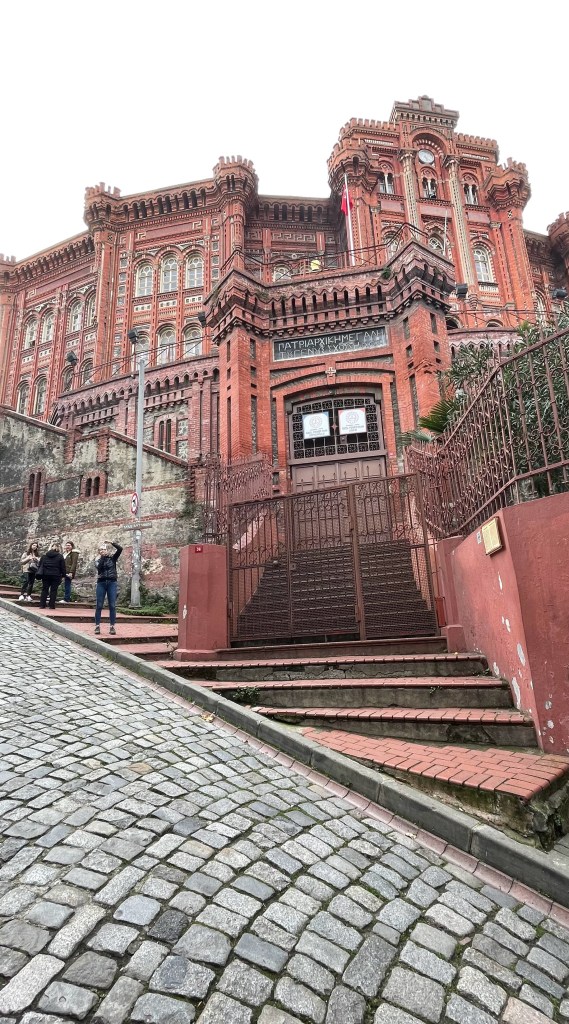
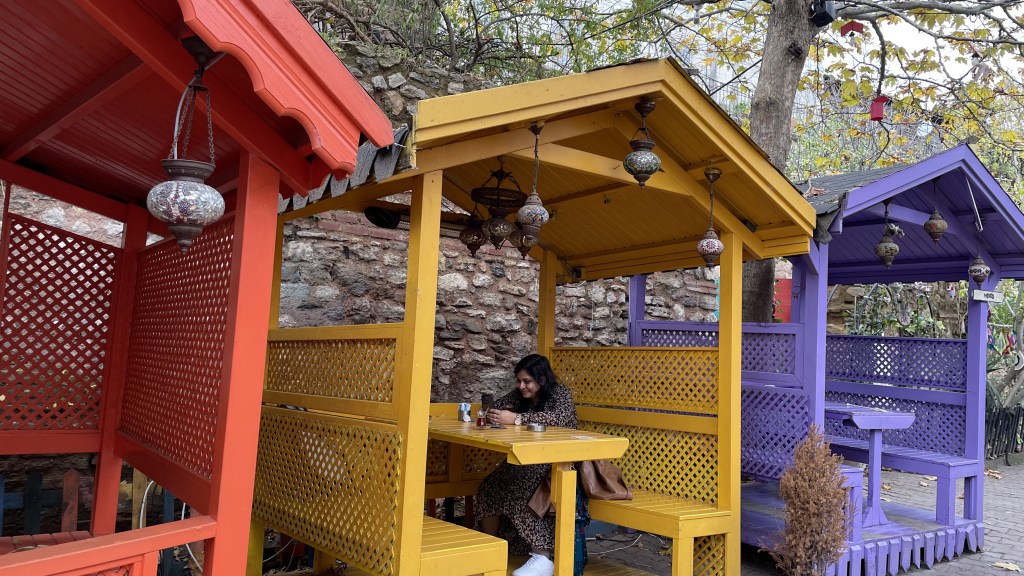
Off the beaten track, away from the hustle-bustle and unperturbed by the tourist trade of Sultanahmet and Grand Bazaar, Balat is a small sleepy neighborhood of Istanbul. Once a home of Jewish, Greek orthodox and other minorities, this area is popular for vibrant colors. As you walk along the steep cobbled streets, you will find synagogues, churches, and many magnificent architectures. Notable among them is brick red colored Phanar Greek Orthodox College. However, if there is one picture that defines Balat, it is the colorful wooden houses. As you wander aimlessly through the sloping streets of Balat, you will see the vibrant colors coming to life. The abandoned buildings metamorphose into beautiful eateries selling Turkish delicacies. A peek into diverse cultural tapestry of Istanbul, Balat is a kaleidoscope of colors.



Sphendon wall
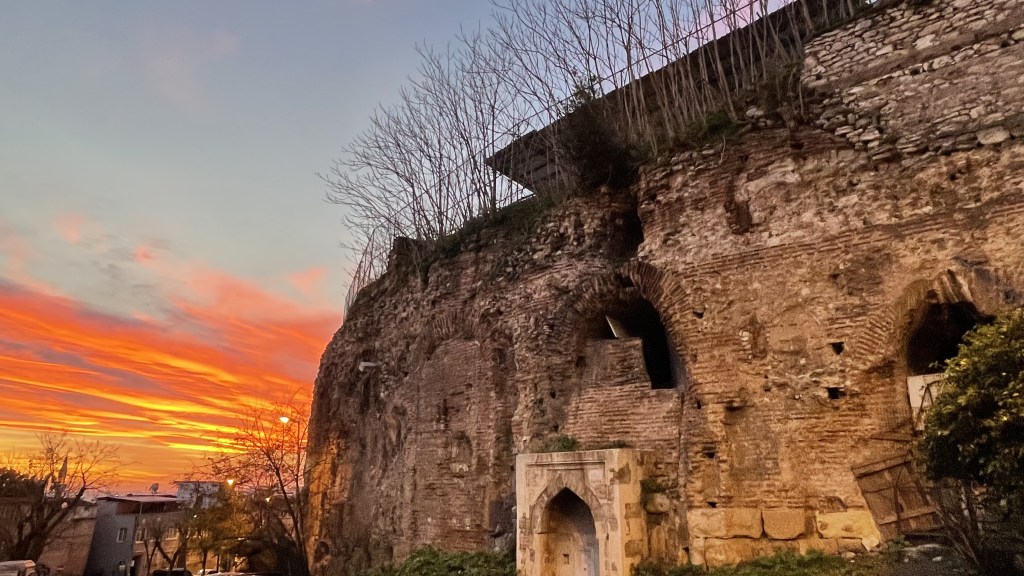
While returning back to our hotel, we stumbled upon a portion of semi-circular, antediluvian wall. We have been crossing this for 3 days but didn’t pay attention. When I read the plaque, I learnt that it was called Sphendon Wall. Hippodrome was built as a venue of chariot racing and other shows. It was supposed to have a flat surface. But its south-western end had a sloping terrain that led to the sea of Marmara. So, a large “retaining wall” kind of structure was built to raise the level which consisted of 25 vaulted chambers. It is not open to the public due to safety concern, but a façade of this semi-circular wall is still visible.
Oh, and one last thing –
 Abhijeet Kumar Sinha
Lovely post. Detailed description. Very helpful tips for future travelers like me Thankyou 🙏
LikeLike