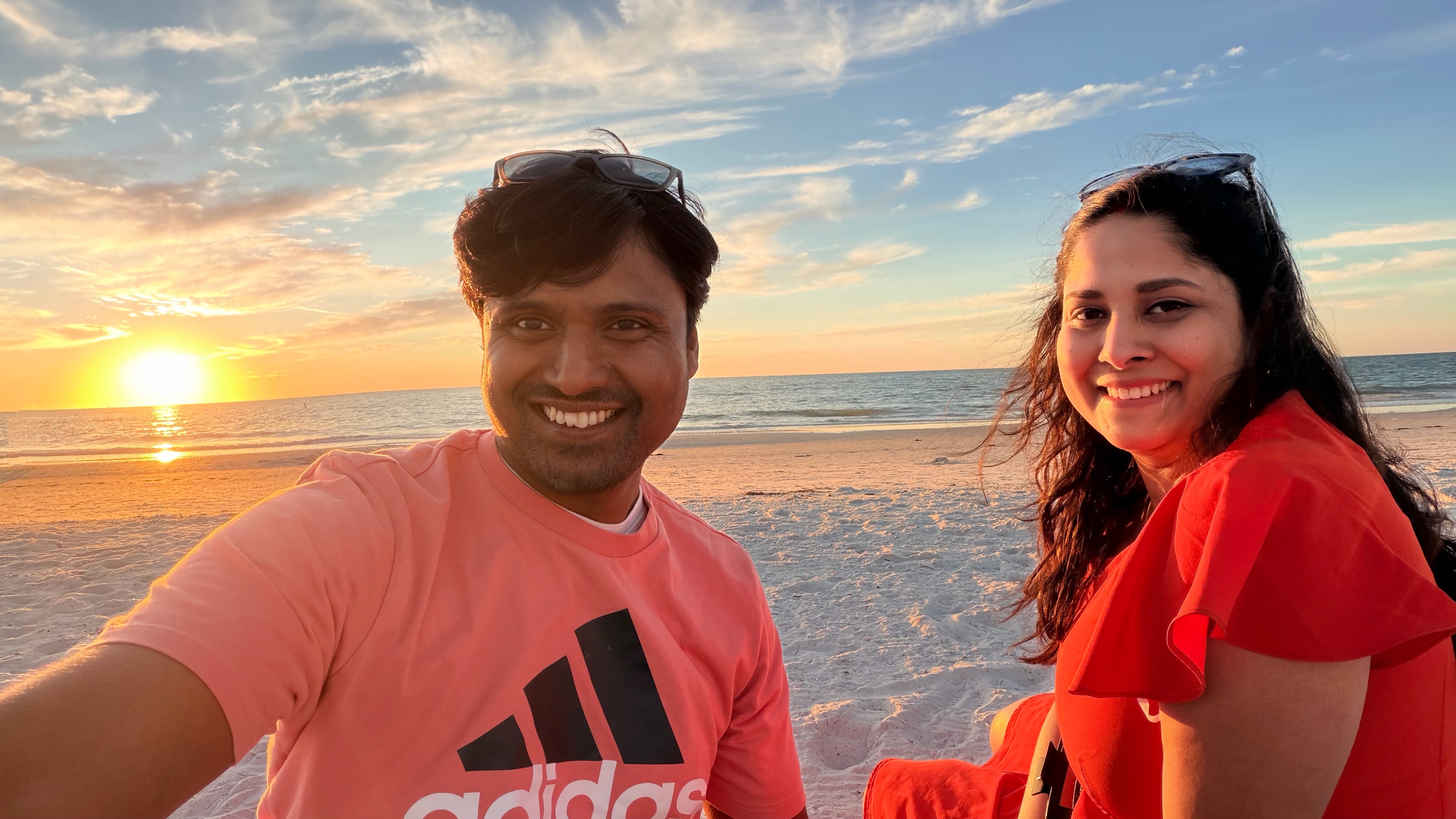
Our Florida trip was lightly planned, chaotic at times and full of trust that things would somehow work out. We had just spent a comfortable week visiting Suman Di in Dallas. From there, we flew straight to Florida for a week-long break. Beyond flight tickets and a few major hotel bookings, nothing was locked in. Each day’s plan was made the night before, often with the quiet glow of a laptop and the enthusiastic help of ChatGPT. We wanted a relaxing vacation. Whether it stayed relaxing or turned into something more energetic is debatable—but it was unquestionably fun and deeply rejuvenating.
Day 1, Dec 15th, Universal Resort, Orlando
Day 1 at Universal Resort in Orlando was the result of three key decisions, each one nudging our trip in a direction that felt more us.
Decision 1: Two days at Universal or one day at Universal and another at Kennedy Space Center?
The big question that loomed in front of us: Universal Resort or Kennedy Space Center? Kennedy Space Center, about an hour and a half east of Orlando, represents humanity’s bold leap beyond Earth—a place where Florida’s flat marshland once thundered with Saturn V launches, and now Artemis.
Everyone we spoke to said, “One day is not enough for Universal.” Shalini and I both felt torn, and interestingly, neither of us wanted to push our preference on the other. So we did something simple and honest—we wrote our choices on separate chits and revealed them together. The result made us laugh and smile at the same time. We both wanted the same thing: one day at Universal, one day at Kennedy Space Center. That moment set the tone for the trip—shared decisions, zero pressure, and excitement ahead.
Decision 2: Which Universal theme park(s) were right for us?
With four parks to choose from—Universal Studios Florida, Islands of Adventure, Volcano Bay, and the newly opened Epic Universe—we had another dilemma.
Launched in May 2025, Epic Universe heme park tempted us with its promise of cutting-edge technology, but mixed reviews and limited attractions made us pause. Volcano Bay is useless and out of question. That left the classic question: Universal Studios or Islands of Adventure? This is where ChatGPT played the role of a calm, well-informed friend. It suggested something we hadn’t seriously considered—a Park-to-Park ticket. This would allow us to visit both Universal Studios Florida and Islands of Adventure in one day and, more importantly, ride the Hogwarts Express. That train isn’t just transport; it’s a narrative bridge between two worlds—Diagon Alley (Universal Studios Florida) and Hogsmeade (Islands of Adventure)—stitched together with storytelling, architecture, and emotion.
At 10 PM the night before, we booked the tickets for the very next day. Spontaneous, yes. Regretful? Not at all.
Decision 3: How to spend one perfect day without overwhelming ourselves?
The final decision was the most personal. How do you experience two massive theme parks in one day without turning it into a stress marathon? I’m scared of roller coasters. Shalini, very patiently, accommodates that reality. So the instruction to ChatGPT was clear: optimize for motion-simulated rides, immersive experiences, and shows. The recommendation felt surprisingly balanced. We followed that plan almost entirely, tweaking it slightly as the day unfolded. We had rub of the green. As we entered the park, there was an offer to apply for Universal Credit Card and if approved, we would get 2 Universal Express passes. Express Passes played a critical role in ensuring that we stuck to the plan ChatGPT recommended.
Below is the schedule of how and what we covered everything at Islands of Adventure and Universal Studio Florida in a day with Park-to-Park ticket –
| Time | Activity |
| Morning | |
| 9:00 AM | Entered the park |
| 9:00 – 10:00 AM | Harry Potter and the Forbidden Journey |
| 10:00 – 10:30 AM | Flight of the Hippogriff |
| 10:30 – 11:00 AM | Skull Island: Reign of Kong |
| 11:00 – 11:30 AM | The Amazing Adventures of Spider-Man |
| 11:45 AM – 12:15 PM | Hogwarts Express → Universal Studios |
| Afternoon | |
| 12:15 – 1:15 PM | Lunch at Leaky Cauldron |
| 1:15 – 2:00 PM | Harry Potter and the Escape from Gringotts |
| 2:00 – 3:30 PM | Roamed around Kidszone (Seuss Landing, Trollercoaster) |
| – | ET Adventure |
| – | Men in Black |
| 3:30 – 4:00 PM | Show: Animal Actors |
| 4:30 – 5:00 PM | Show: The Bourne Stuntacular |
| 5:15 – 5:45 PM | Despicable Me Minion Mayhem |
| Evening | |
| 6:00 – 6:30 PM | Hogwarts Express BACK to Islands of Adventure |
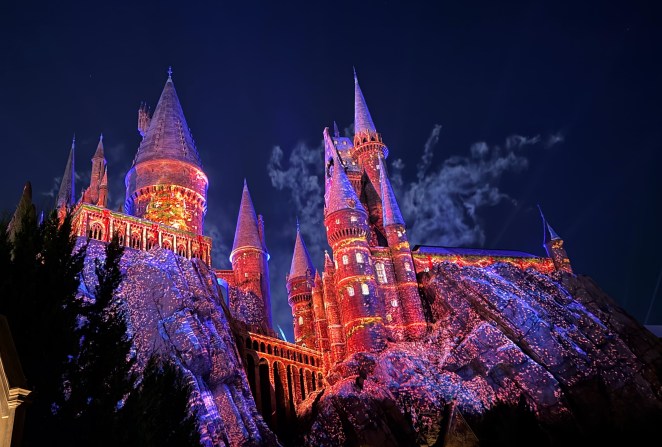
| 7:00 – 7:15 PM | Light show on Hogwarts Castle |
| 8:00 PM | Bye bye Universal |
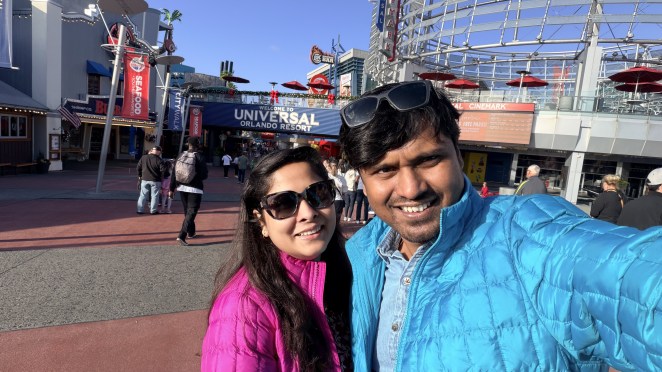
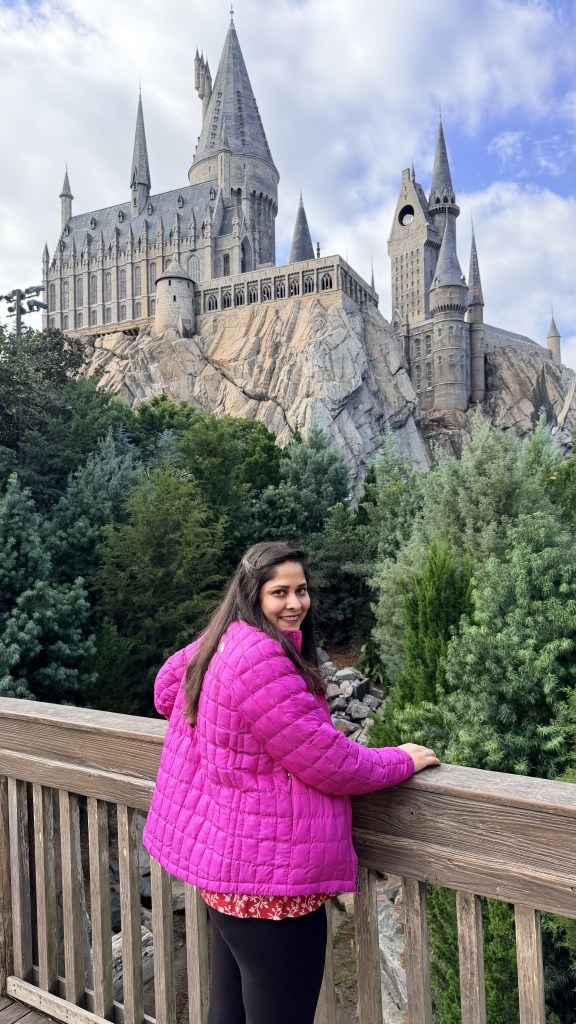
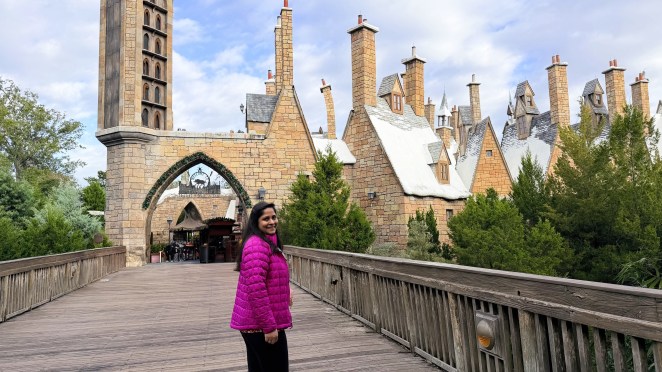
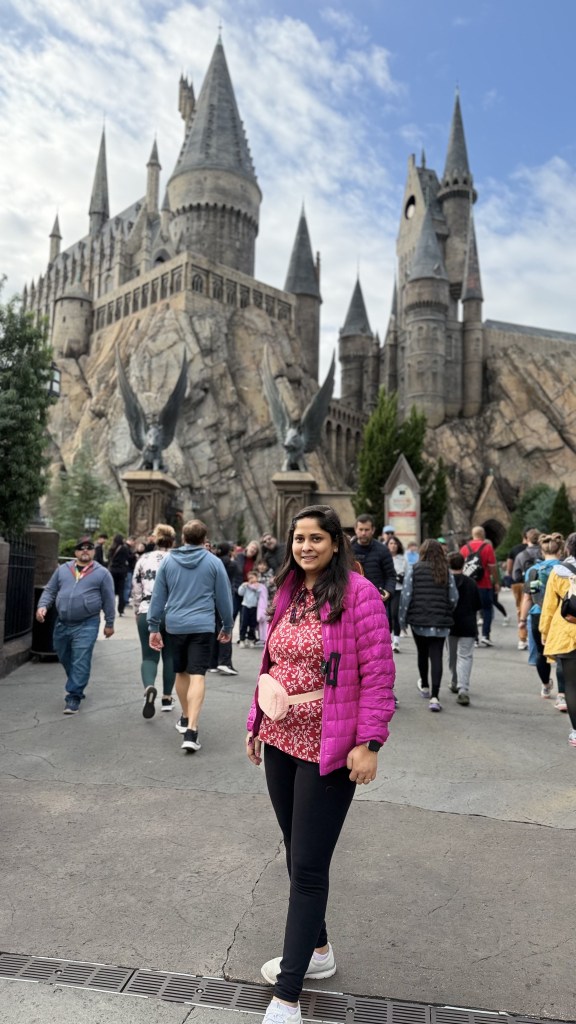
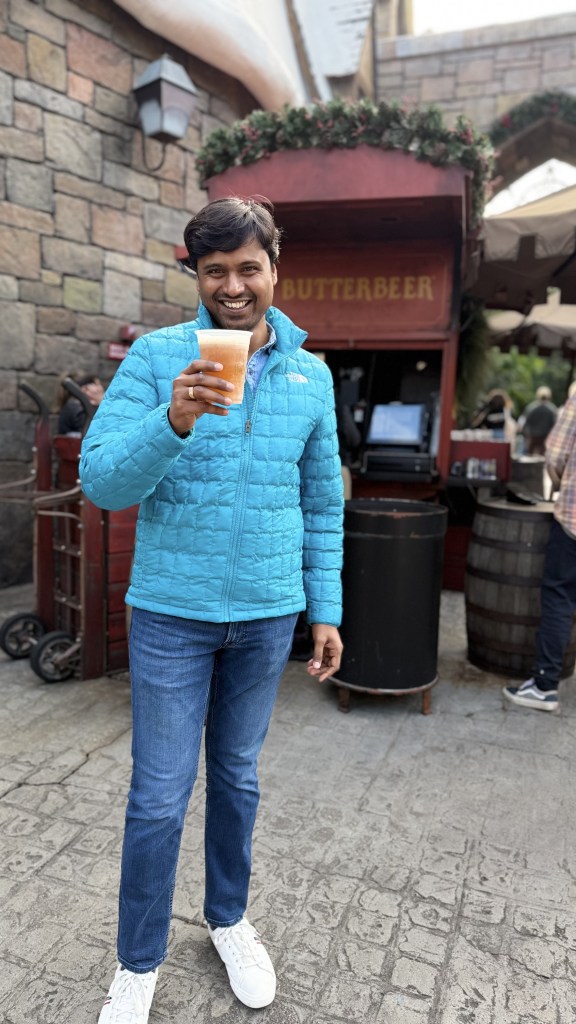
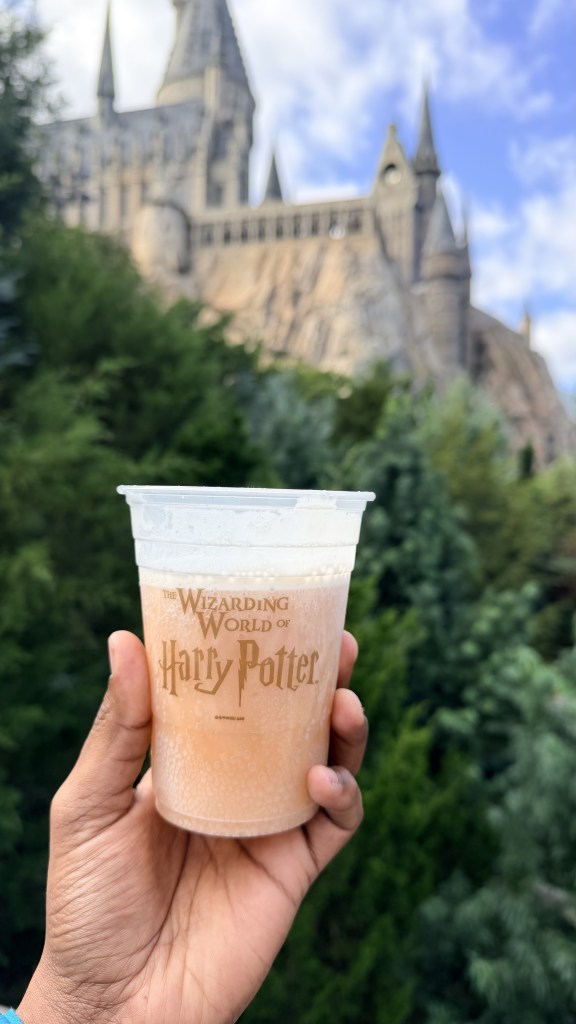
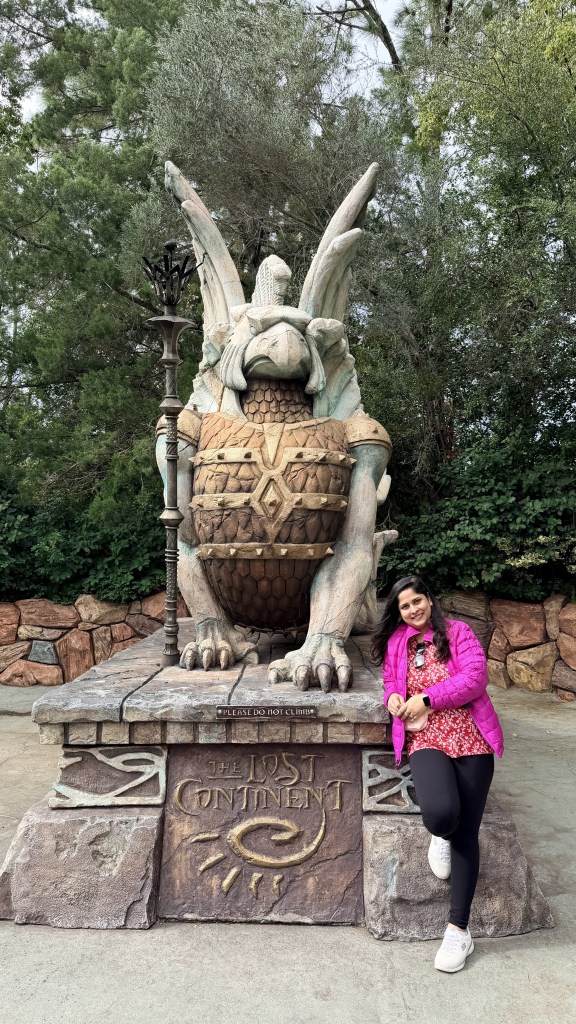
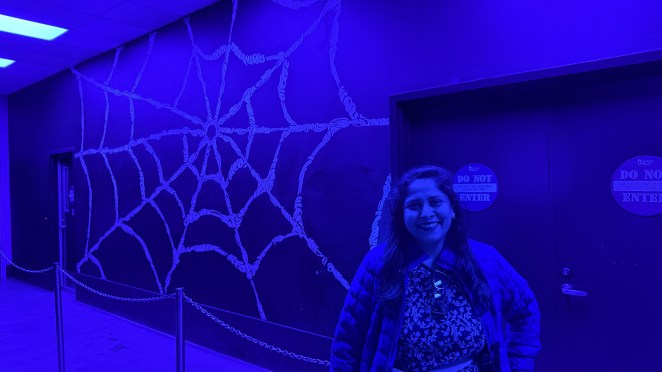
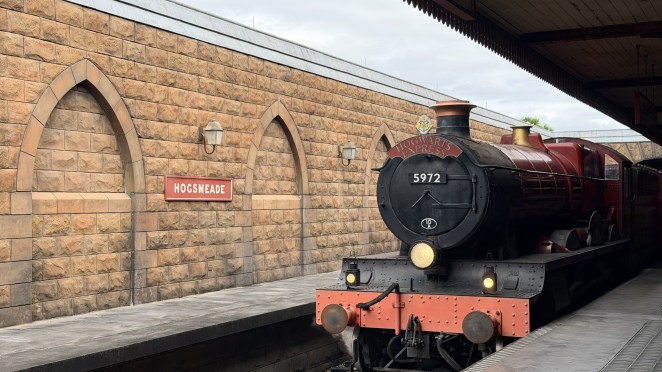
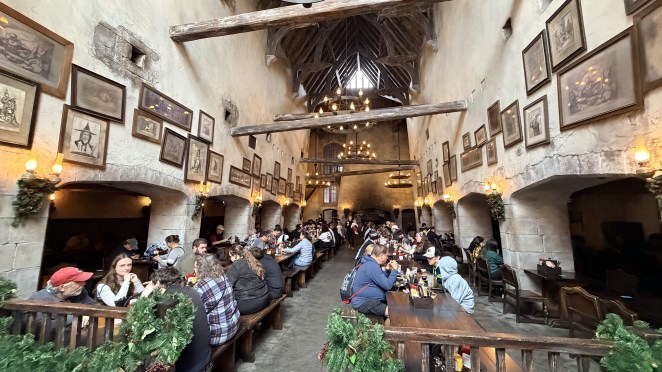
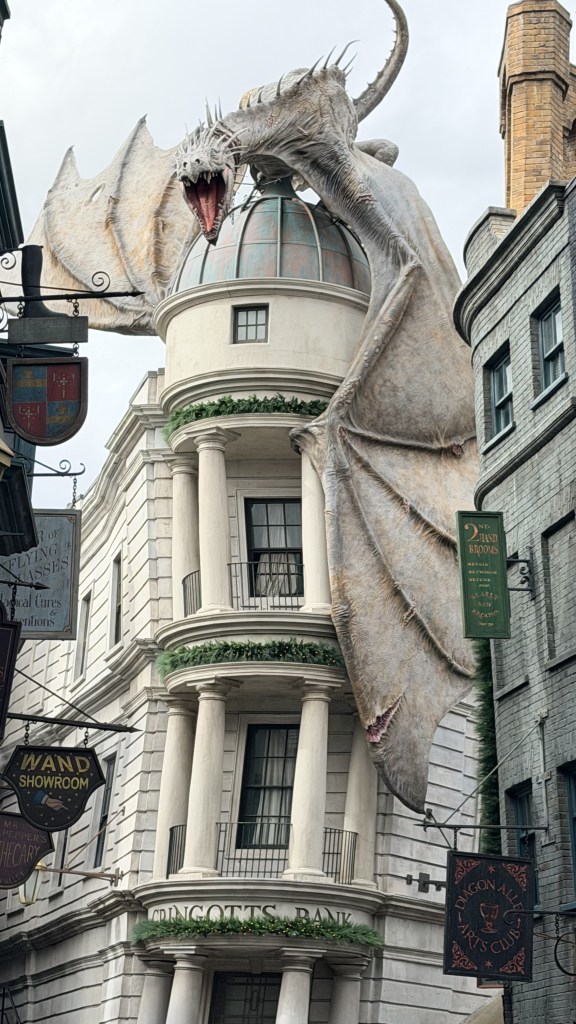
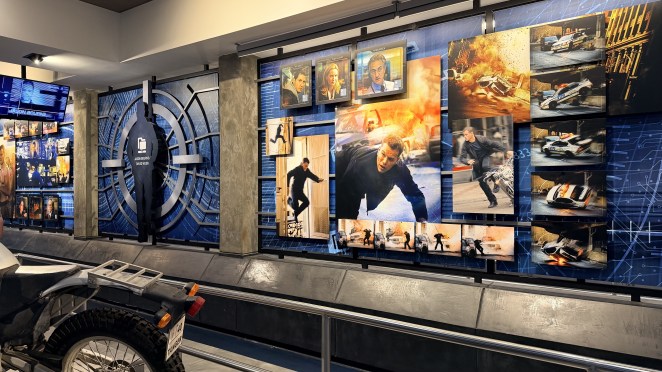
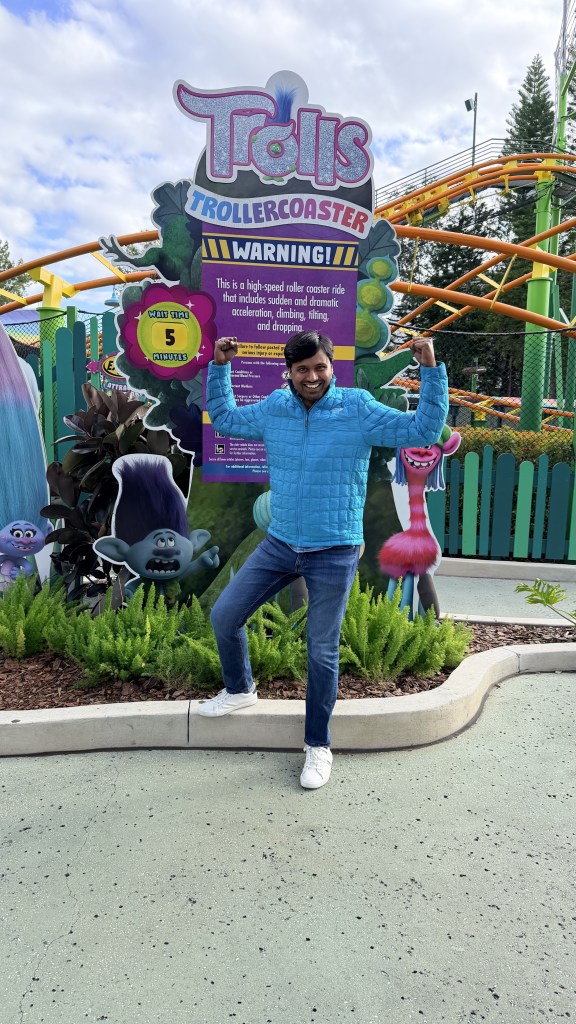
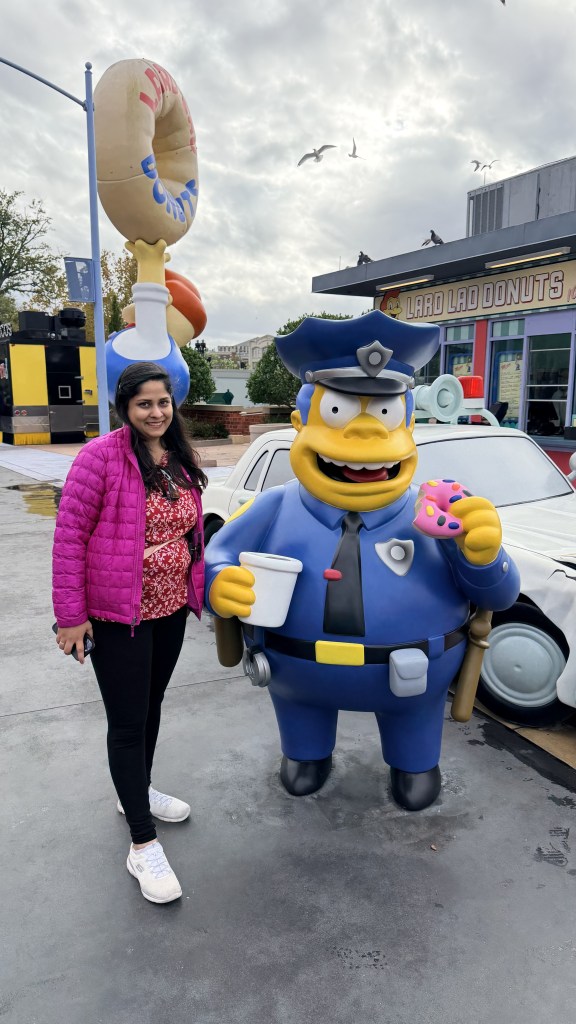
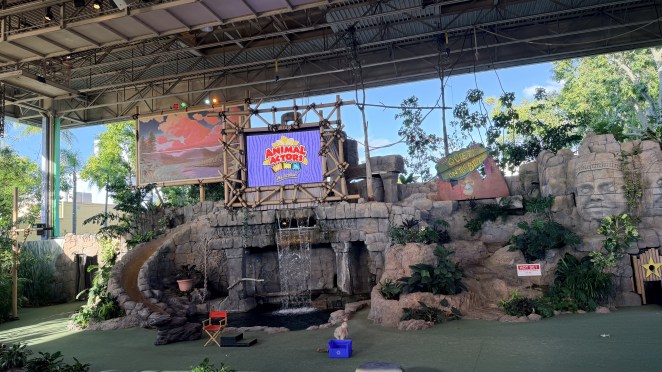
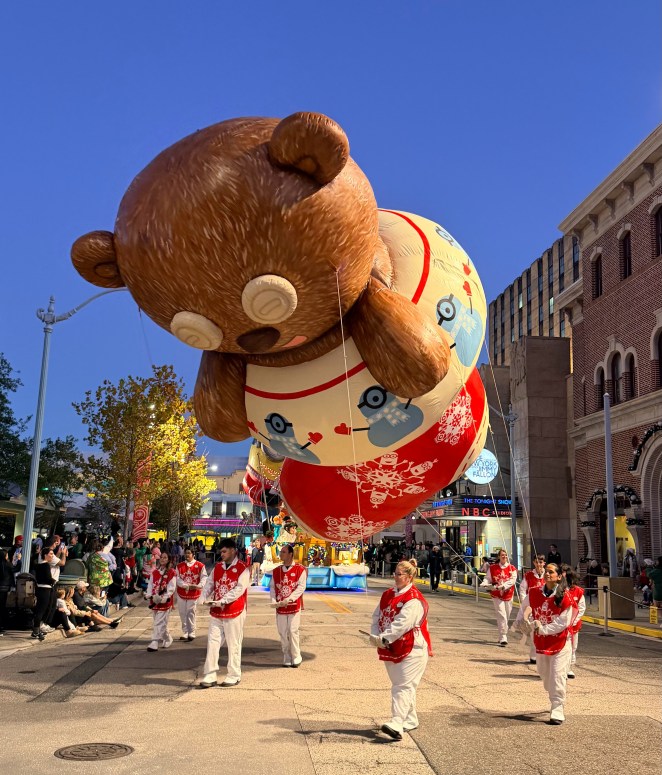
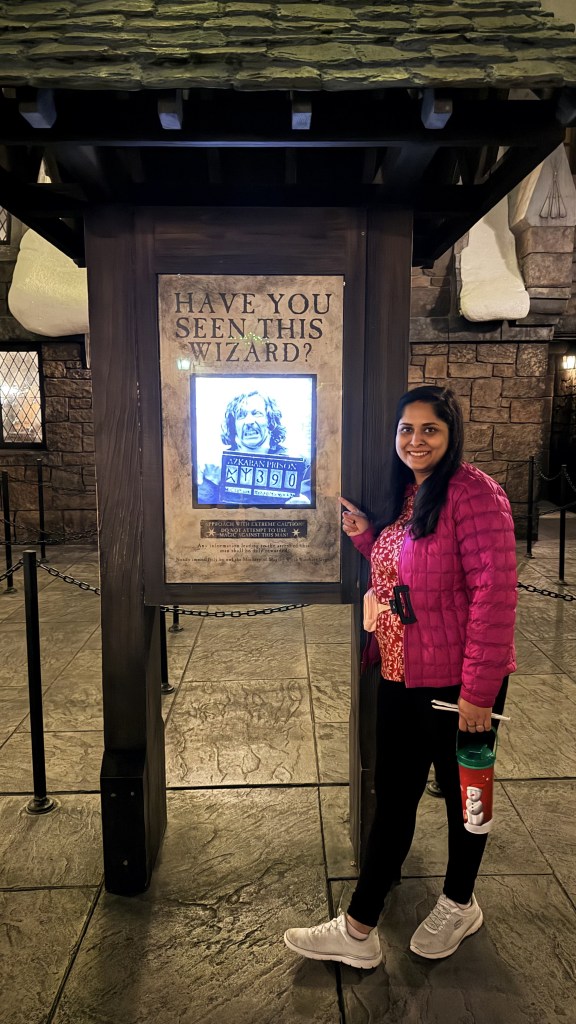
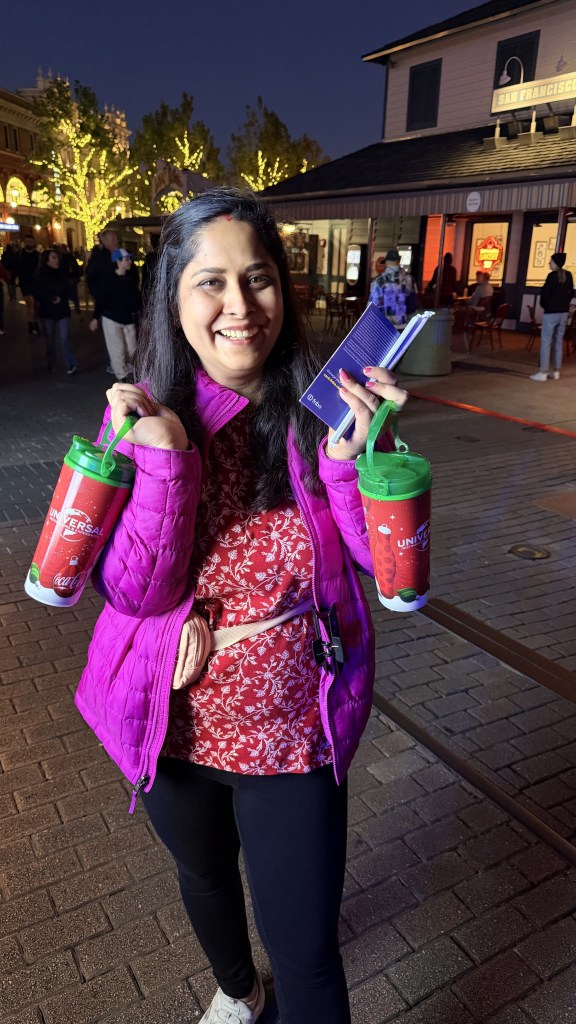
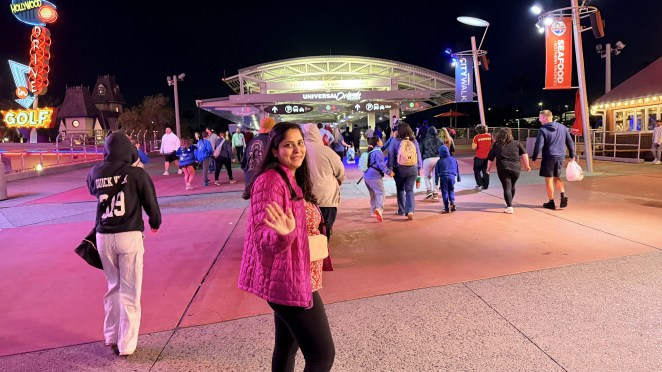
Sometimes the joy comes with no height requirements 😉 Skipping some adrenaline but keeping the magic. No regrets.
Day 2, Dec 16th – Kennedy Space Center
Day 2 began with an early checkout from Orlando at 9 AM, the Florida sun already warm and bright, hinting at another memorable day ahead. The drive east felt purposeful—this was not just another attraction, but a journey toward a place where human ambition had repeatedly challenged gravity itself. By 10:45 AM, we arrived at Kennedy Space Center, a location that feels less like a museum and more like a living archive of humanity’s boldest dreams.
A high-level overview of US space journey
America’s journey into space unfolds in clear, purposeful chapters, all of which come together at Kennedy Space Center.
- Foundations: Mercury and Gemini (1958–1966) — America’s first human spaceflight programs focused on survival and skill-building, proving that astronauts could launch safely, live and work in microgravity, maneuver in orbit, and return to Earth, establishing the technical and human groundwork for everything that followed.
- Exploration: Apollo (1961–1972) — Driven by the goal of reaching the Moon, Apollo used the immense Saturn V rocket to push human spaceflight beyond Earth orbit for the first time, demonstrating that humans could travel to another world, land there, and return safely—one of the most ambitious engineering achievements in history.
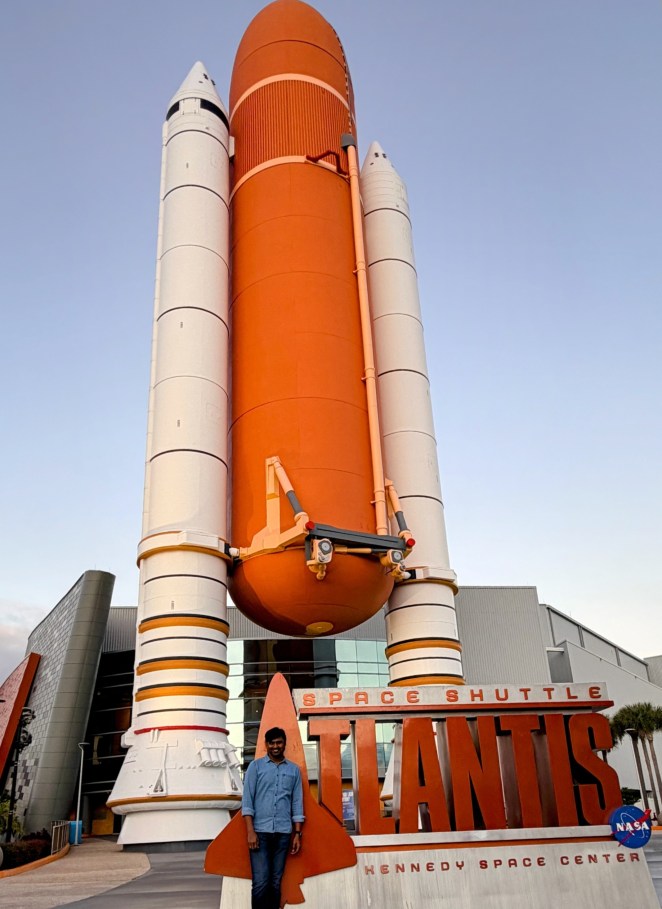
- Operations: Space Shuttle / Atlantis Era (1981–2011) — With orbiters like Atlantis, NASA shifted from one-off exploration to repeatable missions in low Earth orbit, introducing partial reusability and enabling long-term work in space through satellite deployment, Hubble servicing, and the construction of the International Space Station.
- Return to Deep Space: Artemis (Present–Future) — Artemis represents a modern evolution of Apollo’s spirit, combining new spacecraft, international partnerships, and sustainable goals to establish a lasting human presence on the Moon and use it as a stepping stone for future missions to Mars.
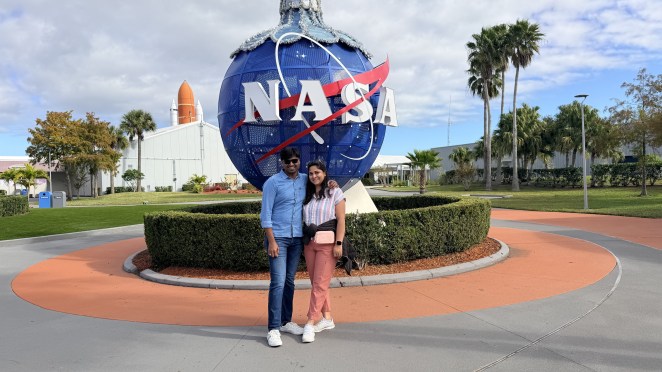
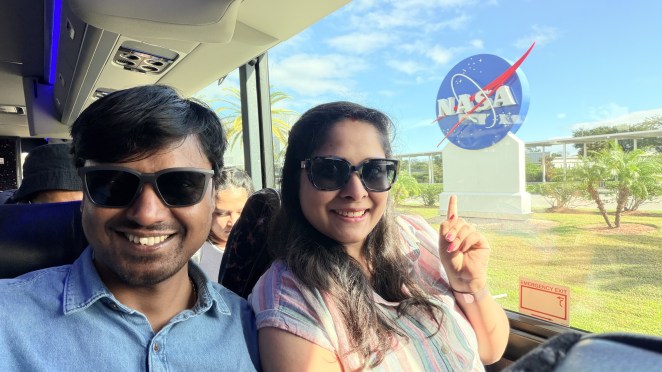
Just inside the entrance stands the iconic NASA globe, bold blue and red against the Florida sky. Like countless visitors before me, I paused for the customary photograph. As we stepped further in, we were welcomed by the Rocket Garden, an open-air display of real rockets from America’s early space programs. These towering structures rise from the ground like metallic monuments, each representing a stepping stone in NASA’s evolution. Mercury-Redstone, Atlas, Titan—rockets that once pushed the limits of technology now stand silently against the Florida sky.
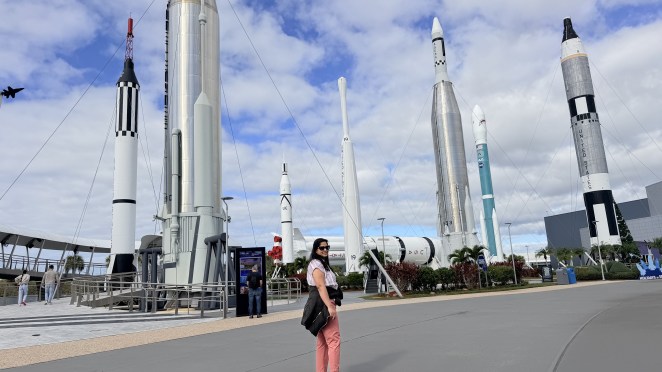
At 11 AM, we headed straight for the Kennedy Space Center Bus Tour, a guided hop-on hop-off experience that takes visitors deep into NASA’s restricted areas. The bus itself becomes a moving classroom, with a knowledgeable guide narrating stories of launches, failures, triumphs, and reinvention. The tour has two major stops—Launch Complex 39 (LC-39) and the Apollo/Saturn V Center.
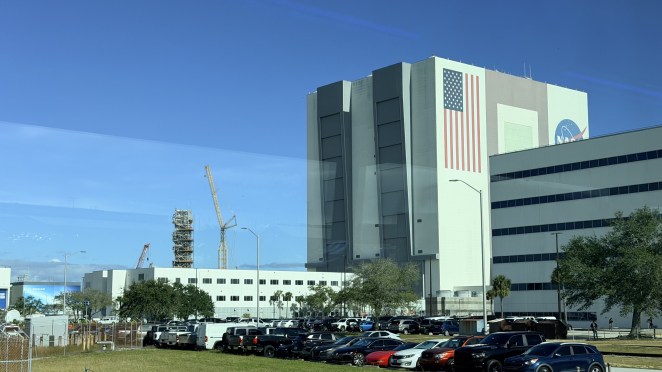
Vehicle assembly building (VAB)
One of the first jaw-dropping sights along the route is the Vehicle Assembly Building (VAB). This colossal structure dominates the landscape. When completed in the 1960s, it was one of the largest buildings in the world by volume, designed specifically to assemble rockets vertically. The American flag painted on its side is itself enormous—each star is six feet across. Inside, entire rockets like Saturn V and now Artemis are stacked layer by layer.
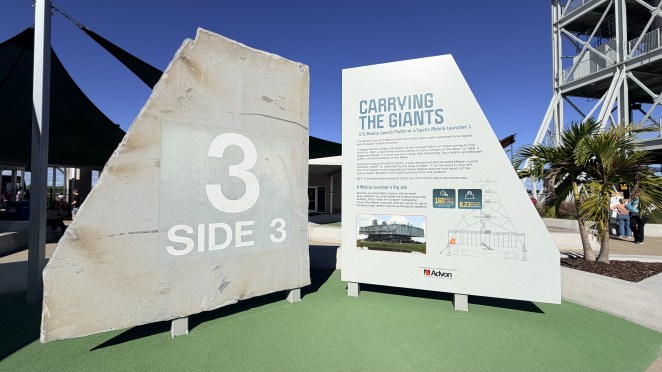
Launch Complex 39
One of the most powerful artifacts here is a piece of concrete—unassuming at first glance, yet deeply meaningful. It once belonged to Mobile Launch Platform 3 (MLP-3). Rockets were assembled, tested, and serviced atop mobile launchers inside the VAB, and once ready, massive crawler transporters carried them slowly to the launch pad. MLP-3 supported three Apollo missions and 29 Space Shuttle missions. In 1969, it launched Apollo 11, carrying Neil Armstrong, Buzz Aldrin, and Michael Collins on humanity’s first journey to the Moon. Decades later, the same platform supported the first mission to the International Space Station and the final launch of Space Shuttle Atlantis in 2011. Just imagine, this concrete had witnessed both the beginning and the end of an era.
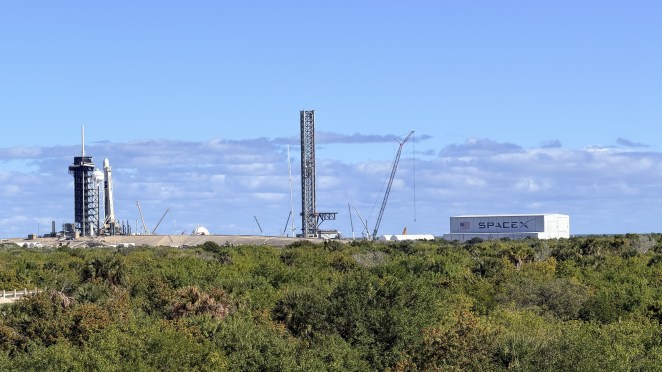
From LC-39, we could also see a Falcon rocket standing tall, prepared for a launch the next morning at 7 AM. Unfortunately, it was outside visiting hours, but just knowing that active launches still happen here made the place feel alive, not frozen in the past.
Apollo / Saturn V Center: Standing Beneath a Giant
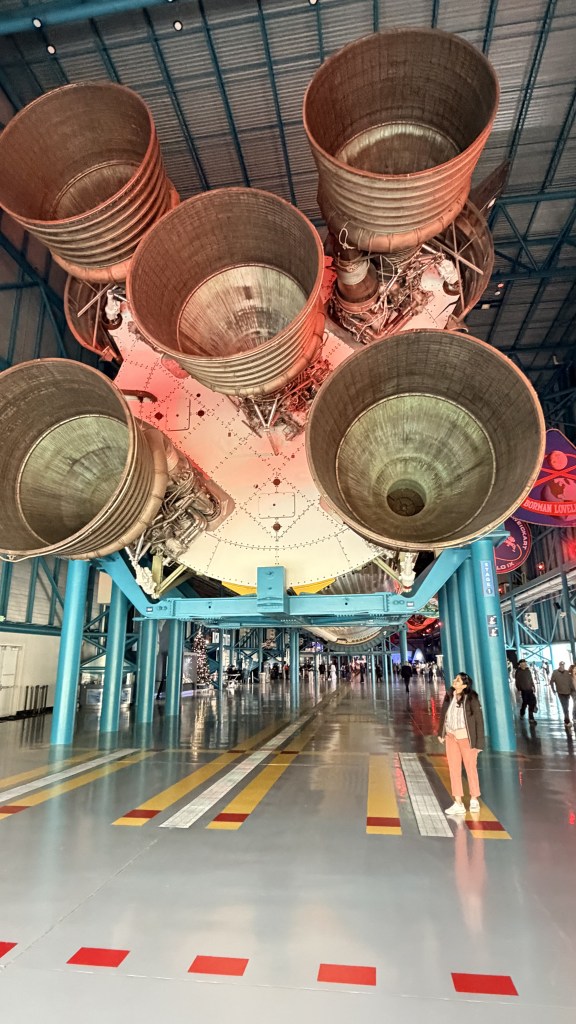
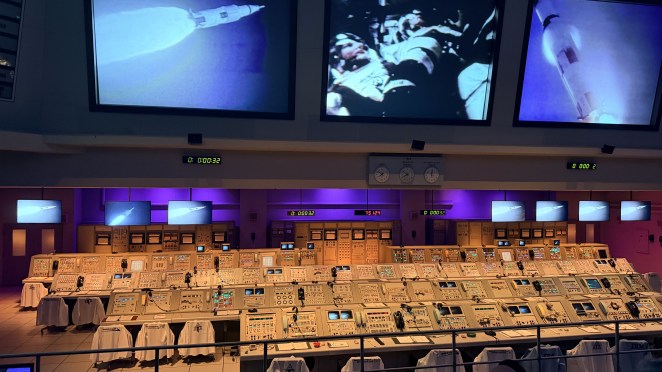
Apollo/Saturn V Center, a building designed to feel like a pilgrimage site. Inside, the launch experience recreates the tension and emotion of an Apollo countdown. Dim lights, rising sound, vibrating floors—it pulls you back to a time when the entire world held its breath during liftoff. Then comes the main hall, dominated by the Saturn V rocket, stretched horizontally in all its staggering glory. At over 363 feet long, it is still the most powerful rocket ever flown. Seeing it up close is overwhelming. You don’t just look at it—you walk along it, under it, beside it.
I found myself wondering: this was a non-reusable era. Rockets fell into the Atlantic Ocean. So how was I standing in front of a Saturn V? I later asked ChatGPT and learned that NASA had built multiple Saturn V rockets. While those that launched were destroyed, others were fully assembled, launch-ready, and never flown. The rocket displayed here is one of those—a real, functional Saturn V that simply never got its turn to fly.
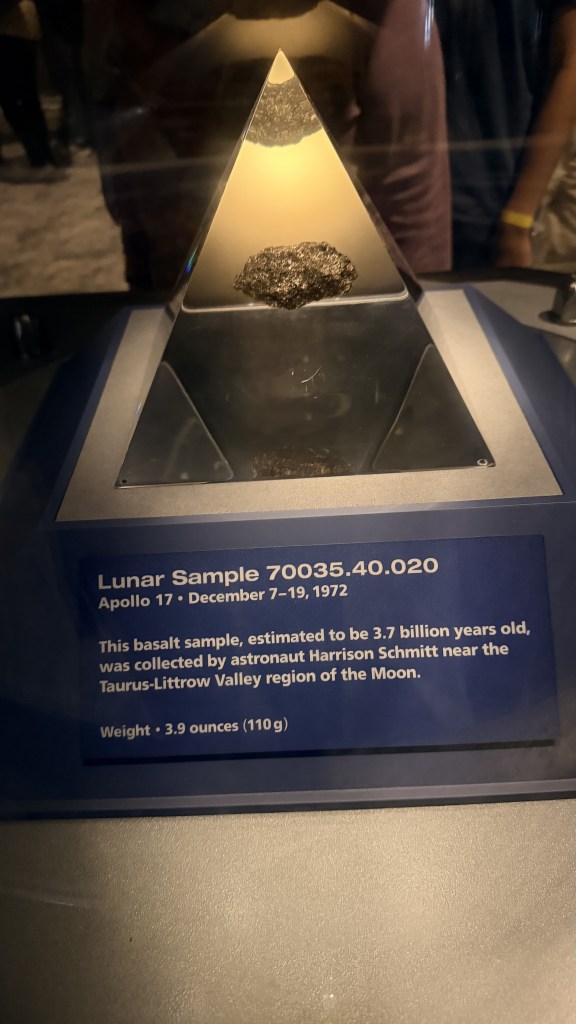
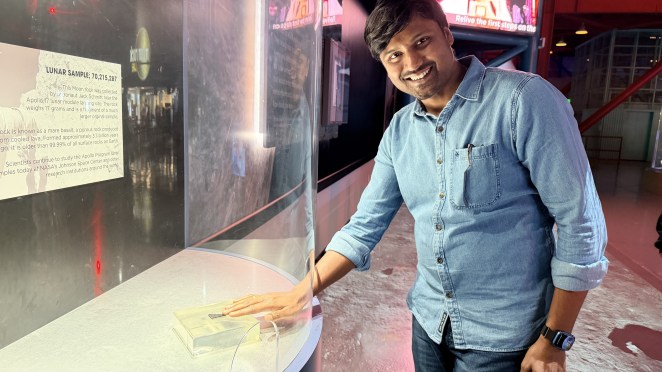
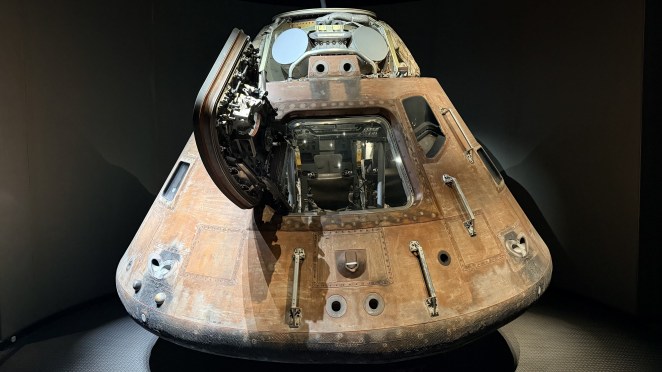
The center has a lunar sample tha you can touch with your bare hand. It also has Apollo artifacts—space suits, command modules, tools—all of them real. Just knowing these objects had been to space was exhilarating.
Atlantis: A theatrical masterpiece
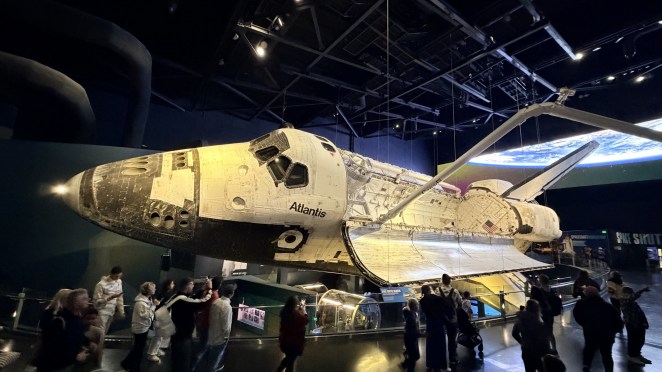
The final stop was the Atlantis Center, and its introduction deserves special mention. Visitors first enter an empty hall facing a massive screen. A short film explains the second era of space exploration—the Space Shuttle program. As the narration ends, a calm voice announces, “Ladies and gentlemen, welcome to Atlantis.” Suddenly, the screen turns transparent. Behind it, the Space Shuttle Atlantis appears—massive, silent, suspended in mid-air. The doors slowly lift, and we walk into the hall. It is pure theater, executed flawlessly. NASA didn’t just master science and engineering—they mastered storytelling. The moment was breathtaking, emotional, unforgettable.
Inside, Atlantis is displayed at a 43.21-degree angle, exactly as it would appear in orbit. The black-and-white heat tiles, the open payload bay, the extended Canadarm—it feels alive. There is also a motion simulation module which gives you near-real feel how crew members feel when the shuttle takes off.
As I left Kennedy Space Center, I didn’t just feel informed—I felt humbled. This was not just a day of sightseeing. It was a journey through generations of courage, engineering, and imagination, set against the serene beauty of Florida’s skies and wetlands. Few places in the world can make you feel both small and inspired at the same time. Kennedy Space Center does exactly that.
Day 3, Dec 17th – Miami
We had stayed the night at Cape Canaveral. It is a small calm town where lots of cruise ships dock.
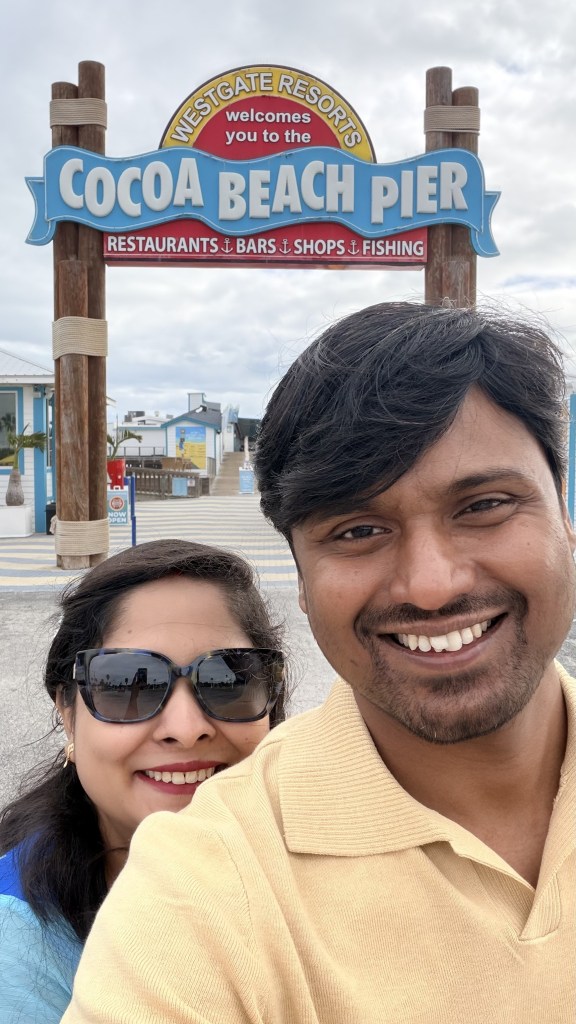
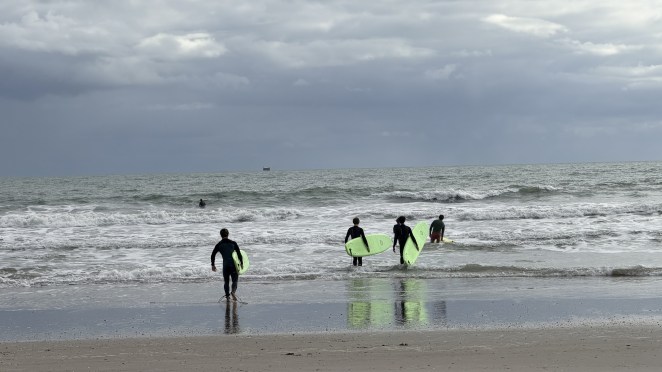
Our first stop of the day was Cocoa Beach. Known for its laid-back surf culture and long sandy shoreline, Cocoa Beach has a relaxed charm that makes you want to linger. We spent some time walking along the shore and watching early surfers catch waves. It was the perfect gentle start to the day.
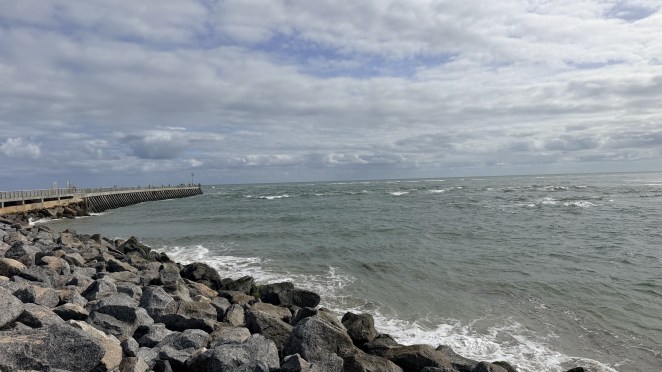
From there, we drove south and made a stop at Sebastian Inlet. There were dozens of anglers lined up along the jetty, patiently waiting for their catch. The inlet, where the Indian River Lagoon meets the Atlantic Ocean, has beautiful turquoise water and a peaceful coastal vibe.
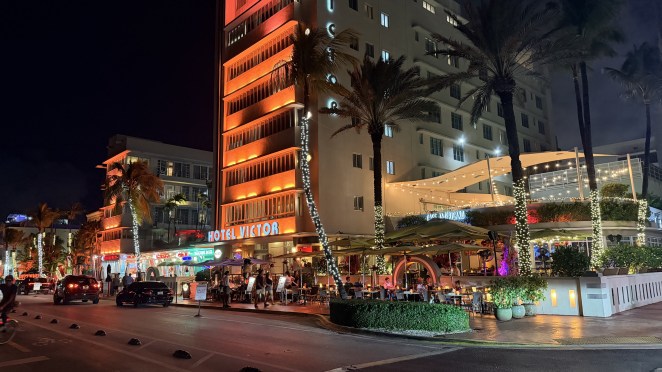
By afternoon, we headed straight toward Miami, making our way to the iconic South Beach. I found it different from my expectation. First, South Beach is east-facing. That means you don’t get to see the sunset over the ocean, which was disappointing. It was a big miss on my part; I should have done the research. Second, while there are plenty of great bars, clubs, and restaurants, they’re mostly along Ocean Drive and nearby streets — not directly on the sand. So, the beach itself feels more open and separate from the party scene than I had imagined.
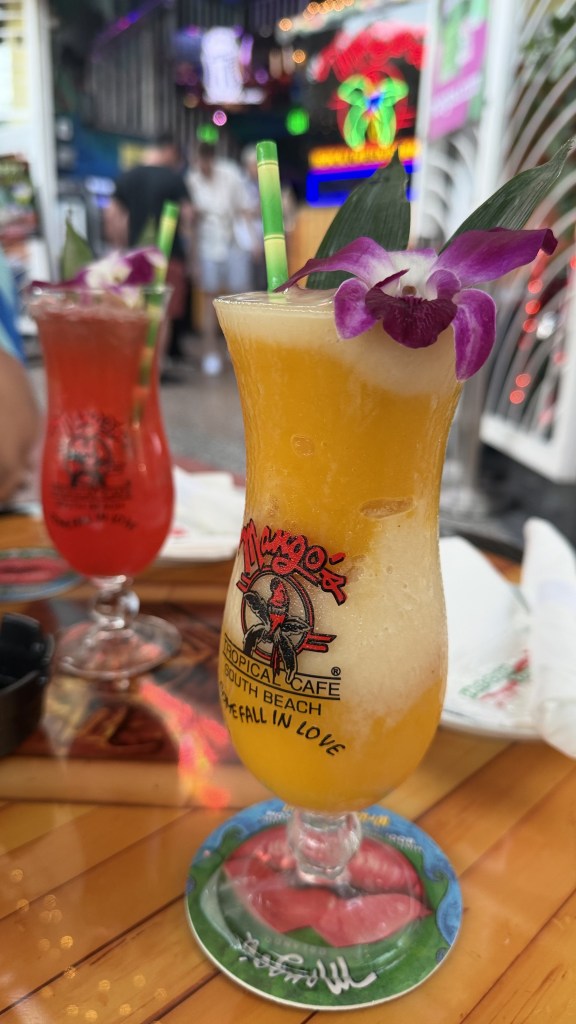
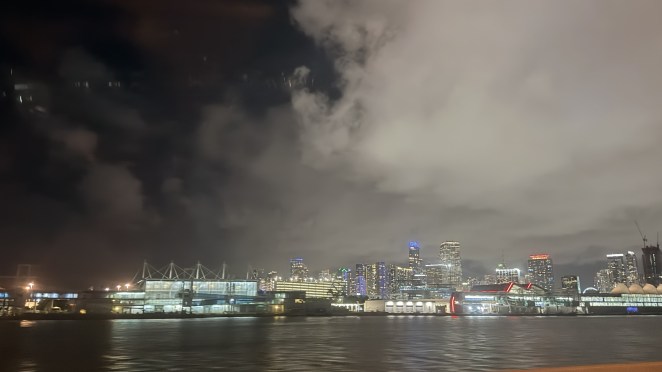
After spending some time on beach, we headed to Mango’s Tropical Cafe — one of the most famous spots on Ocean Drive. We ordered drinks and a few snacks, soaking in the lively atmosphere. Later, we drove around the city and caught a beautiful glimpse of Miami’s skyline from Watson Island.
By around 9:30 PM, we checked into our hotel and decided to call it a night. While driving from Cape Canaveral to Miami, we took the road closest to the ocean. On map, it looked like we would be seeing the ocean on one side as we drive, but that was not the case. You see houses and/or trees on either side. For me, Day 3 was a bit dud. Probably I didn’t spend enough time here, but Miami failed to live up to my expectations.
Day 4, Dec 18th – Key West
We checked out of our Miami hotel around 10:30 AM and set off toward one of the most scenic drives in the United States — the Florida Keys.
About Keys
Here’s an interesting fact: have you ever wondered why these islands are called “Keys”? The word “key” comes from the Spanish word cayo, meaning a small island or islet. The Florida Keys are a chain of more than 800 coral and limestone islands stretching southwest from mainland Florida. That’s why places here have names like Key Largo, Key West and so on. In fact, Key West was originally known as Cayo Hueso or “Bone Key” during the Spanish era.
Glass-bottomed Boat Tour ay Key Largo
One experience I had been looking forward to was seeing coral reefs through a glass-bottom boat. I had deliberately avoided making advance reservations, preferring to play things by ear. Most reviews pointed toward the Key Largo Princess Glass Bottom Boat Tour, so I plugged it into Google Maps and headed there. Except… Google Maps repeatedly took me to the Holiday Inn in Key Largo. Confused, I searched around the area, convinced I had the wrong location. Eventually, I walked into the hotel reception, only to discover that the tour company’s office operated out of a small souvenir shop right next door. Luckily, there were still seats available, and we managed to get tickets for the 1:00 PM departure.
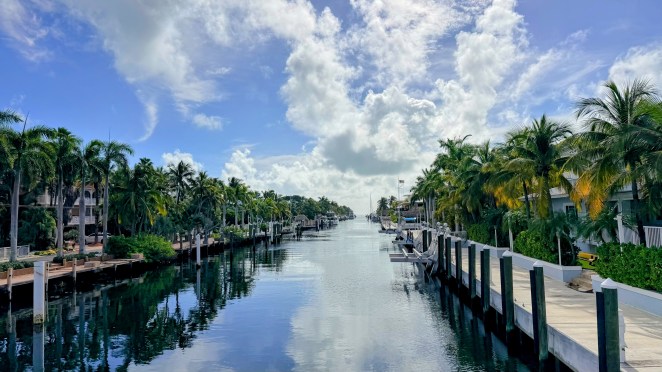
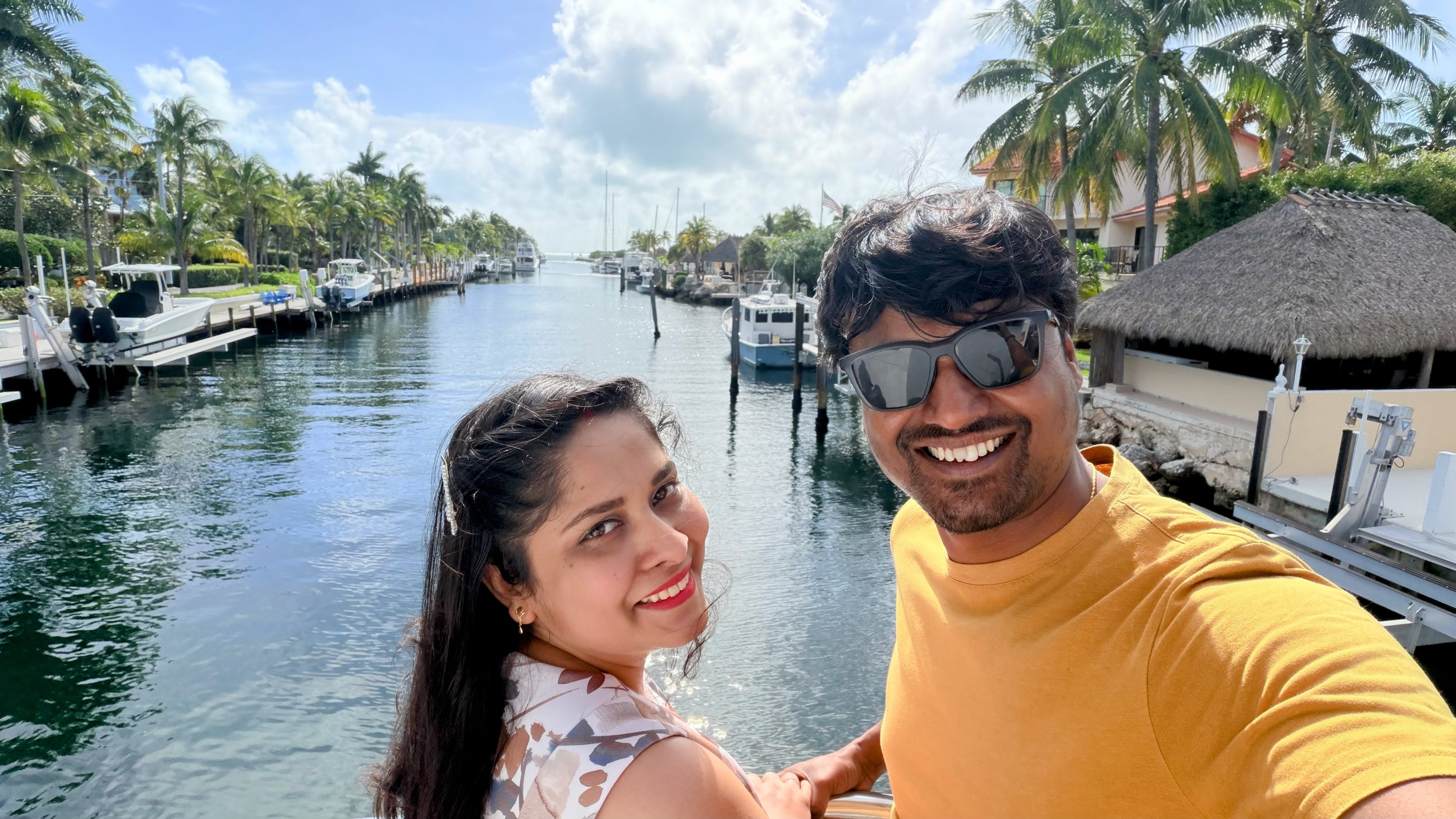
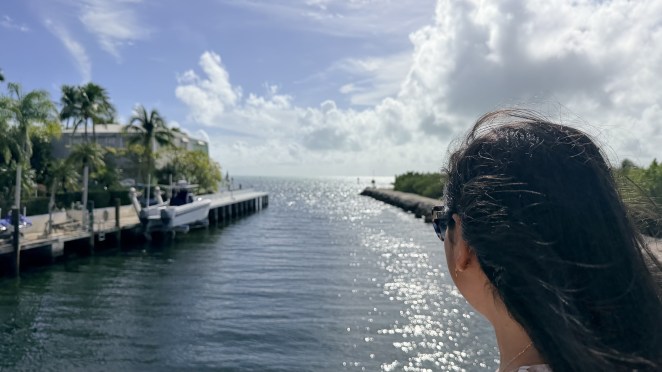
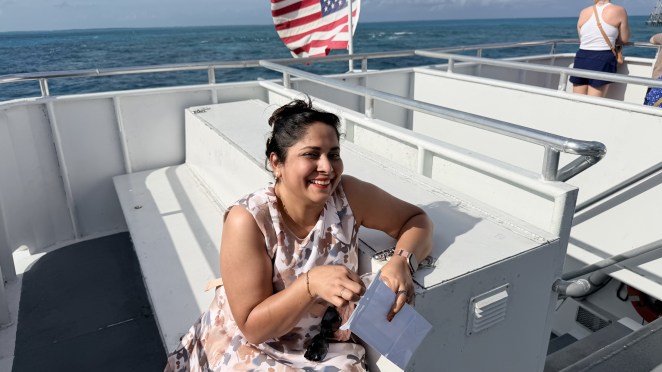
The Key Largo Princess was a spacious two-level boat docked behind the hotel. The waterways around Key Largo are fascinating. Canals and backwaters weave through the community, giving the area a distinctly tropical island feel. Our boat slowly navigated these protected waters before emerging into the open Atlantic Ocean just minutes later.
About 40 minutes into the journey, we reached the reef area near the Florida Keys National Marine Sanctuary. This is where the ride became noticeably rough. Coral reefs around Key Largo sit several miles offshore in exposed Atlantic waters. Unlike the calm backwaters, there is little protection from ocean swells and wind-driven waves. Even on otherwise pleasant days, surface chop around reefs can create significant boat movement. Visibility and sea conditions depend heavily on wind patterns and ocean currents.
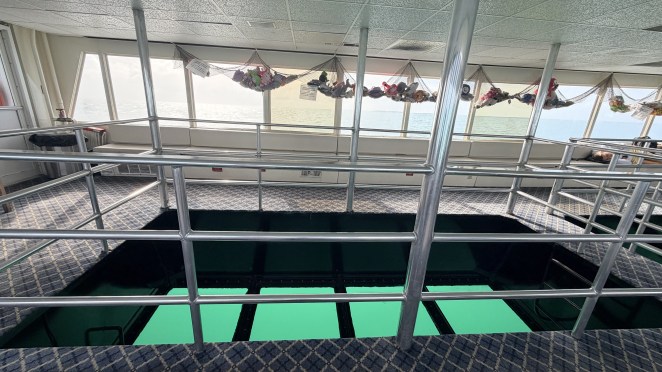
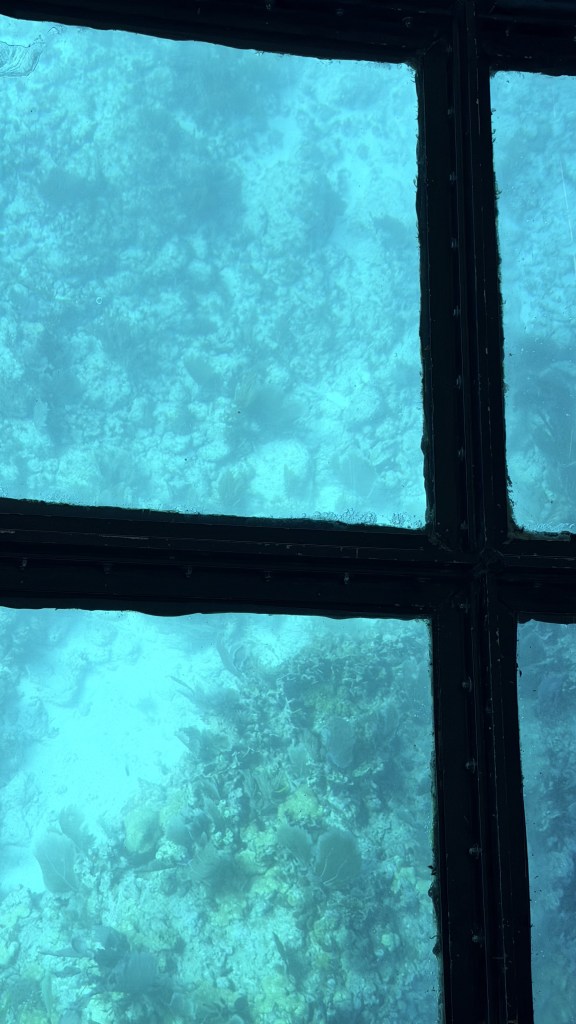
As the boat rocked back and forth, everyone crowded around the glass viewing panels to catch glimpses of the underwater world. Brain corals, sea fans, tropical fish, and reef formations appeared beneath us. It was beautiful.
Unfortunately, looking downward through the glass while the boat pitched in multiple directions proved challenging. The tour guide had warned everyone beforehand about the possibility of seasickness, and he wasn’t exaggerating. Several passengers became nauseous. Even I started feeling queasy and found it difficult to fully appreciate the guide’s detailed commentary.
We spent roughly thirty minutes above the reef before beginning our return journey. The tour wrapped up around 3:00 PM.
Despite the motion sickness, I have to give full credit to the crew. The guide was knowledgeable, enthusiastic, and clearly passionate about the fragile reef ecosystem they were showcasing.
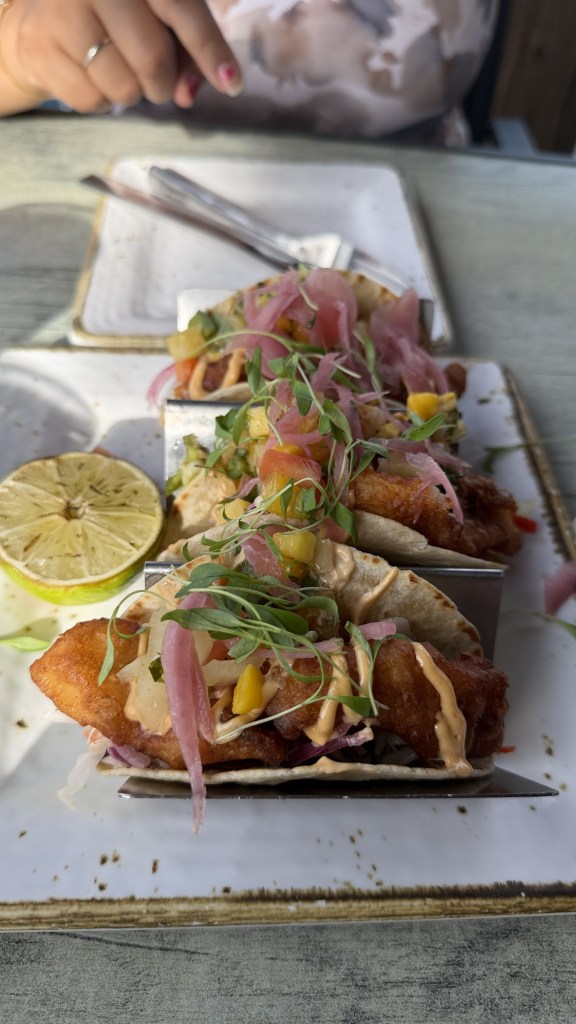
By now, we were starving. Conveniently, Skipper’s Dockside sat right beside the marina. I ordered a fresh poke salad, while Shalini opted for fish tacos. Like many restaurants in the Keys, it wasn’t exactly budget-friendly, but the food was excellent and hit the spot after a long afternoon on the water.
Key West
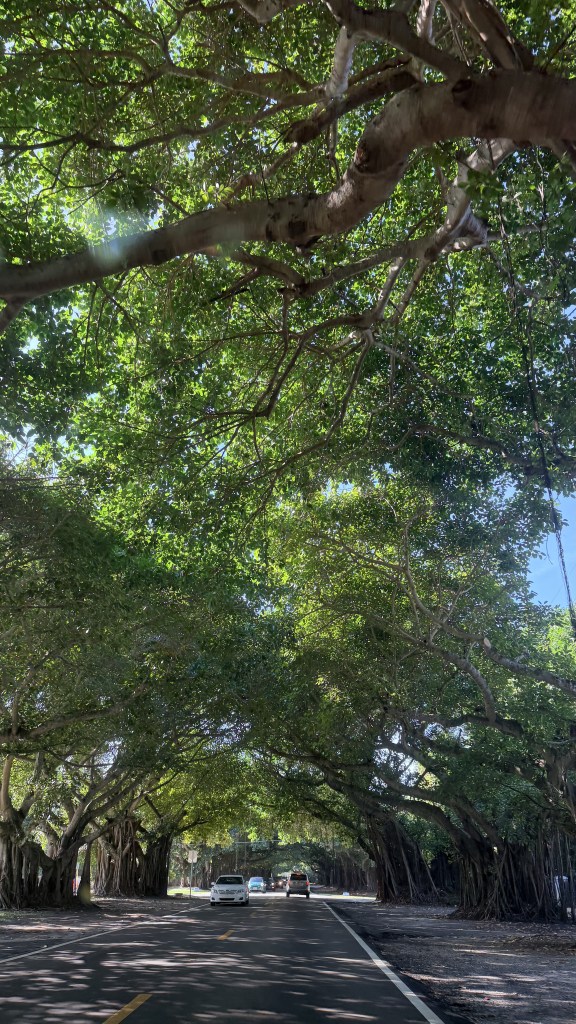
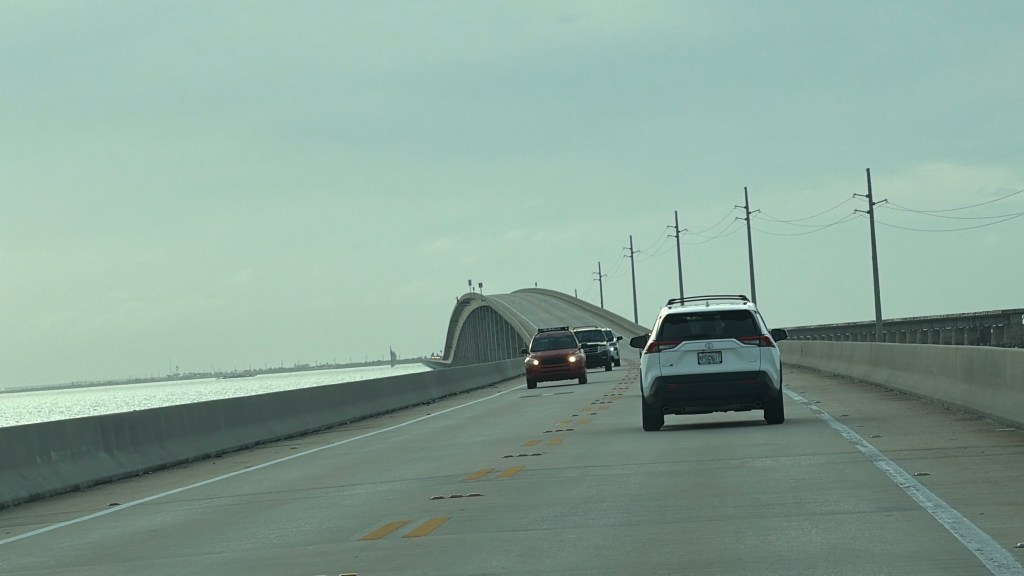
With full stomachs, we resumed our drive south toward Key West. One of the most memorable aspects of this journey is the drive itself. The Overseas Highway links island after island, with stretches of turquoise water extending endlessly on both sides. It often feels as though you’re driving across the ocean. We reached Key West around 5:45 PM. Unfortunately, we didn’t arrive in time to enjoy the famous sunset celebration at Mallory Square, so we decided to aim for sunrise the following morning instead.
After checking into our hotel, we headed back out around 7:00 PM. Fortunately, our hotel was within walking distance of most of Key West’s attractions. We wandered the entire length of Duval Street, undoubtedly the heart and soul of Key West. Lined with restaurants, bars, boutiques, art galleries, and historic buildings, Duval Street has an energy that’s both lively and laid-back at the same time.
From there, we walked over to Mallory Square, one of Key West’s most iconic gathering places. By the time we arrived, it was close to 8:00 PM, long after the famous sunset performers and vendors had packed up. The square sat quietly under the night sky, offering a completely different atmosphere from its usual festive character.
The walk had earned us a reward. Our final stop of the evening was Better Than Sex, a dessert-only restaurant unlike any we’d visited before. The restaurant embraces a playful theme, featuring dim lighting, intimate seating arrangements, curated artwork, and a menu full of cheeky names. We ordered the Cookie Nookie Pie and Man Flowers. The desserts were delicious, creative, and beautifully presented. More importantly, the entire experience was memorable. It wasn’t just about the food; it was the ambience, the humor, and the novelty that made it special. Make sure to make advance reservation; they are pretty booked in advance.
As we walked back to the hotel, satisfied and slightly overdosed on sugar, it felt like the perfect ending to a day that had taken us from coral reefs to island streets.
Day 4 reminded us that travel doesn’t always go according to plan. Sometimes Google Maps leads you in circles. Sometimes the ocean gets rough. But often, those unexpected moments become the stories you remember most.

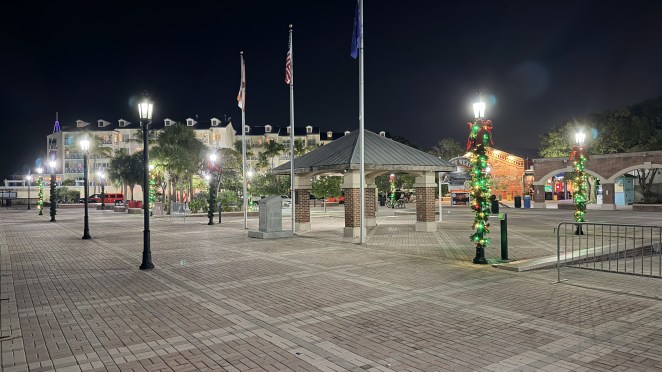
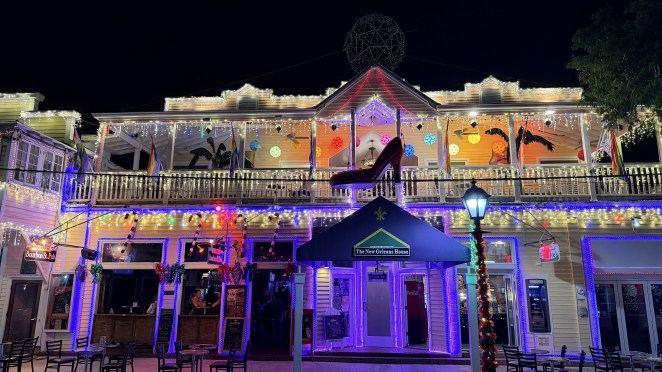
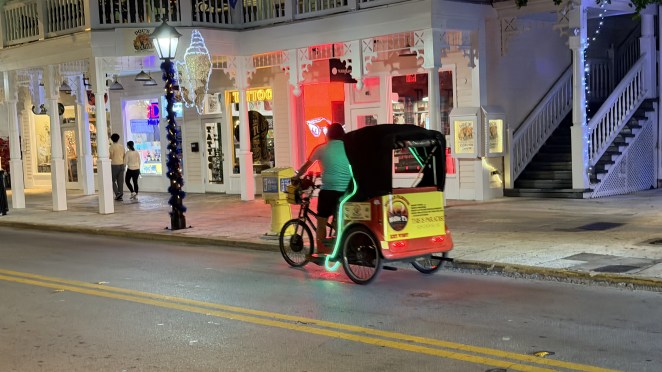
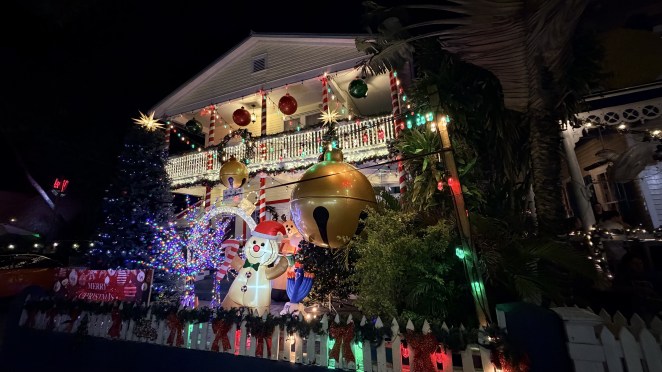
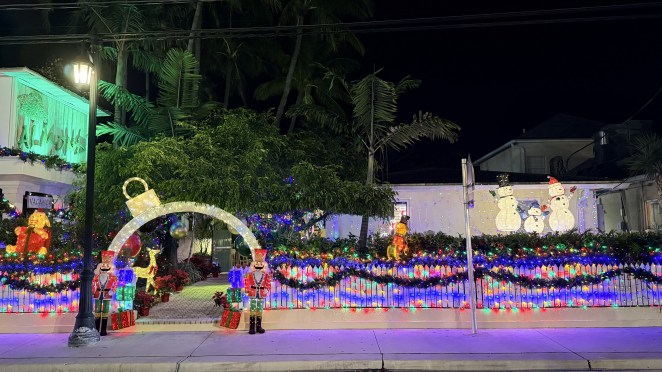
Duval street – if Key West has a heartbeat, it beats on Duval Street
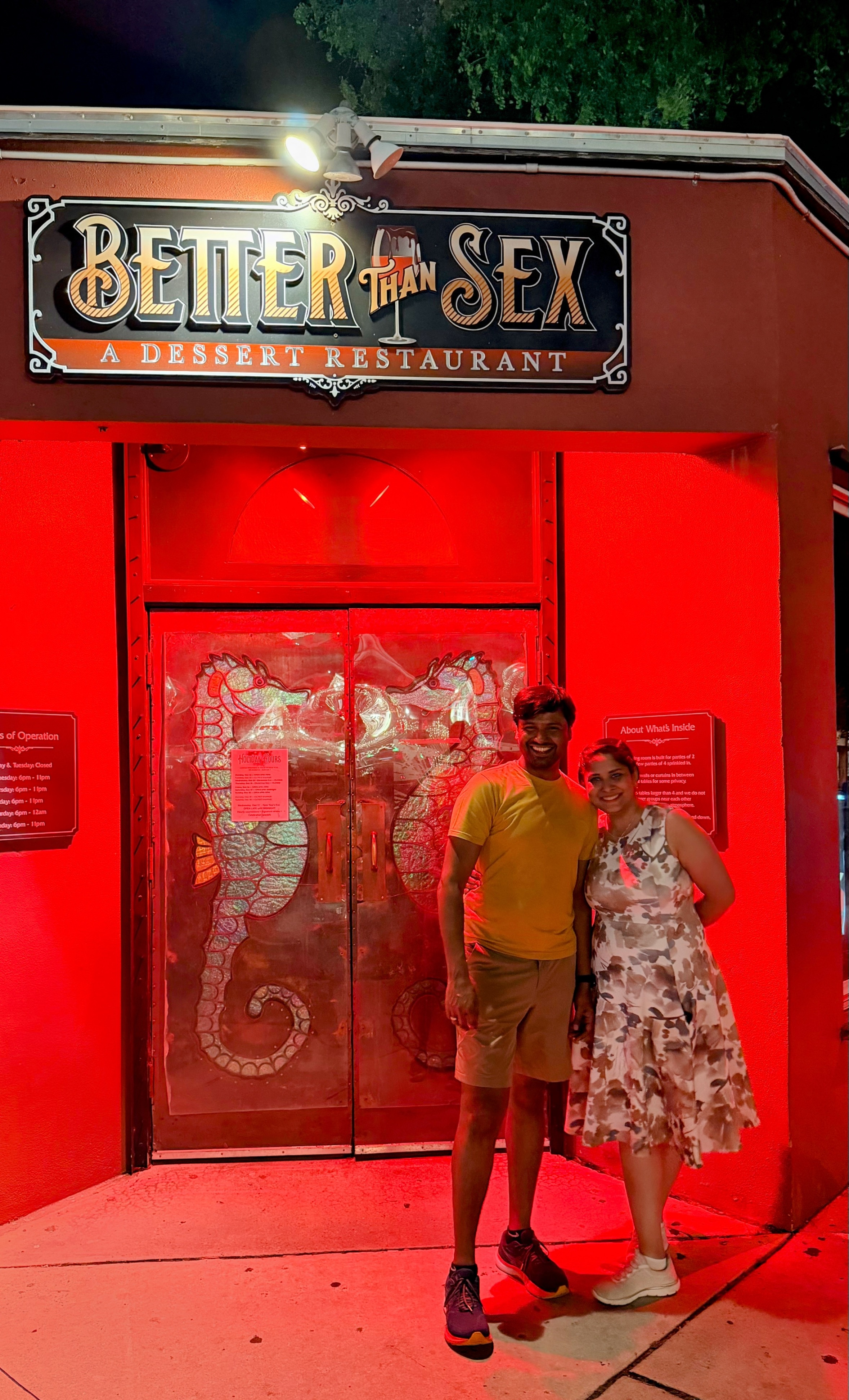
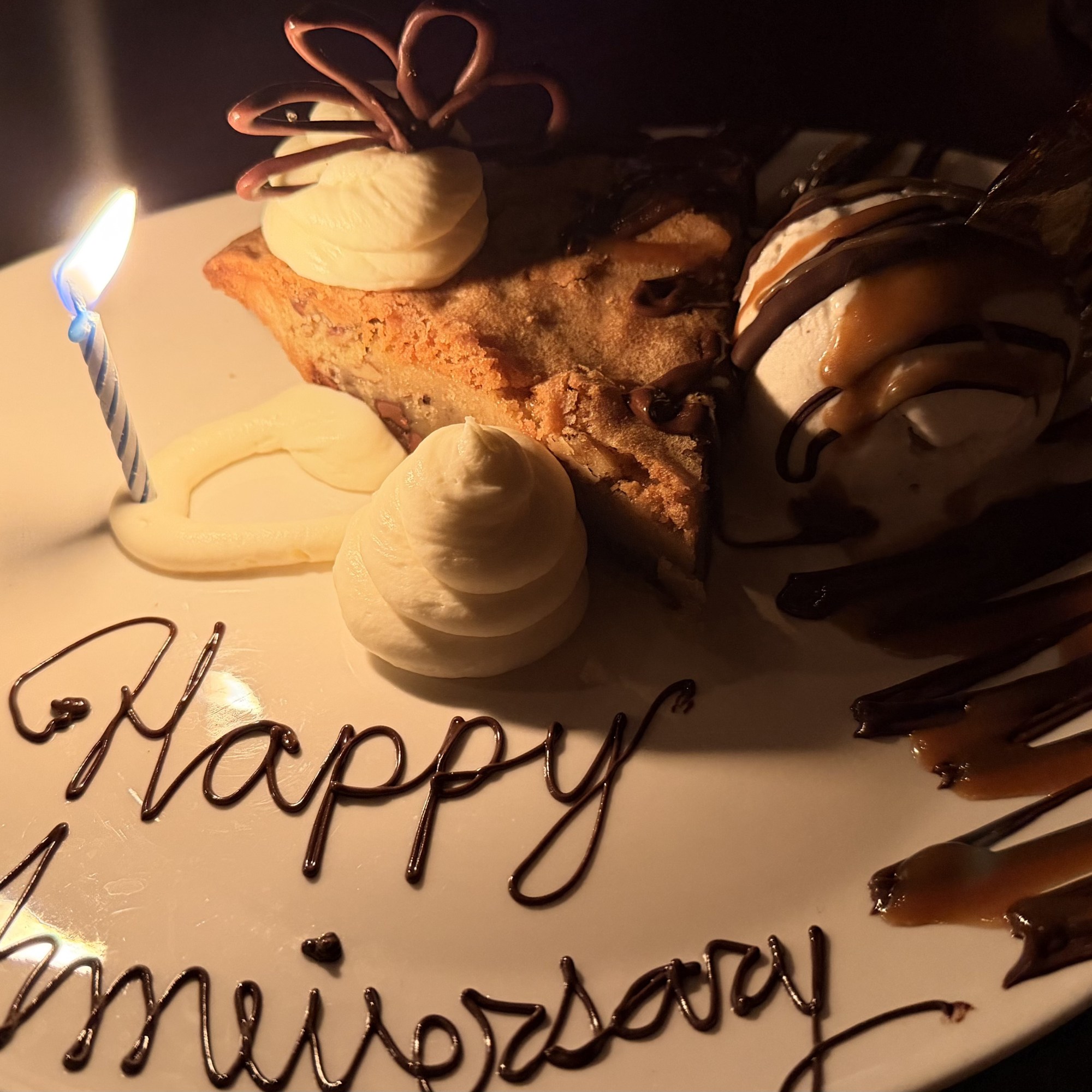
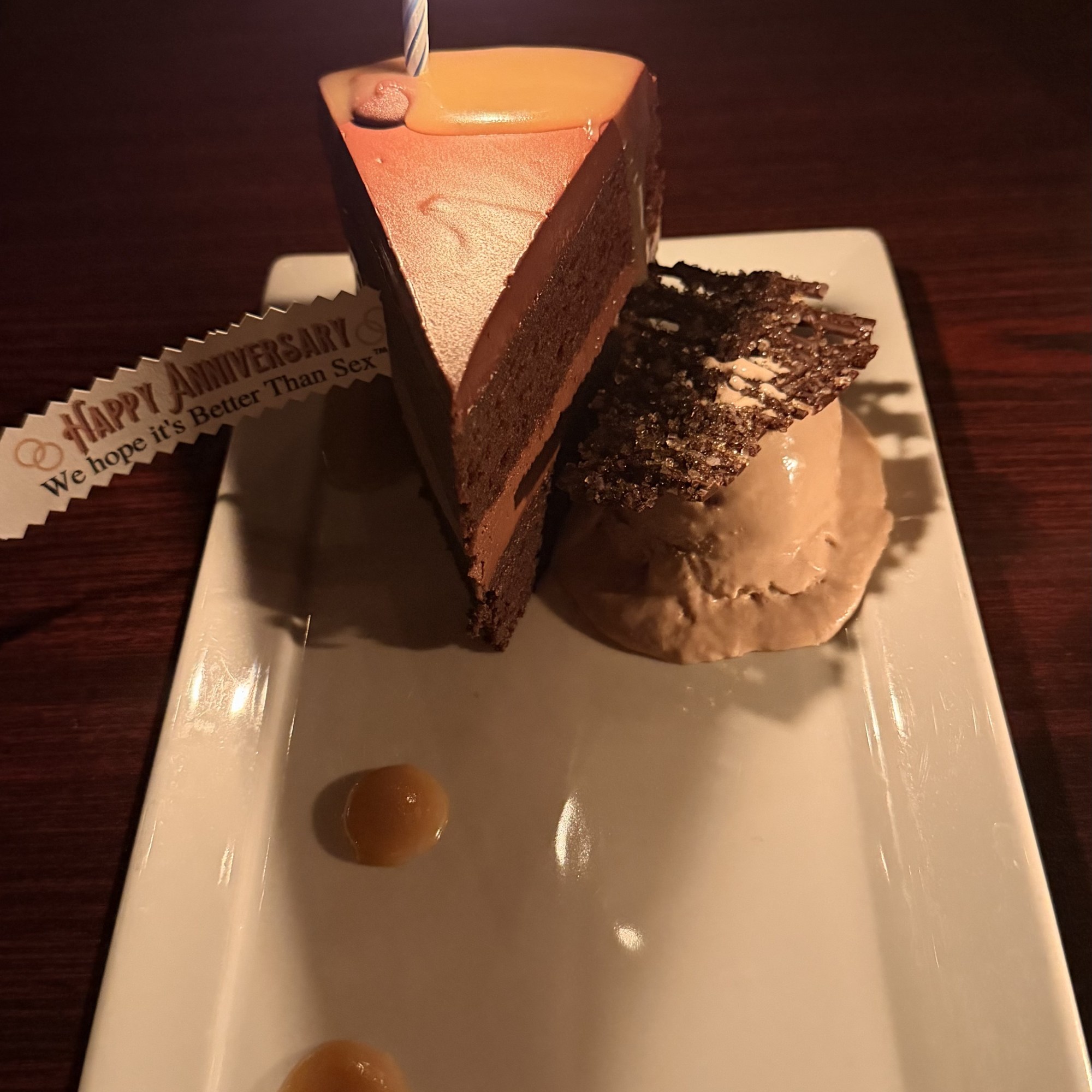
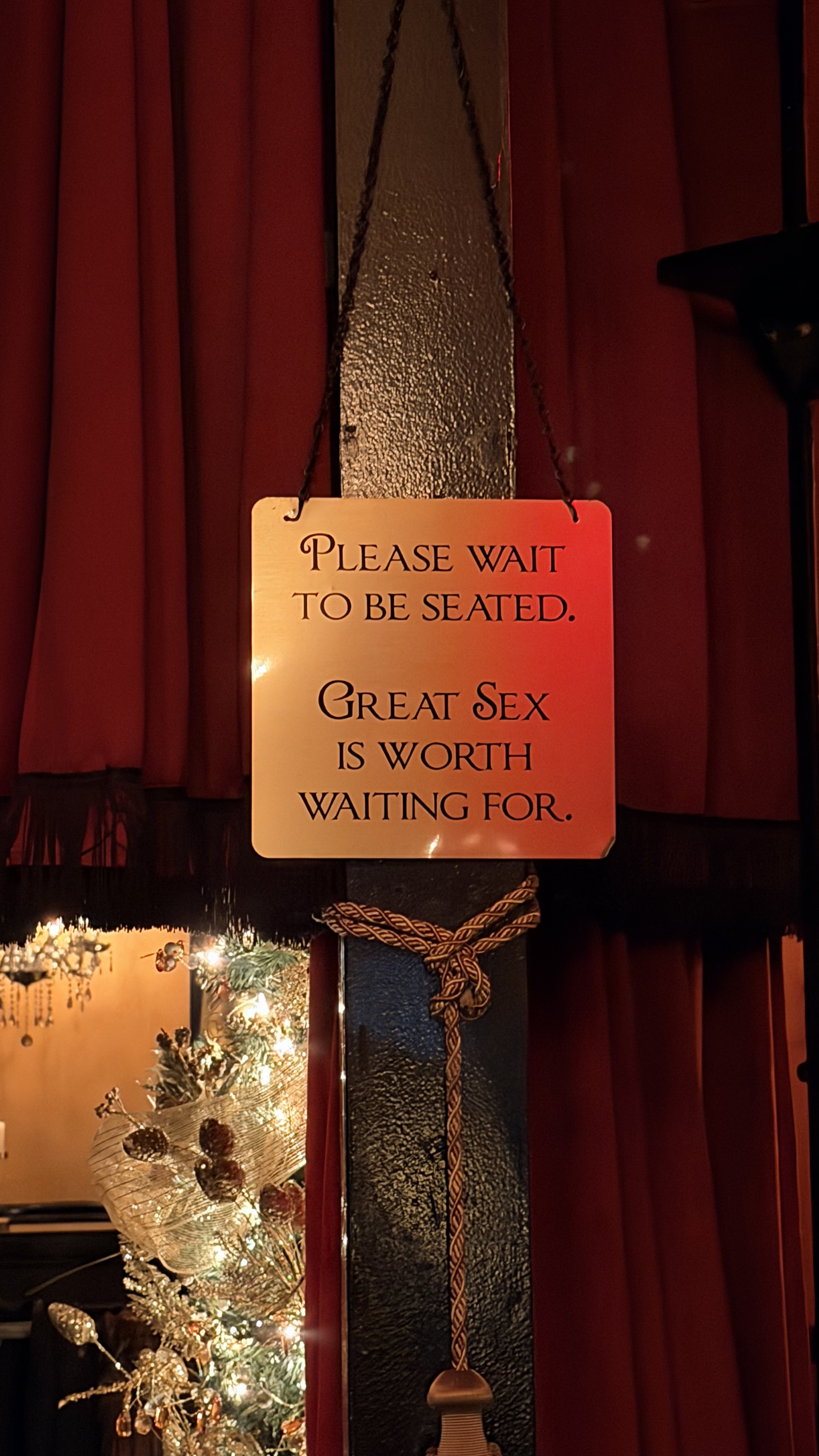
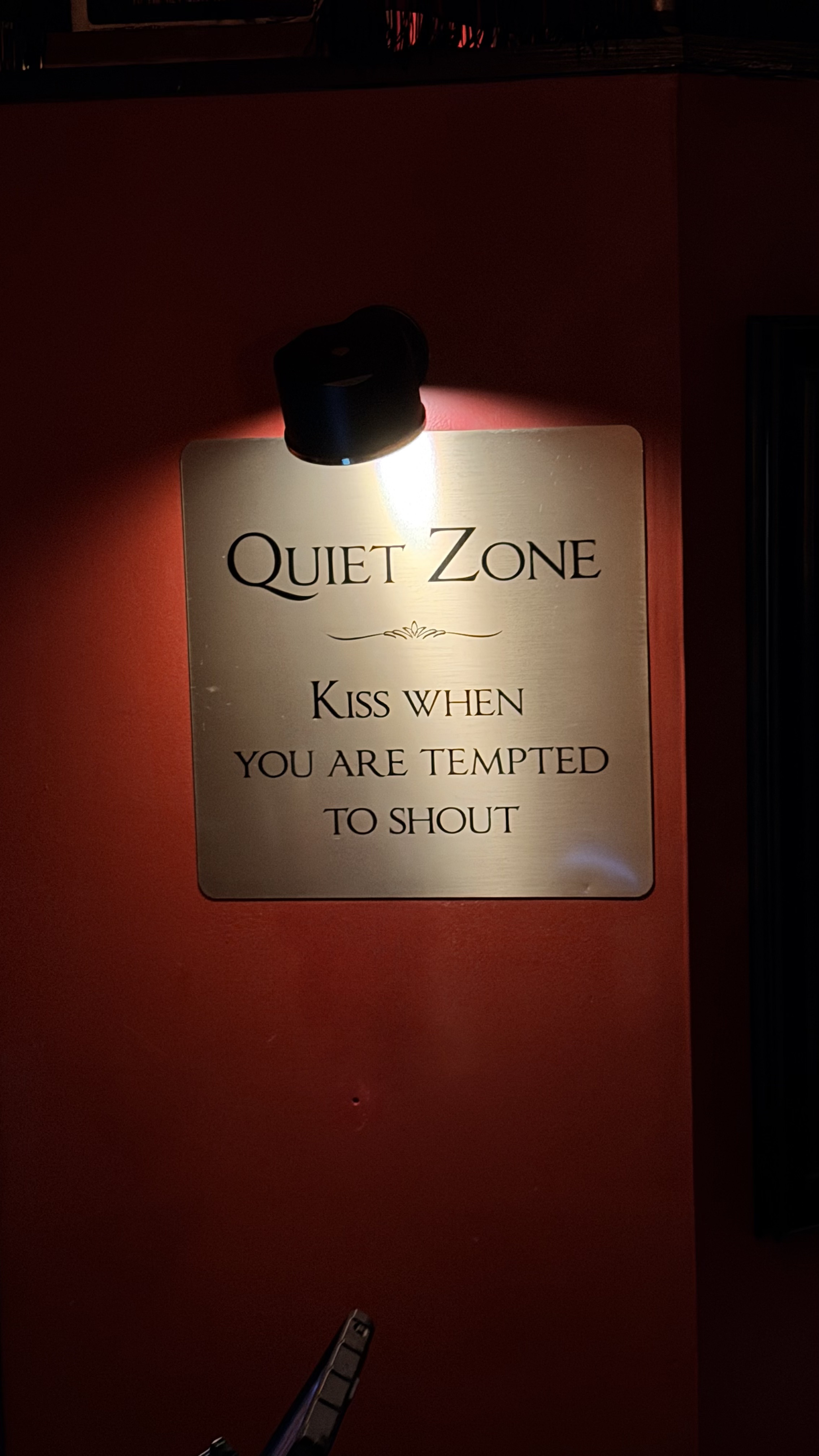
Came for dessert. Stayed for menu & signboards. 😂
Day 5, Dec 19th – Everglades National Park
Sunrise in Key West
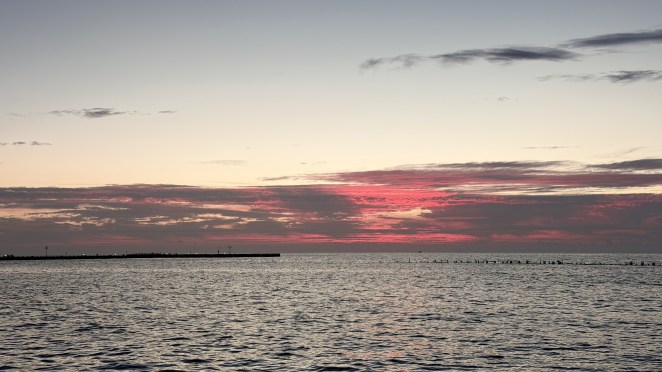
After a packed previous day, we woke up early in Key West to catch the sunrise at Higgs Pier. The sky was a bit cloudy, so I wouldn’t call it a postcard-perfect sunrise. But somehow, that didn’t matter. The pier was quiet, the ocean was calm, and for a while, it felt like we had the entire place to ourselves. There were no crowds, no rush, just the soothing sound of waves and the soft colors of dawn slowly lighting up the horizon. It turned out to be one of those unexpectedly peaceful travel moments that stay with you long after the trip is over.
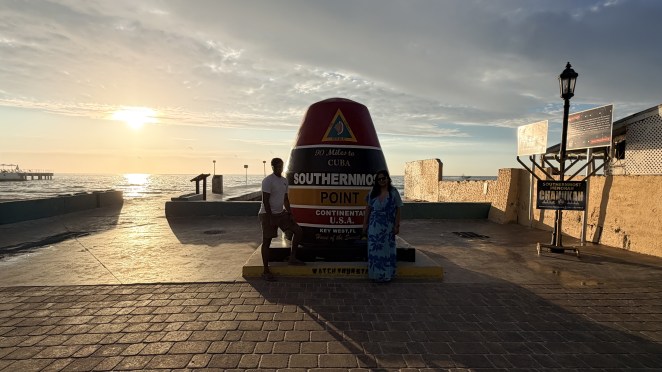
Our next stop was the iconic Southernmost Point Buoy. No trip to Key West is complete without the customary photo here. If you’re driving, simply enter “Southernmost Continental Point of the USA” into Google Maps, and it’ll guide you right there. Technically, the buoy marks the southernmost accessible point in the continental United States, sitting just 90 miles from Cuba. It’s one of Florida’s most photographed landmarks, and understandably so.
Hemmingway Museum
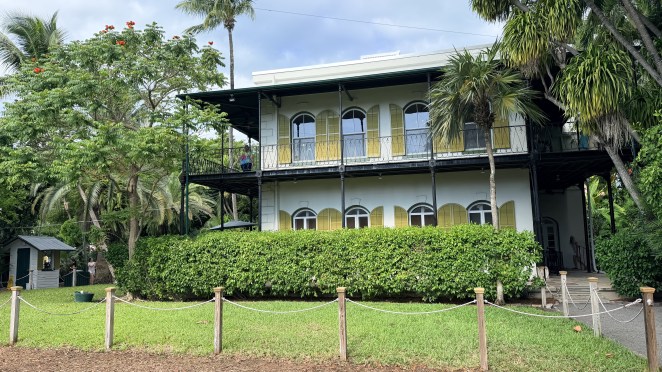
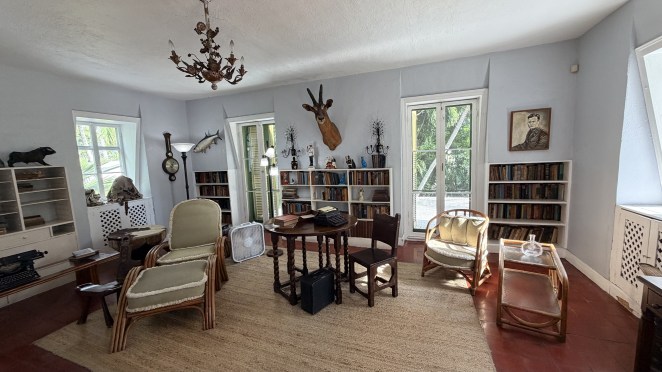
After checking out of the hotel, we headed straight to the Ernest Hemingway Home and Museum, arriving just as it opened at 10:00 AM. That timing turned out to be perfect because the place gets crowded quickly. Hemingway lived in this Spanish Colonial-style house during the 1930s, and it was here that he wrote or completed several of his famous works. The home itself is fascinating, featuring original furnishings, lush tropical gardens, and Hemingway’s detached writing studio where he crafted some of his literary masterpieces.
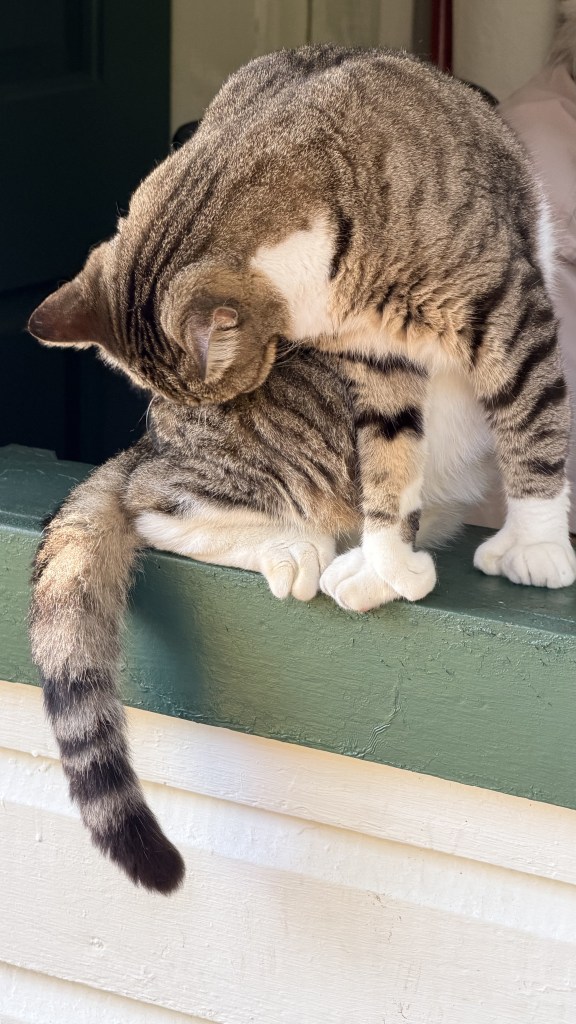
One of the museum’s biggest attractions, however, isn’t literary at all. The property is home to around 60 famous polydactyl cats — cats with extra toes. Hemingway had been gifted a six-toed white cat named Snow White by a ship captain, and many of the cats roaming the grounds today are believed to be descendants of that original feline. About half of the resident cats visibly have extra toes, while others still carry the gene responsible for the trait. The guided tour is included in the admission price, and it’s absolutely worth attending. The guides bring Hemingway’s larger-than-life personality to life through fascinating stories and little-known facts that you might otherwise miss.
Everglades national park
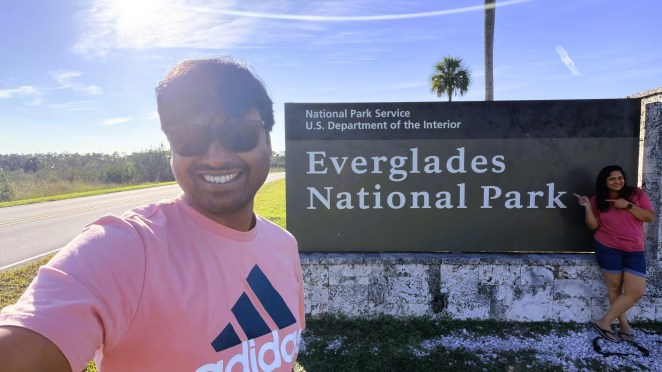
By noon, we had begun our return journey northward through the Florida Keys. We stopped in Key Largo for lunch before continuing toward one of the highlights of our trip — Everglades National Park. We reached the park around 3:30 PM.
The Everglades are unlike any other national park in the United States. Often described as a “River of Grass,” this enormous subtropical wilderness preserves the largest subtropical wilderness in the continental United States and has earned recognition as a UNESCO World Heritage Site, International Biosphere Reserve, and Wetland of International Importance.
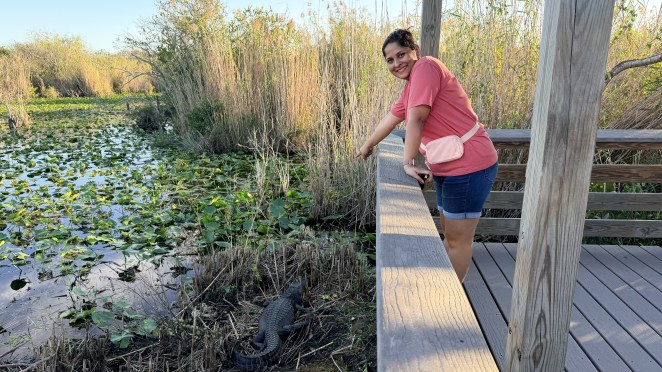
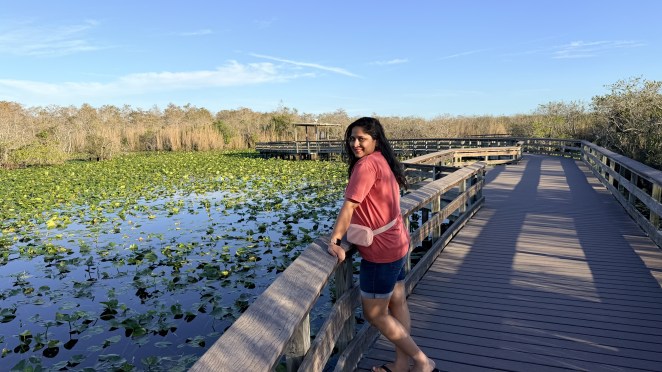
We did the famous Anhinga Trail, located near the Royal Palm area of the park. The trail itself is easy — roughly a one-mile round-trip boardwalk and paved path that winds through Taylor Slough. A slough (pronounced “sloo”) is a slow-moving channel of water, deeper than the surrounding marshes. These sloughs act like natural highways for wildlife during the dry season, concentrating fish and attracting predators like alligators and wading birds. The trail was phenomenal. We saw numerous alligators basking beside the boardwalk, completely unfazed by the visitors passing nearby. Turtles lounged on fallen logs, while anhingas — the bird after which the trail is named — dried their wings in the afternoon sun.
The trail sits near an area historically known as Paradise Key, now called Royal Palm Hammock. In Everglades terminology, a hammock refers to a slightly elevated island of hardwood trees rising above the surrounding wetlands. These hammocks exist because of subtle changes in elevation, often just a few inches higher than nearby marshes. Despite the minimal difference, they support entirely different ecosystems, creating pockets of biodiversity within the vast sawgrass landscape. This unique combination of sloughs, hammocks, marl prairies, and wetlands is what makes the Everglades such an extraordinary place.
I had hoped to hike the nearby Gumbo Limbo Trail as well, but Shalini was understandably tired by this point. So, we decided to skip it.
Exciting drive to Ft Myers
By 5:30 PM, we exited the park. And then came the most spontaneous part of our Florida trip. We had no hotel booking for the night. We had intentionally left the night flexible because we weren’t sure how long we’d spend exploring the Everglades. Depending on timing, we had considered staying in Homestead, Naples, or Fort Myers. Sitting outside a McDonald’s just beyond the Everglades, Shalini and I weighed our options. Since we had finished early enough, we decided to push onward to Fort Myers. The logic was simple: we had enough time to reach it, Holiday Inn prices were considerably better than Naples, and since Clearwater’s beaches were still ahead of us, we weren’t particularly tempted to splurge on a Naples beachfront stay. So, around 6:00 PM, we booked our Fort Myers hotel and hit the road.
The drive itself was unforgettable — and slightly unsettling. The highway cutting westward toward Naples passes through areas bordering Big Cypress National Preserve, a vast wilderness closely tied to the Everglades ecosystem. Once the sun disappeared, the road became remarkably isolated. There were long stretches where only one or two cars shared the highway with us. On either side of the road was complete darkness. No streetlights. No towns. No gas stations. Just the black silhouette of wilderness stretching endlessly into the night. I’ll admit — it was a little scary.
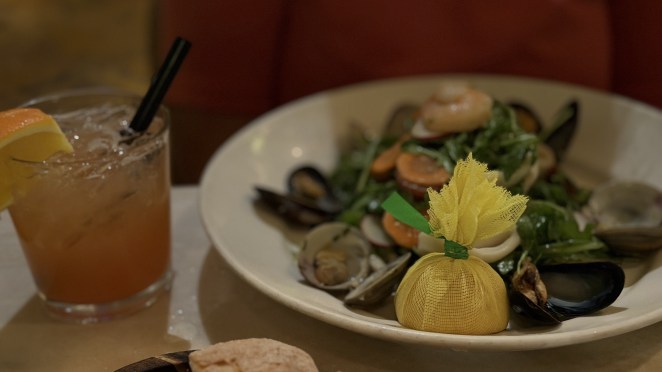
When we finally reached Naples around 9:00 PM, it felt strangely comforting simply to see people again. Naples immediately struck us as sophisticated and upscale. Its downtown area was buzzing with stylish restaurants and elegant bars. Luxurious homes, villas, and manicured streets gave the city an unmistakably affluent feel. We had dinner at Vergina, an Italian restaurant in downtown Naples. The meal was decent, although perhaps a bit overpriced for what it was. Not bad by any means, but not particularly memorable either.
Finally, around 10:30 PM, we reached Fort Myers, checked into our hotel, and collapsed into bed.
Day 5 perfectly captured what road trips are all about. Beautiful sunrise, historic museum filled with six-toed cats, alligators lurking beside boardwalks, last-minute hotel booking, dark wilderness highways and and the freedom to simply decide, in the moment, where the road would take us next.
Day 6, Dec 20th – Siesta and Clearwater Beach
Siesta Beach
After several days of road-tripping through South Florida, Day 6 felt like a reward. It was all about slowing down, soaking up the Gulf Coast sunshine, and enjoying some of the best beaches Florida has to offer.
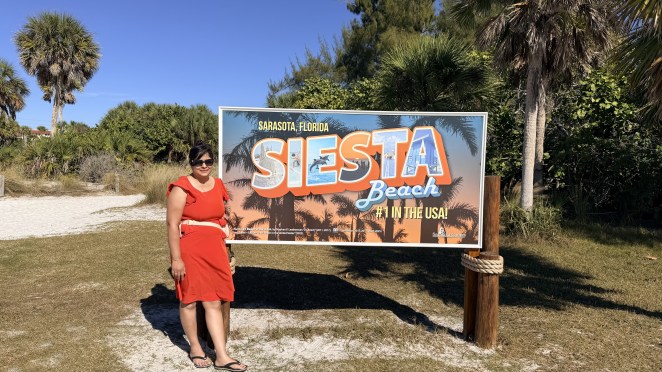
We started the day by driving from Fort Myers toward Sarasota, home to one of America’s most celebrated beaches — Siesta Beach. And it didn’t take long to understand why this beach consistently ranks among the best in the United States.
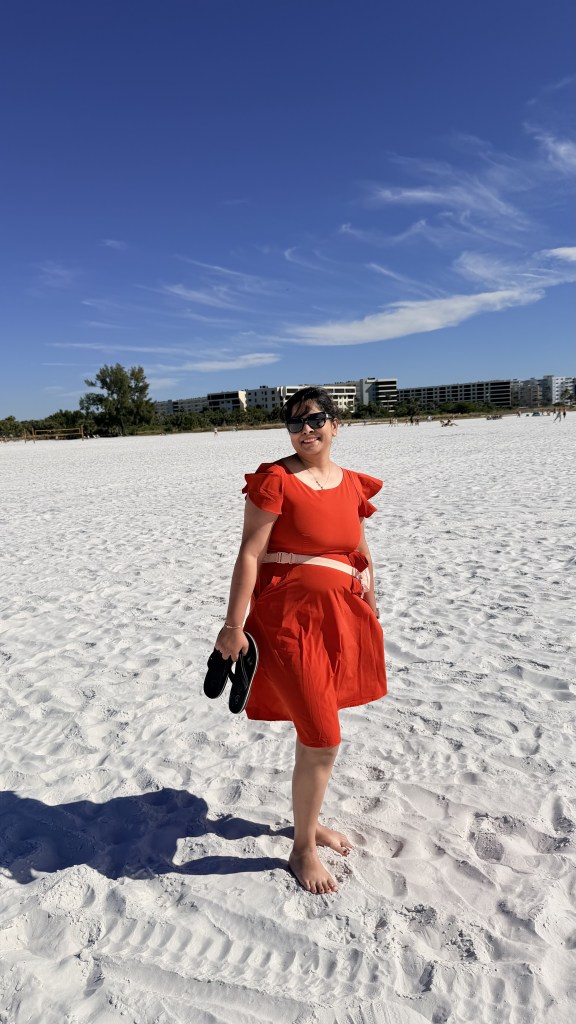
The first thing you notice is the sand. It doesn’t just look different — it feels different. Unlike the coarser, yellowish sand found on many beaches, Siesta Beach has incredibly fine, bright white sand that almost resembles powdered sugar. Walking barefoot here is a unique experience because the sand stays remarkably cool, even under the strong Florida sun.
Why does sand quality differ at different beaches?
The secret lies in local geology and time. Clearwater or Siesta Beach is white and powdery because the sand there comprises 99% ancient white quartz from Appalachian Mountains far away. Over millions of years, rivers carried these quartz particles southward, eventually depositing them along Florida’s Gulf Coast. The longer and farther sediment travels, the finer and rounder it gets. California is yellow-tan because of mixed minerals from nearby mountains. Hawaii is coarser because young volcanic rock and coral with nowhere far to travel.
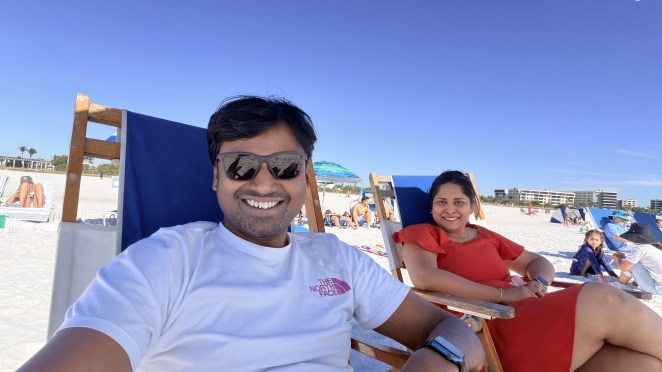
After finding our spot on the beach, we rented a pair of beach chairs and an umbrella. Coming from Seattle, where warm winter sunshine is more of a dream than a reality, this simple pleasure felt luxurious. We spent the next few hours doing absolutely nothing — and it was wonderful.
Clearwater Beach
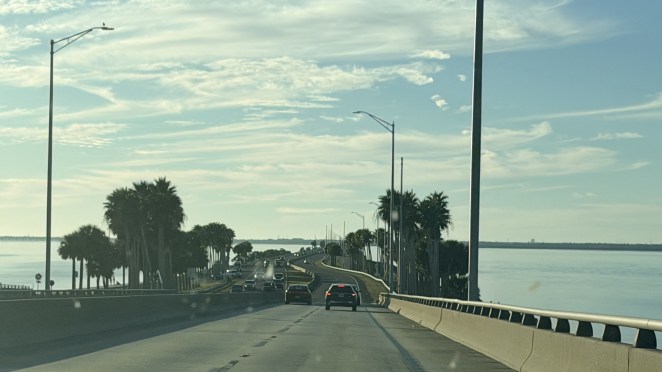
By early afternoon, we packed up and continued north toward Clearwater Beach. The drive itself turned out to be part of the experience. One particularly memorable stretch was State Road 60, connecting Tampa to Clearwater. As the highway crossed Tampa Bay, the scenery transformed dramatically. Palm trees lined sections of the route while expansive views of the bay opened up on either side. With sparkling blue water and boats dotting the horizon, it was one of those drives where you instinctively slow down just to take it all in.
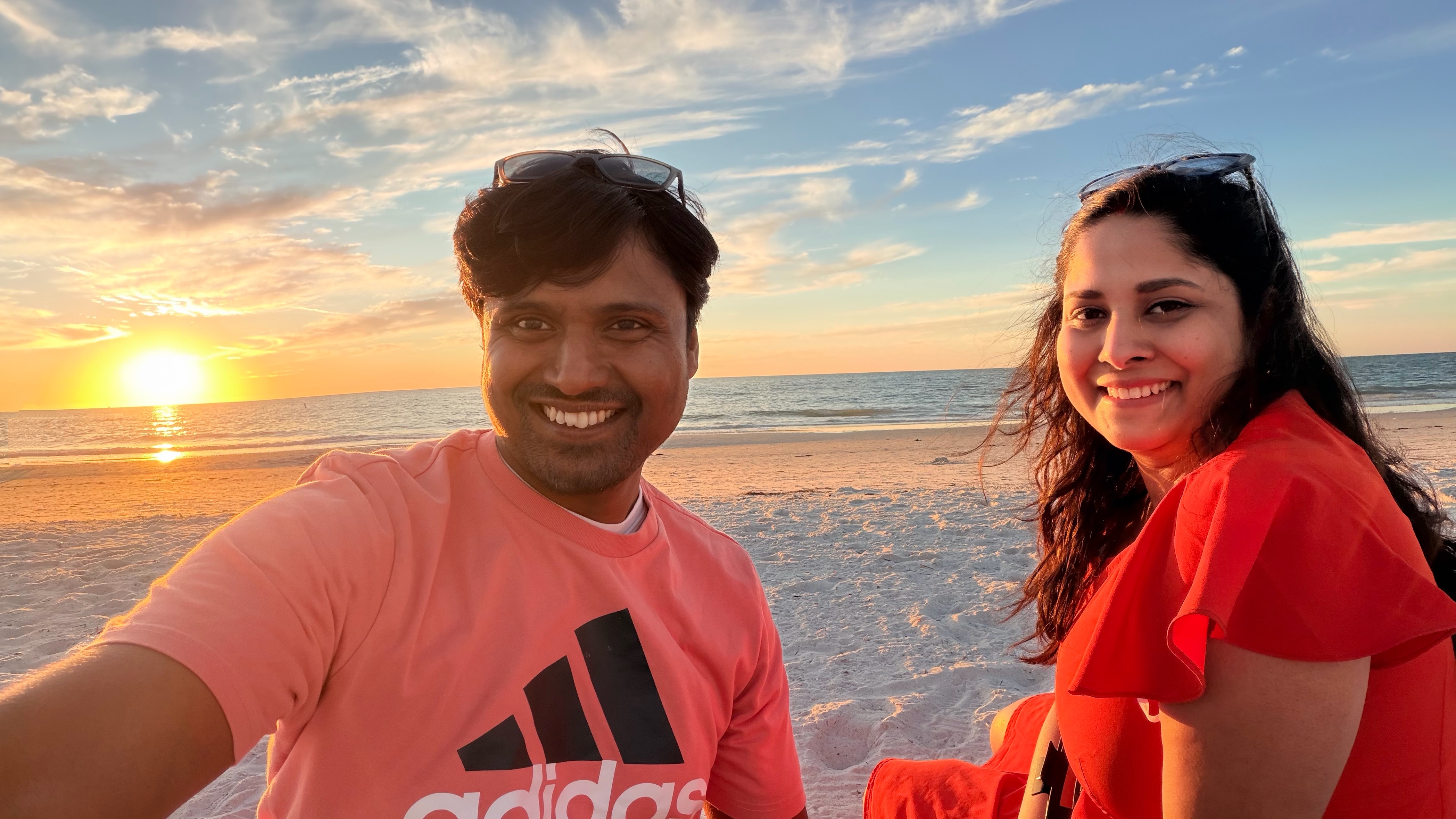
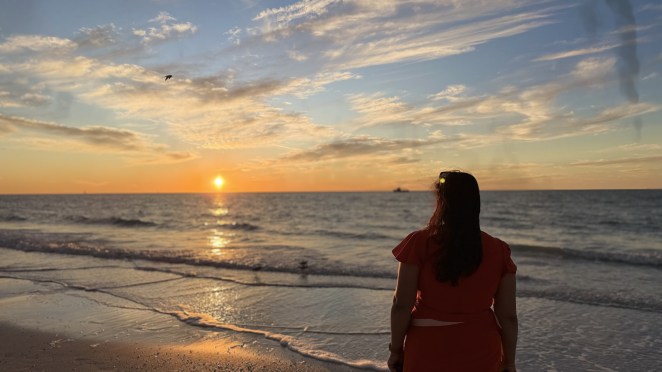
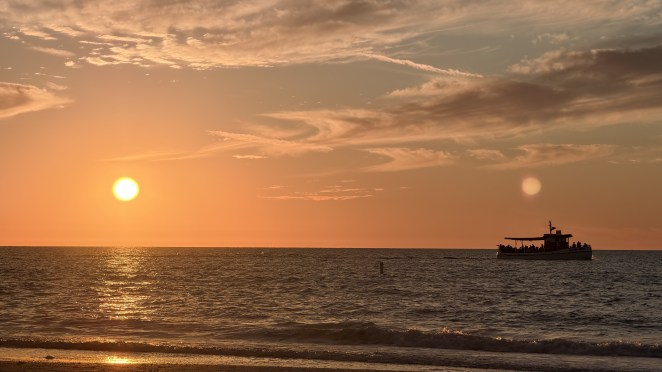
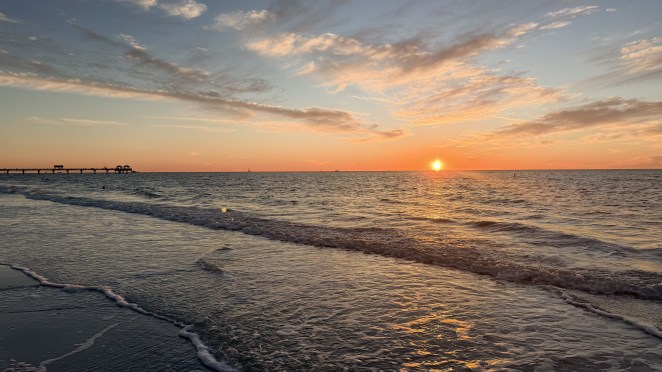
We reached Clearwater around 5:15 PM, almost perfectly timed for sunset. Clearwater Beach had an entirely different personality compared to Siesta Key. Where Siesta had felt peaceful and laid-back, Clearwater was buzzing with energy. We walked out onto Pier 60, one of Clearwater’s most iconic landmarks. The pier stretches out into the Gulf of Mexico and offers spectacular sunset views. Although the sun eventually disappeared below the horizon, we lingered as darkness settled over the beach, enjoying the festive energy that continued long after sunset. Street performers entertained visitors along the promenade. Families strolled along the beachfront. Groups gathered to watch the sunset. Music drifted through the air from nearby restaurants. The atmosphere reminded me a lot of Venice Beach in Los Angeles — vibrant, lively, and full of character.
Around 7:00 PM, hunger finally won. We headed to Frenchy’s Rockaway Grill, located directly on Clearwater Beach. Finally we found a restaurant where the beach sand touched our feet. Miami and Key West has beach side beaches, but none of them are actually on the beach. Even though the evening had turned chilly, we chose to sit outside. The food was excellent. The ambience was even better.
Day 7, Dec 21st – Tampa and return to Seattle
Every trip eventually reaches its final chapter. After six days filled with beaches, road trips, coral reefs, sunsets, alligators, and spontaneous decisions, Day 7 was intentionally slow. There were no attractions to rush to and no long driving routes to conquer.
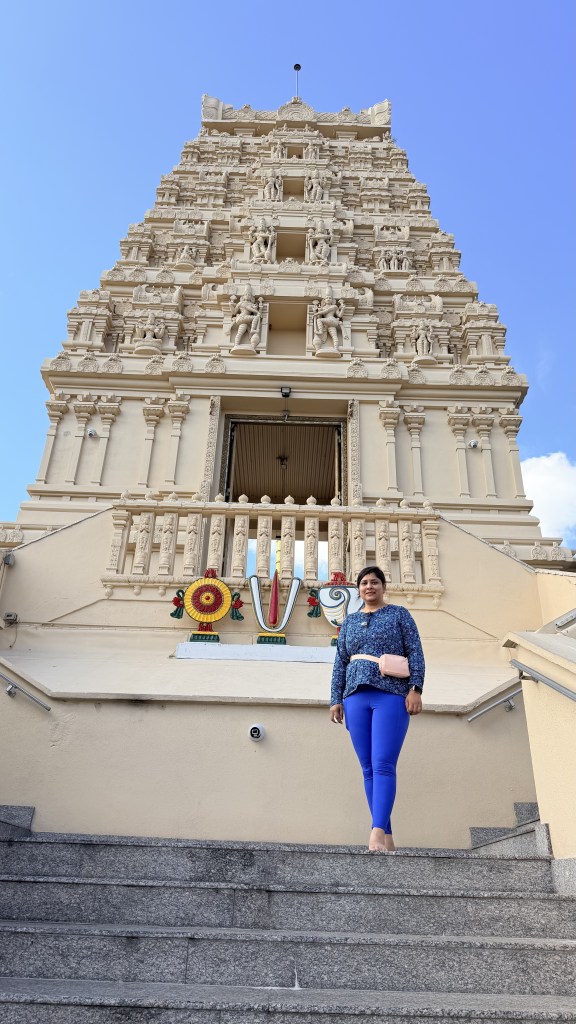
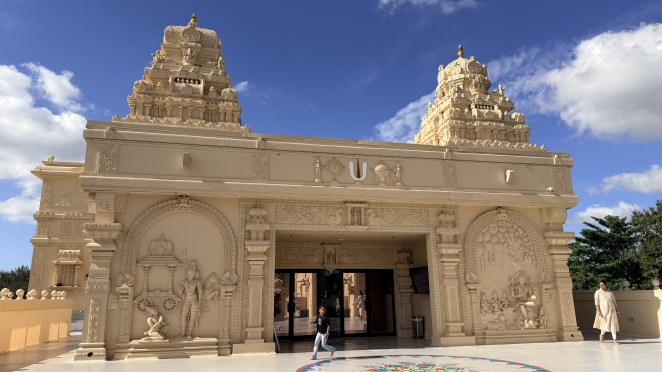
We woke up relaxed, packed our bags at an unhurried pace, and checked out of the hotel around 10:00 AM. Before heading to the airport, we made one final stop that turned out to be one of the most peaceful moments of the entire journey — the Hindu Temple of Florida.
Nestled away from the bustle of Tampa’s busy streets, the temple offered an immediate sense of calm. The intricate architecture, the gentle sounds of prayers, and the soothing fragrance of incense created an atmosphere that encouraged you to slow down and simply be present.
But there was one more reason we liked this place. It’s canteen. The food was simple, authentic, and incredibly satisfying. And remarkably affordable. After a week of tourist-area restaurant prices across Florida, enjoying delicious South Indian food at reasonable prices felt like discovering a hidden gem. If you happen to be passing through Tampa, I will wholeheartedly recommend stopping by — not just for the spiritual experience, but also for food.
As our flight lifted off from Tampa, I found myself reflecting on everything we had experienced over the past seven days.
We had explored the excitement of Orlando. Walked along the shores of Cocoa Beach. Driven the length of the Florida Keys. Peered down at coral reefs through a glass-bottom boat. Met Hemingway’s famous six-toed cats. Watched alligators glide through the Everglades. Relaxed on Siesta Key’s powdery white sands. Enjoyed live music over dinner in Clearwater. And somewhere along the way, we had learned that the best travel memories often come from the moments that weren’t carefully planned. Florida had given us a little bit of everything — adventure, relaxation, nature, history, spontaneity, and countless unforgettable moments.
Eventually, the familiar landscapes of the Pacific Northwest appeared beneath us. Seattle welcomed us back with its cooler temperatures and cloudy skies — a stark contrast to the warmth and sunshine we had enjoyed throughout Florida. But we returned carrying something much more valuable than souvenirs. We came back with stories. And isn’t that what travel is really about? Until next time, Florida.

